REVIEW · MOSHI
The Best of Machame Route in 6 Days: Your World’s Summit Guide
Book on Viator →Operated by AFRICA NATURAL TOURS · Bookable on Viator
Altitude math starts on Day 1.
This Machame-route Kilimanjaro trek from Moshi is built around a smart climb rhythm, with big payoff days like Lava Tower and a summit attempt toward Uhuru Peak. I especially like that you get meals included and the basics for sleeping are handled with camping equipment like tents and mattresses. The main thing to consider: Kilimanjaro park fees, crew tips, and your personal hiking gear are not included, so your final bill can be higher than the headline price.
What makes this experience feel worthwhile is the mix of hard effort and clear pacing: rainforest into moorland, then semi-desert and alpine zones, all while your route sets you up to acclimatize as you go. The plan also targets those classic summit light moments, including an unforgettable summit view, weather permitting. If you know you can handle steep days and a midnight start, you’re in good shape for one of Africa’s most memorable challenges.
In This Review
- Key things to know before you hike Machame
- Machame Route Basics: Why This Climb Often Clicks for First-Timers
- Day 1: Moshi to Machame Gate and Rainforest to Machame Camp (1,830m–3,050m)
- Day 2: Shira Camp Move Through Moorland (3,050m–3,850m)
- Day 3: Lava Tower (Shark’s Tooth) and the Acclimatization Payoff to Barranco (3,850m–4,000m)
- Day 4: Barranco Wall to Karanga Valley and On to Barafu (4,000m–4,700m)
- Day 5 Summit Night: Stella Point to Uhuru Peak (4,700m–5,895m) and Down to Mweka (3,090m)
- Day 6: Mweka Gate Descent, Summit Certificates, and Back to Moshi (3,090m–1,680m)
- Included vs Not Included: The Real Meaning of Value at $1,150
- Logistics That Matter on Kilimanjaro: Pickup, Mobile Ticket, and Group Size
- Camping, Meals, and Your Guide: The Daily Stuff That Makes or Breaks It
- Who Should Choose This Machame Trek (and Who Should Rethink It)
- Should You Book the Best of Machame Route in 6 Days?
- FAQ
- How long is this Kilimanjaro trek?
- Where does the climb start and end?
- What’s included in the price?
- Are park fees included?
- Do I need to pay tips?
- What about flights and airport pickup?
- Do I need my own hiking gear?
- What’s the cancellation policy?
Key things to know before you hike Machame
- Machame Gate to Machame Camp climbs fast, from about 1,830m to 3,050m, with rainforest walking and a long first day.
- Day 3 includes Lava Tower (Shark’s Tooth) at about 4,650m, then you drop to Barranco Camp for acclimatization.
- Barranco Wall and Karanga Valley on Day 4 set you up for the Barafu zone and better summit positioning.
- The summit push is a night mission via Stella Point on the crater rim, continuing to Uhuru Peak at 5,895m.
- Full-board meals plus camping gear are included, so you’re not figuring out food and sleep logistics at altitude.
- A max group size of 100 gives a sense of organization without guaranteeing a tiny, private trek.
Machame Route Basics: Why This Climb Often Clicks for First-Timers
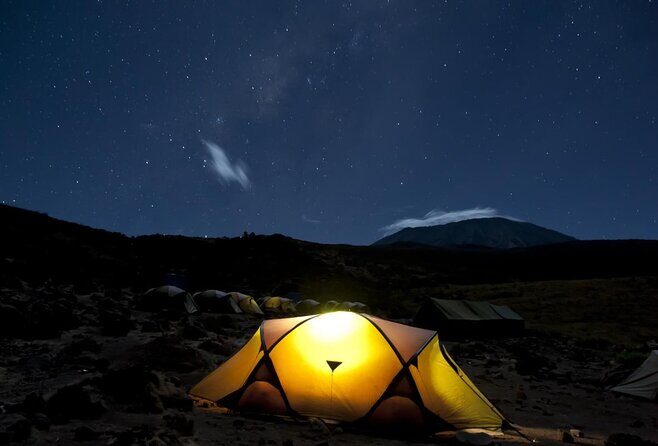
If Kilimanjaro is your one big bucket-list mountain, the Machame route makes a lot of sense. It’s popular for a reason: the way it steps up through distinct altitude zones helps your body adjust better than routes that rush the climb.
You start in Moshi and drive to Machame Gate, then work your way upward day by day. Expect the route to feel like changing environments, not just higher numbers on a map. You’ll move through montane forest, then into moorland, later shifting toward semi-desert and alpine desert as the air thins.
This is not a “walk in the park” hike. Even with good acclimatization structure, you’re still dealing with altitude, cold nights at higher camps, and long hiking hours—especially on summit day.
You can also read our reviews of more guided tours in Moshi
Day 1: Moshi to Machame Gate and Rainforest to Machame Camp (1,830m–3,050m)
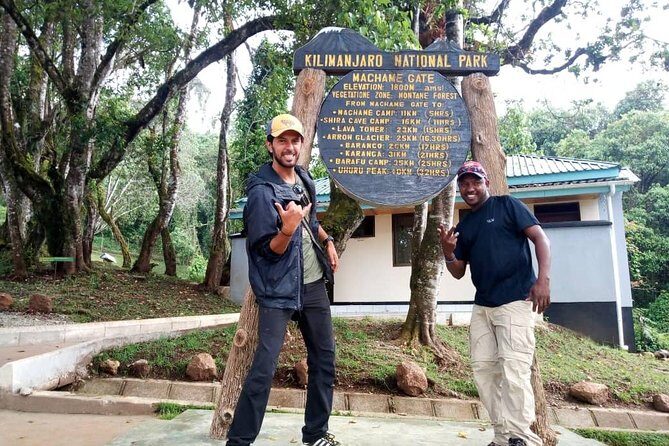
Day 1 is your warm-up in spirit and your warm-up in elevation—because you climb from about 1,830m (6,000ft) to around 3,050m (9,950ft). You’ll drive roughly 45 minutes from Moshi to Machame Gate, passing through the village of Machame before the hiking begins.
Once you leave the park gate, the trail heads into rainforest. This first stretch is about getting used to the rhythm: steady footwork on a winding path, with elevation gain that can feel quicker than you expect once you’re carrying your pack.
By the time you reach Machame Camp, the day is typically 5–6 hours of hiking over about 11km (7 miles). You’ll have lunch and dinner included, then settle into camp for your first night at altitude.
Practical takeaway: Day 1 is long enough that you should pace early. Go easy at the start so you’re not paying for it later.
Day 2: Shira Camp Move Through Moorland (3,050m–3,850m)
After breakfast, you continue climbing as the environment changes. You leave the forest glades and move onto an ascending path with sections that include crossing valleys and a steep rocky ridge. You’ll also travel along a river gorge until you reach Shira Camp.
On this day, your elevation increases from about 3,050m to 3,850m over a short distance of roughly 5km (3 miles). Shorter distance doesn’t mean easier. The steepness and traction demands here can catch you off guard.
It typically takes 4–5 hours. The habitat becomes moorland, and that shift usually means fewer trees, more open exposure, and a different kind of effort—more about sustained uphill work and steady breathing.
Meals are included (breakfast, lunch, and dinner), and you’ll overnight at Shira Camp. Getting your hydration right matters here because you’re building altitude without much horizontal relief.
Day 3: Lava Tower (Shark’s Tooth) and the Acclimatization Payoff to Barranco (3,850m–4,000m)
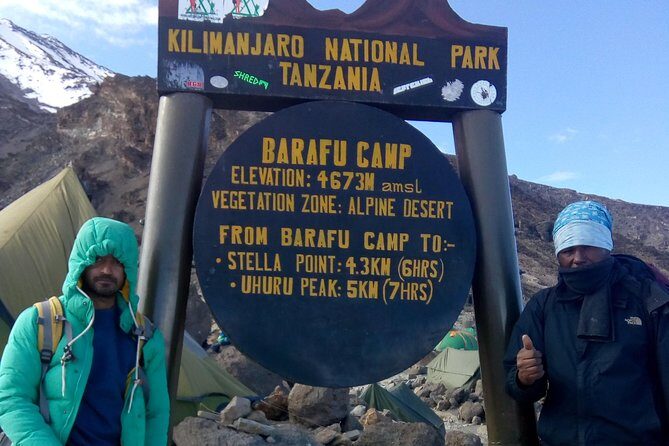
Day 3 is a crucial acclimatization day, and it’s one of the most interesting parts of the whole climb. You start from Shira Camp and hike along a ridge while heading toward the Kibo junction area. Then you shift southeast toward Lava Tower, which the route calls “Shark’s Tooth.”
That stop matters because the elevation goes up sharply—up to about 4,650m (15,250ft). You’ll feel the altitude on your lungs. This is the part where you learn the difference between going fast and going steady.
After reaching Lava Tower, you descend to Barranco Camp, ending the day around 4,000m. Total hiking is about 10km (6 miles) and typically 5–6 hours. The habitat is semi-desert, so the ground and the sky feel more exposed.
Practical takeaway: treat this day as training for the summit attempt, not as a day to prove yourself. The success of the climb depends on how you handle these mid-altitude adjustments.
Day 4: Barranco Wall to Karanga Valley and On to Barafu (4,000m–4,700m)
Day 4 adds more challenge. You leave Barranco and tackle the steep Barranco Wall, climbing to about 4,250m. It’s a real effort day, and it also has a psychological component: your legs will feel it before your body fully adapts.
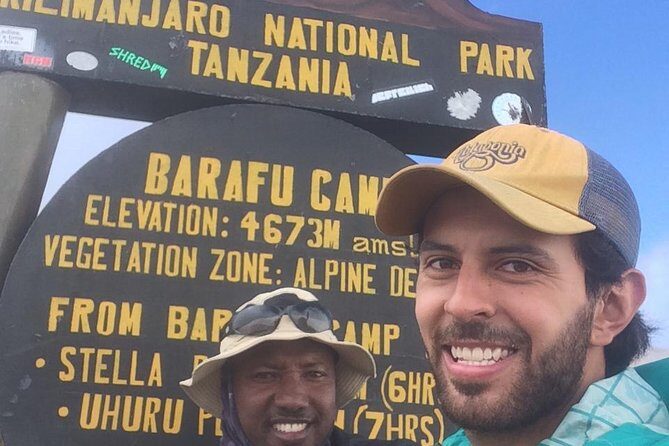
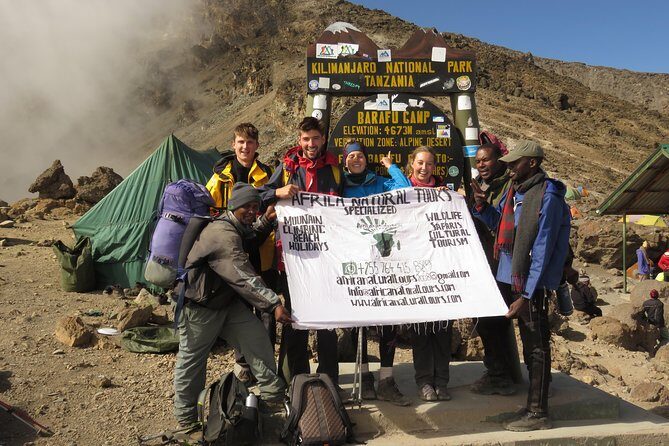
Once you gain height, you traverse the Karanga Valley around 4,050m and then continue to Barafu Camp, reaching about 4,700m (15,350ft). This stretch is about 9km (6 miles) and takes about 6–8 hours.
The habitat shifts again—this time into alpine desert. That usually means a stark, open feel with less natural cover from weather changes. It’s also a day where you’ll start to sense that you’re nearing summit country.
Meals are included, and you’ll overnight at Barafu Camp. If you’re the type who needs a plan in your head, this is when you should focus on conserving energy for the early start coming next.
A few more Moshi tours and experiences worth a look
Day 5 Summit Night: Stella Point to Uhuru Peak (4,700m–5,895m) and Down to Mweka (3,090m)
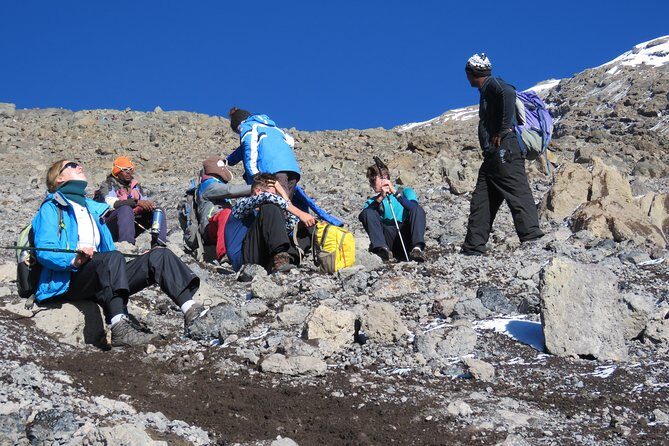
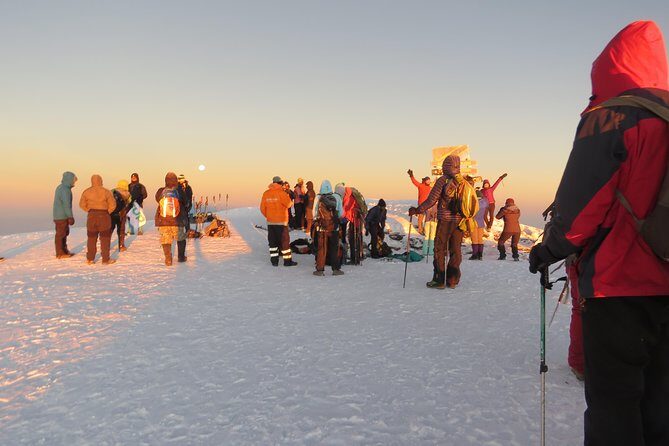
This is the day you came for, and it starts very early—between midnight and 2am. You head toward the summit in the dark, working your way between the Rebmann and Ratzel glaciers. The path includes scree, which means careful footing and steady tempo, not reckless pace.
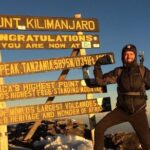
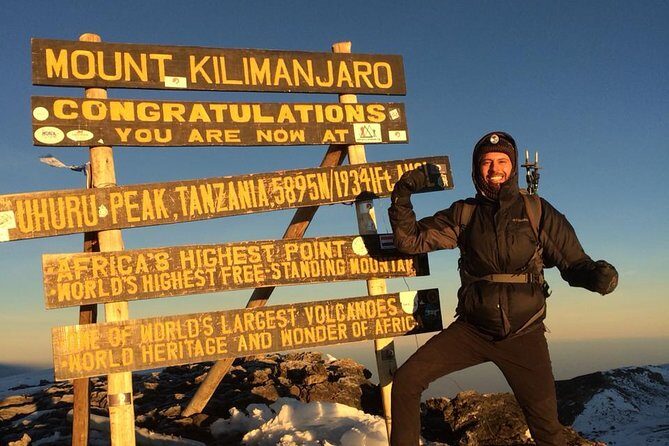
You push up to Stella Point on the crater rim. The route specifically frames this as a point where sunrise is the reward. From Stella Point, the climb continues to Uhuru Peak, the highest point in Africa at 5,895m (19,340ft).
This isn’t a short day trip. Your total hiking time is about 10–13 hours, covering roughly 5km up and 13km down, with an enormous elevation change from 4,700m up to 5,895m and then down to around 3,090m.
After summiting, you descend to Mweka Camp. The plan includes stopping at Barafu for lunch during the descent. Then you’ll have breakfast, lunch, and dinner included, with your final night in camp.
Practical takeaway: summit day success is less about sprinting and more about execution. The right pace, good mental focus, and consistent steps matter more than anything you can control at altitude.
Day 6: Mweka Gate Descent, Summit Certificates, and Back to Moshi (3,090m–1,680m)
Your last day is mostly descent, which sounds easier until you feel your knees and ankles over uneven, possibly muddy ground. You’ll have breakfast before hiking down to Mweka Park Gate to receive your summit certificates.
The hike covers about 10km (6 miles), dropping from about 3,090m to 1,680m. It typically takes 3–4 hours. The route notes that the descent can be wet and muddy at lower elevations—so gaiters and trekking poles are advisable.
Once you complete the descent, you’ll be met by the Africa Natural Tours vehicle at Mweka Gate for the drive back to your Moshi hotel, roughly 60 minutes. Then the trek wraps up with breakfast again.
Practical takeaway: don’t treat Day 6 like a victory lap. Descents are where people get careless. Keep your legs stable and protect your feet.
Included vs Not Included: The Real Meaning of Value at $1,150
The headline price is $1,150 per person, and this is where you should do your math. The value is strong if you want less hassle during the climb itself because the package includes:
- Breakfast, lunch, and dinner on trek days
- Pickup from your Moshi hotel to Machame Gate
- Drop-off back at your Moshi hotel from Mweka Gate
- Camping equipment (tent and mattress)
- Briefing
- Trekking certificate
- A professional Kilimanjaro hiking guide
That’s a lot of heavy lifting handled for you, especially on food and sleeping gear. For most hikers, the summit portion is already complicated—so having the basics managed can be a big stress reducer.
What’s not included is equally important. You’ll add costs for:
- All Mount Kilimanjaro park fees
- Tips to the mountain crew
- Hotel accommodations before and after the trek in town
- Pick up/drop off at the airport
- Flight costs (domestic and international)
- Personal hiking gears
So the best way to think about the price is this: you’re paying for the guided climb with the core logistics, not for your entire trip budget from your home airport. If you already planned your flights and gear, the $1,150 looks more like an efficient package. If you haven’t, factor in the extra line items early so the total doesn’t surprise you.
Logistics That Matter on Kilimanjaro: Pickup, Mobile Ticket, and Group Size
This experience includes pickup from your hotel in Moshi town to Machame Gate, and drop-off from Mweka Gate back to your Moshi hotel after the descent. That matters because the mountain starts with an organized day—less time hunting for transport when you’d rather rest and focus.
You’ll also receive a mobile ticket, and confirmation is provided at booking time. The tour notes it’s near public transportation, which can help if you need to run a quick errand in Moshi before the trek.
Group size is capped at a maximum of 100 travelers. That ceiling suggests you’re likely not dealing with an overwhelming crowd, but it doesn’t mean it will feel private. If you want quiet, you’ll still want to rely on your own pace and headspace, not on expecting a small group.
Camping, Meals, and Your Guide: The Daily Stuff That Makes or Breaks It
On Kilimanjaro, the difference between a rough day and a manageable day is often the boring stuff: meals, sleep setup, and how your guide handles altitude decisions. Here, breakfast, lunch, and dinner are included throughout the trek.
You also get camping equipment—specifically tent and mattress—so you’re not trying to hunt rentals at the last minute. There’s also a briefing and a trekking certificate, which gives you a clearer sense of what to expect before the mountain starts demanding answers.
The route is run with a Kilimanjaro hiking professional guide. Even without extra details on guide names in your info, I’d still treat the guide as your main source for pacing and safety decisions, especially during the acclimatization days and on summit night.
Who Should Choose This Machame Trek (and Who Should Rethink It)
This hike suits people with moderate physical fitness who want a classic route up Africa’s highest peak. It’s a good fit if you like structured days and you’re comfortable with long hikes, steep climbs, and early wake-ups.
You should think twice if you’re not ready for summit-day timing and endurance. Day 5 involves a midnight-to-early-morning start, a long 10–13 hour effort, and very high elevation. Even with acclimatization built into the route, this is still a serious undertaking.
It also helps if you’re emotionally ready for changing weather and terrain. The hike shifts from rainforest to moorland to semi-desert and alpine desert, and that affects how your feet feel, how you dress, and how you conserve energy.
If you’ve got your gear sorted and you can keep a steady pace when it matters, this is the kind of climb that can leave you with a very real sense of accomplishment.
Should You Book the Best of Machame Route in 6 Days?
Book it if you want a well-paced Kilimanjaro route that targets acclimatization, and you’d rather have meals, camping setup, and local logistics handled. The route’s mix of Machame rainforest start, Lava Tower on Day 3, and the Stella Point to Uhuru Peak summit attempt is a strong recipe for hikers who want the full Kilimanjaro storyline.
Pass or plan carefully if you’re trying to keep your total budget tight, because park fees, tips, hotels, flights, and personal gear are not included. Also make sure you’re genuinely comfortable with a very early summit start and a long, demanding Day 5.
If your goal is a focused, guided climb with clear daily structure from Moshi, this one is a solid choice.
FAQ
How long is this Kilimanjaro trek?
It’s listed as 6 days (approx.). Some versions may run 7 days, but this specific experience is described in the 6-day format.
Where does the climb start and end?
You start with a drive from Moshi to Machame Gate, then hike to the mountain camps and finish with a descent to Mweka Park Gate. After that, there’s a drive back to your Moshi hotel.
What’s included in the price?
Included are breakfast, lunch, and dinner during the trek, hotel pickup in Moshi to Machame Gate, drop-off from Mweka Gate back to your Moshi hotel, camping equipment (tent and mattress), a briefing, a trekking certificate, and a professional guide.
Are park fees included?
No. All Mount Kilimanjaro park fees are not included, and they can be paid directly to the park or via the tour operator.
Do I need to pay tips?
Yes. Tips to the mountain crew are not included.
What about flights and airport pickup?
Flights (domestic and international) are not included. Airport pickup/drop-off is also not included.
Do I need my own hiking gear?
Personal hiking gear is not included, so you’ll need to bring what you require for the trek.
What’s the cancellation policy?
You can cancel for a full refund up to 24 hours in advance of the experience’s start time. If you cancel less than 24 hours before, there’s no refund.