REVIEW · MOSHI
7-Day Guided Mount Kilimanjaro Climb by Machame Route
Book on Viator →Operated by Kisaza Tours · Bookable on Viator
Kilimanjaro tests more than your legs. This 7-day Machame Route climb is interesting because you move through rainforest, moorland, semi-desert, and alpine desert while your team works the schedule for acclimatization. I like the full-on support from guides, cooks, and porters, and I like the way the climb builds toward a sunrise summit attempt from the crater rim.
The catch is that Machame is tougher than the more casual Marangu route: it’s steeper, longer, and full of ups and downs across valleys and ridges. If you’re a first-timer with limited trekking time, expect it to feel exhausting even though it’s not technically hard.
In This Review
- Key things to know before you go
- Machame Route: why it’s harder than Marangu, and why people still love it
- Moshi to the park gate: your first taste of Kilimanjaro logistics
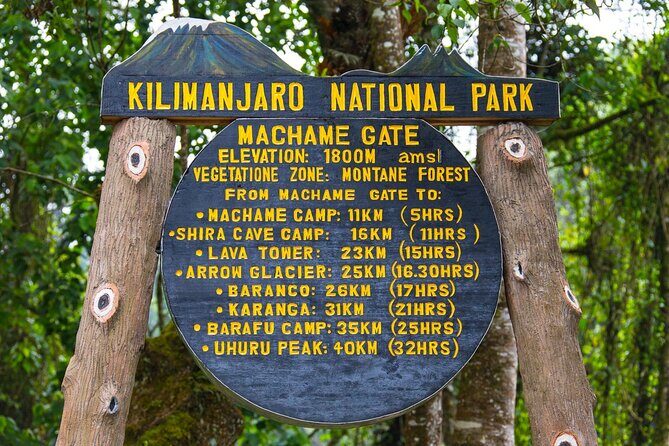
- Day 1 (5,400 to 9,400 ft): rainforest ridges to Machame Camp
- Day 2 (9,400 to 12,500 ft): moorland ascent toward Shira campsite
- Day 3 (to 16,000 ft and back down to Barranco Hut): Lava Tower and Arrow Glacier acclimatization
- Day 4 (about 3 miles): Barranco Wall to Karanga Valley for a short, smart acclimation day
- Day 5 (13,000 to 15,300 ft): South Circuit to Barafu Hut and summit-view prep
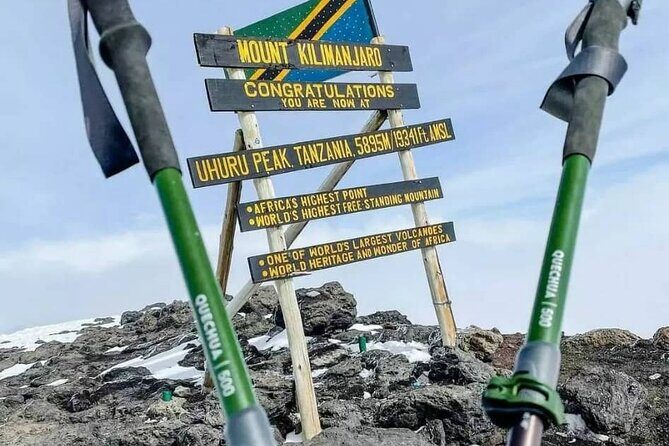
- Day 6 (midnight–2am start): Stella Point sunrise and the final push to Uhuru Peak
- Day 7 (10,000 to 5,400 ft): Mweka descent, summit certificates, and back to Moshi
- The human side: guides, cooks, porters, and why the team matters on Machame
- Price check: is $2,180 good value for a 7-day guided climb?
- Who should book this Machame climb (and who might want a different route)
- Should you book this Kilimanjaro Machame climb with Kisaza Tours?
- FAQ
- FAQ
- What route does this Kilimanjaro climb follow?
- Where does the tour start and end?
- What time does the tour start?
- How long is the climb?
- Is pickup offered?
- How much does it cost per person?
- What’s included in the price?
- What is not included?
- What fitness level should you have?
- What’s the maximum group size?
- Is there free cancellation?
Key things to know before you go
- Machame is popular for variety: big changes in scenery from day to day, not just altitude.
- You get acclimatization built in: Barranco day and the Lava Tower detour help your body catch up.
- Early-morning summit day is real: midnight to 2am start, scree climb to Stella Point, then Uhuru Peak.
- You’re not doing it alone: professional guides, cooks, and porters are included.
- Airport pickup and hotel nights are included: practical help before and after the trek.
- Smaller-group feel: the tour lists a maximum of 100 travelers.
Machame Route: why it’s harder than Marangu, and why people still love it
Machame is often called the whiskey route, and it earns its fame for views and variety. You start on the south side and work upward toward the eastern side, moving beneath the southern ice fields as you head for Uhuru Peak.
Here’s the practical truth: Machame is not technical climbing. You’re walking. But the walking can feel punishing. The route involves steeper sections, longer days, and lots of changing direction as you cross chains of valleys and ridges. That means your legs and breathing get tested over and over.
The good news is that this route typically has a higher success rate than Marangu because it supports acclimatization better. And your 7-day plan matters: the minimum time to summit is usually around six days, but seven is recommended. That extra time is what lets your body adjust rather than just forcing altitude.
If you want a Kilimanjaro that feels like an adventure trek (not a simple trail), Machame fits. If your only experience is casual day hikes, you’ll still be okay—but you’ll need to respect the effort, pace yourself, and listen to your guide.
You can also read our reviews of more guided tours in Moshi
Moshi to the park gate: your first taste of Kilimanjaro logistics
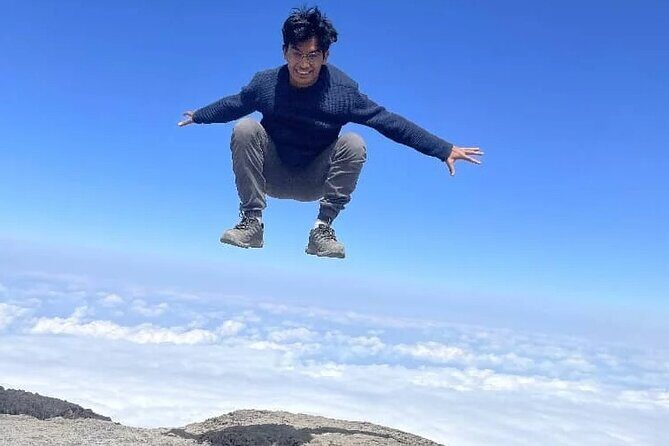
You’ll base in Moshi, Tanzania. The drive from Moshi to the Mount Kilimanjaro National Park gate takes about 50 minutes. Along the way, you pass through the village of Machame on the lower slopes of the mountain.
This matters because your first day doesn’t start from some far-off place—it starts from a real approach into the mountain’s environment. The plan also includes pickup and drop-off at the airport, and it lists two nights of accommodation in Moshi or Arusha before and after your climb. In one group’s experience, airport pickup happened two days before the climb start, so don’t assume you’ll land and walk out immediately.
You also get a clear anchor time: the start time is listed as 9:00 am, and the meeting point is Kilimanjaro International Airport Road, Tanzania. The activity ends back at the meeting point after your final drive.
Day 1 (5,400 to 9,400 ft): rainforest ridges to Machame Camp
Day 1 is about getting your rhythm without pretending you’re not climbing. You drive to the gate, then walk through the rain forest on a winding trail up a ridge.
Two details make Day 1 feel more real:
- Lower-trail mud and slick spots are common early on, so you don’t want to be under-equipped.
- You’re covering 11 km with about 5–7 hours of hiking time, so it’s not a quick warm-up.
You’ll reach Machame Camp at roughly 9,400 ft. The habitat is rain forest, which usually means cooler air than at lower elevations and a sense of steady uphill effort through trees.
Practical gear advice here is spot-on: consider gaiters and trekking poles. Gaiters help if the trail turns muddy; poles take stress off your knees on uneven ground. On Kilimanjaro, your feet and ankles can get more tired than you expect.
Day 2 (9,400 to 12,500 ft): moorland ascent toward Shira campsite
After breakfast, you leave the rain forest glades and keep ascending. This day shifts the feel of the trek: you move from rainforest into moorland.
The route includes:
- Crossing a small valley
- Walking along a steep rocky ridge with heather
- Turning west onto a river gorge
This is a day where your lungs and pace really matter. Even though the distance looks short compared to Day 1—5 km—you’ll still hike 4–6 hours due to the terrain.
You end at Shira campsite at about 12,500 ft. The habitat changes to moorland, and that transition is part of what makes Machame such a popular route: you’re not just gaining altitude—you’re changing environments.
Day 3 (to 16,000 ft and back down to Barranco Hut): Lava Tower and Arrow Glacier acclimatization
Day 3 is the classic Machame “work for it” day, but it’s also one of the most important for success.
You continue from the Shira Plateau, heading east up a ridge and passing a junction toward the peak of Kibo. Then your route turns southeast toward the Lava Tower, called the Shark’s Tooth. After that, you reach a second junction and climb toward the Arrow Glacier at around 16,000 ft.
Then you do something that feels counterintuitive until you get it: you go back down to Barranco Hut at about 13,000 ft.
This day hits 10 km and takes 6–8 hours. Habitat is semi-desert. The schedule is built around acclimatization, and the elevation pattern matters: even though you finish the day lower than your higher point, the climb above helps your body adjust to the thinner air.
For many hikers, this is where you start thinking less about distance and more about breathing rate. If you go too fast here, Day 6 will pay the price. A calm pace on Day 3 can make summit day feel possible.
A few more Moshi tours and experiences worth a look
Day 4 (about 3 miles): Barranco Wall to Karanga Valley for a short, smart acclimation day
Day 4 is shorter, and that’s intentional.
You leave Barranco and continue on a steep ridge past the Barranco Wall. After that, you move to the Karanga Valley campsite, with a very compact elevation change: roughly 13,000 to 13,100 ft.
The hike is about 3 miles (listed as 4–5 hours). Habitat is alpine desert.
This day is worth appreciating because it gives you acclimatization without stacking another long grind. It helps your body keep adapting while you reduce total fatigue heading into the big pushes that come next.
If you’re the type who wants to “win” by moving fast, resist that urge on Day 4. This is the day your future self will thank you for staying steady.
Day 5 (13,000 to 15,300 ft): South Circuit to Barafu Hut and summit-view prep

Day 5 connects you to the Mweka Trail and then pushes you up to Barafu Hut. This is where Machame starts showing off in a different way: you’ll get summit views from multiple angles as part of the South Circuit.
The plan includes:
- Hiking to Barafu Hut
- Resting and preparing for summit day
- Taking in views of Mawenzi and Kibo from camp
It’s not a huge distance—2.5 miles—but you’ll still feel it. The listed hiking time is 4–5 hours, and you climb to about 15,300 ft. Habitat is alpine desert.
This is also the night where your mental game matters. You’re already high enough that sleep can be odd and cold can creep in. The goal is to rest, hydrate, eat what you can, and follow your guide’s instructions rather than invent your own plan for summit day.
Day 6 (midnight–2am start): Stella Point sunrise and the final push to Uhuru Peak
This is the big day: you start very early, between midnight and 2am. You’ll ascend through heavy scree between the Rebmann and Ratzel glaciers, heading northwesterly toward Stella Point on the crater rim.
At Stella Point, you pause briefly. Then you continue to Uhuru Peak.
If weather cooperates, this is where people remember Kilimanjaro forever: the sunrise from the rim. You might see snow along the way all the way to the summit. The ascent from Stella Point to Uhuru Peak is listed as about 1 hour.
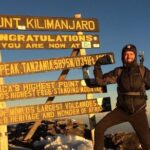
At Uhuru Peak, you reach the highest point on Mount Kilimanjaro and the continent of Africa.
Then you descend—straight down—to the Mweka Hut campsite. This descent can be rough on the legs, because going down at altitude still takes effort and can stress your knees and feet.
Also note a pace reality: faster hikers may catch sunrise from the summit itself. That’s not something to chase at the cost of safety. Your job is to keep moving steadily and conserve energy.
Day 7 (10,000 to 5,400 ft): Mweka descent, summit certificates, and back to Moshi
Day 7 starts with a calmer breakfast, but you still hike. You descend down to the Mweka Park Gate to receive your summit certificates.
Lower elevations can be wet and muddy, so the same gear logic applies: gaiters and trekking poles help. Shorts and t-shirts may work at this lower altitude, but you should keep rain gear and warmer clothing handy since conditions can shift quickly.
From the park gate, you continue another hour to Mweka Village. A vehicle then meets you and drives you back to your hotel in Moshi.
Your elevation drop is large—about 10,000 ft down to 5,400 ft—and you’ll hike about 3–4 hours total covering roughly 6 miles. Habitat is rain forest.
It’s a satisfying finish because you get the formal certificate moment, plus the practical payoff: you’re done, and you’re not scrambling for transportation in muddy conditions.
The human side: guides, cooks, porters, and why the team matters on Machame
On Kilimanjaro, the summit is earned through your feet. But the experience is shaped by how well your team runs the climb.
This trip includes professional guides, cooks, and porters, plus park fees, camping fees, and rescue fees. It also lists fair wages for the mountain crew, which I see as part of real value: you’re supporting the people who make the trek function day after day.
In the reviews, the strongest praise is about service and communication. Names that come up repeatedly include Stephen, Michael, Francis, Louis, David, Ezekiel, and Lusekelo. The common thread is responsiveness—fast replies, proactive solutions to doubts, and a clear sense of being supported and safe.
One group specifically mentioned airport transfers and a complementary hotel after the 7-day tour, which lines up with the included accommodation nights. Another mentioned WhatsApp communication to close trip details, showing that the operator tends to make the process feel organized before you ever step into the park.
What you should take from this: if you feel unsure, you don’t have to suffer in silence. A good guide team helps you read conditions, adjust pace, and keep you calm when the mountain feels demanding.
Price check: is $2,180 good value for a 7-day guided climb?
At $2,180 per person, this isn’t a bargain climb. But it can still be strong value when you look at what’s included.
Included items on this plan cover:
- Professional guides, cooks, and porters
- Park fees, camping fees, and rescue fees
- VAT and charges
- Airport pickup and drop-off
- Two nights of accommodation in Moshi or Arusha before and after
- Meals: 7 lunches, 6 breakfasts, 6 dinners
So you’re not just paying for guide “time.” You’re paying for the entire operation that makes a multi-day camping trek work—permits, safety coverage, staff, and a base in town so you aren’t scrambling last-minute.
Not included:
- International flights
- Tips for the driver guide and hoteliers
- Insurance fees
- Cost of Tanzania
My take: plan your budget so you’re not surprised. If you want the most stress-free experience, handle flights and insurance separately, and keep some money aside for tipping where appropriate.
Who should book this Machame climb (and who might want a different route)
This Machame route is best suited for people with some hiking or trekking experience and for those who like adventure. Even though it’s described as not technically difficult, it’s steeper and longer than Marangu and includes many ups and downs.
You’ll likely enjoy this trek if you:
- Train for sustained hiking and can handle altitude progressively
- Prefer variety in environments over a more straightforward route
- Want a summit attempt that follows a schedule built around acclimatization
You might consider a different option if you:
- Have very limited trekking experience and worry about steep, exhausting days
- Know you struggle when walks are long and repetitive at altitude
If you’re a first-timer, don’t let that scare you out of Machame. Just go in with eyes open: you’ll need patience, steady pacing, and willingness to slow down.
Should you book this Kilimanjaro Machame climb with Kisaza Tours?
If your goal is a guided Machame climb with real logistical support, this option looks like a solid choice. The reviews emphasize professional, attentive teamwork and fast communication. The itinerary also shows why Machame can work well: acclimatization isn’t left to luck, and summit day is planned with a crater-rim route that sets up the sunrise push.
I’d book it if you want the Machame experience and you’re ready for steeper, longer hiking days. I wouldn’t book it if you want an easier, low-fuss route and you’re not comfortable with the physical grind.
FAQ
FAQ
What route does this Kilimanjaro climb follow?
This is a 7-day guided climb on the Machame Route (often called the whiskey route).
Where does the tour start and end?
The tour starts at Kilimanjaro International Airport Road, Tanzania, and ends back at the same meeting point.
What time does the tour start?
The start time is listed as 9:00 am.
How long is the climb?
The duration is listed as 7 days (approx.).
Is pickup offered?
Yes. The tour includes pick up and drop off at the airport.
How much does it cost per person?
The price is $2,180.00 per person.
What’s included in the price?
Included items are professional guides, cooks and porters, park fees, camping fees & rescue fees, VAT fees and charges, airport pickup/drop-off, two nights’ accommodation in Moshi or Arusha before and after, and meals (7 lunches, 6 breakfasts, 6 dinners).
What is not included?
Not included items are international flights, tips for the driver guide and hoteliers, insurance fees, and the cost of Tanzania.
What fitness level should you have?
The additional info says travelers should have a moderate physical fitness level.
What’s the maximum group size?
The tour lists a maximum of 100 travelers.
Is there free cancellation?
Yes. Free cancellation is available up to 24 hours in advance of the experience for a full refund.