REVIEW · MOSHI
Climbing Kilimanjaro – Machame Route
Book on Viator →Operated by ZARA TOURS · Bookable on Viator
Kilimanjaro gets personal on Machame. This is one of the most scenic Kilimanjaro routes, with you hiking through multiple habitats while porters handle your heavy load and a cook keeps meals coming. I also love the mix of hard hiking with starry camps, where dinner happens in a tent or outside when the weather allows.
The big thing to consider: Machame is not gentle. Nights can drop to well below freezing, and the high, exposed sections (especially around Barranco/Barafu) demand focus and good pacing.
In This Review
- Why the Machame Route is such a crowd-pleaser
- Key Highlights I’d Put at the Top
- Price and Logistics: What $2,322.06 Actually Covers
- From Moshi to Machame Gate: Rainforest hiking at 1,490 m
- Day 2: Shira Plateau and those glacier views
- Day 3: Lava Tower (4,630 m) and the hardest middle day
- Day 4: Barranco into Karanga Valley to Barafu’s exposed ridge
- Day 5: The midnight push to Uhuru Peak and Stella Point sunrise
- Day 6: Mweka descent, hot lunch, and green vs gold certificates
- Who This Trip Fits Best (and who should rethink it)
- The Biggest Wins (Based on What Keeps Coming Up)
- Should You Book This Machame Kilimanjaro Trek?
- FAQ
- How long is the Machame Route trek?
- What is included in the mountain meals?
- Do I need to carry my own equipment?
- What’s the summit certificate system?
- Do I get hotel nights in Moshi?
- Is emergency oxygen included?
Why the Machame Route is such a crowd-pleaser
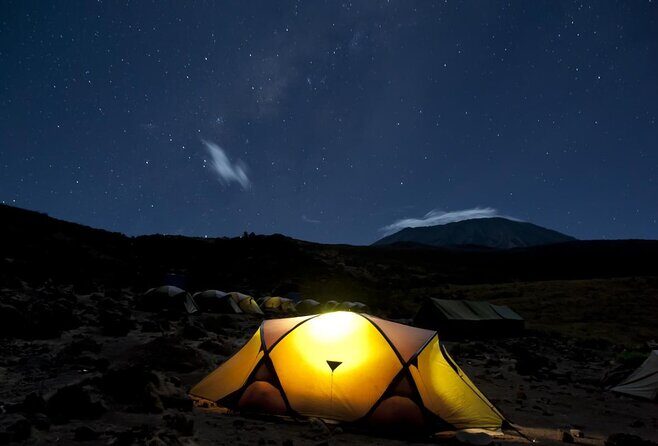
Machame earns its reputation because it doesn’t feel like one long, identical slog. You move from rainforest into moorland, then into a rocky semi-desert world near Lava Tower, and finally into the alpine desert zone. That means you get constant scenery shifts—and plenty of chances to check your pace and altitude feelings before the push for Uhuru Peak.
This trip is also built around doing less logistics and more hiking. You’re not out there figuring out camp setups or meals. Guides and mountain crew run the rhythm, and you sleep in tents with mattresses, so you’re not burning energy on the basics.
Key Highlights I’d Put at the Top
- Porters carry your gear and the cook handles all mountain meals, so you can focus on your steps
- Multiple habitats in 6 days (montane forest → moorland → semi-desert → alpine desert)
- Lava Tower is the tough turning point, with scree, altitude, and symptoms that can show up for the first time
- Stella Point sunrise + a clear certificate system (green for Stella Point, gold for Uhuru Peak)
- Small groups, up to 12 travelers, which usually helps with pacing and camp flow
You can also read our reviews of more tours and experiences in Moshi.
Price and Logistics: What $2,322.06 Actually Covers
At $2,322.06 per person, you’re paying for a full on-the-mountain support team plus park and safety costs—plus the two Moshi hotel nights before and after. This is not just a “guide walks with you” price tag.
Here’s what’s included that matters in real life:
- Two nights at Springlands Hotel (before and after your climb)
- Return transport from Moshi to the start and finish points on the mountain
- Return airport transfers to JRO (Kilimanjaro International Airport)
- Qualified guides and mountain crew (guides, porters, cook, waiter salaries)
- National park fees and rescue fees
- Tents and sleeping mattresses
- Meals on the mountain (breakfast, lunch, dinner for 6 days)
- Boiled water on the mountain
- Pulse oximeters and a first aid kit
What’s not included (and you should plan for it):
- Tips for guides/porters/cook/waiters
- Your climb gear
- Visas
- Emergency oxygen (explicitly not included)
- A single room supplement at Springlands Hotel (except on the 1-person rate)
From a value standpoint, the biggest “you’re getting your money’s worth” items are usually the crew, meals, and safety support. Machame is physically demanding, and you’ll be grateful your day isn’t split between hiking and running camp operations.
From Moshi to Machame Gate: Rainforest hiking at 1,490 m
Day 1 starts with a briefing, then breakfast, then a drive from Moshi (910 m) up toward Machame village (1490 m). Depending on the road conditions, you might be able to drive closer to Machame Gate, or you might walk the extra 3 km (muddy) about an hour.
After registering at the gate office, you begin the ascent into montane forest. Your day’s hiking time is listed at around 7 hours covering about 18 km. You’ll get a lunch pack at the gate.
What I like about day 1 is that it gives you time to warm up without immediately throwing you into the most extreme altitude pressure. You’re still climbing, but the rainforest setting usually makes the hike feel less like a gear-struggle and more like a slow transition into the mountain world.
Practical note: your body can feel “fine” on day 1. That doesn’t mean altitude won’t catch up later—so treat day 1 as pacing practice, not a race.
Day 2: Shira Plateau and those glacier views
Day 2 climbs from Machame Camp (2,980 m) to Shira Camp (3,840 m) over roughly 6 hours and about 9 km. The route first climbs from the forest into moorland with a gentler gradient, then up onto the Shira plateau.
A standout detail here: you should be able to see the Western Breach and its stunning glaciers in an easterly direction as you gain height. That’s one of those moments that helps when your breathing starts to feel different.
Sleeping at Shira Camp can be brutal. The itinerary notes that it’s exposed and can be colder than the previous night, with temperatures dropping to well below freezing. This is the day when I’d make sure your cold weather system actually works: hat, gloves, insulated layers, and sleeping setup you can trust.
If you’re the type who feels tempted to “tough it out” at night—don’t. Cold steals energy, and energy is what you’ll need later.
Day 3: Lava Tower (4,630 m) and the hardest middle day
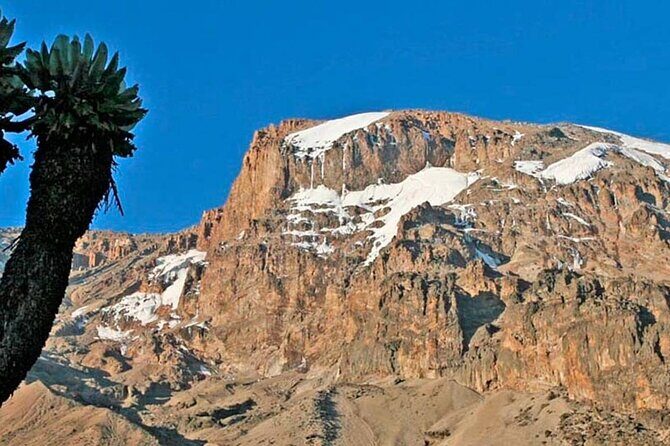
Day 3 is where Machame starts to feel serious. You go from Shira (3,840 m) toward Lava Tower (4,630 m), then down to Barranco Camp (3,950 m). Expect about 7 hours and roughly 15 km.
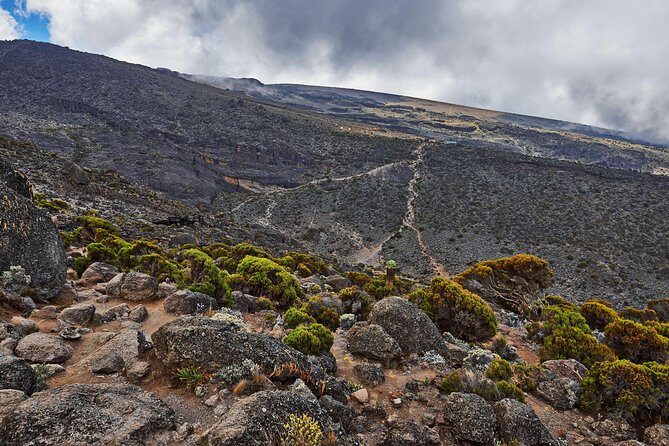
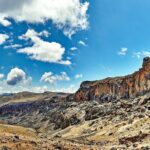
Habitat shifts again into semi-desert, with rocky terrain around Lava Tower. The itinerary calls Lava Tower day “definitely the toughest day so far,” and it’s not just because of the mileage. After about 5 hours of walking, some climbers typically experience symptoms like breathlessness, irritability, and headaches.
That’s not a scare tactic—it’s the altitude catching up. If you feel any of those early warning signs, stay calm, report them, and follow your guide’s pacing plan. The presence of pulse oximeters and a first aid kit in your included gear makes it easier for the team to monitor you.
You’ll have lunch around the higher area, then descend about 680 m back down to the Barranco camping zone and reach high altitude again around 4,600 m. In other words: you don’t get a “full reset” day. You’re moving into a pattern—up, down, up again—that tests both endurance and recovery.
Day 4: Barranco into Karanga Valley to Barafu’s exposed ridge
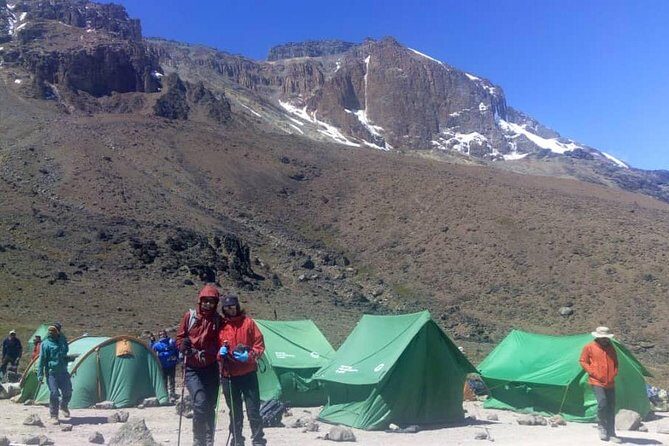
Day 4 runs from Barranco to Karanga Valley, ending at Barafu Camp (4,550 m). The hiking time is about 7 hours and around 13 km.
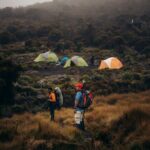
This day comes with a big atmosphere shift. The tents are pitched on a narrow, stony ridge, and you’re dealing with ever-present gales. The itinerary even flags it as dangerous, and it recommends familiarizing yourself with the terrain before dark to avoid accidents.
Then comes the summit strategy. The summit is further up by about 1,345 m, and the plan is a final ascent the same night. You’ll prepare equipment and thermal clothing, including replacing headlamp and camera batteries and making sure you have spares available. The itinerary also advises carrying your water in a way that helps prevent freezing.
What I like about the structure is how it forces a focused “gear and readiness” window. You’ll be tired, but it’s also when small mistakes matter—especially around headlamp power and cold-water planning.
Day 5: The midnight push to Uhuru Peak and Stella Point sunrise
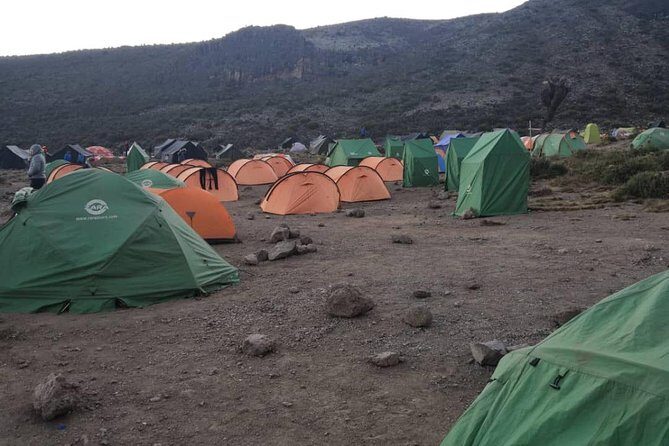
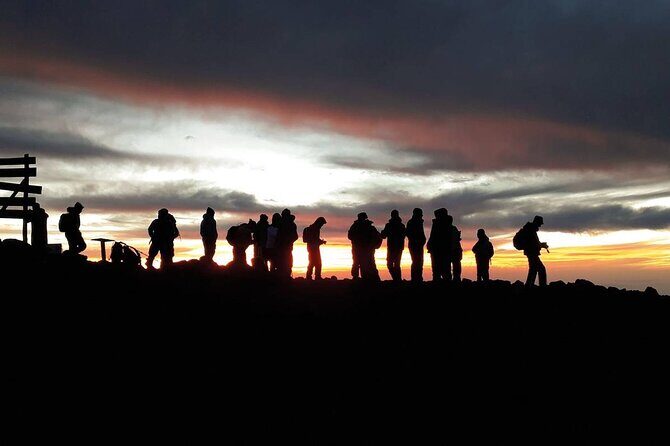
Day 5 is the make-or-break day. You wake around 23:30, then have tea and biscuits before you start hiking into the night.
The ascent heads toward Stella Point on the crater rim. The itinerary lists a 6-hour walk to Stella Point and calls it mentally and physically the hardest part for many climbers.
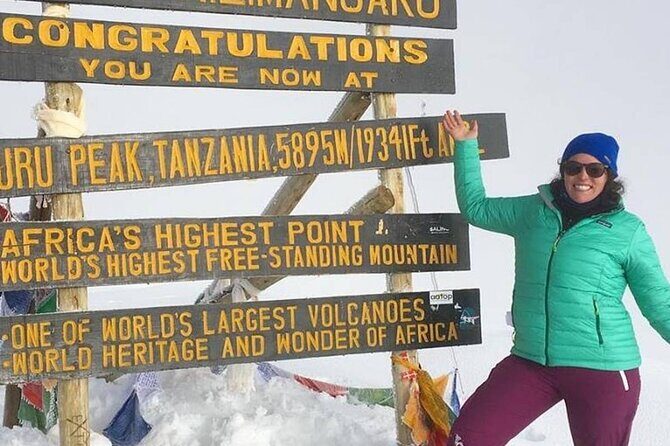
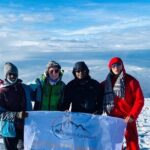
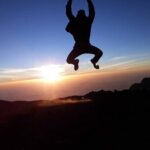
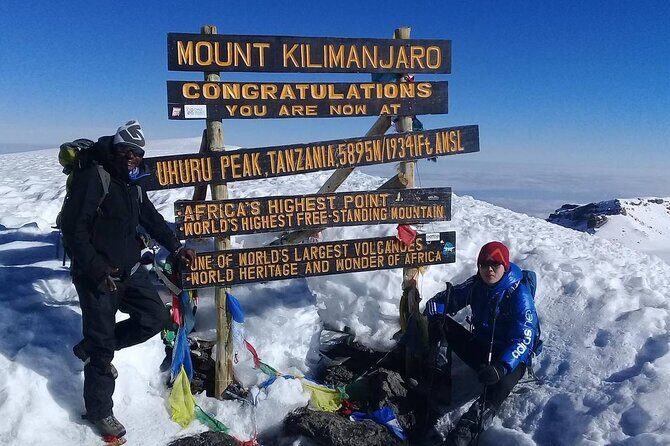
At Stella Point (5,685 m), you take a short rest and you’re rewarded with the sunrise that many people say is the best they’ll ever see. Then you continue the final movement that leads to Uhuru Peak (5,895 m). The hike time to reach Uhuru Peak is listed at around 8 hours, with a descent of about 7–8 hours afterward.
A detail I’d take seriously: this isn’t a gentle “walk uphill.” You’ll be moving over heavy scree, and you’ll be cold and running on limited fuel. The value of having a full support crew here is obvious: someone is managing camp, meals, and safety gear while you focus on the climb.
Day 6: Mweka descent, hot lunch, and green vs gold certificates
Day 6 starts with breakfast and then you head down from Mweka Camp (3,100 m) to Mweka Gate (1,980 m). The listed hiking/descend time is about 3 hours over roughly 15 km through forest.
From Mweka Gate, you continue down into the Mweka village (often muddy and a long hour walk). Then you drive to Springlands Hotel and get a hot lunch. The tour includes overnight at Springlands, giving you a real chance to recover without rushing.
Certificates are handled at Springlands Hotel. Climbers who reached Stella Point (5,685 m) receive green certificates, and climbers who reached Uhuru Peak (5,895 m) receive gold certificates.
If your goal is the peak, that’s the number to chase. But Stella Point still counts as a major milestone in this program—and it’s part of how the team tracks success on summit day.
Who This Trip Fits Best (and who should rethink it)
This Machame experience is a strong fit if you:
- Have moderate physical fitness and can handle long days
- Like structured guidance and want logistics handled for you
- Want dramatic scenery changes in a short window
- Can follow cold-weather planning (night temps can be far below freezing)
It might be less ideal if you:
- Need a lot of rest time to recover between big altitude moves
- Are prone to anxiety in exposed conditions (Barranco ridge gales are real)
- Don’t want to do a demanding summit day
Your success will come down to pacing and stamina, not toughness theater. Prep matters too—your team can set you up with support, but your body still has to do the work.
The Biggest Wins (Based on What Keeps Coming Up)
Even without getting into any single person’s story, certain strengths are consistently visible in how this program runs:
- Support that reduces decision fatigue: when porters handle gear and a cook handles meals, you can keep your mind on breathing and rhythm.
- Good camp organization: dinner tents, mattresses, and the overall camp setup help you recover enough to keep going.
- Team effort on summit day: multiple guides earn praise for pushing the group through the hardest hours, and that kind of leadership can matter a lot when conditions get long and cold.
- Food quality and variety: people consistently highlight that the meals are better than you’d expect in a high-camp setting, which helps you eat when appetite is low.
And yes, one drawback shows up too: the route is tough, and some people feel the schedule can feel rushed in the mornings. That doesn’t mean it’s chaotic. It means Machame asks you to be ready to move when it’s time to move.
Should You Book This Machame Kilimanjaro Trek?
If you want a classic Kilimanjaro route with big scenery payoffs and strong in-the-field support, this Machame option is easy to recommend. The price is high, but a lot is baked in: meals, tents, guides and crew, national park and rescue fees, and safety monitoring tools like pulse oximeters.
I’d book it if your training goal is realistic: hiking fitness for a hard week, plus cold-weather readiness for night camps and a late-night summit push.
I’d hesitate if you’re not confident about harsh cold and long altitude days. In that case, you might consider building in more time for acclimatization (if you have the flexibility), because Machame moves quickly by design.
FAQ
How long is the Machame Route trek?
The itinerary is listed as 6 days (approx.), with long hiking days and a late-night summit attempt.
What is included in the mountain meals?
All meals on the mountain are included: breakfast (6), lunch (6), and dinner (6), plus boiled water on the mountain.
Do I need to carry my own equipment?
Your climb is supported by porters. The tour is set up so guides and the mountain crew handle your gear and camp supplies while you hike.
What’s the summit certificate system?
You receive green certificates for reaching Stella Point (5,685 m), and gold certificates for reaching Uhuru Peak (5,895 m).
Do I get hotel nights in Moshi?
Yes. The tour includes two nights accommodation at Springlands Hotel in Moshi—one before and one after the climb.
Is emergency oxygen included?
No. Emergency oxygen is not included.