REVIEW · MOSHI
Mountain Kilimanjaro Climbing 7 Days Rongai Route
Book on Viator →Operated by Exceed Expectations Tours & Safari · Bookable on Viator
Kilimanjaro feels wilder from the north. This 7-day Rongai climb out of Moshi brings you past real wilderness near the Kenyan border, then connects with the more famous Kibo area for the summit attempt. I like that the pacing is built around acclimatization, with multiple stops that give your body time to adjust. One thing to consider: the final day is brutally long, and the midnight start means you need good cold-weather stamina and patience.
Rongai also has a practical advantage if you’re climbing in a wetter season. The north side typically gets less precipitation, and the route sees less foot traffic than the busier Marangu option. I like that it’s described as moderately difficult and a good fit if you have less backpacking experience than hardcore trekkers—but you’ll still be walking uphill for days. The main drawback is that scenery variety is more limited than some western routes, so your “wow” moments lean heavily on crater views and altitude, not constant changes of terrain.
Overall, this is the kind of Kilimanjaro trip that rewards calm, steady hiking and a respect for altitude. If you like quieter places, big views to the Kenyan plains, and a well-run team, you’ll probably feel at home on Rongai.
In This Review
- Key things I’d watch for on Rongai
- Why the Rongai Route makes sense from Moshi
- Day 1: NaleMuru to Simba Camp at 2625m
- Day 2: Second Cave at 3450m plus acclimatization time
- Day 3: Moorland to Kikelewa caves near 3630m, with Mawenzi on the horizon
- Day 4: Steep grassy slopes, Mawenzi Tarn Hut, and more altitude prep
- Day 5: The saddle between Mawenzi and Kibo, then a high-camp reset
- Day 6: Midnight ascent to Gillman’s Point and Uhuru Peak at sunrise
- Day 7: Descent through moor zone to Mandara Hut and back to Moshi
- Value, group size, and the human touch from Exceed Expectations Tours
- Timing, fitness, and what “moderately difficult” really means
- What you’ll remember most on Rongai
- Who should choose this 7-day Rongai trip
- Should you book the Rongai Route with Exceed Expectations Tours & Safari?
- FAQ
- How long is the Kilimanjaro climb on the Rongai route?
- Where does the Rongai route start, and what time does the experience begin?
- Is pickup from Moshi included?
- What fitness level do I need?
- How many people are in the group?
- Are park/admission tickets included?
- How does the summit day work?
- What about tipping after the climb?
- Can I cancel and get a full refund?
Key things I’d watch for on Rongai
- Quieter northern start near the Kenyan border, with lower traffic than Marangu
- Acclimatization built into the route, including cave stops and extra daytime walking
- Camps placed for altitude sanity, from moorlands to Mawenzi country and into the high saddle
- A classic summit rhythm: Hans Meyer Cave, Gillman’s Point, then Uhuru Peak at sunrise
- Descending the Marangu side to finish with tropical forest passing through Mandara Hut
- Small-group feel (maximum 15 travelers) plus hands-on support from Exceed Expectations Tours & Safari
Why the Rongai Route makes sense from Moshi
Starting from Moshi, Rongai is one of the more thoughtful ways to plan Kilimanjaro. This route approaches the mountain from the north, close to the Kenyan border, which changes the entire vibe. You trade crowds for distance—you’ll spend days that feel more remote before you join the Kibo area for the summit window.
If your trip timing pushes you into rainy-season months, Rongai is often picked for a reason: the north side receives less precipitation than some other approaches. That doesn’t mean you’ll get guaranteed dry weather, but it can make trail conditions more manageable and help you keep moving when fog or mist rolls in.
Rongai is also good value if you care about route logic. It’s recommended to take seven days (with six as the minimum), and the extra day isn’t “wasted time.” On Kilimanjaro, time is part of your safety strategy because acclimatization is what helps you stand a chance at a summit. You’ll see that theme repeated all the way through the camp-to-camp plan.
Finally, the trade-off is honest: Rongai’s scenery isn’t described as as varied as the western routes. Instead of constant visual reinvention, you get a steadier story—farmland and pine forests, moorland and lunar desert, and then the crater rim drama that most people come for.
A few more Moshi tours and experiences worth a look
Day 1: NaleMuru to Simba Camp at 2625m
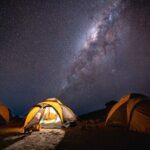
Your day begins with a drive from Moshi to the village of NaleMuru, the starting point for Rongai. The early hike is through farmland and pine forests, which is a nice way to ease into the altitude. It’s not about pushing hard on day one. It’s about getting into rhythm, getting used to walking with a pack, and letting your breathing settle.
This is also where you might get your first wildlife surprise. The route passes chances to see colobus monkeys, and if you’re lucky, elephants or buffalo. Even if you don’t spot anything, this initial section matters because it sets expectations: you’re not just “climbing a mountain,” you’re moving through ecosystems that change with elevation.
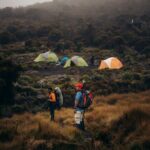
You’ll finish at Simba Camp, set at the edge of the moorland zone at 2625m, with wide views over the Kenyan plains. Those plains views are an early preview of what Rongai does well: you’re often looking out across distance, not just up at steep ground.
Practical tip: start slow and don’t treat day one like a warm-up hike. Save your energy for later days when the route turns steeper and colder.
Day 2: Second Cave at 3450m plus acclimatization time
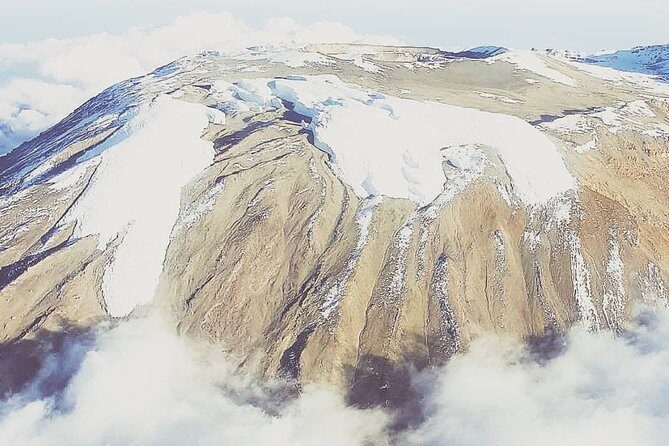
Day two starts with a steady ascent to the Second Cave at 3,450m. This is one of the first “crater rim” days, where the views start to feel specific. The plan calls out Kibo and the Eastern ice fields on the crater rim, which is a big deal because it pulls your focus to what’s coming.
After a hot lunch, you’re not rushed into “more climbing” immediately. You get free time at camp or an option for an acclimatization walk to Third Cave. That choice is valuable. Sometimes you feel great and want to move. Other times you want to rest, hydrate, and let your body catch up.
The overall logic of day two is acclimatization without chaos. You gain altitude, you see the high-mountain scenery, and you still get recovery time. That balance is what helps make Rongai feel less like a forced march.
Day 3: Moorland to Kikelewa caves near 3630m, with Mawenzi on the horizon
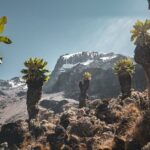
Leaving the pine forest behind, the climb continues on moorland. This day is described as a steady ascent, and it’s where the route begins to feel “high” in a more dramatic way. You get superb views of the Eastern ice fields on Kibo’s crater rim, plus the sense that you’re not far from the big altitude zones.
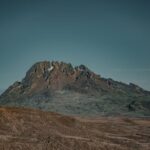
Then you strike out on a smaller path across moorland toward the jagged peaks of Mawenzi, Kilimanjaro’s second volcano. Mawenzi is a visual shift—more jagged and rugged than the smoother lines people imagine when they think of Kilimanjaro.
You’ll camp in a sheltered valley near the Kikelewa caves at 3630m. That matters. At these elevations, shelter and reduced exposure help you sleep and recover. This is also a day where you’ll likely understand why Rongai is often recommended for less experienced backpackers: it doesn’t require technical climbing, but it still delivers variety through navigation and high-altitude hiking.
What to expect: it can feel like you’re walking across an open, windy world. Your best move is to keep your pace steady and your posture relaxed.
Day 4: Steep grassy slopes, Mawenzi Tarn Hut, and more altitude prep
Day four starts with a short but steep climb on grassy slopes. The reward is a superb view of the Kenyan plains to the north—one more reminder that Rongai isn’t only about climbing into cloud. It’s about looking out while you climb.
Then you head to Mawenzi Tarn Hut directly below the towering cliffs of Mawenzi. The cliffs add drama and a sense of scale. After you arrive, you have time to rest or explore the surroundings to help with acclimatization.
This day is less about sprinting and more about making your body ready for the high saddle and summit night. If you feel tired, it’s not a sign you’re failing. It’s normal. Altitude has its own timetable.
Day 5: The saddle between Mawenzi and Kibo, then a high-camp reset
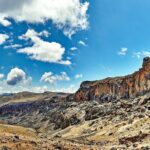
On day five, you cross the lunar desert of the saddle between Mawenzi and Kibo. This is where the terrain starts feeling otherworldly—open, stark, and exposed. The plan calls it “spectacular,” and I think that’s the right word: it’s the kind of terrain that makes you look at your legs and also at the horizon.
After a couple hours trekking, you reach the high camp with Kilimanjaro’s summit area in the background and your final trail stretching out before you. This is the day’s emotional payoff: after days of climbing, you finally see the summit line clearly.
But the real point of day five is preparation. Once you arrive, the remainder of the day is spent resting, with an early night planned. That’s not optional. Summit night starts around midnight on day six, and your ability to function will depend on sleep and calm.
Practical note: if you tend to stay awake worrying, plan for it. Bring what helps you settle down (warm layers, ear protection if needed, and a hydration rhythm you can repeat).
Day 6: Midnight ascent to Gillman’s Point and Uhuru Peak at sunrise
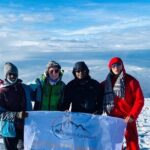
This is the signature day. You begin the final ascent around midnight—long and strenuous. You pass Hans Meyer Cave at 5220m, and the climb gradually rises as you move toward the crater rim.
At sunrise, you reach Gillman’s Point (5681m). This is when the sun starts warming the land, and you’ll likely feel the cold lift from your mood even if your body still feels it. Then you continue for another 1–2 hours to Uhuru Peak (5895m).
The plan is clear about rewards and recovery. After returning to Kibo Hut, a warm meal is waiting, followed by a 1–2 hour break before you continue down to Horombo Hut. That meal isn’t just a comfort—it’s fuel at a moment when you’ll need it to finish the day and stabilize for sleep.
Reality check: this day is long enough that mindset matters as much as fitness. You’ll climb in darkness, then shift into sunrise, then keep going. The “win” isn’t only reaching the top—it’s doing the whole process without panic.
Day 7: Descent through moor zone to Mandara Hut and back to Moshi
Day seven is where you trade altitude drama for leg-friendly motion, but don’t expect it to feel easy. The last stage passes through heath and moor zone to Mandara Hut (2700m), where a warm lunch is waiting.
Soon after, you head back through tropical rainforest. This is one of Rongai’s underrated strengths: the finish isn’t just a gray grind down. You get a transition back into living, green terrain.
After about 6 hours trekking, you return to the Kilimanjaro National Park Gate at 1860m. Then you say goodbye to your mountain guides and shift to a short transfer back to your hotel in Moshi. After that, it’s basically a celebration moment—warm shower, food, rest, and a proper sense of accomplishment.
One practical note: the plan emphasizes tipping guides, cooks, and porters. If you keep that in mind early, you won’t be scrambling at the end when everyone is exhausted.
Value, group size, and the human touch from Exceed Expectations Tours
This climb is run by Exceed Expectations Tours & Safari. You can plan with the confidence that pickup is offered, and the tour uses mobile ticketing (handy if you hate last-minute printouts).
Price-wise, at $2,628.72 per person, you’re not paying “budget trekking” money. You’re paying for the whole ecosystem that makes Kilimanjaro work: guides, logistics, and the infrastructure that keeps you fed and moving between camps. The good part is that the day-by-day structure is built around the summit goal and acclimatization, not just moving you from point to point.
Group size is capped at 15 travelers, which tends to help keep the experience more manageable than large group formats. Smaller groups often mean less crowding at shared moments—like when you’re resting, checking in, or adjusting layers.
There are also clear signs of support quality from how the operator communicates. Oscar was named in feedback as a key contact who answered questions in a WhatsApp group and helped customize a longer Tanzania plan alongside the climb. Names like Mtei also show up in the same context, reinforcing that you’re working with a team, not a faceless booking desk.
If you like planning support: this kind of communication matters. It reduces uncertainty, which matters a lot when you’re spending days at altitude.
Timing, fitness, and what “moderately difficult” really means
The tour is aimed at people with moderate physical fitness. That’s a good sign for most travelers because Kilimanjaro isn’t about being an athlete—it’s about being consistent. You’ll hike for hours each day, and elevation will do the rest of the work.
That said, moderately difficult still means you’ll feel it. Day six is a long nighttime push. Day five and day four both set you up for that. So the question isn’t whether you can climb—you likely can with training. The real question is whether you can keep moving slowly when your lungs feel challenged.
If you want the best odds, focus on:
- steady walking practice before you go
- building comfort with cold early mornings or nighttime starts
- hydration discipline (altitude makes “dry” sneak up on you)
You’ll also want to be mentally ready for a lot of early or late movement. The meeting point lists a start time of 12:00 am, which matches the midnight summit rhythm on day six and indicates the trip schedule can include very early starts.
What you’ll remember most on Rongai
Rongai is built for people who like honest mountain moments: views that appear in stages, camp nights that feel high and exposed, and the feeling of being farther away from noise than most people expect on Kilimanjaro.
The early “big view” moments come from the crater rim sights on days two and three. The emotional peak comes from sunrise at Gillman’s Point and then reaching Uhuru Peak. The final satisfaction is coming down into rainforest and finishing at the gate with a warm lunch waiting at Mandara Hut.
And for people who care about atmosphere, the north-side approach gives you that extra quiet. You get wilderness days before you join the more famous Kibo area. If you’re the type who enjoys the journey more than the checkbox, Rongai fits.
Who should choose this 7-day Rongai trip
You’ll likely love this climb if:
- you want a quieter route instead of the busiest corridors
- you’re climbing at a time when rain is more likely and you want the north-side advantage
- you want a structured pace with acclimatization moments built in
- you’re okay with a summit day that’s long, cold, and mentally demanding
- you want a smaller-group feel (up to 15) and solid operator support
It may not be the best match if:
- you’re strongly sensitive to cold and nighttime starts
- you need tons of constantly changing scenery every day (Rongai is more steady and wilderness-driven)
- you’re not prepared for a full summit cycle rather than a shorter attempt
Should you book the Rongai Route with Exceed Expectations Tours & Safari?
If you want Kilimanjaro without the main-road crowds, Rongai is one of the smartest ways to do it. The route structure gives you acclimatization time, meaningful crater views, and a summit day that’s planned around sunrise. With pickup included, mobile ticketing, and a small-group cap, it’s also set up for practical travel comfort.
I’d book it if you can handle the final push and you value quiet, wilderness-feeling days. I’d think twice if you want a route that’s all variety and low effort, because day six is serious work.
Go in with a steady pace mindset, plan your cold layers, and trust the rhythm. If you do that, Rongai can feel like Kilimanjaro in its more remote, less crowded form.
FAQ
How long is the Kilimanjaro climb on the Rongai route?
The trip runs for 7 days (approx.). The route has a minimum of six days, and seven days are recommended.
Where does the Rongai route start, and what time does the experience begin?
You’re driven from Moshi to the village of NaleMuru for the start of the Rongai route. The meeting point start time is listed as 12:00 am.
Is pickup from Moshi included?
Yes. Pickup is offered.
What fitness level do I need?
The tour states that travelers should have a moderate physical fitness level. The route is described as moderately difficult and recommended for those with less backpacking experience.
How many people are in the group?
The tour has a maximum of 15 travelers.
Are park/admission tickets included?
Yes. Admission ticket is included for the listed day activities.
How does the summit day work?
You begin your final ascent around midnight. You pass Hans Meyer Cave (5220m), reach Gillman’s Point at sunrise (5681m), and then continue to Uhuru Peak (5895m). Afterward you return to Kibo Hut for a warm meal, then continue descent to Horombo Hut.
What about tipping after the climb?
The plan advises tipping guides, cooks, and porters since you’ll be leaving them at the end of the trek.
Can I cancel and get a full refund?
Yes. There is free cancellation, and you can cancel up to 24 hours in advance for a full refund. If you cancel less than 24 hours before the experience’s start time, the amount paid is not refunded.
![3 Days Nyerere NP [Selous GR] Game, Walking and Boat - Day 2 full-day game drive: big mammals and serious bird time](https://i.exploringtanzania.com/wp-content/uploads/3-days-nyerere-np-selous-gr-game-walking-and-boat.jpg)