REVIEW · MOSHI
Best 5 Days Kilimanjaro Bike Trek Tour via Marangu Kilema Route
Book on Viator →Operated by #1 Best Kilimanjaro Bike Tour Operators | BURIGI CHATO SAFARIS C.O L.T.D · Bookable on Viator
Cycling toward Kilimanjaro feels almost unreal. This 5-day bike trek out of Moshi follows the Kilema route, built for the specific goal of getting you as high as possible on a mountain bike before the summit push. You’ll be in the hands of Burigi Chato Safaris, with gate transfers, meals, and a guided plan aimed at acclimatization.
Two things I really like about this experience are the practical logistics and the route design. You start with clear, structured movement from Kilema Gate (1,950m) up to mountain huts, and the day-by-day rhythm is meant to reduce the guesswork on summit night. I also like that the package covers a lot of the hard-to-organize bits: park fees, meals, and transfers, so you’re not spending your energy counting receipts at altitude.
One consideration: this is not a casual “bike tour.” You should expect big elevation, rough trail, early starts, and mechanical risk. Some riders warn about flat tires unless your bike is truly up to the job, so check your setup (or plan to handle repairs) before you go.
In This Review
- Key Highlights You’ll Care About
- Why Bike Up Kilimanjaro Via Kilema From Moshi?
- Route Strategy: Kilema Gate to Horombo, Then Kibo and Summit Night
- Day 1: Kilema Gate Check, 16 km to Horombo, and Your First Altitude Lesson
- Day 2: Alpine Desert Riding to Mawenzi Hut and Back (10 km of Real Work)
- Day 3: Kibo Hut Arrival, Summit-Path Orientation, and That Summit-Night Pressure
- Day 4: 4 a.m. Summit Zigzags, Hans Meyer’s Cave, Gilman’s Point, Then Bike to Uhuru Peak
- Day 5: Descent to Kilema Gate, Check-Out, and Back to Moshi
- Price and Logistics: Does $3,292 Make Sense for a 5-Day Bike Trek?
- Fitness, Group Size, and Bike-Trek Reality Checks
- Should You Book the Best 5 Days Kilimanjaro Bike Trek via Marangu Kilema Route?
- FAQ
- How long is the Kilimanjaro bike trek?
- Where does the tour start and end?
- What’s included in the price?
- What is not included?
- What fitness level do I need?
- Is a bike provided or is bike hiring included?
- What happens if the weather is bad?
Key Highlights You’ll Care About
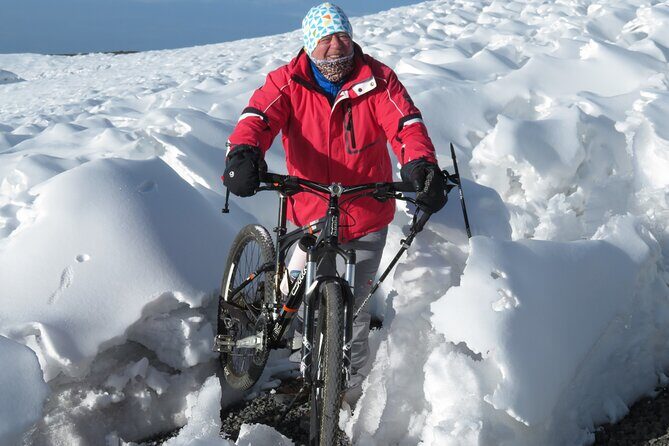
- Kilema route geared for bike-to-summit ambitions: the operator states it’s the only bike-trek route that can reach the top by mountain bike.
- Summit is a mixed approach: you bike portions, then on summit night you hike sections and later ride the descent.
- Experienced, organized guiding: guides travel with you and coordinate using radios, including escort support for safety on larger groups.
- Hut-to-hut acclimatization rhythm: the plan spreads effort across Horombo, Kibo, and the summit approach.
- You get a full package of meals and park access: breakfast, lunch, and dinner are included, and fees and taxes are covered.
Why Bike Up Kilimanjaro Via Kilema From Moshi?
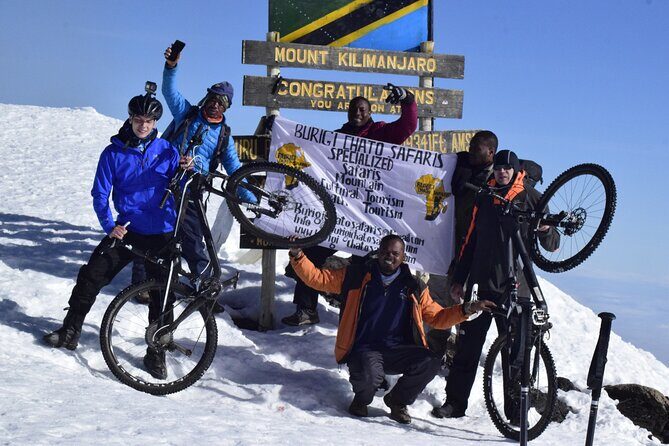
Let’s be honest: Kilimanjaro is already a serious undertaking, even when you walk. Turning it into a bike trek changes the feel. You trade the slow, steady grind for alternating chunks of riding and guided hard effort, where your legs still have to handle altitude and fatigue.
This particular trip is built around the Kilema route, accessed from the Marangu side. It’s popular because it’s one of the few approaches where the concept of reaching the top by bike isn’t just marketing. The operator emphasizes that cyclists use the route up through the mountain hut system and connect with porters at Horombo Hut for the final push.
Starting from Moshi matters too. You’re not trying to solve a complex arrival the day before the climb. Your tour includes airport pick-up and drop-off, plus gate transfer. That means you can focus on getting your body ready rather than getting lost in paperwork and timing.
If you love cycling and want a workout that actually tests you, this is a strong fit. If you want smooth downhill fun and minimal strain, you’ll likely feel disappointed. This is a summit attempt with bikes, not a bike park experience.
You can also read our reviews of more cycling tours in Moshi
Route Strategy: Kilema Gate to Horombo, Then Kibo and Summit Night
The backbone of this trek is simple: move upward in stages, sleep at mountain huts, and reserve the hardest effort for the planned summit window.
Here’s the core pattern you’ll feel across the five days:
- Ride uphill sections from gate to huts
- Use rest and food to recover enough for the next push
- Gradually increase altitude exposure while staying on a route designed for acclimatization
- On summit night, accept that biking pauses and controlled hiking takes over
The operator’s plan is very “do the work, then rest.” After you arrive at each hut, you’re expected to prepare. That includes checking your bike, packing essentials, and getting your thermals ready for colder conditions. You’ll also have porters working with you, especially as the route narrows for the summit push.
One detail worth noting: you’re not alone on the bike sections. The guided setup is designed for coordination, and in larger groups there can be escort vehicles plus radio communication between guides. That’s the difference between feeling like you’re tagging along and feeling like you’re supported.
Day 1: Kilema Gate Check, 16 km to Horombo, and Your First Altitude Lesson
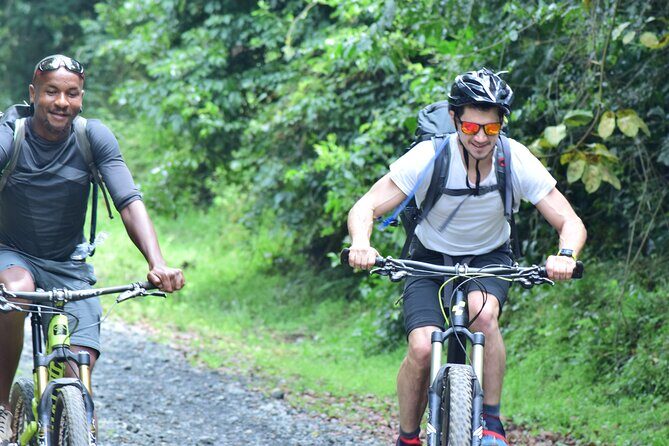
Day 1 is the “setup and acclimatize” day. You meet your guide and transfer to the Marangu Gate (about 45 minutes). Once you reach the park area, you register at the Park office after signing in at Marangu Gate. Then you drive on to the Kilema Gate and start your ride.
Before the wheels start spinning, you do what matters: make sure your day-pack is stocked and your mountain bike is ready. You’re expected to have drinking water, your lunch pack, and extra clothing. This isn’t a throwaway moment. In the Kilimanjaro zone, cold, fatigue, and trail conditions turn small oversights into big problems fast.
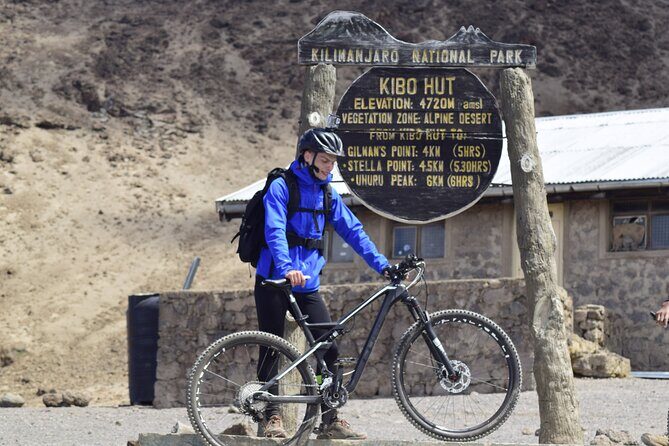
Then you bike the first section: 16 km from Kilema Gate (1,950m) to Horombo Hut. The ride time is listed at about 6 hours, so you’re not speed-running this. You’ll feel the altitude shift quickly, even before you reach the higher desert zones.
What makes Day 1 special is that it’s the first “real” test of how your body responds to effort at elevation. What makes it slightly tricky is that it’s early in the trip, so you’ll need to pace. If you go hard on Day 1 like it’s a flat road ride, you’ll pay for it later.
Day 2: Alpine Desert Riding to Mawenzi Hut and Back (10 km of Real Work)
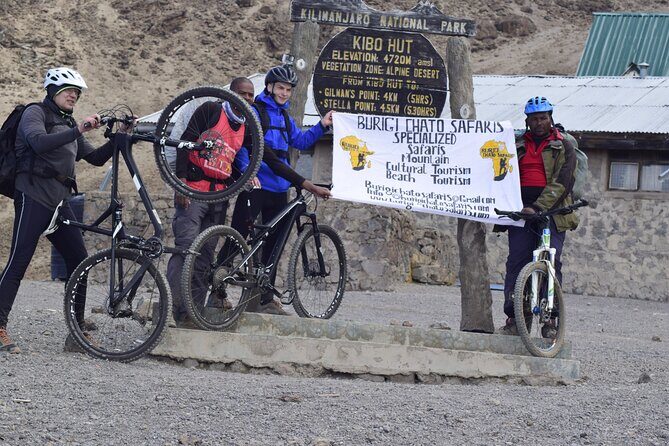
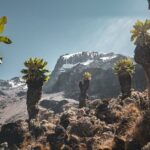
After breakfast, you head out into the high terrain. Day 2 is described as 90% riding through Alpine desert vegetation, with some sections that can involve a small stone surface. You ride toward Mawenzi Hut and then return to Horombo Hut.
The cycling distance is listed around 10 km, with a total time of about 5 hours. That might sound short if you’re used to long rides back home. At altitude, and on a rougher surface, 10 km can feel longer than you expect.
Two practical things to keep in mind:
- You’ll likely ride with the constant awareness of traction. Small-stone sections can be tiring for your hands, arms, and legs.
- You’re building a rhythm. Day 2 is where you learn how to keep effort controlled so you don’t burn your summit legs too early.
From a value standpoint, Day 2 is also a good example of what you’re paying for. This isn’t just a logistics package and a hotel. You’re getting guided mountain-specific pacing and a plan that uses the landscape’s altitude zones intelligently.
If you enjoy the challenge of technical climbing and you want your cycling to feel meaningful, Day 2 is a highlight.
Day 3: Kibo Hut Arrival, Summit-Path Orientation, and That Summit-Night Pressure
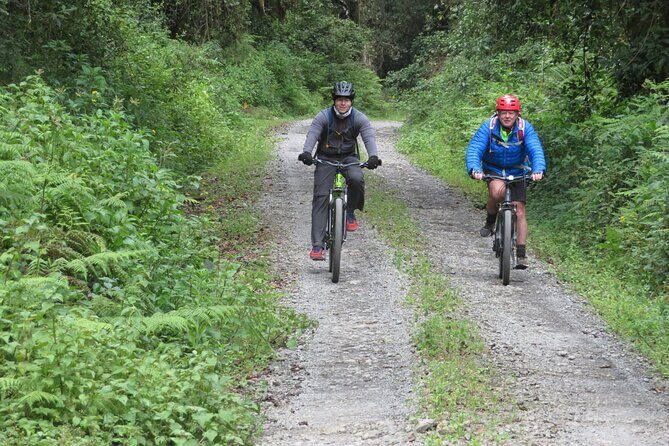
Day 3 starts with an early routine: wake up, make sure your duffel bags are packed, then meet your guide for the ride back upward toward Kibo Hut.
The ride has a “trail building” feel. The plan notes that the early part includes a short climb, and then you get a better trail experience on the final segment. You’ll reach Kibo Hut, stop for lunch, and then shift into rest-and-prepare mode.
Here’s one detail that matters for your mindset: around 16:00, depending on how you feel, you might be able to hike partially up the summit path to orient yourself for the night attempt. That means Day 3 is not only about riding—it’s about mental preparation. At this altitude, nerves and cold can hit hard, and knowing what the next stage feels like can calm you down.
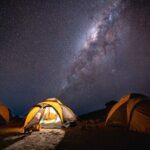
Kibo Hut is described as a stone-built block house with bunk beds for 60 climbers. That’s important. You’re not just sleeping outdoors. You’re dealing with the shared realities of mountain huts: cold air, early waking, and a general need to manage your energy for the summit push.
The trip plan sets up your final ascent to start later that same night. That means your job on Day 3 is to:
- eat well
- keep warm
- prepare gear you’ll actually use at night
- avoid turning rest time into a long, draining delay
This day can be emotional for the right reason: you’re close enough to feel the goal, but far enough that you still need patience.
You can also read our reviews of more hiking tours in Moshi
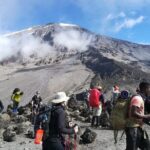
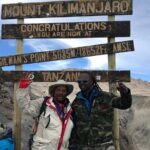
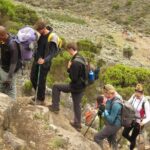
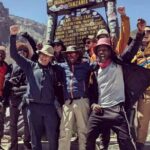
Day 4: 4 a.m. Summit Zigzags, Hans Meyer’s Cave, Gilman’s Point, Then Bike to Uhuru Peak
If Day 3 is preparation, Day 4 is execution.
You’re awakened around 4:00 a.m. by your guides. Then you begin the summit approach: a zigzag trek up steep ground described as a long screen slope. The plan indicates that after about two hours, you reach Hans Meyer’s Cave. From there, the gradient gets steeper.
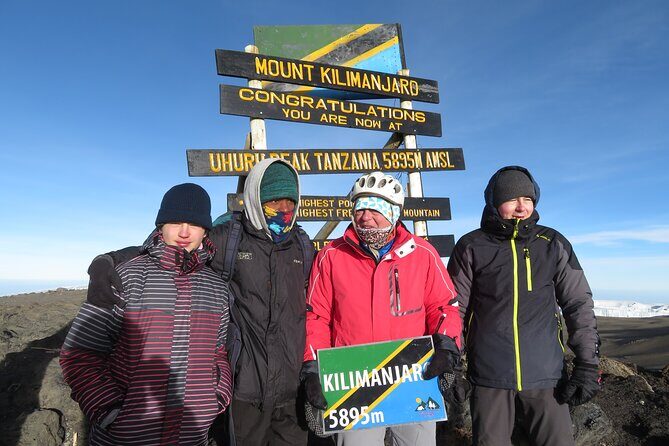
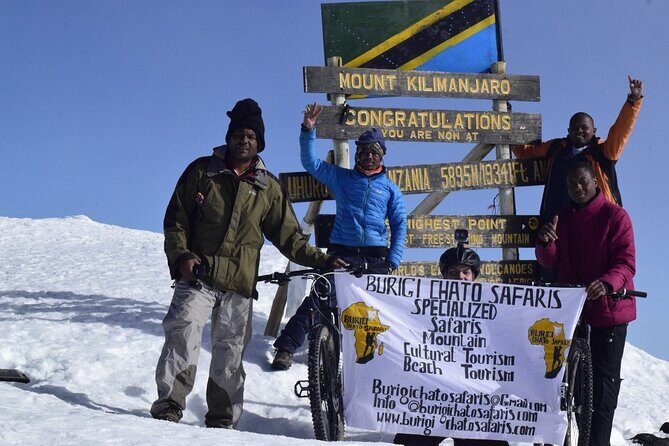
After roughly another three hours, you reach Gilman’s Point. Then comes one of the key contrasts of this bike trek: you take your bike from the porters and ride to Uhuru Peak. You spend a few minutes at the top, take photos, and then continue riding down toward Stella Point.
After lunch, you ride back down to Horombo. The route description also breaks down vegetation patterns: parts of the cycling include 15% to 20% vegetation during the return segments, and other sections are described as 100% Alpine desert vegetation / ice cap.
This is the part of the trip that defines the whole value proposition. You get the rare combination of:
- summit route experience with real altitude hiking time
- the bike element that makes it different from a standard climb
- the emotional payoff of seeing Uhuru Peak without turning the whole day into a walkathon
Is it demanding? Yes. But the structure helps. When guides wake you early, guide you to named waypoints like Hans Meyer’s Cave and Gilman’s Point, and then coordinate the transition from hiking to riding, you’re getting an organized approach to something that could otherwise feel chaotic.
And if you’ve been thinking about mechanical issues: this is where you’ll be glad your bike was checked earlier and that you’re prepared for trail reality.
Day 5: Descent to Kilema Gate, Check-Out, and Back to Moshi
Day 5 is about finishing strong and getting back to normal air.
After breakfast, you ride your final downhill segment to Kilema Gate. The description notes you’ll cross zones that include alpine and rainforest environments, then you transfer to Marangu Gate for check-out. After that, you head back to your hotel in Moshi.
The cycling and transfers are listed around 2 hours, which you should interpret as the “move-day” after a full summit push. You’ll likely feel it more than you think you will. After a long, cold summit night and the riding down, the last day can feel both satisfying and strangely fast.
From a recovery perspective, Day 5 is your reward. You’re not just dropping altitude and hoping for the best. The trip plan has a defined end and returns you to Moshi with hotel support.
Price and Logistics: Does $3,292 Make Sense for a 5-Day Bike Trek?
At $3,292 per person (5 days approx.), this is not a budget add-on. The price is high enough that you should think about value, not just cost.
Here’s what’s included based on the package details:
- Private transportation for gate transfers
- Airport pick-up and drop-off
- Experienced tour guide
- Hotel accommodation before and after the trek
- All fees and taxes
- Meals: breakfast (4), lunch (5), dinner (4)
- Mobile ticket
- Group discounts
- Service animals are allowed
- Admission ticket is listed as free for the trek days
What’s not included:
- Flights
- Visa
- Medical insurance
- Personal climbing gear
- Mountain trekking bike hiring
So, where does the value come from? Mostly from reducing friction:
- You’re not managing park registration, gate timing, or multi-vehicle transfers on your own.
- Meals are covered, which matters at altitude when you don’t want to hunt for food or gamble with energy.
- You’re paying for mountain-specific guiding and a structured acclimatization schedule.
Still, you should sanity-check one big item: bike logistics. The package notes that mountain trekking bike hiring is not included. If you’re relying on them to supply everything bike-related, confirm what you’re actually getting. Some riders also mention flat tires and bike readiness as real concerns, so your bike setup is not a footnote.
If you already have strong cycling capability and want a guided, end-to-end summit attempt with hut pacing and transfers, the price can feel justified. If you’re hoping for an easy ride and lots of spare time, you’ll likely find better value in a shorter or non-summit cycling route.
Fitness, Group Size, and Bike-Trek Reality Checks
This trek is designed for people with moderate physical fitness, but moderate still means you’re committing to hard effort.
The itinerary has long days and altitude effects. Even the shorter cycling distances can feel heavy due to:
- steep gradients
- rougher surfaces
- reduced oxygen
- early starts and cold conditions
Group size is another practical point. The experience lists a maximum of 200 travelers, and in past operations people have described groups around the mid-teens with multiple escort vehicles. That suggests you could have a setup where bikes ride with guided coordination and vehicles provide backup.
Now, the bike reality check. In rider feedback, a few themes come up:
- Expect the potential for flat tires
- Going too fast can backfire on your stamina
- A proper wheel/tire setup matters, especially when trail conditions include small stones
So you should plan like this is part cycling trip and part mountain expedition. That means:
- confirm your bike condition early
- consider having a repair plan you can execute calmly
- pack sensible clothing for cold nights and wind
If you’re a strong cyclist and you like the idea of earning your turns, you’ll probably enjoy this more than you think. If your cycling experience is mostly smooth pavement, you’ll still be able to do it with good pacing, but you’ll need patience and discipline.
Should You Book the Best 5 Days Kilimanjaro Bike Trek via Marangu Kilema Route?
I’d book this if you want a Kilimanjaro experience that is genuinely different from the standard walking climb. The best reason is the combination: you bike substantial sections, you reach the summit area with a guided plan, and you’re supported with transportation, huts, meals, and route coordination.
I’d pause before booking if:
- you’re not comfortable with early wake-ups and long summit-day effort
- you’re unsure about bike suitability, since bike hiring isn’t listed as included
- you’re expecting a relaxed holiday pace rather than a real endurance challenge
If you do book, my practical advice is simple: treat this like a training event for both legs and logistics. Get your bike ready, bring the gear you personally need for cold nights, and plan to ride within your limits so you finish strong.
FAQ
How long is the Kilimanjaro bike trek?
It’s listed as 5 days approximately.
Where does the tour start and end?
It starts at 8:00 am and ends back at the meeting point.
What’s included in the price?
The package includes private gate transfer transportation, airport pick-up and drop-off, an experienced tour guide, hotel accommodation before and after, all fees and taxes, and meals (4 breakfasts, 5 lunches, and 4 dinners). It also includes a mobile ticket and offers group discounts.
What is not included?
Flights, visa, medical insurance, personal climbing gear, and mountain trekking bike hiring are not included.
What fitness level do I need?
You should have a moderate physical fitness level.
Is a bike provided or is bike hiring included?
Bike hiring for the mountain trekking bike is listed as not included, so you’ll want to arrange that separately or confirm what equipment is supplied by the operator.
What happens if the weather is bad?
The experience requires good weather. If it’s canceled due to poor weather, you’ll be offered a different date or a full refund.
If you want, tell me your cycling background (how many km you can ride comfortably and whether your bike is hardtail or full suspension). I can help you judge if this route feels like a good match and what to double-check before departure.