REVIEW · MOSHI
Kilimanjaro: Day trip -hike to Mandara Hut Kilimanjaro 2700m
Book on GetYourGuide →Operated by Kili Trips & Safari Outfitters Co Ltd · Bookable on GetYourGuide
A day on Kilimanjaro can sound intense, but this one is built for it. You’ll start at Marangu Gate (1850m), climb into montane rainforest, and reach Mandara Hut (2700m) in a single long day with lunch and wildlife spotting on the way. It’s one of the best ways to taste the mountain’s terrain without committing to a multi-day trek.
What I like most is the natural setting: towering eucalyptus, serious birdlife, and the chance to see blue monkeys and colobus monkeys as you walk. I also really value how guides handle the pace—names like Alex and Freddy come up for a reason, with attention to keeping you moving without burning you out.
The main consideration is altitude and effort. You’ll be walking for hours and gaining big elevation (close to 3000m), so it’s not for casual sneakers or anyone who’s not ready for a sustained uphill climb.
In This Review
- Key things to know before you go
- Marangu Gate to Mandara Hut: the day-trip climb in numbers
- Rainforest walking: eucalyptus shade, birds, and monkey spotting
- Maundi Crater side trip: a view break that’s worth the extra effort
- Lunch at Mandara Hut: refuel, reset, and keep moving
- Moshi logistics and the park day flow
- Price and value: what $180 buys (and what it doesn’t)
- Who this hike is best for (and who should think twice)
- What to bring for almost 3000m rainforest hiking
- Should you book this Kilimanjaro day hike?
- FAQ
- Where does the hike start and where does it end?
- How long is the hike?
- How much elevation do we gain?
- Is lunch included?
- What wildlife can you look for?
- What’s included in the price?
- What is not included?
Key things to know before you go

- Mandara Hut is the goal: a single-day climb with a rewarding break at 2700m.
- Rainforest, not scree: expect eucalyptus shade and a calmer trail feel than higher routes.
- Wildlife on your schedule: blue monkeys often appear, and colobus monkeys can call from the canopy.
- Maundi Crater adds the view factor: a short side step that frames northern Tanzania and Kenya.
- Lunch is included at the top: a real meal moment, not just a snack stop.
- Private group vibe: you’re not fighting crowds for pace, questions, or photo time.
Marangu Gate to Mandara Hut: the day-trip climb in numbers

This is a classic Kilimanjaro feel day, focused on one workable ascent. You’ll begin at Marangu Gate and climb to Mandara Hut at about 2700m. The climb covers roughly 8 km, with the hiking time typically split into 3–4 hours up and 2–3 hours down. On top of that, plan for time at the park area, photo stops, and breaks, so the whole experience stretches to about 9 hours.
What you’ll notice most is how fast the air changes as you climb. You may not feel like you’re at “summit altitude,” but you are moving into thinner air, and the guide will likely pace you with a steady rhythm rather than a sprint. The altitude note matters: the activity is described as you walking at almost 3000m, so even if the distance looks short on paper, the vertical movement is real.
The good news is the trail style. This route portion stays in montane forest, which generally means fewer harsh rock steps than you’d see on higher, drier zones. That doesn’t make it easy—it still takes effort—but the footing tends to be more forgiving than you might fear.
You can also read our reviews of more hiking tours in Moshi
Rainforest walking: eucalyptus shade, birds, and monkey spotting

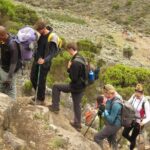
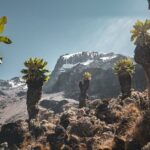
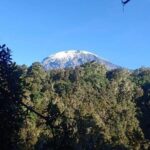
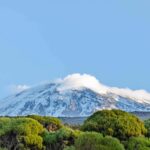
If you want “Kilimanjaro nature” more than “Kilimanjaro rocks,” this hike delivers. The route goes through rainforest where eucalyptus trees can tower overhead, creating a cool canopy. That matters on a day hike because your energy goes further when you’re not cooking in full sun.
The standout wildlife opportunity is primates. You have a good chance of spotting blue monkeys, and colobus monkeys may be heard (and sometimes seen) in the tree canopy. Monkey spotting isn’t guaranteed, but this is the kind of habitat where you’re not just hoping for a lucky moment—you’re actively walking through a system that supports them.
Birdlife is another big reason to do this specific segment. The hike is framed around birdlife in its natural habitat, so you’ll get plenty of chances to pause, look up, and notice how the forest is alive even when you’re focused on the trail.
A practical note: when you’re watching wildlife, keep your balance. It’s easy to slip into slow-motion posing mode, especially if you see a monkey. Let the guide set the safe pace and keep your footing first.
Maundi Crater side trip: a view break that’s worth the extra effort

One of the smart parts of this experience is the Maundi Crater side trip. It’s described as a good way to see the surroundings, including Northern Tanzania and Kenya. That’s the payoff moment on a day that otherwise spends most of its time in trees.
Think of it as your “pay attention now” section of the day. You’re not just pushing uphill; you’re also earning perspective. The guide brings you there while you’re still within a feasible time window, so it doesn’t turn the day into an endurance test.
Because the data frames it as a viewpoint toward Kenya and northern Tanzania, you should expect at least some open sightlines in that area. If visibility is clear, you’ll get more of that big-picture feeling. If it’s misty, don’t panic—this is still part of the reason guides bring you there: the crater zone helps break up the day and gives your brain a change of scenery.
Lunch at Mandara Hut: refuel, reset, and keep moving

Reaching Mandara Hut is where the day becomes more manageable. Up to that point, you’re doing the “work.” Then you get a pause that’s more than a quick breather: you stop for lunch and water, with clean drinking water provided during the day.
The lunches described in the experience are local meals, and one of the best practical details is that lunch happens at the top of the hike, not right after the “easy start.” That timing matters because it helps you stop before you’re completely cooked. You get food, you cool down, you reset your legs, and then you head down with a clearer mind.
Guides also help here by managing your pace. Guides like Freddy are described as staying on top of motivation and break timing—helpful when you’re climbing and the effort starts to feel long. The best approach on an altitude day is usually controlled and frequent: short breaks, a steady rhythm, and listening to your body rather than trying to “win” the hike.
The descent is where confidence often grows. The walk down can feel straightforward compared to the climb, and in past experiences people have arrived at the gate with time to spare. Still, treat the descent as part of the workout: you’ll be tired, and tired feet don’t love roots and rocks.
Moshi logistics and the park day flow
This is a Moshi-based experience, so you should expect transportation to the start area and back. The driver picks you up from your hotel in Moshi, and you’re told the driver will arrive about 30 minutes earlier than you might plan for. That’s a good thing—altitude days run on timing.
Pickup options are flexible: you may meet at a hotel, and there are listed pickup points tied to Moshi and the local area. The drive to the park area is described as about 40 minutes by van. Once you arrive, you’ll sign in at the park office area and move from there into the hike itself.
The day plan also includes what you’d want on a structured walk: break time, a photo stop, and a guided route. In other words, you’re not just handed a trail map and sent off. You’re in a guided experience with enough stops to keep it enjoyable, but not so many that the day drags.
One small reality check: restroom access can be limited. The experience notes that a halfway bathroom waypoint may be closed during the descent. So if you’re someone who likes planning every stop, be ready to move on when nature calls and facilities aren’t available.
A few more Moshi tours and experiences worth a look
Price and value: what $180 buys (and what it doesn’t)
At $180 per person for a 9-hour private day, the core value is what’s included and what the day is designed to do: get you into Kilimanjaro National Park, up to Mandara Hut, with a licensed English/French-speaking guide, plus local lunch and clean drinking water.
But let’s talk costs honestly. Park entrance fees are not included and must be paid at entry. Gratuities are also not included. That means your final out-the-door amount will be a bit higher than the headline price.
So is it worth it? For most people, yes—if you want a guided, structured “Kilimanjaro taste” day and you don’t want to handle the route planning, guide sourcing, and day coordination yourself. You’re also getting pickup and drop-off from Moshi, which often saves a lot of stress on the day you’re trying to focus on hiking.
If you’re on a strict budget, ask yourself a simple question: are you paying for the hike, or for the complete organized day? Here you’re paying for organization plus guide labor plus lunch plus water. Once you add park fees, it becomes closer to a standard guided national-park day with altitude added in.
Who this hike is best for (and who should think twice)

This is a great fit if you:
- Want a day trip that includes lunch and a real mountain-feeling destination (Mandara Hut).
- Like nature walking—rainforest, birds, and monkey chances—more than just chasing altitude records.
- Prefer a guide who helps manage pace and questions without turning the day into a lecture.
- Are staying in Moshi and want an easy logistics setup.
It may be harder for you if:
- You’re not used to sustained uphill hiking, even if the distance is only 8 km.
- You’re sensitive to altitude. The day is described as you walking at almost 3000m, and effort plus altitude can be a tough combo.
- You need frequent restroom stops; the note about a closed halfway waypoint on the way down is a hint that facilities aren’t always available exactly when you want them.
One more practical detail: the activity is marked as wheelchair accessible, but you should treat that as “listed accessibility,” not a promise of a comfortable wheelchair-friendly experience. The day still involves meaningful walking and altitude exposure. If accessibility is important for you, confirm how they handle your exact needs and what portion is realistic for your group.
What to bring for almost 3000m rainforest hiking
The data doesn’t include a full packing list, so I’ll stick to what’s clearly relevant. You should bring what lets you handle changing air and a guided forest hike.
At minimum:
- Passport or ID card (a copy is accepted).
- Comfortable hiking shoes with grip for roots and uneven ground.
- A layer system, because montane forest can feel cooler once you’re higher.
- Water discipline: water is provided, but you should still be ready to drink regularly on the move.
Also, bring the mindset of a day hiker, not a weekend stroller. Plan for an up-and-down workout rhythm:
- Start slower than you think.
- Take breaks when you feel you need them.
- Don’t wait until you’re fully exhausted to slow down.
Should you book this Kilimanjaro day hike?
I’d book it if you want a realistic Kilimanjaro day that’s heavy on nature and guided comfort: rainforest habitat, monkey and bird chances, and a destination you can point to after lunch—Mandara Hut at 2700m. The Maundi Crater add-on is a smart way to get the view without turning this into a multi-day commitment.
I’d think twice if you’re looking for an easy stroll or you’re worried about altitude and effort. This is still a serious hiking day with an elevation push, even though it’s shorter than full Kilimanjaro routes.
If you do book, do it with a simple plan: go slow uphill, use the guide for pace and questions, and treat lunch as your reset moment. You’ll get the best day out of it.
FAQ
Where does the hike start and where does it end?
You start at Marangu Gate (about 1850m) and hike to Mandara Hut (about 2700m) before descending back to the gate.
How long is the hike?
Hiking time is typically about 3–4 hours up and 2–3 hours down, with the full experience lasting around 9 hours including stops.
How much elevation do we gain?
You go from roughly 1860m to 2700m during the hike.
Is lunch included?
Yes. Local lunch is included, and you’ll also have clean drinking water during the day.
What wildlife can you look for?
The experience highlights chances to see blue monkeys and to spot or hear colobus monkeys, plus birdlife in the rainforest.
What’s included in the price?
Included items are a professional English/French-speaking guide, local lunch, clean drinking water, and pickup/drop-off in Moshi.
What is not included?
Not included are Kilimanjaro National Park entrance fees, gratuities, souvenir photos, and any airport transfer (listed as extra).