REVIEW · ARUSHA
3 Days /2 nights Serengeti and Ngorongoro crater
Book on Viator →Operated by Afrozone kingdom safaris · Bookable on Viator
Few trips move this fast through big wildlife country.
This 3-day / 2-night safari from Arusha is built to pack in the best-known places in Tanzania, with game drives timed around where animals tend to show up. I like that it pairs the Serengeti’s classic open-plains feel with Ngorongoro Crater’s unusually dense wildlife.
Two things I really like: first, you’re driving through both habitats that feel totally different—Serengeti plains near the Seronera area (water-fed wildlife concentration) and then the crater floor, where you can see species clustered in one place. Second, the guiding seems to matter a lot here; one standout guide mentioned by name was Mandela, praised for finding animals and explaining what you’re actually seeing.
One consideration: this is a short trip, so your time in each place is limited. Also, since you’re sleeping at a campsite, your comfort depends on what you bring—one report noted a rented sleeping bag felt cold when the zipper didn’t close fully.
In This Review
- Key takeaways
- 3 Days, 2 Nights: the fast-track safari that still feels organized
- Day 1 in Serengeti: Seronera River country and an afternoon drive
- Day 2 in Ngorongoro: crater wildlife density and en-route sightings
- Day 3 crater time: descending again, lunch box setup, then back to Arusha
- Campsite nights: what comfort really means on this safari
- The guide: animal-finding skills and clear explanations
- Price and value: what $820 per person really buys you
- Logistics that matter: pickup, timing window, and mobile ticket
- A quick note on risk and quality control
- Who this safari suits best
- Should you book this 3-day Serengeti and Ngorongoro safari?
- FAQ
- How long is the safari?
- Where does the tour start and end?
- What is the price per person?
- What’s included in the tour price?
- Are park admission tickets included?
- How big is the group?
- Can I cancel for a full refund?
Key takeaways
- Serengeti’s Seronera area gives you a wildlife-rich starting point thanks to the Seronera River water source.
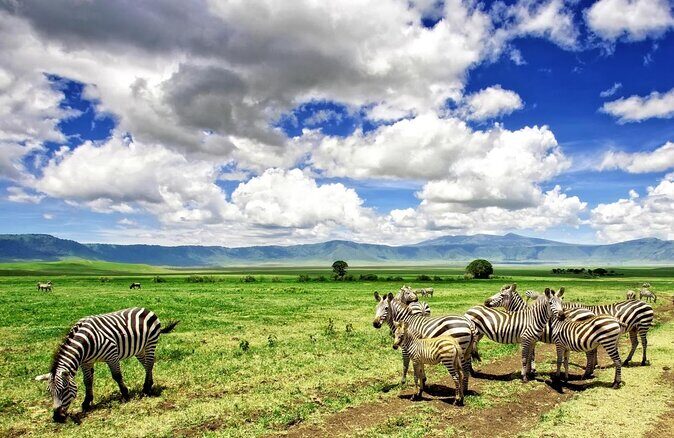
- Ngorongoro Crater game drives focus on a small, concentrated area with lots of species in one sightline.
- Picnic lunch on the crater floor keeps you on the action instead of rushing back up early.
- Small group size (max 6) usually means less waiting and more flexible vehicle movement.
- Guide quality is a big deal, and at least one guide (Mandela) earned strong praise for spotting and explaining animals.
- Campsite nights can be great fun, but pack for cooler temperatures at night.
3 Days, 2 Nights: the fast-track safari that still feels organized
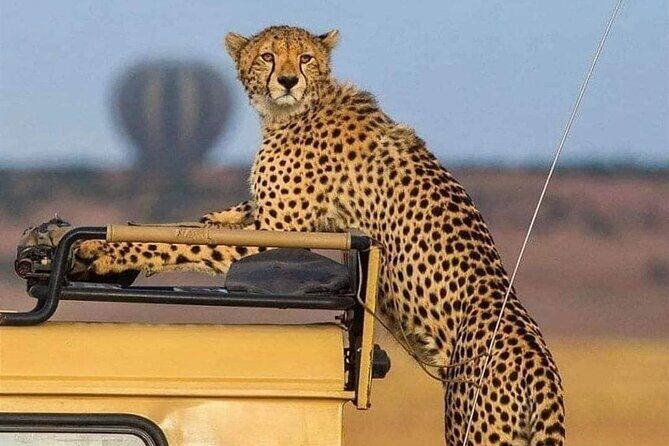
If you’ve got limited time in Tanzania but still want the headline animals and scenery, this is the type of plan that makes sense. You’ll start and end in Arusha, then swing through Serengeti National Park and Ngorongoro Crater over two nights. The structure is simple: drive early, do game drives when wildlife activity tends to be strong, then sleep in a campsite base for the next day.
What makes this trip work is that it doesn’t treat Serengeti and Ngorongoro as two random stops. Serengeti is approached through a specific zone—the central Seronera area—and Ngorongoro is approached as its own world, with crater-floor time that typically delivers more animals per hour than spread-out plains.
The rhythm is also practical. Day 1 gives you Serengeti in the afternoon after lunch. Day 2 shifts you into Ngorongoro with a morning start and en-route game viewing. Day 3 is another full crater-focused push before heading back to Arusha late afternoon. In a short trip, that kind of pacing usually helps you avoid the common problem of spending most of the time in transit.
A few more Arusha tours and experiences worth a look

Day 1 in Serengeti: Seronera River country and an afternoon drive
You’ll leave Arusha after breakfast and make your way toward Serengeti National Park, passing through Karatu farmland and the Ngorongoro Conservation Area before descending into the park itself. That land-change matters, because the Serengeti experience isn’t only about animals. It’s also about the sheer openness of the plains once you drop down into the main park zone.
In Serengeti, the focus lands on the Seronera area, described as one of the richest wildlife habitats in the park. The reason is straightforward: the Seronera River acts as a reliable water source. When water is dependable, animals tend to concentrate there, and you get more consistent sightings rather than hoping luck will carry the day.
Your day looks like this: arrival in time for lunch, then an afternoon game drive in Serengeti, followed by dinner and an overnight at a campsite. That timing is a mixed bag. Afternoon light can be beautiful for photos, and animal activity can still be very good. The tradeoff is simple: you’re not starting before sunrise on Day 1, so you might miss some peak morning action.
Still, for many first-timers, this is a solid way to ease in. You get the Serengeti feel quickly, you’re not exhausted on the first day, and you’re set up for a bigger animal-dense day in Ngorongoro the next morning.
Day 2 in Ngorongoro: crater wildlife density and en-route sightings
Day 2 begins with breakfast, then you head out for a morning game drive, plus lunch, and then you depart toward Ngorongoro with more game drives en-route. That matters because the route itself can produce sightings and it breaks up the long day into better viewing chunks.
Ngorongoro Crater is often treated like the star of a Tanzania itinerary, and this tour leans into why. The crater is described as one of the most densely crowded wildlife areas in Africa, with an estimated 30,000 animals. It’s supported year-round by water and fodder, which is why animals don’t just pass through and disappear. They hang around, and that improves your odds.
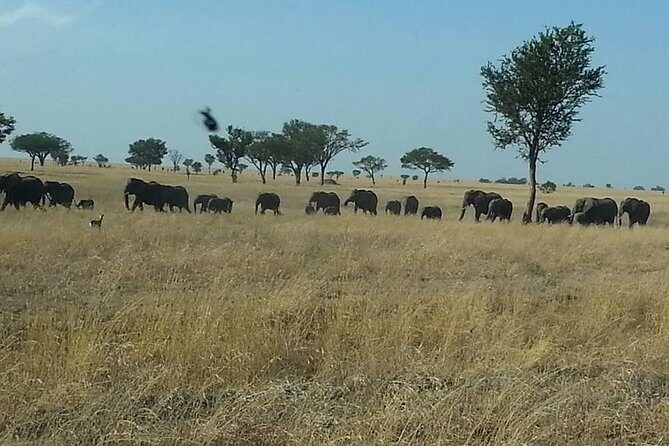
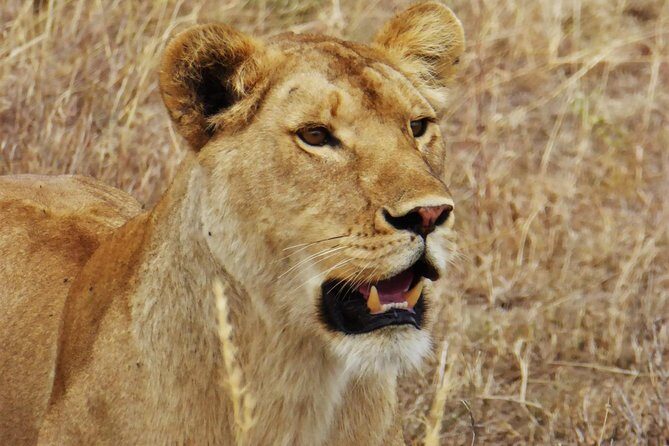
You’re also specifically in the zone where some big-name wildlife are possible, including herds of wildebeest, zebra, buffalo, eland, warthog, hippo, and giant African elephants. Predators are also part of the crater draw: lions, hyenas, jackals, cheetahs, and the elusive leopard are all listed as possible. In practice, leopard sightings are never guaranteed anywhere, but knowing the crater is one of the more realistic places to search helps set expectations.
Your day ends with dinner and another campsite overnight. A campsite night on Day 2 can be a good momentum-builder. You’re already seeing animals both in and out of the crater, and you can wake up expecting more crater-floor time on Day 3.
Day 3 crater time: descending again, lunch box setup, then back to Arusha
After breakfast, you descend into the crater, with a lunch box for a crater-floor picnic-style meal (as described), then enjoy full day game drive. Later, in the late afternoon, you’ll head back to Arusha.
This is the part of the itinerary that makes or breaks the whole trip for many people. A full day in Ngorongoro changes the feel of the safari. Instead of squeezing in a quick pass, you get time for animals to move, for groups to form around water, and for sightings to happen more than once. It also gives you a chance to adjust if you don’t get a lion right away.
It’s also a practical advantage for your photos. With enough time, you can shoot in different light angles rather than only one short window. And for video, you’re more likely to catch behavior—feeding, resting, interactions—rather than only brief appearances.
On the way back, the drive to Arusha is listed as taking about 6 hours for the final segment, meaning you’ll probably end the day tired in the best way. This is one reason I like tours that don’t stack in too many extra detours. When the plan stays focused on game driving, you tend to get more satisfaction when you finally drop back into Arusha.
Campsite nights: what comfort really means on this safari
Campsite lodging is part of the design here, not an afterthought. One review mentioned the tents and equipment were great, which is a hopeful sign for basic comfort. Another note said a rented sleeping bag felt cold because the zipper didn’t close properly—so at least one traveler had an issue that made the night uncomfortable.
So here’s the practical approach: assume evenings can be cooler than you expect, especially if you’re sensitive to cold. If you’re the type who runs warm, you might be fine. If you’re not, bring a sleeping bag you trust, or pack extra layers you can sleep in comfortably.
Also think about what you’ll do right after you wake up for an early game drive. In many safaris, you’re ready to go quickly. If your kit is scattered, it wastes energy. Try to pack so you can grab layers, water, and essentials fast.
Food gets good marks in the notes you shared. Cooks were praised for good meals, and the staff were described as friendly. That’s not a small thing. When you’re eating well, safari fatigue hits less hard.




The guide: animal-finding skills and clear explanations
In a short safari, your guide isn’t just driving. They’re also the person translating what you’re seeing. The strongest praise in the material you provided centers on this idea: a guide who can locate animals and explain animal behavior clearly can turn a decent sighting into a memorable moment.
One guide named Mandela was singled out as excellent—able to explain animal behaviors and, crucially, able to locate animals. That’s what you want to hear, because the Serengeti and Ngorongoro landscapes are huge and busy visually. Wildlife can look like a speck at first. A guide who points out subtle cues—movement patterns, grazing areas, predator signs—helps you get your bearings fast.
Even when the animals are there, interpretation matters. Hearing why a certain group is clustered around water, or how predators hunt in that terrain, adds weight to the experience. It also helps you photograph with intention instead of only reacting.
Price and value: what $820 per person really buys you
At $820 per person, the sticker price isn’t low, but the value case is fairly clear based on what’s included. This package covers all fees and taxes, plus meals: 2 breakfasts, 3 lunches, and 2 dinners. It also includes the core safari time—Serengeti + Ngorongoro over 3 days—with campsite overnights.
What’s not included is also important. Airfares, travel insurance, tips, and personal items are not included. If you’re bringing your own gear, snacks, or need laundry or phone charging accessories, those costs can add up. Also, since tips are not included, set aside a budget for that. It keeps the trip feeling smooth at the end.
Now the biggest value question: is it too short to be worth it? For many people, the answer is yes, it’s worth it precisely because it’s short. You get two of Tanzania’s iconic wildlife regions without burning a week on logistics. But if you’re the type who wants long, slow drives and lots of downtime for wandering, you might feel rushed.
The small group limit helps justify the price too. With a maximum of 6 travelers, you’re likely to have less crowding inside the vehicle and fewer scheduling conflicts.
Logistics that matter: pickup, timing window, and mobile ticket
This tour offers pickup and ends back at the start point in Arusha. The meeting point is listed as Shoppers Supermarket. The opening hours show a pickup window of 6:00 AM to 7:00 AM, Monday through Sunday. That early start is a practical safari reality; you want daylight and decent viewing conditions.
You also get a mobile ticket. That’s handy in a world where paper can disappear. Still, I’d keep a screenshot on your phone as a backup, just to avoid last-minute tech glitches.
One more thing: park entry fees are described as included in the package via all fees and taxes. That’s good because park costs can surprise people on arrival.
A quick note on risk and quality control
Safari experiences can vary. One of the items you provided includes a very negative complaint describing issues with equipment and responsibility during an emergency situation, plus claims that park fees were not paid. I’m not able to verify those claims from what you provided, but it’s enough to flag a simple point for you.
Before you hand over money, ask clear questions:
- Who is the operator providing the vehicle and guide?
- Are park fees fully covered for your dates?
- What’s the backup plan if a vehicle issue happens?
A good operator should answer plainly and quickly. If they dodge specifics, treat that as information.
Who this safari suits best
This is a strong fit if you:
- Want the Serengeti + Ngorongoro combination without spending days on travel.
- Prefer a small group experience.
- Care about having a guide who can help you spot animals and explain behavior.
- Don’t mind campsite sleeping in exchange for being close to the action.
It might not suit you as well if you:
- Want lots of downtime and slow pacing.
- Are very sensitive to cold at night and don’t want to pack layers or a reliable sleeping bag.
- Need a guarantee for specific animals like leopard. Even with great guiding, wildlife isn’t predictable.
Should you book this 3-day Serengeti and Ngorongoro safari?
I’d book it if your main goal is classic Tanzania wildlife in a tight timeframe, and you’re comfortable with camping. The structure is built for sightings: Seronera’s water-fed concentration in Serengeti, then a full focus on Ngorongoro’s dense crater ecosystem with a crater-floor lunch setup and day-long game drive time.
The best sign here is the guiding emphasis—spotting animals and explaining what you’re seeing is consistently highlighted, including a named guide, Mandela. The most important caution is comfort and quality control around the campsite setup and vehicle reliability. If you pack for cooler nights and you confirm the operator details clearly before payment, you’ll stack the odds toward a satisfying, memorable safari.
If you want, tell me your travel month and your comfort level with camping, and I’ll suggest what to pack (especially for evenings) and whether this exact pacing matches your style.
FAQ
How long is the safari?
It’s listed as 3 days (about) with 2 nights, covering Serengeti and Ngorongoro Crater from Arusha.
Where does the tour start and end?
The meeting point is Shoppers Supermarket in Arusha, Tanzania, and the tour ends back at the same meeting point.
What is the price per person?
The price is listed as $820.00 per person.
What’s included in the tour price?
The package includes all fees and taxes, meals (2 breakfasts, 3 lunches, 2 dinners), and the safari activities described in the itinerary.
Are park admission tickets included?
Admission ticket notes show Day 1 as Free, Day 2 as Included, and Day 3 as Free, and the tour also lists all fees and taxes as included.
How big is the group?
The tour has a maximum of 6 travelers.
Can I cancel for a full refund?
Yes. You can cancel up to 24 hours in advance for a full refund. If you cancel less than 24 hours before the start time, the amount you paid will not be refunded.