REVIEW · MOSHI
Best Kilimanjaro Adventure 7 days Machame route Trekking
Book on Viator →Operated by Kilinge Adventures · Bookable on Viator
Kilimanjaro rewards patience more than speed. This 7-day Machame route is a steady progression from lush rainforest to high-altitude camps, and the way the schedule builds in acclimatization makes it feel more manageable than the usual rush-up-and-hope plan. I also love that you get real mountain support on the ground with a guide team, porters, and chef handling camp life. The one drawback to flag early: this is a serious trek, including a long, early-morning summit push, and it needs solid weather.
You’ll start in Moshi with an 8:30 am meeting and an easy get-to-it rhythm: pickup is offered, and you return to your hotel in Moshi/Arusha after the final forest walk. The biggest “watch the math” point is that the national park fee and tax aren’t included in the base price, so your total will be a bit more than the headline number.
In This Review
- Key things to know before you go
- Machame Gate to rainforest days: where the trek starts feeling real
- Shira and Lava Tower: the acclimatization that keeps you in the game
- Barranco to Karanga: the view payoff comes after a tough morning
- Barafu to summit sunrise: the midnight start you plan your whole trip for
- Mweka descent and the lush final hike: the finish that feels like exhale
- Price and value: what’s included in $1,200, and what you should budget extra
- Guides, camp team, and group size: how support affects your safety and sanity
- Should you book the Machame 7-day trek with this provider?
- FAQ
- FAQ
- What route is this trek based on?
- How long is the trek?
- What time does the trek start?
- Is pickup included?
- What’s included in the price?
- What’s not included?
- What kind of fitness level do I need?
- Is there a limit on group size?
- Can I cancel and get a full refund?
Key things to know before you go
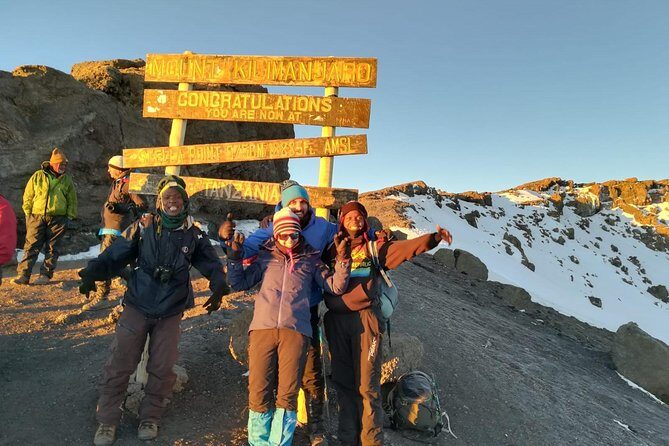
- Machame route, full arc: Machame Gate to Shira, then Barranco, Karanga, Barafu, and Mweka.
- Acclimatization built in: Lava Tower hike (15,000’) before dropping toward Barranco.
- That sunrise day is real: Start just after midnight and plan for a 10–14+ hour day.
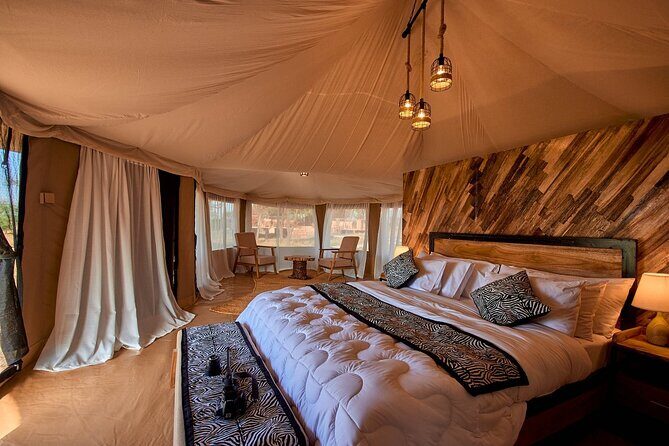
- Camp comfort is handled: You get camping equipment with a sleep mattress, tent, and meals.
- Guides with names you can feel good about: I’d put my faith in teams like Victor, Tyson, and Thomas, who are highlighted as key support.
Machame Gate to rainforest days: where the trek starts feeling real
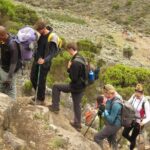
Your week begins with a drive to Machame Gate, then registration, and finally the first steps into the mountain’s green world. This is the day you should treat like a warm-up in the best sense. It’s not about speed. It’s about getting into the groove while the rainforest does what it does—cooler air, steady shade, and birdsong breaking up the monotony of your own breathing.
As you hike through the tropical forest, you may spot colobus monkeys and wild birds. Those little moments matter. On a mountain like Kilimanjaro, morale isn’t a soft skill. It’s survival gear. If you’re the type who worries about whether you’re “doing it right,” this first day is where you learn the pace you can repeat for days.
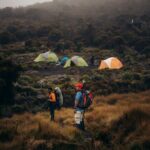
Camp life kicks in at Machame Camp. Dinner and an overnight there mean you don’t have to think about logistics beyond your own body. That’s a big deal on Kilimanjaro, where your mental bandwidth is limited by altitude and exhaustion.
Possible snag: rainforest trekking can still mean slippery footing and damp air. Bring layers you can manage and keep your hands and feet protected from cold-wet combos, especially as the evenings cool off.
You can also read our reviews of more hiking tours in Moshi
Shira and Lava Tower: the acclimatization that keeps you in the game
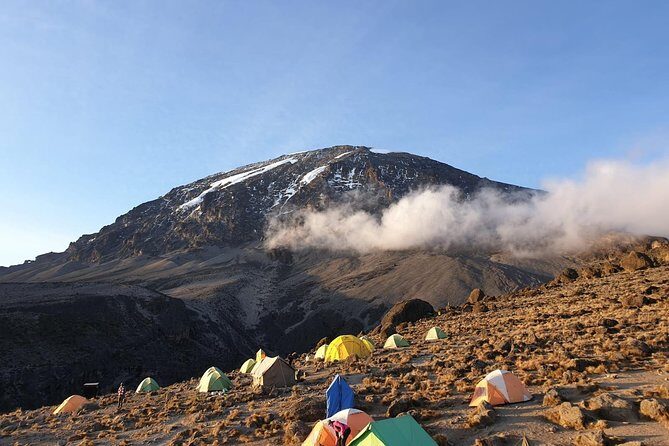
Day two pushes you toward Shira Camp with a climb that includes crossing a stream and following a path up a steep rocky ridge. It’s a classic Kilimanjaro rhythm: effort goes up, your legs complain, and your breathing gets louder than you’d like.
Shira Camp sits at the base of a semi-circular wall of rocks. That’s not just scenery. It’s a reminder that this mountain isn’t one uniform climb—it’s a sequence of zones. Each zone changes how your body handles effort. Your body likes consistency, but Kilimanjaro doesn’t do that. So the schedule tries to help you with small wins.
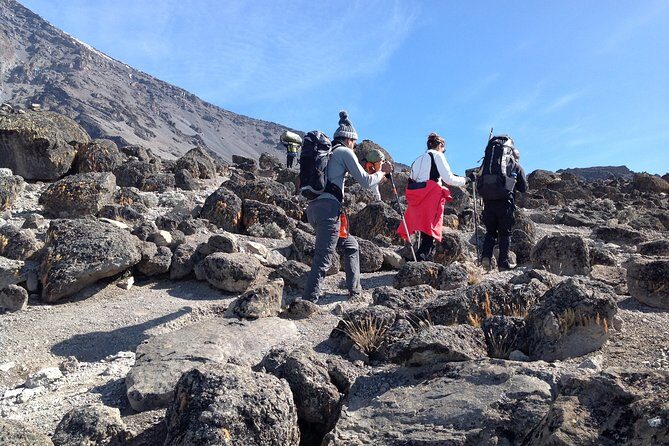
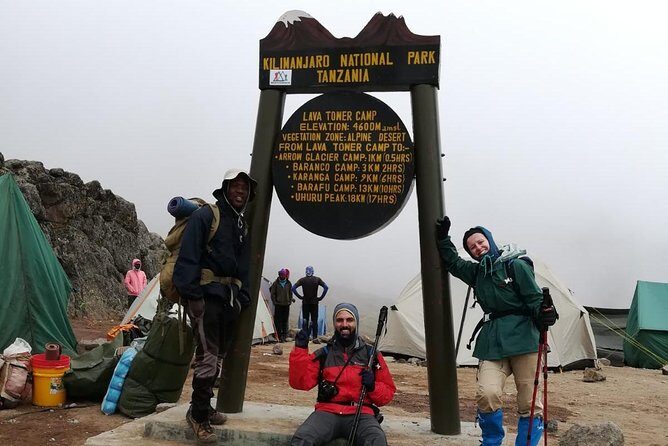
The real turning point comes with the Lava Tower day. You hike up to Lava Tower (15,000 feet) to acclimatize, then proceed down to Barranco Camp via the Great Barranco Wall. This “go up, then go down” pattern is one of the main reasons the Machame route can work for people who aren’t elite athletes. Your body gets practice dealing with altitude while you still keep your highest stress closer to planned exposure, not chaos.
What I like here: this route doesn’t pretend acclimatization is optional. It builds it into the trek, not as a side note but as a core step.
What to watch: the Great Barranco Wall area can feel steep and exposed in parts. Even when you’re descending, your legs will burn. If you tend to over-sprint early, this is where you learn restraint.
Barranco to Karanga: the view payoff comes after a tough morning
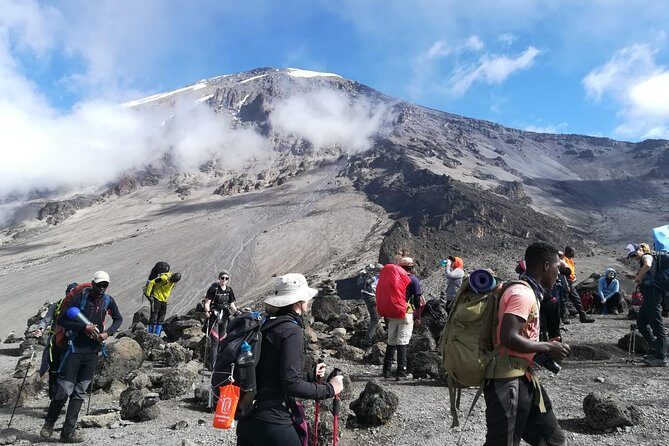
Barranco Camp is one of those places you’ll remember for more than the coordinates. It’s known as a camp with a great vibe, and after a day that includes the Great Barranco Wall approach, you’ll feel it. Nights at Barranco can feel especially rewarding because you’re past the initial forest phase and you’ve earned a more dramatic sense of where you are.
From Barranco Camp, you climb up through the edge of the Great Barranco Wall. It’s described as a tough morning climb on a steep trail. That tracks with what most people feel: you’ll spend the early part of the day fighting the slope. But once you reach the top, the views pay you back. This is where Kilimanjaro becomes bigger than a workout. You start looking around and realizing you’re climbing into a world where the horizon matters.
Then you head to Karanga Camp for dinner and overnight. Karanga is often where trekkers start to feel the altitude as more than just breathlessness. You may not feel “sick,” but you’ll notice sleep can get lighter and your body feels like it’s working harder for simple movement.
My practical advice: treat Karanga as a day to conserve energy. The summit day is coming, and you’ll want legs that still know how to move efficiently.
Barafu to summit sunrise: the midnight start you plan your whole trip for
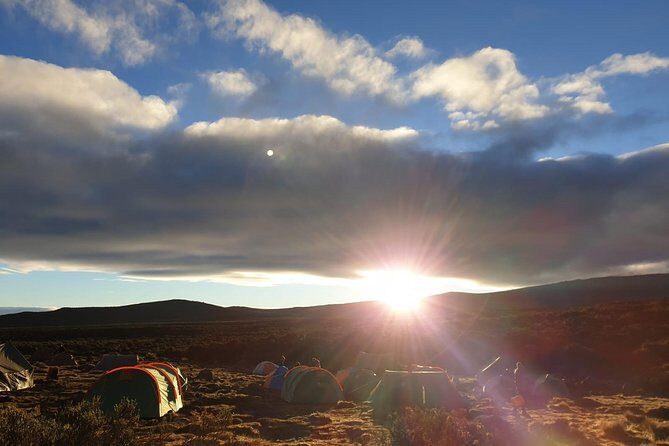
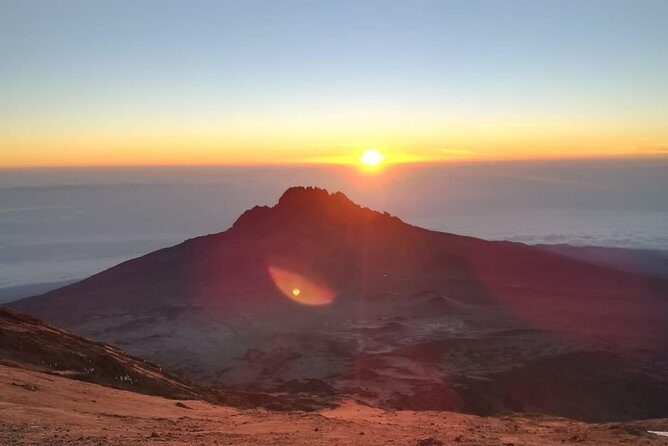
This is the day with the biggest emotional pull. You hike up to Barafu Camp, which sets you up for the final ascent. It’s a shorter climb than the past few days, but it’s shorter for a reason: you need rest. You’ll be saving energy for the climb that gets you the summit views and the sunrise over the Great Rift Valley.
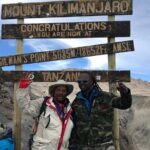
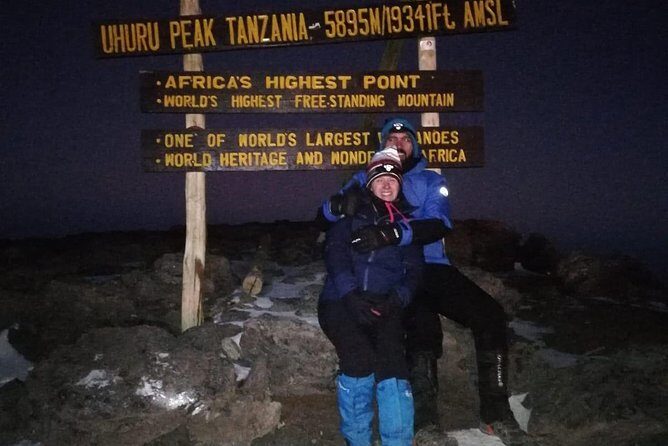
Then comes the midnight start. You begin trekking just after midnight because the ascent takes time—10 to 14+ hours total—and you’re aiming for sunrise. The climb includes a steep section: about 1,100 meters of ascent in just over 3 kilometers, taking roughly 6 to 8 hours. Even if you’re strong, this part is not a “walk it off” moment. It’s deliberate effort at altitude.
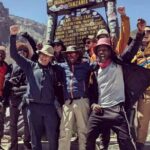
After sunrise and enough pictures, you descend down the mountain to below the tree line and continue to Mweka Camp for dinner and overnight.
Why this is valuable: the summit day is where the Machame route earns its reputation. You don’t just reach a goal. You earn a clear, calm sunrise after a hard push. The contrast—darkness to dawn, strain to wonder—is the part people remember in plain, human terms.
The consideration: this is long, cold, and mentally intense. If you hate waking up at night or you’re easily rattled by discomfort, plan for that now. Also, remember that weather matters. Cloud, wind, and poor visibility can change the experience.
Mweka descent and the lush final hike: the finish that feels like exhale
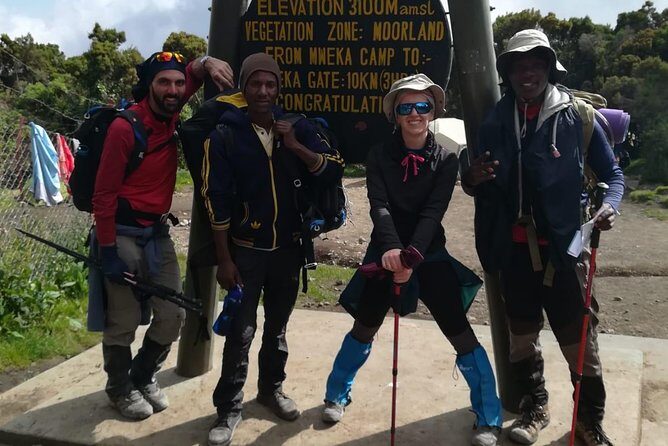
After the summit and the big descent to below the tree line, you reach Mweka Camp. Even if you’re “done done,” your body will still be negotiating with gravity. Dinner and overnight give you the decompression time that’s easy to overlook when you’re focused only on the top.
The final day is a short three-hour hike out through lush forest. You meet the driver at the Mweka park gate, then drive back to your hotel in Moshi or Arusha.
This matters more than it sounds. A good finish keeps you from feeling like your whole trip was one long suffering contest. The forest day is your bridge back into normal breathing and normal rhythm. It’s also a good moment to notice how much your feet have changed—from stubborn rocks to soft ground again.
Quick mindset tip: don’t rush the final hike just because you can feel the finish line. Your knees and ankles will thank you.
A few more Moshi tours and experiences worth a look
Price and value: what’s included in $1,200, and what you should budget extra
At $1,200 per person, this trek sits in the “serious adventure but not bargain-bin” zone. The price covers a lot of the work that usually makes Kilimanjaro hard to organize: you get camping equipment (sleep mattress, tent), and you travel with a team that includes guides, porters, and a chef. Meals are also included: breakfast (6), lunch (7), and dinner (6).
That meal support is a real value item. When you’re moving all day at altitude, your food needs to be consistent and timed. It’s not just about calories. It’s about keeping energy steady so you don’t crash at exactly the wrong time.
What’s not included: tipping and gratuity, travel insurance, and the national park fee and tax. Those last two are the ones that can surprise you because they often get treated like small footnotes—until you’re adding everything up.
My honest way to look at it: this price buys you the mountain team and camp system. You still need your own preparation for cold, effort, and altitude, and you should budget separately for park fees and any gratuities you choose to give.
Guides, camp team, and group size: how support affects your safety and sanity
Kilimanjaro logistics are only simple if you have a good team. This operator runs with a clue guide, porters, and chef, and the structure is designed so you focus on walking and resting instead of hauling. That matters for two reasons: safety and sanity.
The support style highlighted in feedback is personal and attentive. Names mentioned include Victor, Tyson, and Thomas, with Victor and Tyson called out as especially helpful during a challenging climb. That’s a good sign, because on Kilimanjaro, encouragement isn’t fluff. It’s what helps you keep your pace when you start thinking bad thoughts.
Group size can shape your experience too. This trek lists a maximum of 100 travelers. With Kilimanjaro, you’ll feel the benefit of having people organized, but you’ll still want to expect a group pace that may be different from yours. Your best strategy is to listen to your guide and keep your effort steady, not competitive.
Practical takeaway: plan to be flexible. The mountain decides some things. A strong guide team helps you meet those decisions without panic.
Should you book the Machame 7-day trek with this provider?
You should consider booking if you want:
- A full Machame route experience with multiple camps and built-in acclimatization.
- A team setup that includes guides, porters, and a chef, plus camping gear and meals.
- A sunrise summit goal with an early start that’s clearly planned.
You might pause if:
- You’re not comfortable with a long, cold summit day that can run 10 to 14+ hours.
- You’re trying to keep your budget extremely tight, since park fees, taxes, and gratuities are not included.
If you’re mentally prepared for the work and physically willing to train for hills before you go, this is a solid way to tackle Kilimanjaro. It’s not just about reaching the top. It’s about having the structure to get there without improvising the hard parts.
FAQ
FAQ
What route is this trek based on?
It’s the Machame route on Kilimanjaro, starting at Machame Gate and moving through Machame, Shira, Barranco, Karanga, Barafu, and Mweka camps before finishing near Mweka park gate.
How long is the trek?
The duration is listed as 7 days (approx.).
What time does the trek start?
The start time is 8:30 am.
Is pickup included?
Pickup is offered, and you’re driven back to your hotel in Moshi/Arusha at the end.
What’s included in the price?
Included are camping equipment (sleep mattress, tent), a guide team with porters and chef, and meals (breakfast 6, lunch 7, dinner 6).
What’s not included?
Not included are tipping and gratuity, travel insurance, and the national park fee and tax.
What kind of fitness level do I need?
The description says travelers should have a moderate physical fitness level.
Is there a limit on group size?
Yes. The trek has a maximum of 100 travelers.
Can I cancel and get a full refund?
There is free cancellation. A full refund is available if you cancel at least 24 hours before the experience’s start time.