REVIEW · ARUSHA
Arusha Guided Walking City Tour, Culture, Lifestyle & History
Book on Viator →Operated by Tanzania Songbirds Safaris · Bookable on Viator
Five stops. Four hours. Real Arusha energy.
This guided walk in Arusha mixes colonial-era landmarks, a tanzanite museum stop, and market time so you see both the official history and everyday culture without feeling like you’re sprinting across town.
Two things I especially like: the route is guided with care, and Israel (often the guide on recent departures) has a way of explaining local life that keeps it understandable. Also, it’s not “all legs, no breaks”—you’ll get short rides between points, so the pace feels human.
One consideration: a key museum fee is extra, so budget for the Boma Museum admission you may pay on-site, plus any food, drinks, and shopping you choose to do.
In This Review
- Key highlights
- A Walk That Still Works With Real City Time
- Old Boma Museum: German-Era Building, Fossils, and City Origins
- Tanzanite Experience: How a Rare Gem Shapes Local Work
- Arusha Clock Tower: A Meeting Point With a Greek Backstory
- Maasai Market Curios and Crafts: Souvenirs, Color, and Bargain Reality
- Cultural Heritage Centre: Big Art Gallery Energy, No Museum-Stress
- Price and Logistics: What You’re Really Getting for $26
- Who Should Book This Arusha Walking Tour—and Who Might Want Something Else
- Should You Book It?
- FAQ
- FAQ
- How long is the Arusha guided walking city tour?
- What does the price include?
- Is pickup included?
- Is the Old Boma Museum admission fee included?
- Are food and drinks included?
- Do I need cash for the tour?
- Who will be my guide?
- How large are the groups?
- Is free cancellation available?
- When should I book?
Key highlights
- Israel as your guide: clear English, lots of context, and a friendly, calm approach
- Old Boma Museum: German colonial building now used as a museum, with evolution and wildlife photography displays
- Tanzanite Experience: learn why Tanzania is the only tanzanite source and see cutting/polishing stories in a shop setting
- Arusha Clock Tower: a Greek founder story tied to the city as a meeting point
- Markets and craft centers: Maasai Market curios and crafts plus a large cultural heritage art gallery
A Walk That Still Works With Real City Time
This tour is priced at $26 per person for about 4 hours, which is a very workable length for first-time visitors. You’re also not left to figure out transport on your own, because pickup and drop-off near the city center are part of the deal.
The “walking city tour” label can sound intimidating, but the day is designed to balance time on foot with short transfers. In practice, you’ll walk enough to feel like you’re in the city, then you’ll get help getting to the next stop efficiently. One solo traveler even noted that it included a mix of car and walking, with a tuktuk used to reach the first sight.
The group size stays small (max 19), which matters when the streets get busy. Small groups also make it easier to ask questions—especially when the guide is doing most of the talking.
Before you go, know what’s not included: food and drinks are on you, and you’ll want some cash ready for purchases at markets or museum shops. Tips are optional too, based on how satisfied you are.
You can also read our reviews of more walking tours in Arusha

Old Boma Museum: German-Era Building, Fossils, and City Origins
Your first stop is the Old Boma Museum, and it sits in a German colonial-era building that originally served a fort purpose. Today, it functions as a government museum with a mix of permanent and temporary displays, and you’ll spend about 45 minutes here.
This is the stop that gives you perspective fast. You start with the Human evolution exhibition, which focuses on evolution theory using replica fossils and tools, plus items like the oldest footprint found in East Africa (as described in the exhibit). If you like your history more hands-on than textbook-only, this section is one of the more memorable ones on the route.
Then there’s a smaller history of Boma section, covering the city’s timeline from 1884 to 1919. It’s not trying to be a full university course, but it gives you enough background to understand later city stories.
The third major exhibit in this museum is ecology and wildlife photography. Even if you’re not a photography specialist, it helps connect what you learn about people and place to what’s happening in the wider environment.
Practical catch: the museum admission fee isn’t included (it’s listed as $6 USD per adult). If you want to avoid surprises, plan for that extra cost and bring cash.
Tanzanite Experience: How a Rare Gem Shapes Local Work
Next comes the Tanzanite Experience, and it’s about 30 minutes with admission included. Tanzanite is one of those minerals that turns “buying a souvenir” into a story you can actually explain.
Tanzania is the only place on the planet where tanzanite is mined (as stated in the tour information). The tour also highlights how rare it’s thought to be—described as around 1000 times rarer than diamond due to that limited location.
What I like about this stop is that it’s not only about the gemstone’s look. You get a guided tour that covers:
- the complexities of how it’s mined
- the skills involved in cutting and polishing
- stories and myths around the gem
Then there’s a shop on-site. That’s where the day can turn personal—if you want something affordable, you’ll likely find options in the $100 range, while pricier pieces can run $3,000 and up (depending on what you choose). If you don’t want to shop, you can still treat the store as part of the learning experience and leave with at least a better sense of what you’re seeing.
Arusha Clock Tower: A Meeting Point With a Greek Backstory
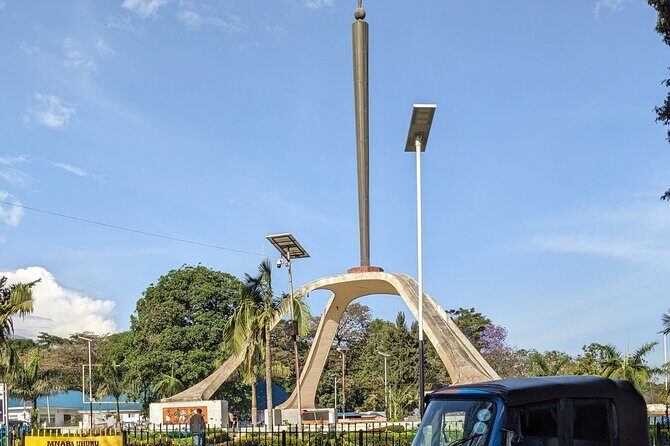
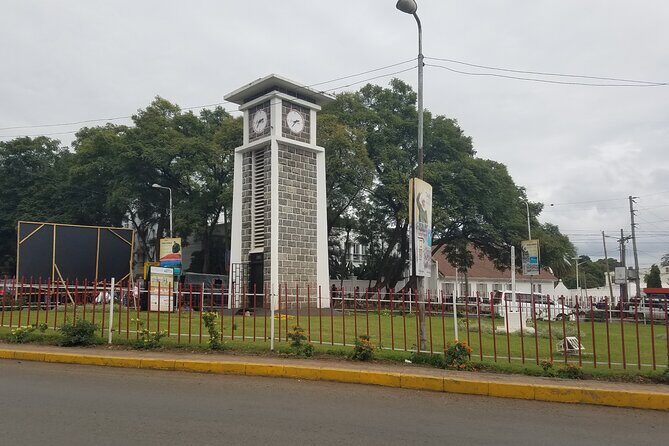
After the Tanzanite stop, you head to the Arusha Clock Tower, which is described as the meeting point of people in the city. It’s a short stop—about 15 minutes—but it’s the kind of detail-rich landmark that makes your day feel grounded.
The clock tower was built by Galanos, a Greek millionaire who came to Tanganyika in the early 20th century. The tour also shares a belief that the tower is located exactly between Cairo and Cape town, and frames the tower as a center point for Tanzania, Kenya, and Uganda.
Then you continue walking to see an older landmark: one of the oldest hotels and schools built during colonial times. This is one of those “small stretch, big payoff” moments. You don’t just look at a landmark; you connect it to how the city grew and who shaped it.
Admission is listed as included for this stop, so you don’t need to do extra ticket math here.
Maasai Market Curios and Crafts: Souvenirs, Color, and Bargain Reality
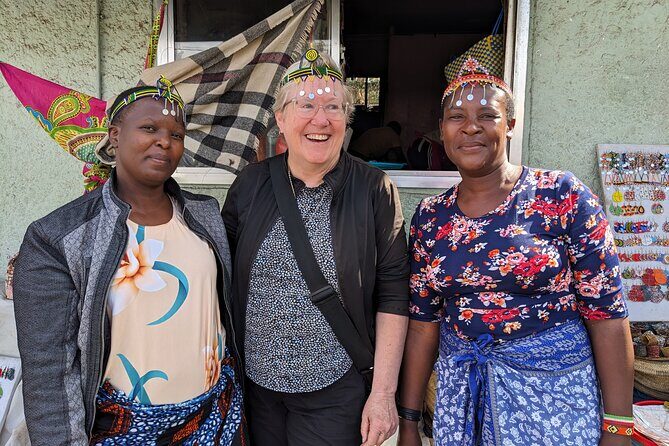
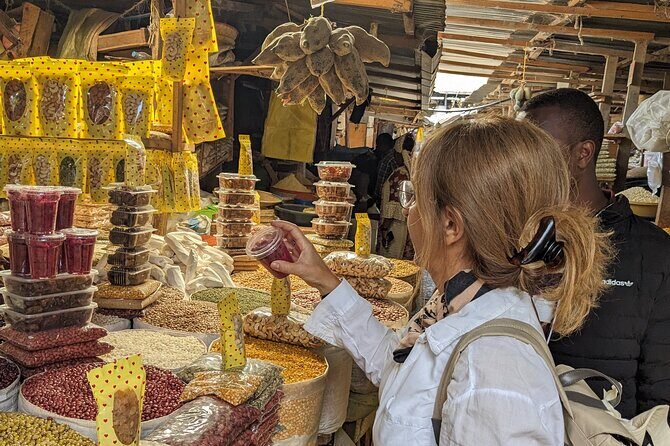
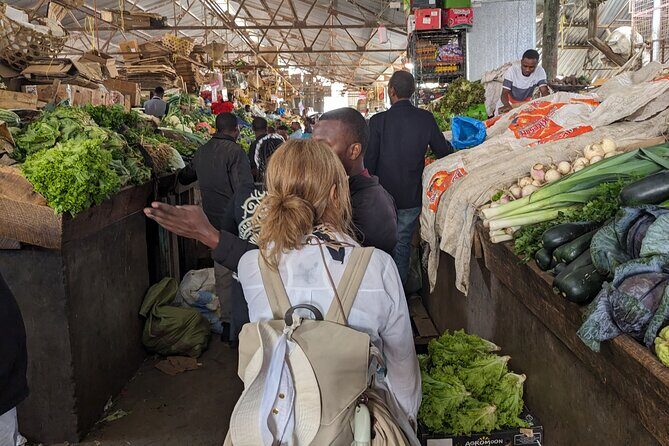
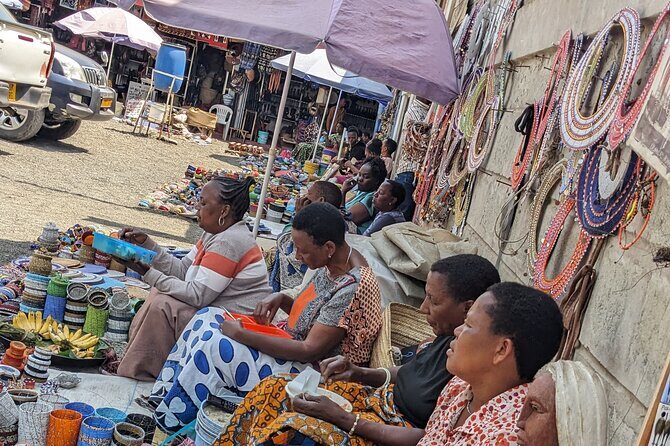
Time for the market stop. The Maasai Market Curios and Crafts is an open-air market built around variety—think textiles, small goods, and handmade items you can actually carry home.
You’ll spend about 25 minutes here, and admission is included. In terms of what you’ll see, the market description calls out:
- African pots and pans
- safari-style t-shirts, fabric clothes, and Tanzania jerseys
- Maasai shoes and sandals
- jewelry and necklaces
- bags in multiple sizes
- shukas / Maasai blankets
- artwork
This is the part of the tour that’s most about you making choices. The best value move is to treat the market like a guided shopping scan. Get a sense of what’s available, compare prices quickly, then decide if you’re buying. Because the tour also provides a Tanzanite museum shop, you can end up seeing two different styles of “price and product”—which helps you judge value better.
One more practical note: the tour information specifically says to bring cash for purchases. That’s because markets and shops don’t always play nicely with card systems.
You can also read our reviews of more guided tours in Arusha





Cultural Heritage Centre: Big Art Gallery Energy, No Museum-Stress
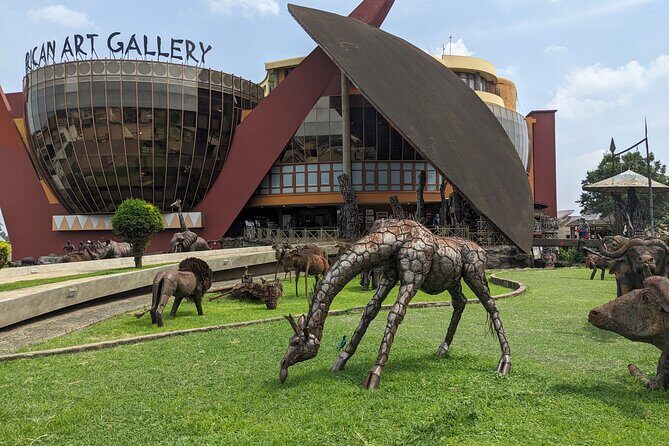
The final major stop is the Cultural Heritage Centre, with about 40 minutes on-site and admission included. This place is described as one of the biggest art galleries in Africa, and you can explore artworks from different parts of Tanzania and other parts of Africa.
If you’re the type who worries that “markets + history” will turn into scattered randomness, this is where the day gets a stronger structure. It’s not just a place to look at objects. It’s also a place to understand how art connects different regions and traditions.
There’s also a shop next door. So if you want souvenirs that feel more like art than tourist clutter, this can be a good spot to check options. It’s also where you can slow down a bit—40 minutes is enough to browse without feeling rushed.
Price and Logistics: What You’re Really Getting for $26
Let’s talk value in real terms.
For $26 per person, you’re paying for:
- a professional local guide
- the Tanzanite Experience
- the African art gallery / cultural heritage costs
- pickup and drop-off near the city center
So you’re not just paying for directions. You’re paying for guided interpretation plus entry costs for key stops.
What’s not included is important:
- Foods and drinks are not included
- the Old Boma Museum fee is listed as $6 USD per adult
- money for souvenirs is on you
- tips are optional
If you compare the price to the included museums and guided time, it’s a strong deal for a half-day. The only way it stops being a bargain is if you plan to eat pricey meals during the tour or do a lot of shopping without budgeting.
Also keep in mind the time structure: the day runs 2.5 to 6 hours depending on the tour flow, but it’s listed as about 4 hours. That “range” matters if you’re fitting this into a tight itinerary between other activities. I’d treat the day as a solid block you can plan around, but still leave buffer if your schedule is strict.
Finally, there’s free cancellation up to 24 hours in advance (based on local time). That gives you flexibility if your other plans change.
Who Should Book This Arusha Walking Tour—and Who Might Want Something Else
This tour is a great fit if you want:
- history and culture without a full-day commitment
- a guided route that helps you interpret landmarks in context
- a mix of museum and market experiences in one afternoon
- an easy way to get oriented in Arusha
It also fits solo travelers well. One recent solo experience praised the guide for making the markets and busy streets feel comfortable. With a small group size up to 19, you get social safety without losing the ability to ask questions.
You might consider a different day if:
- you’re mainly here for food, since meals aren’t included
- you don’t want any museum admission fees outside the price (because the Boma Museum fee is extra)
- you’re shopping-focused and want a longer, more flexible market session than the 25 minutes allocated
Should You Book It?
I think this is worth booking if you’re aiming to understand Arusha beyond the headline safari towns. The best part is the balance: you get colonial-era context at the Old Boma Museum, you get a Tanzania-specific story at the Tanzanite Experience, then you finish with craft and art stops that help the day feel practical—not just theoretical.
Book it if you like guided walking with short rides, and if you’re comfortable paying a small extra museum fee and bringing cash for purchases. Also, if you care about the human side—clear explanations, friendly pacing, and an easy guide-to-city relationship—this tour has delivered that repeatedly through recent experiences with Israel.
If you’re unsure, choose it when you have limited time in Arusha. It’s the kind of half-day that can turn a first stop in town into a real sense of place.
FAQ
FAQ
How long is the Arusha guided walking city tour?
It runs for about 4 hours on average, with guided time listed as about 2.5 to 6 hours depending on how the day flows.
What does the price include?
It includes a professional local tour guide, the Tanzanite museum, the African art gallery and cultural heritage costs, and hotel pickup and drop-off near the city center.
Is pickup included?
Yes. Pickup and drop-off for hotels near the city center are included.
Is the Old Boma Museum admission fee included?
No. The German Boma (natural history museum) fee is listed as $6 USD per adult.
Are food and drinks included?
No. Foods and drinks are not included.
Do I need cash for the tour?
Yes. The tour information recommends bringing cash for souvenirs, since purchases during the tour are at your expense.
Who will be my guide?
You’ll have a professional local tour guide. Recent experiences mention Israel by name, and he’s been praised for clear explanations and excellent English.
How large are the groups?
The maximum group size is 19 travelers.
Is free cancellation available?
Yes. Cancellation is free, and you can cancel up to 24 hours in advance for a full refund.
When should I book?
On average, this tour is booked about 30 days in advance.