REVIEW · ARUSHA
5 Days cheapest Kilimanjaro Marangu Route
Book on Viator →Operated by Moorland Safari and Trekking · Bookable on Viator
Bunk beds on Kilimanjaro sound unreal. What makes the Marangu route so compelling is that it feels like a real climb with a clear routine, while using long-running hut accommodations instead of tents. It is the oldest path on the mountain, often called the Coca-Cola route, and you get a steady, gradual approach to altitude.
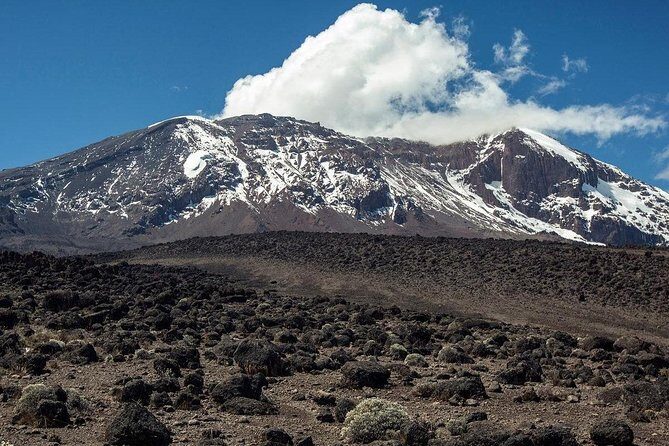
I like two things a lot. First, the hut lodging is dormitory style with real mattresses and pillows, plus communal dining halls. Second, the trek builds toward big-name viewpoints like Kibo and Mawenzi on clearer days, and then the crater rim before you go for Uhuru Peak.
One drawback to plan for: the time on the mountain is short, so altitude acclimatization can be tough. And Marangu is less scenic than other routes because you climb and descend on much of the same line, with more people on it than quieter options.
In This Review
- Key highlights you should know before you go
- Marangu’s big appeal: the easiest-feeling route up Kilimanjaro
- Hut life: bunk beds, shared dining, and bathroom reality
- Day-by-day: what the 5 days actually feel like
- Day 1: Rainforest to Mandara Hut (about 3–4 hours, ~840 m gain)
- Day 2: Moorlands to Horombo Hut (about 5–7 hours, ~1,000 m gain)
- Day 3: Last water point to the saddle area (about 5–7 hours)
- Day 4: Gilman’s Point to Uhuru Peak, then down to Kibo and Horombo (long day, cold summit)
- Day 5: Back down through moorland and rainforest to Marangu (about 5 hours)
- Summit-day reality: early hours, cold air, and the small things that help
- Acclimatization: why Marangu can feel easier and harder at the same time
- Price and value: $1,869.24 per person for a 5-day hut trek
- Getting started in Arusha: pickup, a 6:30 am start, and mobile tickets
- Moorland Safari and Trekking: comfort, planning help, and Nasir’s role
- Who should choose this 5-day Marangu route
- Should you book this 5-day cheapest Marangu route?
- FAQ
- What time does the trek start?
- Where does the tour begin and end?
- What kind of sleeping arrangement does this Marangu route use?
- Do I need a sleeping bag?
- Is altitude acclimatization easy on this route?
- Is this a private tour?
- What is the cancellation window?
Key highlights you should know before you go

- Dorm-style huts instead of camping with 60 bunk beds at Mandara and Kibo Huts, and 120 bunk beds at Horombo Hut
- Communal dining halls and basic washrooms, ranging from flushing toilets and running water lower down to long-drop toilets and buckets higher up
- A gradual route that is easier on the legs, but the shorter schedule can make altitude feel more intense
- Jungle-to-desert changes: rainforest into moorlands, then into a more barren saddle and desert-like sections
- Summit timing you must respect: you prep around 23:30 and push to Gilman’s Point and Uhuru Peak very early
Marangu’s big appeal: the easiest-feeling route up Kilimanjaro

If you want Kilimanjaro without the logistics of tent camping, Marangu is the classic answer. This route is known for a gradual slope and a direct route, which tends to feel more manageable day to day. You’re still climbing one of the highest mountains on Earth, so it is not a walk in the park—but the “steady effort” style fits a wider range of fitness levels than steeper routes.
This is also the route most people already know. That matters because you can show up expecting a well-established system: ranger checkpoints, hut-based sleep, and a clear routine for meals and rest. If part of your goal is to reduce unknowns, Marangu has an advantage.
The trade-off is crowding and scenery. Because the ascent and descent overlap, you will see plenty of the same environment again, and the “wow, I’m traveling through something totally new” feeling can be lower than on other routes. If you’re the type who wants big visual variety every day, you should read that as a warning sign.
A few more Arusha tours and experiences worth a look
Hut life: bunk beds, shared dining, and bathroom reality

Marangu’s signature is its hut system. At Mandara and Kibo, there are 60 bunk beds each; Horombo Hut has 120. You get mattresses and pillows, but you still need a sleeping bag. That is an important difference from what some hikers assume when they hear huts and think indoor warmth.
On water and toilets, the details matter. Lower huts can offer flushing toilets and running water, while higher up you may deal with long-drop toilets and buckets of water. Either way, it is basic. I strongly suggest you treat this like a “camping with better walls” situation rather than a hotel.
The dining setup is communal. You’ll have access to dining halls, which makes the evenings feel more social and organized. If you get anxious about planning your own meals, that structure helps. But you should also expect limited comfort for drying gear or getting truly cozy—heat and cold swing fast at altitude.
Day-by-day: what the 5 days actually feel like
Day 1: Rainforest to Mandara Hut (about 3–4 hours, ~840 m gain)
You start after breakfast with a briefing, then drive from Arusha area to the Marangu village area and up to the Kilimanjaro National Park Gate (about 45 minutes). Then you register with the Kilimanjaro National Park Authority offices and begin walking.
The first section runs through rainforest to Mandara Hut at 9,000 ft / 2,740 m. This day is a “get your legs working” start, and it also gives you the most forgiving walking conditions: trees, shade, and a more humid feel.
There is also a side trip option to Maundi Crater, described as a good way to understand the atmosphere of northern Tanzania. It is one of those extra touches that can make the first day feel less routine.
Day 2: Moorlands to Horombo Hut (about 5–7 hours, ~1,000 m gain)
After morning start around 8:30 am, you trek toward Horombo Hut. Early on, you still get glades of rainforest. After about an hour, the trail transitions into open moorlands and you keep climbing.
On clear days, this is where the mountain starts showing you real personality. Views of Kibo summit and Mawenzi can look stunning and shiny. You may also pass giant lobelias and groundsels, which are part of Kilimanjaro’s high-altitude plant zones.
Horombo Hut is a classic acclimatization point. The key detail: you can request an extra day here. That extra time can help your chances on summit day, especially when your overall plan is tight. If your main goal is maximizing safety, ask about adding that day before you commit to the full schedule.
Day 3: Last water point to the saddle area (about 5–7 hours)
Today you walk into the saddle between Kibo and Mawenzi. The route shifts again: vegetation starts disappearing, and things become more desert-like. The description includes a “last water point,” which is a good reminder to treat hydration as serious work, not an afterthought.
After reaching the Kibo area, you have dinner, then a nap. Around 23:30, you prepare for the summit climb. This night rhythm is where many people feel the stress, not because it is difficult walking-wise, but because your body and sleep schedule get pulled around. Plan for cold toes and a stiff neck—altitude doesn’t care about your schedule.
Day 4: Gilman’s Point to Uhuru Peak, then down to Kibo and Horombo (long day, cold summit)
You wake very early, with coffee/tea/hot chocolate as part of the pre-walk routine. Then you start the summit climb.
First stop: Gilman’s Point on the crater rim at 18,640 ft / 5,861 m, which can take 4–7 hours depending on pace and conditions. Then you continue to Uhuru Peak at 19,340 ft / 5,895 m. That final push to the top is listed as 1–2 hours.
This is the day where gear and timing matter most. You’ll need a flash light, camera, sunglasses, and warm clothes. At the summit it is too cold for comfort, so warm layers are not optional.
After photos at the top, you descend back to Kibo Hut for breakfast and rest, then continue down to Horombo Hut for dinner and overnight. That combination—summit effort followed by a second stretch—means your legs may feel fine for the first half of the descent and then suddenly not. Pace early. Save energy for the long downward work.
Day 5: Back down through moorland and rainforest to Marangu (about 5 hours)
You start after breakfast with a steady descent through moorland to Mandara Hut (2,700 m / 8,858 ft), then continue down through lush forest on a good path to the National Park gate at Marangu (1,830 m / 6,004 ft). A vehicle meets you at Marangu village and drives you back to your hotel in Arusha.
This last day is about getting back to normal air. Expect relief, but also watch your footing. Descents can be harder on knees than climbs, even when the walking time looks short on paper.
Summit-day reality: early hours, cold air, and the small things that help

Summit night on Marangu has a specific feel. You’re climbing in the dark, then you crest areas that are far above what most people are used to. The plan you’re given matters: prepare around 23:30, then start the real push early.
Because the route goes up and down through the same overall corridor, the mountain can feel familiar—but altitude still changes everything. Keep your effort controlled. If you rush, you will pay for it later, usually on the final crater sections.
Gear that is explicitly called out for the summit matters because it is not “for fun,” it is functional:
- Flash light so you can keep your footing safely
- Sunglasses for bright conditions around the crater rim
- Warm clothes because the summit can be brutally cold
Also bring a camera plan. You’ll want to shoot the peak moment, but you don’t want to take off layers every time you press a button. Keep it simple: get the shot, then move.
Acclimatization: why Marangu can feel easier and harder at the same time

Marangu is called the easiest route partly because of the gradual slope and the direct path. That helps your breathing a bit compared with steeper climbs. But the schedule is what tightens the challenge. With only about 5 days, altitude acclimatization can be fairly difficult.
Here’s the practical mindset shift: the route might feel physically smoother while altitude feels less forgiving. You can feel strong on foot and still have altitude issues. That is why resting where it makes sense is so important.
The good news is that Marangu builds in a known acclimatization stop at Horombo Hut. The itinerary notes an extra day can be requested there. If you’re serious about improving your summit odds, that added day is the lever you have within this route style.
Price and value: $1,869.24 per person for a 5-day hut trek

$1,869.24 per person is the kind of price that makes you ask what you’re truly buying. The strongest value signals here are that park admission is included for the trekking days and that the trek uses the hut system (meaning you avoid the extra setup and gear costs that come with camping-style trekking).
Another value factor: pickup is offered, and you have vehicle support for key transfers (including a vehicle meeting you at Marangu to return to Arusha). That reduces time stress at the beginning and end.
That said, do not judge value only by the headline price. Ask what the total includes besides park admission, especially around the human side of the trek—guides, porters, and what support you get day to day. The tour is listed as a private activity, which typically means you are not sharing the experience with random strangers, but you still want clarity on the services included in the price.
In short: this is a reasonable-cost entry into Kilimanjaro via the classic hut route, as long as you confirm exactly what services and support come with that figure.
Getting started in Arusha: pickup, a 6:30 am start, and mobile tickets

This trip begins at 6:30 am. You’re in Arusha, and the plan includes a drive to the park start area. The day 1 logistics also include registration at the park authority offices, which helps keep the climb official and organized.
The tour notes pickup is offered. That matters when you’re tired, and it also helps with meeting times. You’ll also receive a mobile ticket, and confirmation is received at booking. The activity is near public transportation too, which can be useful if you’re building your own time in Arusha before the trek.
Because it’s a private tour/activity, only your group participates. That often leads to a calmer pace and more straightforward communication with the team.
Moorland Safari and Trekking: comfort, planning help, and Nasir’s role

The experience provider is Moorland Safari and Trekking. The names you’ll hear in this kind of operation matter because you want to feel guided when the mountain gets serious.
One name that stands out is Nasir, listed as the host and owner who helped select and plan the Marangu route. That kind of planning support matters when you’re choosing a route based on your fitness and your altitude comfort level.
The overall tone around the service is also practical. The vibe is about comfort and making the trek feel organized from start to finish, not just showing up and hoping for the best. For many people, that is the difference between feeling stressed at 23:30 and feeling ready.
Who should choose this 5-day Marangu route
This is a strong fit if:
- You want the Marangu hut system instead of camping
- You prefer a gradual route and a clear routine over steep scrambling
- You want a classic, well-known path with communal hut infrastructure
- Your fitness is moderate and you can handle long walking days
It is a weaker fit if:
- You want the quietest, most scenic, least-crowded trek
- You need more time for acclimatization and recovery
- You are sensitive to altitude and want more buffer than a tight schedule
Should you book this 5-day cheapest Marangu route?
I’d book it if you want the classic Kilimanjaro experience with hut bunks, solid structure, and a climb that doesn’t rely on tents. The hut setup with mattresses and pillows (plus the required sleeping bag) keeps things simpler than camping, and the route is designed to be walkable with a steady progression.
I wouldn’t book it blindly if summit odds are your #1 concern and you know you struggle with altitude. In that case, the most important question to ask is about adding that extra acclimatization day at Horombo Hut. If you can build in more time there, you’re likely to feel better on summit night and reduce the pressure on your body.
If you pick this route, prepare for a real cold summit push, pack smart, and treat acclimatization as part of the journey—not an extra.
FAQ
What time does the trek start?
The start time is listed as 6:30 am.
Where does the tour begin and end?
It starts at the meeting point and ends back at the meeting point.
What kind of sleeping arrangement does this Marangu route use?
You stay in dormitory-style huts with bunk beds. Mandara and Kibo have 60 bunk beds each, and Horombo Hut has 120 bunk beds.
Do I need a sleeping bag?
Yes. You are supplied with mattresses and pillows, but sleeping bags are still required.
Is altitude acclimatization easy on this route?
It can be difficult because the route is short in timeframe. Horombo Hut is also used for acclimatization, and an extra day there is available on request.
Is this a private tour?
Yes. It is listed as a private tour/activity, so only your group participates.
What is the cancellation window?
Free cancellation is available up to 24 hours in advance for a full refund. If you cancel less than 24 hours before the start time, the amount paid is not refunded.