REVIEW · ZANZIBAR
Stone Town Walking Tour
Book on Viator →Operated by Zan Archipelago Tours & Safaris · Bookable on Viator
Stone Town can feel like a living puzzle. This private walking tour turns the streets into a clear story, with stops tied to the slave trade, Swahili and Omani culture, and Zanzibar’s royal past. You’ll also get real logistics handled, with round-trip hotel transfers in the Stone Town area and a guide who keeps you moving.
Two things I’d put near the top: first, the combination of key monuments with entry fees included (so you’re not doing surprise payments), and second, the private format that lets you ask questions and shift the pace. One consideration: some buildings you’ll see are under renovation, so views and access can be limited, especially at the House of Wonders.
In This Review
- Key Points Worth Knowing Before You Go
- What You’re Really Buying With a $35 Private Stone Town Walk
- Start at Forodhani Park and Get Your Bearings Fast
- Ngome Kongwe (Old Fort): Thick Walls, Strong Stories, Craft Courtyard Energy
- House of Wonders (Beit-el-Ajaib): Iconic Name, Renovation Reality, Still Worth It
- Old Slave Market and the Anglican Cathedral: Heavy History, Guided With Care
- Freddie Mercury House: A Quick Pop-Culture Stop With a Real Local Link
- People’s Palace (Beit al-Sahel): Royal Rooms, Original Furnishings, Museum Time
- The Guide Makes or Breaks It: Mady and Hamad as Examples
- Price and Logistics: When This Tour Is a Smart Buy (and When It Isn’t)
- What to Expect From a 3-Hour Pace in Stone Town Lanes
- Should You Book This Stone Town Walking Tour?
- FAQ
- What does the Stone Town Walking Tour include?
- How long is the tour?
- Is this a private tour?
- Where does the tour start and end?
- Which sights are included in the route?
- Are monument entry fees included?
- Is hotel pickup included for everyone?
- What about the House of Wonders—can you go inside?
- Can most people join, and are service animals allowed?
- Is free cancellation available?
Key Points Worth Knowing Before You Go

- Private guide, 3 hours, one clear route that’s long enough to learn but short enough to stay comfortable
- Hotel pickup and drop-off around Stone Town keeps you from wrestling with directions
- Entrance fees are included, including stops tied to the slave trade and Stone Town’s main landmarks
- House of Wonders is currently under renovation, so plan for learning from the outside
- Shopping time is built in, handy for browsing local crafts without turning the tour into a market sprint
- Guides on past tours (like Mady and Hamad) are known for strong storytelling and adapting to your questions
What You’re Really Buying With a $35 Private Stone Town Walk
This is priced at $35 per person for an approx. 3-hour private tour, which is a smart value if you like historical context and don’t want to piece together stops on your own. The biggest practical advantage is that it’s not just a guide who talks. It bundles the real-world stuff: professional guide, mineral water, service/entrance fees, and round-trip pickup/drop-off around Stone Town.
You’re also getting a structure. Stone Town is compact, but it’s easy to get turned around in the lanes. With a private guide leading the way from Forodhani Park (the start point), you can spend your energy actually seeing, not navigating.
One more detail that matters: this experience runs with a mobile ticket, and it’s frequently booked ahead (about 25 days on average). If you’re traveling during peak periods, I’d still reserve early so you can lock in your preferred day.
You can also read our reviews of more walking tours in Zanzibar



Start at Forodhani Park and Get Your Bearings Fast

The tour begins at Forodhani of Zanzibar park (Forodhani area). From there, the route is designed to hit the core landmarks most first-time visitors want—plus the more sobering memorial sites that are central to understanding Zanzibar’s role in the slave trade.
For me, the best part of a timed walk like this is that it helps you build a mental map quickly. You’ll connect names to places, and you’ll start noticing the architecture choices—Omani influences, Swahili styles, and European echoes—without needing to be an expert on day one.
Also, you return to the same meeting point. That means you don’t have to solve the end-of-tour puzzle after you’ve already spent your focus on history.
Ngome Kongwe (Old Fort): Thick Walls, Strong Stories, Craft Courtyard Energy

Your first major stop is the Old Fort, known as Ngome Kongwe. This is the oldest building in Stone Town, built in the 17th century by the Omani Arabs to defend against a Portuguese invasion. Even before you get deep into the details, the fort’s physical design does the teaching: thick stone walls, defensive battlements, and the sense of a place meant to hold ground.
Today, the Old Fort isn’t just a relic. It functions as a cultural center, and you’ll have time to explore the courtyard where local artisans showcase crafts. That part matters. It keeps the experience from becoming only lecture-style history. You see how Stone Town’s creative traditions still live inside the old defenses.
You’ll also learn how the Old Fort shifted roles over time—military stronghold, later a prison, and later still a space used for community events. It’s one of the stops where the past feels less like a museum wall and more like something that shaped everyday life.
Practical note: you’ll spend about 15 minutes here, and admission is included.
House of Wonders (Beit-el-Ajaib): Iconic Name, Renovation Reality, Still Worth It
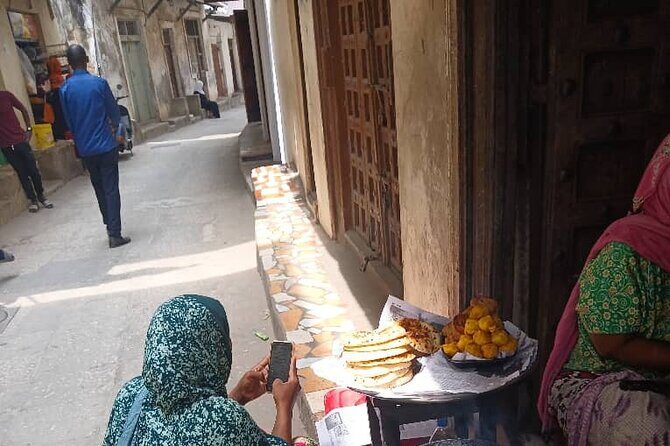
Next up is the House of Wonders, or Beit-el-Ajaib—one of the most recognized landmarks in Stone Town. It was built as a ceremonial palace for Sultan Barghash in the 19th century. The reason it’s famous is specific: it was the first building in East Africa to have electricity and an elevator, which is exactly the kind of detail that makes your guide’s explanations land.
Here’s the key thing to understand before you go: the building is currently under renovation. So you may not get the full access you’d hope for. In this tour, the emphasis is learning from the outside. Even from street level, it’s still a powerful lesson in Zanzibar’s mix of influences—Omani and European architectural elements—and how the island’s position as a major trading hub shaped its wealth and connections.
This stop is about 15 minutes, and the admission is listed as free.
Old Slave Market and the Anglican Cathedral: Heavy History, Guided With Care
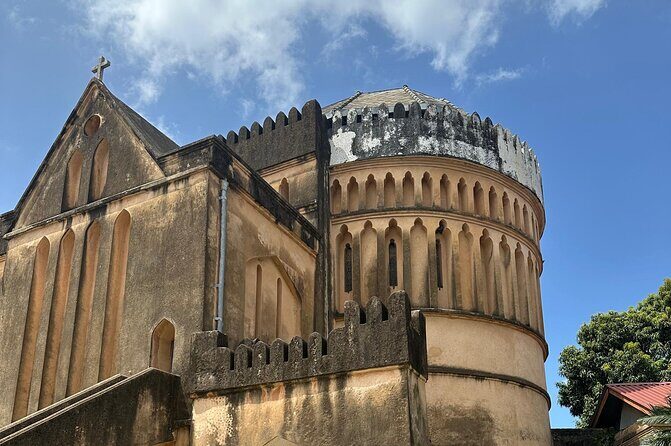
If you choose this tour, plan your mindset for the most emotional stop. You’ll visit the Old Slave Market site, including the underground slave chambers, and then also see the Anglican Cathedral built on the former market area.
This part of the experience is not casual sightseeing. It’s where Stone Town’s history turns hard and real: memorials, the underground spaces, and the stories your guide shares about the enslaved people’s struggles and resilience. A strong guide makes a difference here—someone who can handle your questions without rushing and who helps you understand why the site is preserved.
In past experiences on this route, guides like Mady have been noted for answering tough questions well, even adding a small quiz at the end to check what you learned—an odd but helpful way to keep the emotional weight from turning into pure numbness. Another guide, Hamad, is noted for being able to answer widely across Zanzibar’s complex culture, and that ability matters most when the information is heavy.
Practical note: this stop runs about 30 minutes, and admission is included.






Freddie Mercury House: A Quick Pop-Culture Stop With a Real Local Link
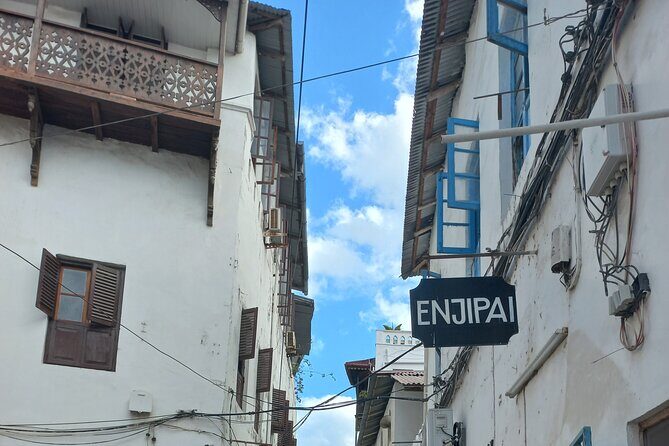
Between the heavier sites and the royal palaces, you’ll pass the Freddie Mercury House. You’ll get a glimpse of the birthplace of Queen frontman Freddie Mercury and a short thread of how his early life in Zanzibar connects to the larger story of the island.
This is a brief moment, but it helps some people re-balance the mood. It also gives you a break from pure historical gravity without losing the sense that Stone Town has always been a meeting place for worlds—musical, cultural, commercial, and personal.
You’re not expected to linger here. Think of it as a quick snapshot—enough to spark curiosity.
People’s Palace (Beit al-Sahel): Royal Rooms, Original Furnishings, Museum Time

The last big landmark is the People’s Palace, also called Beit al-Sahel. This is the former residence of the Sultan of Zanzibar, now operating as a museum.
This stop is where you see what power looked like in material form: opulent rooms, original furnishings, historical photographs, and artifacts tied to the royal family’s lifestyle. It’s also where your guide can connect political life to everyday design—how wealth showed up in architecture, household layout, and display choices.
For me, this kind of museum stop works best when it’s not treated like a walk-through checklist. With a private guide, you get more meaning attached to what you’re seeing, rather than only a list of objects and dates.
The Guide Makes or Breaks It: Mady and Hamad as Examples

This tour is private, so the guide is not background noise. In the notes from past tours, Mady is repeatedly singled out for in-depth knowledge and strong communication—especially around the history behind each place. One memorable detail: Mady didn’t just explain Zanzibar history; he also made room for a local treat, buying sugar cane juice from a street vendor so the tour had a sensory moment too.
Hamad is another name associated with strong performance, including the ability to adjust the route depending on what you prefer. That matters because not everyone wants to spend the same amount of time on every stop. If you have questions about architecture, trade history, or the slave trade memorials, a flexible guide can steer the pacing so you don’t feel like you’re being rushed.
If your guide on the day is anything like these examples, you’ll leave with more than photos. You’ll leave with a clearer picture of what you just walked through.
Price and Logistics: When This Tour Is a Smart Buy (and When It Isn’t)
Let’s talk value in plain terms.
At $35 per person, you’re paying for:
- A private guide
- Round-trip transfers from hotels within the Stone Town area
- Entrance/service fees included for the monuments on the route
- Mineral water
- Shopping time
If you were building this yourself, you’d likely end up spending time paying entry fees and spending more time figuring out routes. This tour compresses that work into about three hours, which is especially useful if you only have a short window in Stone Town.
When it may not be the best fit: if your hotel is outside the “around Stone Town” pickup area, you might have to coordinate other transport on your own. The tour’s pickup coverage is clearly limited to Stone Town, so if you’re staying far out, ask ahead how pickup works.
What to Expect From a 3-Hour Pace in Stone Town Lanes
This tour moves at a walking pace that’s built for multiple landmark types: fort courtyard time, iconic building context, memorial and cathedral viewing, a short pop-culture pass-by, and royal palace museum time.
The timing distribution matters:
- Short stops (like the Old Fort and House of Wonders) help you get context without burning half a day.
- The longer emotional stop (Old Slave Market and chambers) gives enough time to absorb what you’re seeing without rushing you out the door.
- Shopping time is included, but it’s not meant to swallow the tour.
And because it’s private, you’re not stuck with a rigid group schedule. If you want to ask one more question at the fort or slow down around the memorial areas, you have a better chance of doing that.
Should You Book This Stone Town Walking Tour?
I’d book it if:
- You want a first-rate Stone Town orientation in only a few hours
- You care about the island’s connections to Omani rule, Swahili culture, and Indian Ocean trade
- You want the slave trade memorials explained with care rather than stumbling through them on your own
- You prefer the comfort of hotel pickup and entry fees included
I’d think twice if:
- You’re sensitive to heavy history and memorial sites, because the Old Slave Market stop is one of the emotional centers of the route
- You expect full access everywhere; with the House of Wonders under renovation, some parts are outside-view learning rather than full inside exploration
- You’re staying beyond the listed pickup zone, where transfers might not be as convenient
If you’re trying to make Stone Town meaningful in a short visit, this tour’s structure is a strong match—guided, focused, and built around the exact places that shape how you understand the city.
FAQ
What does the Stone Town Walking Tour include?
You get a professional tour guide, shopping time, mineral water, and service/entrance fees for the monument stops. The tour also offers pickup and drop-off from your hotel within the Stone Town area, and you’ll use a mobile ticket.
How long is the tour?
It runs for about 3 hours.
Is this a private tour?
Yes. It’s a private tour/activity, so only your group participates.
Where does the tour start and end?
It starts at Forodhani of Zanzibar Park and ends back at the same meeting point.
Which sights are included in the route?
You’ll visit the Old Fort (Ngome Kongwe), the House of Wonders (Beit-el-Ajaib), the Old Slave Market/Anglican Cathedral, you’ll pass by the Freddie Mercury House, and you’ll explore the People’s Palace (Beit al-Sahel).
Are monument entry fees included?
Yes. Admission for the tour’s monument stops is included where listed, and service entrance fees are part of what’s included.
Is hotel pickup included for everyone?
Pickup and drop-off are included from your hotel around Stone Town only.
What about the House of Wonders—can you go inside?
The House of Wonders is under renovation, and the tour focuses on learning about it with guidance from the outside.
Can most people join, and are service animals allowed?
Most travelers can participate, and service animals are allowed.
Is free cancellation available?
Yes. You can cancel up to 24 hours in advance for a full refund. If you cancel less than 24 hours before the start time, the amount paid isn’t refunded.