REVIEW · ZANZIBAR
Zanzibar Stone town historical walking tour with Mohamed
Book on Viator →Operated by Africa’s Home Tours & Safaris · Bookable on Viator
Stone Town has a way of slowing you down fast. This 3-hour walking tour with Mohamed is a smart mix of landmarks, stories, and free-stop sightseeing that makes the maze of streets feel manageable and meaningful. You’re not just looking at buildings—you’re learning what they used to do and why they matter.
I especially love the private guide setup. You get a relaxed pace, and Mohamed can steer the walk toward what you care about most. I also like that the route includes free-entry stops, so you can spend your money on experiences (and snacks) instead of tickets.
One thing to consider: it’s still a walking tour in warm conditions. If you’re not into lots of stops, angles, and street-level sightseeing, you might find it a bit more active than you expected.
In This Review
- Key highlights you’ll feel on this tour
- How the 3-hour Stone Town walk with Mohamed actually works
- Freddie Mercury Museum: a quick start that sets the tone
- House of Wonders (Beit-el-Ajaib) and the electricity story behind the name
- Old Fort (Ngome Kongwe): a defensive past with festival timing
- People’s Palace Museum: what Zanzibar wanted to teach its people
- Old Slave Market and the Anglican Cathedral: a serious stop done respectfully
- Darajani Bazaar: market time that’s actually useful for shopping and senses
- Old Dispensary: Tharia Topan’s building and a second life
- Price and value: what $30 buys you and what you still need to plan
- Tips to make this a smooth, low-stress walking tour
- Who this tour suits best (and who might want a different plan)
- Should you book this Stone Town historical walk with Mohamed?
- FAQ
- How long is the Zanzibar Stone Town historical walking tour?
- What does the tour cost?
- What’s included in the tour price?
- What are the major stops on the route?
- Are admission tickets included for the stops?
- Is lunch included?
- What is the cancellation policy?
Key highlights you’ll feel on this tour
- Mohamed’s private, flexible pacing for a calmer, more personal Stone Town experience
- Freddie Mercury Museum to start with a pop-culture anchor before the deeper history
- House of Wonders (Beit-el-Ajaib) and the electricity story behind its name
- Slave-market and Anglican Cathedral area for a heavy, important historical stop
- Darajani Bazaar time so you can shop and take in real daily market life
- Old Dispensary as a quick architectural bonus with a second-life purpose
How the 3-hour Stone Town walk with Mohamed actually works
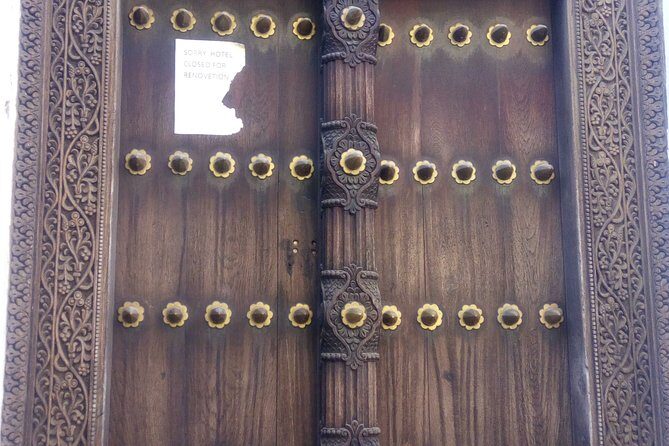
This is a private historical walking tour, scheduled for about 3 hours. What that means in real life: you’re not stuck following a big group with someone shouting over the noise. You can ask questions, pause to look closely, and shift the emphasis if you’re more into architecture, cultural history, or shopping.
You’ll also get hotel pickup and drop-off from various locations, which matters a lot in Stone Town. The streets are tight and easy to misjudge on your first day. Having transport handled is less stress so you can focus on the walk.
You can choose morning or afternoon departure times, so you can match it to your energy level. In practice, I’d pick the time of day when the light looks best for you and you’re least likely to feel rushed about other plans.
The route starts at the Old Fort on Mizingani Road. The tour ends back at the meeting point, with time built in for browsing and shopping.
You can also read our reviews of more walking tours in Zanzibar



Freddie Mercury Museum: a quick start that sets the tone
Most tours toss you straight into ancient walls. This one begins with the Freddie Mercury Museum—the house where he was born. The details you’ll hear matter here: Freddie’s real name is connected to Farrokh Bulsara, and you’ll also get the family background tied to roots from Iran and India.
It’s a smart opener for two reasons. First, it gives you an easy entry point into Stone Town’s global connections. Second, it helps you understand how a single famous story can grow out of a place—and then pull attention back to the city itself.
You should expect a short stop. The museum time is listed at about 5 minutes, and the admission ticket is free. That doesn’t mean it’s shallow; it means it’s a kickoff moment—enough to orient you before the older, heavier layers of history.
If you’re a fan of Queen, you’ll probably enjoy this more than you expect. If you’re not, it still works because it frames Stone Town as a crossroads of cultures, not just a set of old buildings.
House of Wonders (Beit-el-Ajaib) and the electricity story behind the name
Next up is the House of Wonders, also called Beit-el-Ajaib. You’ll hear that it was originally a sultan’s palace, built by Sultan Baraghash, who was the third sultan in that line of rule.
The reason this building gets its dramatic nickname is straightforward and oddly specific: it’s described as the first house with electricity in that era. Then, over time, the palace function changed, and today it’s used as a museum.
This is one of those stops where the architecture is interesting, but the story is what makes it click. You start to see how power, technology, and status were tied together—long before the modern world tried to measure importance with gadgets.
The stop is brief (around 7 minutes) and the listing says free admission. I like that. You don’t lose half your tour to a long entry process, and you move onward while the context is still fresh.
Potential drawback: if you’re the type who hates standing still, this might feel like a “look-and-listen” stop rather than a deep read. Still, it’s very effective for understanding the city’s timeline.
Old Fort (Ngome Kongwe): a defensive past with festival timing
The walk continues to the Old Fort, known as Ngome Kongwe. Here, you’ll learn it was an Arab fort built to defend against Portuguese forces.
Then the story pivots, which I appreciate. Today, it’s used for festivals such as the Sauti za Busara festival, the Zanzibar International Film Festival, and the reggae festival connected with Freddie Mercury’s music legacy (often referred to through the Bulsara name).
That contrast—defense wall to culture stage—gives Stone Town a kind of rhythm. Even if you don’t catch a festival in action, you’ll understand why people keep returning to this location.
This stop lasts about 6 minutes, with free admission listed. It’s short, but the key takeaway is big: places in Stone Town aren’t frozen. They keep getting reused as the city’s needs change.
People’s Palace Museum: what Zanzibar wanted to teach its people
The People’s Palace Museum is another former sultan’s palace site, now used for public education. You’ll hear that the government opened it to show Zanzibar’s history, culture, and traditions and to act as a centre of education and research.
This is the part of the tour that feels less like tourism and more like civic identity. It’s not only about showing you sights; it’s about showing you what Zanzibar chose to preserve and explain.
The stop time is about 7 minutes, and it’s listed as free. That short duration means you won’t get a full museum-style experience unless you choose to linger on your own after the tour. But for an efficient walking route, it does a good job giving you the big picture.
If you like learning how cities present themselves—what they highlight and why—you’ll probably enjoy this stop even more than the “photo spots.”
You can also read our reviews of more historical tours in Zanzibar




Old Slave Market and the Anglican Cathedral: a serious stop done respectfully

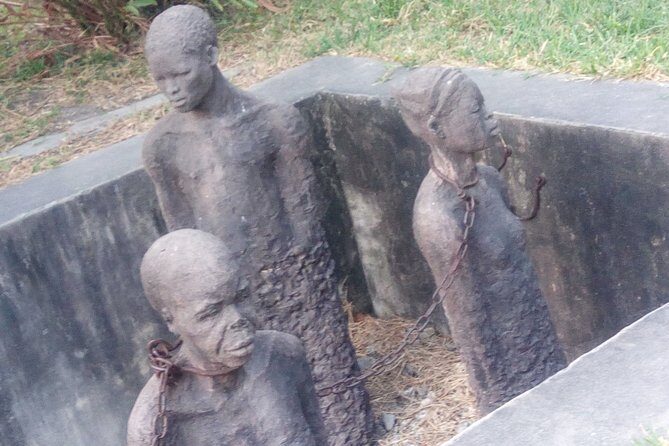
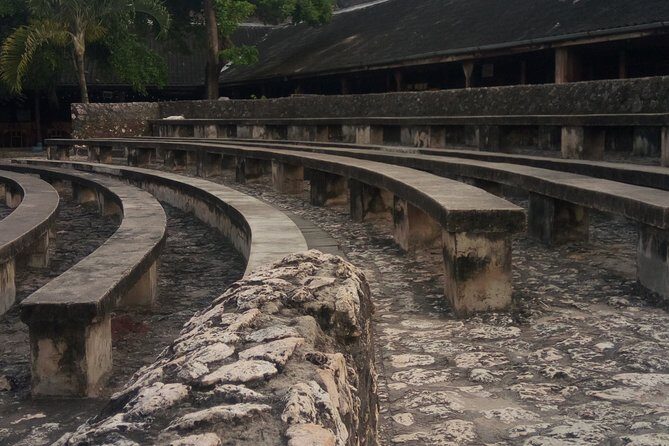
Next comes a heavy one: the Old Slave Market area / Anglican Cathedral. You’ll hear it was the former slave market where people were brought from different parts of Africa and sold. Today, the area is treated as a historical site.
Then you’ll also connect it to the Anglican Cathedral nearby, which helps you understand how new structures grew in the same urban space that once held suffering and commerce.
I like that this tour doesn’t skip the difficult chapter. You get the context, and you get it as part of the flow of the town instead of as a separate “special trip.” It makes the history feel real, not staged.
The stop is listed at about 15 minutes, with free access. That longer time compared to some other stops suggests the guide expects you to absorb it. Go slower here. Ask questions. If you need a breath of air, take it—there’s no prize for rushing through.
Practical note: because the subject is intense, this is a stop you’ll want to be mentally present for. If you’re exhausted, consider saving it for a time you can handle the emotional weight.
Darajani Bazaar: market time that’s actually useful for shopping and senses
After the history comes the street life. Darajani Bazaar is described as Zanzibar’s old and first market, active from morning to evening. It’s a great place to see how daily needs shape the city’s rhythm.
You’ll hear what’s commonly sold: fish, meat, fruits, spices, and vegetables. Even if you don’t buy anything, standing in a market like this helps you understand what locals are doing, not just what the city used to be.
This stop is listed at about 7 minutes, admission-free. That might sound short, but it’s often the right amount of time on a 3-hour walk. You’ll be able to orient yourself and maybe grab a souvenir or two without turning your tour into an all-day wandering session.
Also, the tour includes time for shopping later. So you can treat the bazaar portion like a scouting lap: see what looks good, then decide if you want to return on your own.
If you have dietary needs, don’t assume anything. The tour doesn’t include lunch, so consider buying only what you’re confident you can eat and handle.
Old Dispensary: Tharia Topan’s building and a second life
The tour finishes with the Old Dispensary, a former hospital now recognized as a historical building. It’s said to have been built by Tharia Topan.
This is one of those stops that can be easy to miss if you’re walking alone, because it’s not as famous as the big “headline” sites. But it adds something important: Stone Town wasn’t only about palaces and trade. It also had spaces for health and community support.
The stop is about 5 minutes, and admission is listed as free. Again, short. But it works as a final anchor—architecture plus function plus time.
If you’re the type who loves how cities reuse old structures, you’ll probably appreciate the theme ending: each building changes roles as the years change.
Price and value: what $30 buys you and what you still need to plan
The price is $30 per person for about 3 hours. For Stone Town, I think this is solid value when you consider three things:
- You get a private guide rather than joining a large group
- Hotel pickup and drop-off are included, which saves time and navigation stress
- The listed sightseeing stops are marked as free admission, so your cost stays mostly predictable
What’s not included is also clear. You’ll need to plan for lunch if you want it, plus breakfast, coffee/tea, and anything else you choose to buy while shopping. A small water bottle is included, which is a helpful detail in warm weather.
So here’s the practical way to think about the value: this tour is priced like a guided orientation and storytelling session, not like an all-in-one day tour. If you use it to learn and then spend your own time eating and exploring afterward, you’ll likely feel like you got your money’s worth.
Tips to make this a smooth, low-stress walking tour
Stone Town rewards comfortable pacing. Here’s how to set yourself up for an easy win:
- Wear walking shoes you can trust. The ground can be uneven and you’ll be stopping often.
- Bring a light layer if you feel the sun and then the shade swing. This is a street walk, not a climate-controlled event.
- Keep small cash for souvenirs. The tour includes time to shop, but it doesn’t include what you buy.
- If you want lunch, decide beforehand. The tour gives you time to purchase lunch, but it doesn’t bundle it in.
- Plan for good weather. This experience is described as weather-dependent. If conditions are poor, you may be offered a different date or a full refund.
If you’re traveling with limited time, this is also a good “first Stone Town” option. It helps you understand where you are and what you’re seeing, which makes the rest of your days easier.
Who this tour suits best (and who might want a different plan)
This tour fits well if you:
- want a private guide who can tailor the pacing
- like mixing well-known places (Freddie Mercury) with deeper context (slave-market history)
- want a short, efficient way to cover multiple key sites in about 3 hours
- enjoy markets and shopping time instead of a pure museum day
It may feel less ideal if you:
- prefer long museum stays and slow, detailed reading
- dislike walking in warm conditions
- want lunch fully included as part of the ticket price
The listing also says most travelers can participate, and service animals are allowed. If you’re comfortable on your feet for a few hours, this is a realistic option.
Should you book this Stone Town historical walk with Mohamed?
If you want Stone Town in a controlled, human-scale way, I’d say yes. This tour does a nice job pairing storytelling stops with just enough time to look around and shop. The private format with Mohamed makes it feel less like you’re collecting landmarks and more like you’re understanding a city.
Book it if you like a mix of famous and serious sites—Freddie Mercury and the House of Wonders, but also the old slave market area where the history deserves respect. Also, the price feels fair for what’s included, especially with pickup and free-entry stops.
Pass or consider another option if you want a long, sit-down museum experience or a fully meal-inclusive day. This is a walk and a conversation, not a buffet of activities.
If the timing works and the weather looks good, this is a strong way to get oriented, learn the key threads of Stone Town, and still have energy left to explore on your own.
FAQ
How long is the Zanzibar Stone Town historical walking tour?
It’s approximately 3 hours.
What does the tour cost?
The price is $30.00 per person.
What’s included in the tour price?
A small water is included. The tour also includes a guided walking route with a private guide, plus hotel pickup and drop-off from various locations.
What are the major stops on the route?
The tour includes stops such as the Freddie Mercury Museum, House of Wonders (Beit-el-Ajaib), Old Fort (Ngome Kongwe), People’s Palace Museum, the Old Slave Market/Anglican Cathedral area, Darajani Bazaar, and the Old Dispensary.
Are admission tickets included for the stops?
The listed stops on this route show admission as free.
Is lunch included?
Lunch is not included. The tour includes time to purchase lunch if you want.
What is the cancellation policy?
You can cancel for a full refund up to 24 hours before the experience’s start time. The experience requires good weather, and if it’s canceled due to poor weather, you’ll be offered a different date or a full refund.