REVIEW · ARUSHA
7-Day Machame Kilimanjaro Summit Tour from Arusha
Book on Viator →Operated by Climb Kili · Bookable on Viator
Seven days on Kilimanjaro starts with a climb. On the Machame route, you move through rain forest, moorland, and alpine zones toward a sunrise push at Uhuru Peak.
What really makes this trip feel doable (and worth it) is the small group size (max 6), plus the logistics that keep you focused on walking, not wrangling details. I also like that your camps run with camping equipment, fees, and meals included, so you’re not constantly thinking about what’s missing. One possible drawback: this is a tougher route that asks for strong fitness and previous hiking experience, and summit night is steep and mentally heavy.
In This Review
- Key Things That Make This Machame Summit Tour Work
- The Machame Route in Plain Terms: Tough, Scenic, and Not for Everyone
- Arusha Setup: Summit Lodge, an 8:00 am Start, and Hotel Transfers
- Day 1: Machame Gate to Machame Camp, Rain Forest Boots-On Work
- Day 2: Shira Camp via Moorland and a Dry Gorge
- Day 3: Lava Tower Acclimatization, Arrow Glacier, Senecio Forest, and Barranco
- Day 4: Barranco Wall to Karanga Camp, Where “Adventurous” Gets Real
- Day 5: Barafu Views, Slow Pace to Kosovo Camp, and the Exposed Ridge Factor
- Day 6: Midnight Summit to Stella Point and the Uhuru Peak Finish
- Day 7: Mweka Gate Morning Walk and the Shower You’ve Been Thinking About
- Value and Price: Is $2,695 Worth It for a 7-Day Machame Summit Tour?
- The Guide and Crew Advantage: Why the Team Matters on Kilimanjaro
- What You Should Train for Before You Go
- Should You Book This Machame Summit Tour?
- FAQ
- How long is the Machame Kilimanjaro summit tour?
- What time does the tour start, and where do I meet?
- How many people are in the group?
- What’s included in the price?
- Is the route suitable for beginners?
- What is the summit day schedule like?
- Can I cancel for a full refund?
Key Things That Make This Machame Summit Tour Work
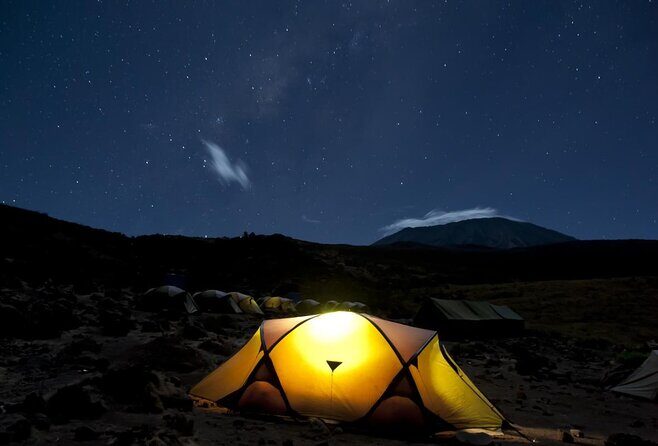
- Max 6 travelers means your guide can actually help, not just manage
- Camping gear, meals, and mountain fees included so you travel lighter
- Round-trip hotel transfers from Arusha keep the start and finish simple
- Machame-to-Kibo progression uses altitude gains and rest days for acclimatization
- Midnight summit start to Stella Point sets you up for a sunrise moment
- Admission tickets included across the trek days, so you’re covered on entry costs
The Machame Route in Plain Terms: Tough, Scenic, and Not for Everyone
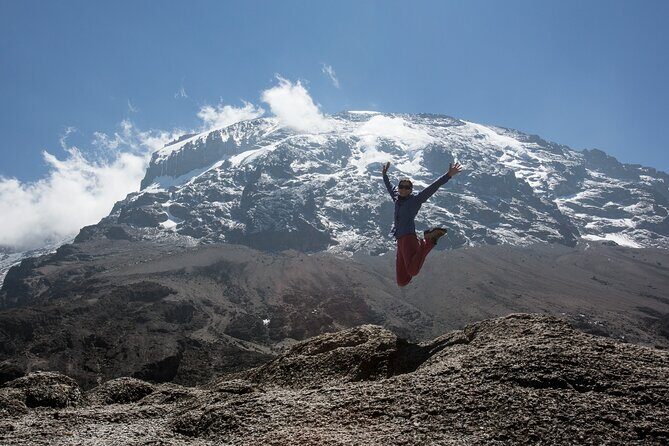
The 7-day Machame route is famous for a reason: it takes you upward through changing climates, not just one long road to the summit. You’ll start in damp, lower-elevation forest and gradually trade that for moorland, rocky ridges, and cold alpine conditions. The payoff is real—when you crest high camps, the views and the sense of progress hit hard.
This trek is also described as tougher than the Machame’s common alternative routes like the Mangaru option, and you’ll get the most out of it if you already have hiking experience. If you’re the type who trains for climbs, paces well, and can stay calm when the air thins, you’ll feel more in control when the route turns serious.
Your best mindset is steady effort, not speed. Kilimanjaro rewards patience. Even on days that look shorter on paper, you’re still gaining altitude, walking on uneven ground, and adjusting to colder temperatures.
A few more Arusha tours and experiences worth a look
Arusha Setup: Summit Lodge, an 8:00 am Start, and Hotel Transfers
This tour starts in Arusha, meeting at Summit Lodge (Sakina Raskazone Arusha). The start time is 8:00 am, and you’ll be picked up and taken to the mountain entry point area for your trek start.
One practical win is the round-trip transfers from your Arusha hotel, both before you leave and when you return after the final walk. That matters more than it sounds. You don’t want to spend your energy on taxis, finding the right door, or figuring out where to hand over bags at the end of a brutal day.
The experience also uses a mobile ticket, and you should receive confirmation within 48 hours of booking subject to availability. That helps if you’re planning flights and want fewer loose ends hanging over your head.
Day 1: Machame Gate to Machame Camp, Rain Forest Boots-On Work
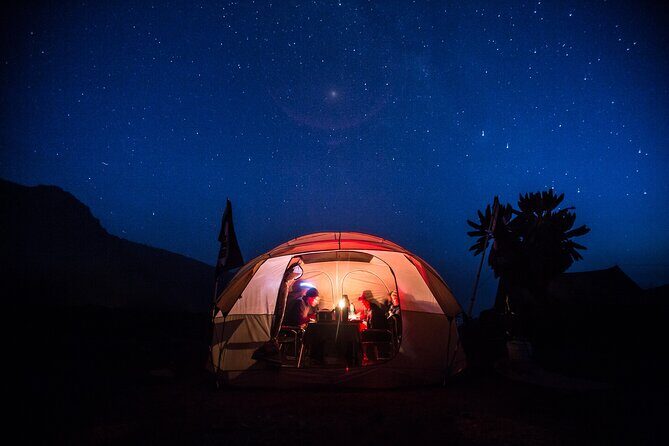
Day 1 begins with a transfer from your hotel to Machame Gate, then you walk into the park and up through rain forest. The route climbs along a winding trail up a ridge, and the description is honest: lower down, it can get muddy and slippery.
This is where I’d lean into smart foot-care early. Plan on trekking poles and gaiters if you have them, because the ground can be slick and you’ll be learning how your footing feels with a load.
By the time you reach Machame Camp, your tent setup and personal belongings are handled for you. That’s a real quality-of-life detail on day one, because it turns “arrival” into rest instead of a second job.
Day 2: Shira Camp via Moorland and a Dry Gorge
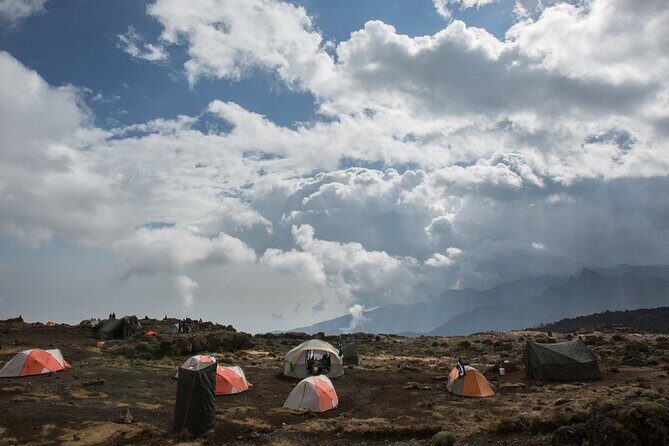
After breakfast, you leave the wetter forest feel and head into an ascending path where the scenery shifts into moorland with heather. You’ll cross small valleys and move along a steep rocky ridge, then turn toward a dry river gorge.
This day tends to feel different in your body. The terrain changes, the air feels less damp, and your pace will likely slow as altitude climbs. The walk still isn’t about sprinting. It’s about keeping your breathing steady and not overreaching.
You finish at Shira Camp, with time for rest and dinner. The good part of a day like this is that it builds stamina while still keeping you close enough to the next acclimatization step.
Day 3: Lava Tower Acclimatization, Arrow Glacier, Senecio Forest, and Barranco
Day 3 is an acclimatization day that helps set you up for what comes next. You’ll push toward the Lava Tower (around 15,000 feet / 4,500m), then follow the route toward the Arrow Glacier area.
After that, the plan is to descend into the Senecio forest and walk through a route that includes a waterfall segment before you reach Barranco Camp. The Barranco area is described as being in the shadow of the big Barranco wall, and you’ll often get clouds moving in from the Barranco Valley. That’s not just scenery; it can change how cold and windy the camp feels.
This is one of those days where pacing matters most. If you rush the climb to the tower, you’ll pay for it later. The point is acclimatization—give your body the signal it needs without burning yourself out.
Day 4: Barranco Wall to Karanga Camp, Where “Adventurous” Gets Real
Day 4 tackles the Barranco Valley and then the Barranco wall. That wall is described as an adventurous stretch that ushers you into the arctic zone of Kili, and that wording is there for a reason: conditions change quickly at higher elevations, and the terrain becomes more exposed and colder.
From there, you trek along the South Circuit path through Karanga Valley, ending at Karanga Camp. This day is about moving from “climby” to “high” in a way that feels serious but still structured for acclimatization.
The practical thing to remember: your hands and feet will get cold even when you feel warm during movement. Keeping a steady pace helps you avoid the stop-start chill that can sneak up on you.
Day 5: Barafu Views, Slow Pace to Kosovo Camp, and the Exposed Ridge Factor
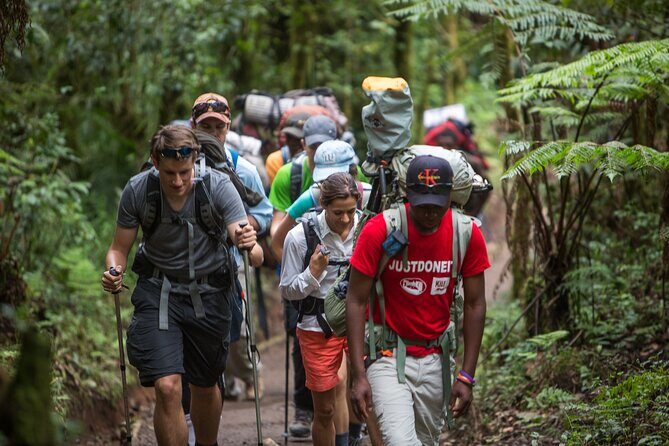
Day 5 is all about controlled effort. You take a slow pace to Kosovo Camp, passing Barafu Camp where you can get excellent views of Kibo and Mawenzi peaks.
Kosovo Camp sits on an exposed ridge, so the day’s big consideration is simple: you need to be comfortable with the terrain before dark. That matters because the next day starts at midnight, and you want your night to be about sleep, not stress.
This is also the day where preparation pays off. You’re resting, getting ready, and making sure you’re set for summit night. If you’re the type who likes to be organized, this is where that habit pays dividends.
Day 6: Midnight Summit to Stella Point and the Uhuru Peak Finish
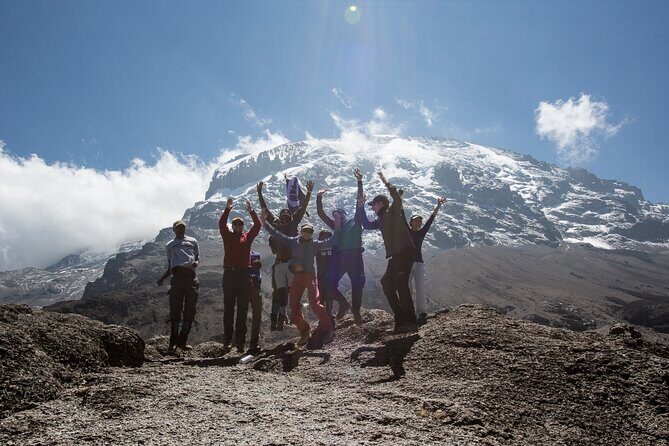
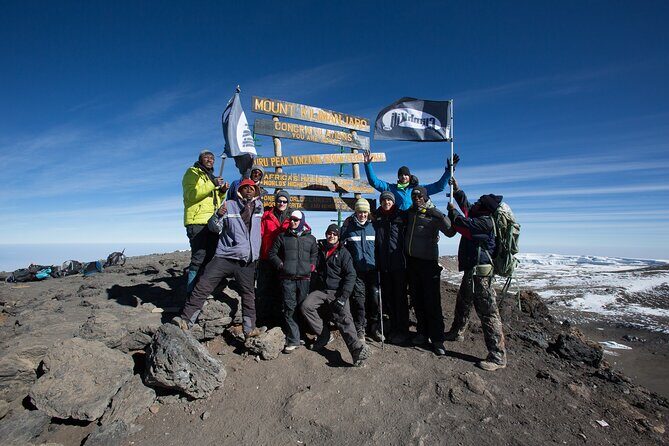
This is the day with the legend: a midnight start to reach the summit. The hike section is described as one of the steepest on the non-technical paths, and it’s long—about 6–7 hours of ascent to Stella Point for sunrise.
From Stella Point, you can see the summit, and the route continues about 1 hour to Uhuru Peak, the rooftop of Africa. The ascent goes through heavy scree toward the crater rim between Rebmann and Ratzel glaciers. That detail is important. Scree is slow, tiring, and annoying if you’re not used to it.
You’ll then descend to Mweka Camp for dinner and celebration. That contrast—extreme effort up, then an actual meal and recovery—helps make the day feel survivable, not just dramatic.
Day 7: Mweka Gate Morning Walk and the Shower You’ve Been Thinking About
After the summit, day 7 is about coming down without rushing. You’ll walk from the camp area to Mweka Gate (around 5,400 feet / 1,645m), taking about 3–4 hours.
Once you hit the gate, your vehicle returns you to the meeting point, and the trek includes the key comfort many people remember most: a very welcomed shower back at your hotel. After several nights on the mountain, that hot rinse is pure morale.
Even if your legs are cooked, this final day feels reflective. You’ll likely notice how quiet and relieved your group feels compared to earlier days.
Value and Price: Is $2,695 Worth It for a 7-Day Machame Summit Tour?
At $2,695 per person, this isn’t a casual add-on. The value comes from what’s included and what you’re spared from managing.
Here’s what you can count as baked in:
- Camping equipment, fees, and meals included
- Round-trip transfers from your Arusha hotel
- Admission tickets included across the trek days
- Small group size (max 6) for more guide attention
When you compare that to options where you piece together park fees, camp logistics, and meal planning, the total can climb quickly. The included structure also reduces decision fatigue. You can focus on acclimatization, pace, and staying mentally steady for summit night.
That said, you should still confirm what’s not covered for your specific booking—especially anything tied to personal gear, optional add-ons, or extra transportation outside the stated transfer points.
The Guide and Crew Advantage: Why the Team Matters on Kilimanjaro
Kilimanjaro success is about more than legs. It’s about decisions—when to push, when to slow, how to handle altitude symptoms, and how to keep the group calm through cold hours.
This operator’s approach is consistently described as careful and supportive. In the feedback you can see patterns around strong leadership and motivation, with names like Herment Mosha (often mentioned as a lead guide), plus Florian, Godlove, and others such as Steve, Manny, Singer, and Dismiss. You also get the sense that porters and guides are working as a coordinated team, not a last-minute patchwork.
A big practical point here is that daily monitoring and constant availability reduces uncertainty. On summit night, uncertainty is what burns energy. When your crew is watching pace and responding to needs, you stay in your own rhythm.
What You Should Train for Before You Go
The tour calls for strong physical fitness and notes that this route is tougher and better suited to hikers with previous experience. So treat this like a serious endurance climb, not a walk in the park.
You’ll want to practice:
- Sustained uphill walking (even if it’s just stairs and hills)
- Controlled pacing (not going too hard early)
- Hiking with a loaded pack
- Handling cold and slippery conditions if you train in varied weather
Also take seriously the details you already get in the plan: rain forest mud on day one, steep rocky ridges, and scree during the summit push. Those aren’t “maybe” conditions—they’re part of the route.
Should You Book This Machame Summit Tour?
Book it if you want:
- A classic Machame route with a structured acclimatization path
- Small-group attention (max 6)
- A trip where camping and feeding logistics are handled for you
- A lead-up to a midnight summit night designed around reaching Stella Point for sunrise
Think twice if you:
- Don’t have the hiking background for a tougher route
- Struggle with steep, cold, high-altitude effort
- Hate the idea of long days followed by a late-night summit attempt
If you’re ready to train, pace, and respect the altitude, this tour looks like strong value for a full-service Kilimanjaro climb.
FAQ
How long is the Machame Kilimanjaro summit tour?
It’s scheduled for 7 days (approximately).
What time does the tour start, and where do I meet?
You start at 8:00 am at Summit Lodge, Sakina Raskazone, Arusha (13842), Tanzania.
How many people are in the group?
The tour has a maximum of 6 travelers.
What’s included in the price?
The tour includes round-trip transfers from your Arusha hotel, camping equipment, fees, and meals, and admission tickets for the trek days listed.
Is the route suitable for beginners?
The tour says it’s suitable for people with previous hiking experience, and it notes the route is tougher than Mangaru.
What is the summit day schedule like?
You’ll start the summit push at midnight, hike to Stella Point for sunrise (about 6–7 hours of ascent), then continue to Uhuru Peak, and descend afterward to Mweka Camp.
Can I cancel for a full refund?
Yes. You can cancel up to 24 hours in advance for a full refund. If you cancel less than 24 hours before the start time, the amount paid is not refunded.