REVIEW · MOSHI
8 Days Guided Private Trekking in Mount Kilimanjaro
Book on Viator →Operated by Spirit of Kilimanjaro · Bookable on Viator
Eight days to Uhuru Peak is serious business. What makes this trek feel so doable is the small-group attention and a planned acclimatization schedule built around multiple high camps before summit night. I like that the route starts right at Londorossi Gate with your paperwork handled, then eases you in with a rainforest day before the altitude jumps. The main consideration is the hardest day: a long push to Uhuru Peak just before sunrise, followed by a substantial descent to Mweka Camp, so this isn’t a casual walk.
I also appreciate the human side of the operation. In feedback, the guiding team is repeatedly credited by name, including Joseph, Swahele, Zac, and William, with praise for organization and getting families of different ages through the same challenging itinerary. You’ll meet at Panama Garden Resort in Moshi, with pickup offered, and you’ll finish back at the same point after certificates and a final rainforest walk.
In This Review
- Key Highlights You’ll Care About Most
- Why a Private 8-Day Kilimanjaro Trek From Moshi Works
- Price and What You Actually Get for $2,310
- Day 1: Londorossi Gate Rainforest Start to Mti Mkubwa Camp
- Day 2: Shira 1 Camp and the Shift Into Higher Terrain
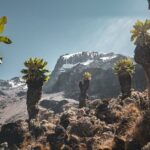
- Day 3: Shira 2 Camp and the Alpine Desert Feeling
- Day 4: Lava Tower Acclimatization and the Barranco Wall Moment
- Day 5: Karanga Camp Views With Rocky Higher Terrain
- Day 6: Barafu Camp, Your Summit Base
- Day 7: Sunrise Summit Push to Uhuru Peak and the Long Descent
- Day 8: Mweka Gate Finish Through Rainforest With Certificates
- Guides, Camp Organization, and Why Food Matters on Kilimanjaro
- Sustainable Tourism and Respect for the Mountain
- Who Should Choose This Trek From Spirit of Kilimanjaro
- Quick Practical Notes Before You Go
- Should You Book This 8-Day Kilimanjaro Private Trek?
- FAQ
- How long is the Mount Kilimanjaro trek?
- Where does the trek start and end?
- What is the highest point you reach?
- Are park tickets included?
- What meals are included in the price?
- Is this a private trek?
- Can I cancel and get a full refund?
Key Highlights You’ll Care About Most
- Start at Londorossi Gate with registration handled on the spot before you hit the trail
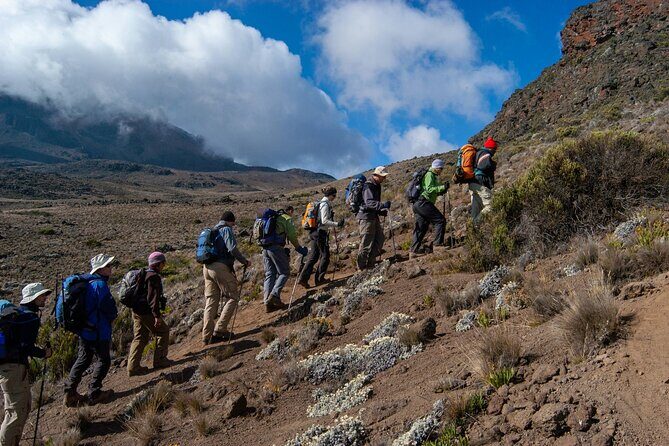
- Altitude built into the route, including a Lava Tower climb and Barranco Camp time to adjust before higher ground
- Summit night begins early, with an Uhuru Peak push before sunrise and a long descent afterward
- Meals and lodging are included (breakfast 8 days, lunch 8 days, dinner 7 days), so you’re not juggling logistics
- A private setup means your group is the only group on the activity
- Food and organization get real credit, including camp meals and smooth running on tough days
Why a Private 8-Day Kilimanjaro Trek From Moshi Works
If you’re choosing Mount Kilimanjaro, you’re really choosing how you’ll handle uncertainty: weather, altitude, energy, and the mental grind of summit night. A private guided trek helps because you’re not sharing your plan with a crowd. Your schedule, your pacing, and your support stay focused on your group.
From Moshi, the experience is designed to be practical from day one. You’re picked up (when offered), you start from Panama Garden Resort, and you end back there. That matters because the days leading into the trek can be chaotic enough without also figuring out where to meet, when to leave, and how to return.
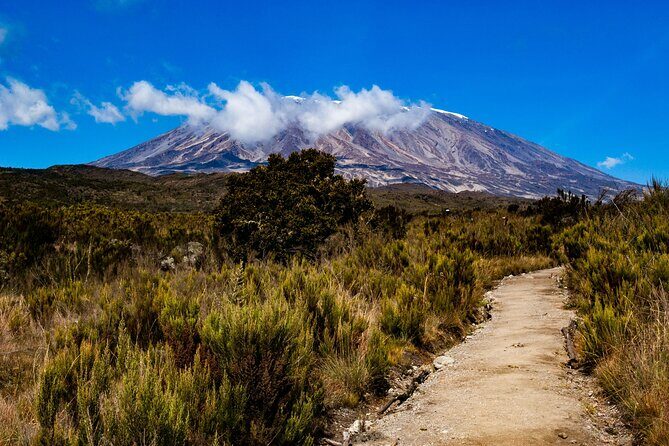
The itinerary itself is built like a ladder: rainforest first, then moorland, then alpine desert, then your higher camps and the final summit attempt. That progression matters for two reasons. First, it gives your body time to register altitude changes. Second, it keeps the hiking experience varied enough that you don’t feel like you’re doing the same thing every day for a week straight.
You can also read our reviews of more guided tours in Moshi
Price and What You Actually Get for $2,310
The cost is $2,310 per person for an approx. 8-day guided private trek. On paper, that’s a big number, so here’s how I’d judge value using only what’s included.
What you’re covered for:
- Tour guide
- Accommodations
- Meals: breakfast 8 times, lunch 8 times, dinner 7 times
- Park admission/tickets: the daily itinerary lists admission ticket as free, and your registration happens at Londorossi Gate
What’s not included:
- Visas (you’ll need to handle that yourself)
So where does the money go? Not just to “being there.” It goes into the full running of an 8-day program: consistent meals, camp logistics, trained guidance, and the safety-first planning around acclimatization. For a mountain like Kilimanjaro, the quality of how your days are staged often matters as much as the route name.
If you’re comparing costs, I’d focus on what happens after you’re paid. Does your guide team manage the steep segments and timing? Does the plan reduce altitude risk with staged climbs like Lava Tower and Barafu? This trek’s structure strongly suggests that those details are part of the product, not an afterthought.
Day 1: Londorossi Gate Rainforest Start to Mti Mkubwa Camp
Your trek begins at Londorossi Gate, where you complete park registrations. That’s a small step, but it’s important: it keeps your first day from turning into an administrative scramble.
Then you move into lush rainforest hiking. The day is designed as an introduction: about 6 kilometers over roughly 3 hours, ending at Mti Mkubwa (Big Tree) Camp around 2,750 meters.
What I like about this first day is the balance. You’re not dumped into steep altitude right away. You’re getting your rhythm and your footing while you’re still in the lower elevations. That can reduce stress early, which helps when later days demand more focus.
Possible drawback: it’s still day one on a mountain trek, so you’ll want to treat it seriously. Even “easy” days can tire you if you go too fast out of excitement.
Day 2: Shira 1 Camp and the Shift Into Higher Terrain
Day two continues through rainforest and pushes into the moorland zone, where the environment changes noticeably and the trail becomes more rugged. You’ll hike about 8 kilometers for around 4 hours, reaching Shira 1 Camp at approximately 3,505 meters.
This day is also your first real taste of Kilimanjaro’s volcanic drama, with views of volcanic formations described as breathtaking during the hike.
What this means for you in real life: the terrain transition is part of the acclimatization process. You’ll feel it in your breathing and how your body handles effort. The more smoothly you manage pace here, the better you’ll likely feel on later, higher-camp days.
Consideration: moorland hiking can feel harder even when the distance isn’t huge, because conditions can be more exposed and the terrain can vary. Plan to move steadily.
Day 3: Shira 2 Camp and the Alpine Desert Feeling
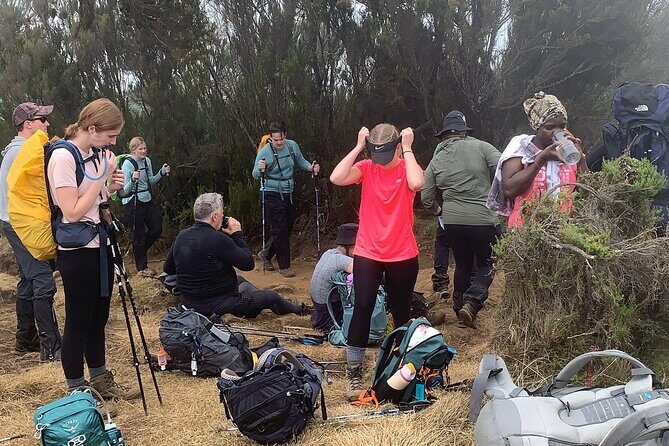
On day three you go to Shira 2 Camp, around 3,850 meters. The hike is about 7 kilometers, and the schedule lists a very short time estimate, with the key point being altitude change rather than distance.
At this stage, the surroundings shift toward an alpine desert. The thinner air is something you’ll notice here as you climb.
This is where the itinerary’s pacing philosophy shows up. You’re not trying to brute-force altitude. You’re taking the hike to the next camp level and letting your body start adapting before you add bigger elevation challenges.
You can also read our reviews of more private tours in Moshi
Day 4: Lava Tower Acclimatization and the Barranco Wall Moment
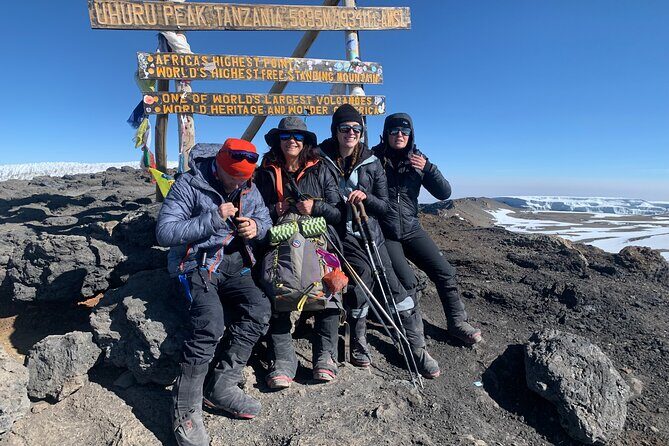
Day four is a big one for acclimatization strategy. You climb to Lava Tower at about 4,600 meters and then descend to Barranco Camp around 3,960 meters. Total distance is roughly 10 kilometers for about 5 hours.
The highlight is the Barranco Wall climb. That’s the kind of section that tests technique and confidence. If your legs feel fresh and your head stays calm, it can be an energizing challenge rather than just suffering.
Here’s why this day is valuable: you gain altitude to help your body adapt, then you come down to a lower camp. That pattern is often what makes later days feel possible instead of catastrophic.
Possible drawback: the day is longer than some of the others, and the wall section can slow you down. If you’re the type who tries to “win” hiking days, I’d resist that urge and follow your guide’s pace.
Day 5: Karanga Camp Views With Rocky Higher Terrain
Day five heads to Karanga Camp at about 4,035 meters. The day’s hike is listed around 4 kilometers and about 3 hours.
The terrain is described as alpine and rocky, with panoramic views during the trek.
This is the kind of day I’d call strategic. Shorter distance, high elevation, and a terrain type that keeps you moving but doesn’t exhaust you the way a long day would. It helps you arrive at the next phase with enough energy for what comes next.
Day 6: Barafu Camp, Your Summit Base
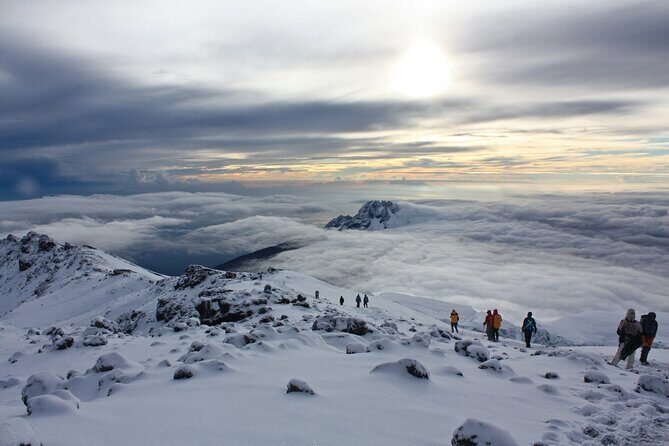
Day six takes you to Barafu Camp, around 4,600 meters. The trekking distance is very short—about 3 kilometers—and the purpose here is rest and preparation.
In summit programs, the last pre-summit camp day often feels strange: you’re hiking, but the real job is getting your body ready for the early morning effort and managing fatigue.
This day is short on paper, but it’s not a “break day” in the normal sense. It’s a reset. The itinerary is clearly built to let you recover enough to attempt Uhuru Peak the next night.
Day 7: Sunrise Summit Push to Uhuru Peak and the Long Descent
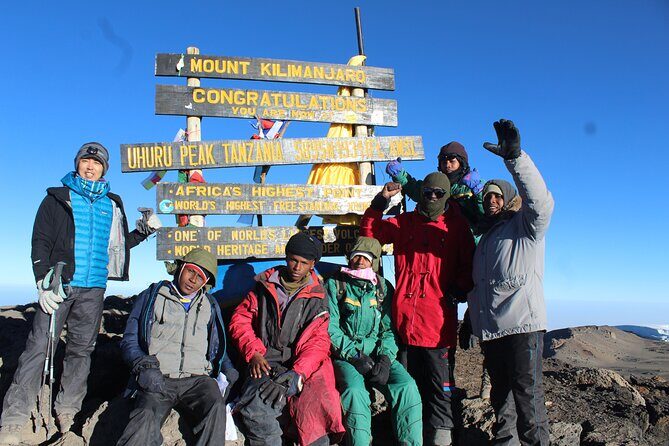
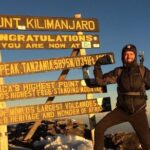
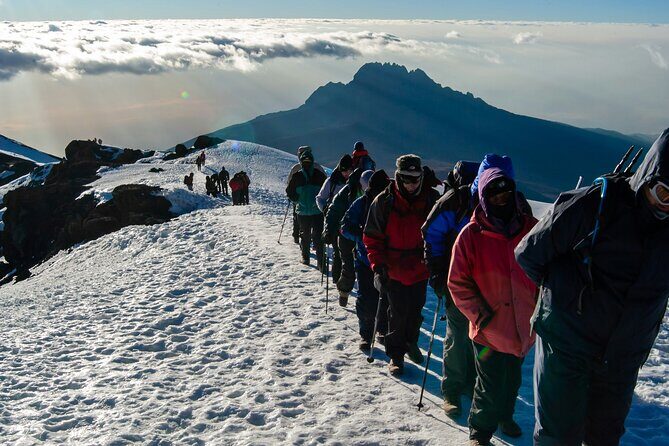
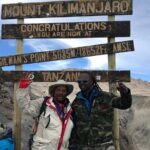
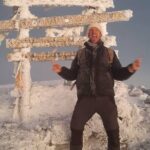
Day seven is the main event. Your summit attempt starts in the early hours, with a steep ascent to Uhuru Peak, the highest point in Africa, reached just before sunrise. After the summit celebration, you descend to Mweka Camp at about 3,100 meters.
The day covers roughly 18 kilometers total and is described as the most challenging and rewarding day of the trek.
This is the day where guidance quality matters most. The itinerary suggests a high-output effort followed by a demanding descent. That combination can turn your summit achievement into a recovery test, so it’s wise to treat the descent as part of the goal, not just the afterthought.
Important consideration: If summit night planning makes you nervous, read the itinerary carefully. This is a long day with a serious elevation change. Your best chance is staying steady and following your team’s rhythm.
Day 8: Mweka Gate Finish Through Rainforest With Certificates
Your final day runs from Mweka Camp to Mweka Gate. You’ll descend through the lush rainforest zone, covering about 10 kilometers in about 3 hours.
At the end, you receive summit certificates and you’ll say farewell to your guides and porters, then the activity ends back at the meeting point.
I like this ending because it gives your body something to do without the pressure of a high-altitude climb. The rainforest finish is also a satisfying contrast after days of moorland and alpine air.
Guides, Camp Organization, and Why Food Matters on Kilimanjaro
A summit trek is as much logistics as it is hiking. The program here is built around a consistent schedule: camps at specific elevations, time estimates for each day, and meals structured across the full itinerary.
Food might not sound like “adventure,” but it’s energy math at altitude. The information you’ve been given emphasizes well-planned acclimatization schedules and comfort-focused support. In feedback, camp meals are directly praised, which usually means more than just taste: it signals that the operation keeps running smoothly even when the mountain is doing its thing.
The guiding team also shows up as a standout theme. Names like Joseph, Swahele, Zac, and William come up in positive feedback, and that’s usually a clue that the guides are adjusting pacing and keeping people calm when the itinerary gets tough.
Sustainable Tourism and Respect for the Mountain
The tour description highlights sustainable tourism and preserving the environment. On Kilimanjaro, that matters because this is a high-traffic mountain where management choices affect trails, waste handling, and how local communities benefit from tourism.
You don’t see sustainability as a line item every day, but you feel it in how the trek is run: how smoothly things are organized, how camp operations are handled, and how your experience connects to the place rather than treating it like a box to tick.
Who Should Choose This Trek From Spirit of Kilimanjaro
This is a private tour/activity, meaning only your group participates. That’s ideal if you want space, attention, and fewer “wait and watch” moments on busy sections of the hike.
The experience data also says most travelers can participate, which suggests they run this itinerary with a broad range of people in mind. The structure also supports this: it starts gently and uses acclimatization steps like Lava Tower before summit night.
That said, day seven is still day seven. If you’re coming for a serious goal, you should be ready for a long summit day and a long descent afterward. If you’re looking for a light, casual hike, this route won’t match that expectation.
Quick Practical Notes Before You Go
- Start: Panama Garden Resort Tanzania, Shanty Town Road, Moshi (near public transportation)
- End: returns back to the meeting point
- Duration: approx. 8 days
- Ticketing: mobile ticket
- Pickup: offered
- Confirmation: received at booking time
Also, since this is a private trekking setup, you’ll want to double-check your group’s needs early. The route is clear, but everyone’s pace differs once altitude starts calling the shots.
Should You Book This 8-Day Kilimanjaro Private Trek?
If your priority is a structured acclimatization plan, this itinerary makes a strong case. The day-by-day pattern climbs high at key moments (Lava Tower and Barafu), then uses descents to keep you from cooking your body too early. The summit day is demanding, but the schedule is designed to set you up for it.
Book this trek if you want:
- Private guidance and a plan built for altitude management
- A team that’s been praised for organization and camp food
- A full 8-day program with certificates and a rainforest finish
Skip it (or at least shop carefully) if:
- You’re expecting a short, low-pressure hike
- Your group isn’t prepared for the intensity of summit day followed by a long descent
If you’re aiming for Uhuru Peak and you want a trek that treats pacing and support as part of the product, this is a thoughtful choice from Spirit of Kilimanjaro.
FAQ
How long is the Mount Kilimanjaro trek?
The trek runs for 8 days (approx.), with a full itinerary from Londorossi Gate to Mweka Gate and a summit attempt on day seven.
Where does the trek start and end?
It starts at Panama Garden Resort Tanzania in Moshi and ends back at the same meeting point after the final hike and certificates.
What is the highest point you reach?
The summit attempt is to Uhuru Peak, listed as the highest point in Africa, reached just before sunrise on day seven.
Are park tickets included?
The daily itinerary shows admission ticket: free for each day, and you complete park registrations at Londorossi Gate at the start.
What meals are included in the price?
Meals included are breakfast (8 times), lunch (8 times), and dinner (7 times).
Is this a private trek?
Yes. It’s listed as a private tour/activity, meaning only your group participates.
Can I cancel and get a full refund?
Yes. You can cancel up to 24 hours in advance for a full refund. If you cancel less than 24 hours before the start time, the amount paid is not refunded.