REVIEW · MOSHI
The Ultimate 8-day Lemosho route Climbing Kilimanjaro
Book on Viator →Operated by AFRICA NATURAL TOURS · Bookable on Viator
Climbing Kilimanjaro is a big deal, and Lemosho helps you pace it. This private 8-day Lemosho route package from Moshi focuses on guided trekking, with meals and camping equipment handled for you so you can stay focused on the climb.
What I like most is that your day plan is built around time on the mountain and gradual altitude gains, not just distance-chasing. Another strong point: you travel from Moshi to the park gate and back, with a guide briefing and a trekking certificate to wrap it up cleanly. One thing to consider: Kilimanjaro park fees are not included, so you’ll need to budget for that on top of the tour price.
In This Review
- Key things to know before you go
- Lemosho on Kilimanjaro: why this route feels more forgiving
- Moshi to the Londorossi Gate: day 1 sets the tone
- Day 2: Mti Mkubwa to Shira 1 Camp and the moorland “gear shift”
- Day 3: Shira 1 to Shira 2 and a lighter-feeling plateau day
- Day 4: Shira Camp 2 to Lava Tower—the steep path above vegetation
- Day 5: Barranco Wall to Karanga Camp—the climb that looks worse than it is
- Day 6: Karanga to Barafu—your body learns the thin air
- Day 7: Summit day planning, then back down to Mweka Camp
- Day 8: Mweka Camp to Mweka Gate—crossing off the last kilometers
- Guide, crew, and food: the part that makes or breaks your experience
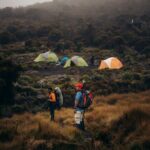
- Camping setup: you’ll sleep, but you’ll want to sleep well
- Price and what you really get for $1,300
- Private package details: pace, group size, and meeting point timing
- Practical summit prep: how to think on days 6 and 7
- Who should book this 8-day Lemosho climb from Moshi
- Should you book it?
- FAQ
- What is included in the Kilimanjaro 8-day Lemosho package?
- Are Kilimanjaro park fees included in the price?
- What are the main transport logistics from Moshi?
- When does the trek start and where is the meeting point?
- Is this trek private?
- What fitness level do I need?
Key things to know before you go
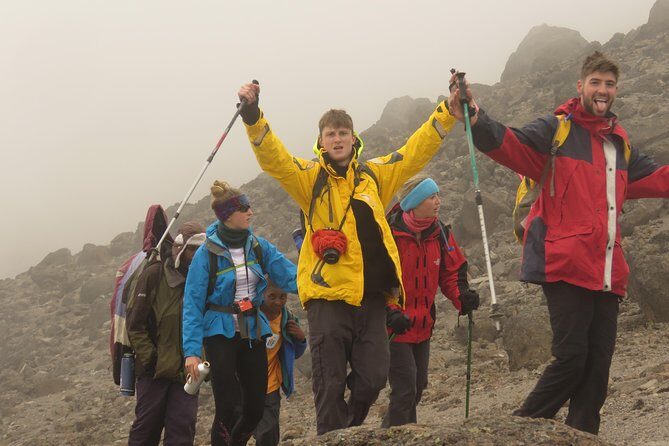
- Private pace for your group: you trek together, but you’re not forced into a one-size-fits-all rhythm.
- Camping gear and mattresses are included: you’re not scrambling to find tents and sleeping pads.
- Guide-led route through Shira and Barranco: you’ll pass classic waypoints like Shira Ridge, Lava Tower, and the Barranco Wall.
- Round-trip transport from Moshi to the gates: hotel-to-gate pickup and end-of-trek drop-off are covered.
- Summit day is planned for day 7: you’ll crest, then descend back toward Mweka Camp.
Lemosho on Kilimanjaro: why this route feels more forgiving
The Lemosho route is often chosen for one simple reason: it gives you time to adjust as you climb. You start relatively lower, then spend multiple days building altitude while still giving your body a chance to adapt. That matters on Kilimanjaro, because the mountain doesn’t care how motivated you are.
This specific itinerary travels across the Shira side and works toward the summit through key stages like Shira Ridge, Lava Tower, Barranco Wall, and Barafu. It also has a reputation for fewer crowds early on, since it doesn’t hit the common traffic patterns immediately. In practical terms, that often means you can keep your pace without constantly shoulder-checking around other groups.
You can also read our reviews of more tours and experiences in Moshi.
Moshi to the Londorossi Gate: day 1 sets the tone
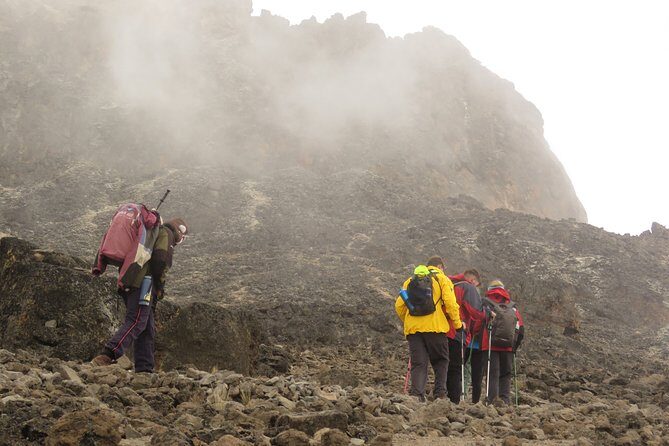
Day 1 is all about getting into the right starting position. After breakfast, you get a briefing with your chief guide, then you drive about 2.5 hours to Londorossi Park Gate at roughly 2,250 m / 7,380 ft.
What you’ll feel on day 1 is mostly logistics and nerves. Once you arrive at the gate area, you’re ready to begin the slow climb rhythm that makes Lemosho work. If you’re prone to stress before hiking starts, this day is useful because someone else runs the plan.
Day 2: Mti Mkubwa to Shira 1 Camp and the moorland “gear shift”
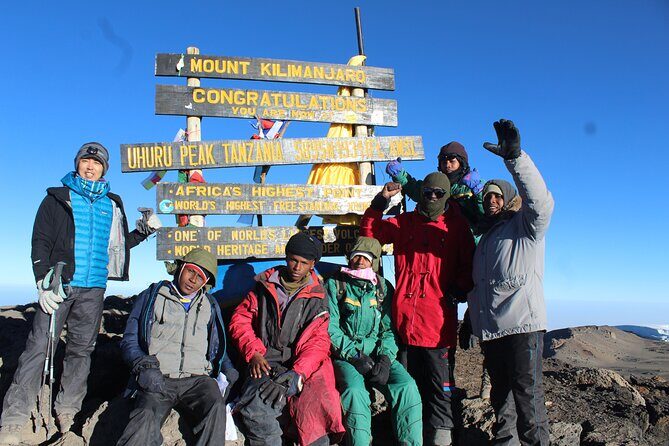
On day 2 you move from Mti Mkubwa Camp (2,750 m) toward Shira 1 Camp (3,600 m / 11,810 ft). The trail steadily steepens and you enter the moorland zone, then you cross the Shira Ridge.
This is where the mountain starts to change its personality. The air gets thinner, and your body may start breathing harder on climbs that feel short on a treadmill. The best way to handle day 2 is not to force speed; let your guide set a steady, calm pace so you don’t burn your legs before the route really begins.
Day 3: Shira 1 to Shira 2 and a lighter-feeling plateau day
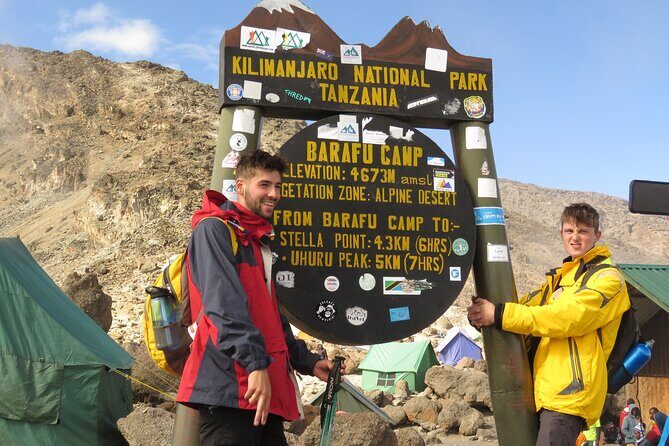
Day 3 is a more forgiving mental moment. You trek across the plateau from Shira 1 Camp (around 3,500 m) to Shira 2 Camp (3,840 m / 12,600 ft on the next segment timing, with this day described as a fairly easy plateau crossing). The walk is described as across moorland meadows near a stream.
Why this matters: you’re getting altitude, but the effort feels less like a constant grind. On Kilimanjaro, these “easier on paper” days often become the ones you remember most, because you can breathe, look around, and settle into the routine—walk, pause, drink, repeat.
Day 4: Shira Camp 2 to Lava Tower—the steep path above vegetation
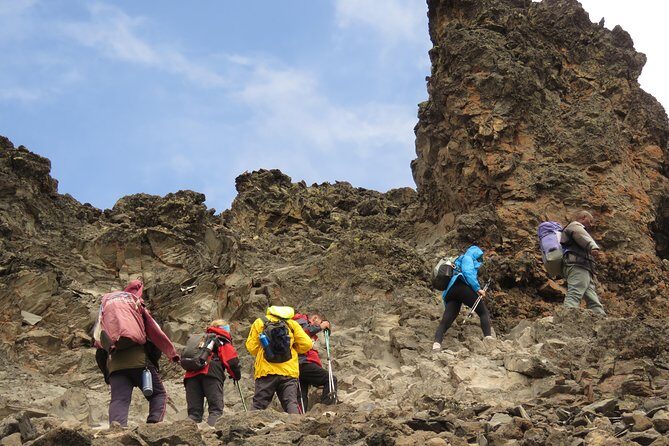
Day 4 targets Lava Tower at about 3,840 m / 12,600 ft. After breakfast you hike east on a path that becomes steep, moving toward the looming mass of Kilimanjaro.
If you’re the type who likes to know what’s coming, day 4 delivers a clear message: the mountain will ask more of you. The good news is that you’re not doing summit-day effort yet. Use day 4 to practice your “slow is smooth” strategy—short steps, steady breathing, and consistent hydration—because those habits pay off later.
Day 5: Barranco Wall to Karanga Camp—the climb that looks worse than it is
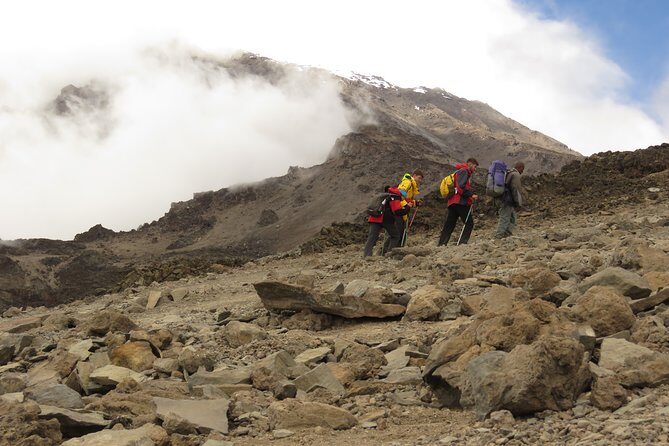
Day 5 goes from Barranco Camp (3,900 m / 12,800 ft) up toward Karanga Camp. You’ll continue up a narrow slope to reach the Barranco Wall, and the itinerary notes it’s easier to climb than it appears.
This section is a classic turning point. The Barranco Wall looks intimidating from a distance, but on Kilimanjaro many of these “scary-looking” segments are manageable when your guide keeps you moving one step at a time. It’s also a great day for mental teamwork: you’re tired, but you can still make steady progress.
Day 6: Karanga to Barafu—your body learns the thin air
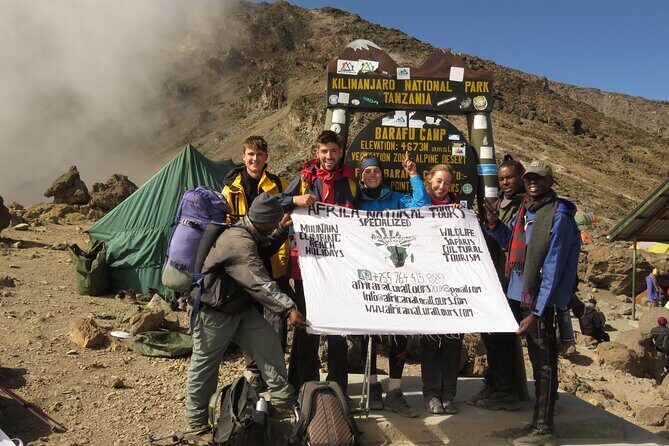
Day 6 climbs from Karanga Camp (about 4,200 m / 13,780 ft) to Barafu Camp. This is where you should expect the air to feel noticeably thinner, even if you keep your effort controlled.
Day 6 is often the last “normal” day before summit night. In other words, it’s when you want to be extra serious about sleep and fueling. Even small choices—wearing warm layers, drinking enough water, eating what you can—can affect how you feel when you start the summit push.
Day 7: Summit day planning, then back down to Mweka Camp
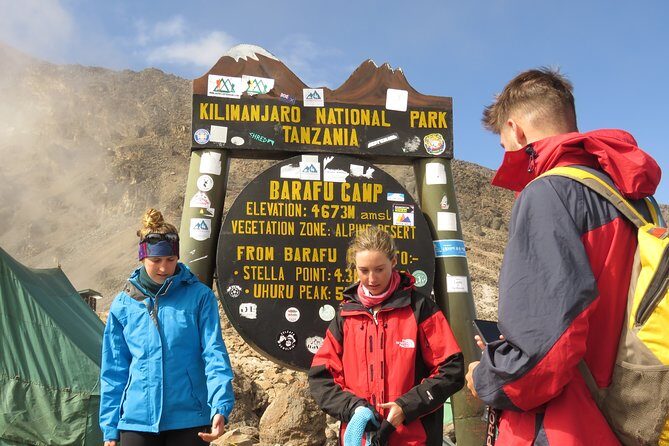
Day 7 is the summit day. You go from Barafu Camp up to the top, then you descend back via Barafu Camp to Mweka Camp.
Summit day is always about pacing and decision-making under stress: you’ll move in darkness or early hours depending on timing, and you’ll need to listen to your guide. After you reach the summit, the win doesn’t end there—descending is where tired legs and thin air can still cause trouble. Your goal is smooth movement to keep knees, balance, and breathing under control.
Then you arrive at Mweka Camp, which is more of a “recovery landing” than a finish line. This is where good organization matters, because you’ll want food, warmth, and a clear plan for what happens next.
Day 8: Mweka Camp to Mweka Gate—crossing off the last kilometers
Day 8 starts with Mweka Camp (about 3,100 m / 10,170 ft) and continues to Mweka Gate, ending the climb. After you clear the gate area, the tour returns you to Moshi with drop-off to your Moshi hotel.
This is the day you’ll feel most “normal,” but don’t let that fool you. You’re still walking on tired muscles, and it’s easy to overdo it because you finally see the end. Keep steps short and steady until you’re done.
Guide, crew, and food: the part that makes or breaks your experience
On Kilimanjaro, your guide isn’t just there to point at the trail. They manage pacing, altitude risk, and morale—especially late in the trip. This operator’s guides and crew have earned standout praise across many climbs, including names like Paul, Gabrielle, Prudence, Edwin, Noka, Barakael, Martin, and Ngaiza.
What comes through in the feedback is care in day-to-day moments: guides checking how you’re feeling, porters and cooks keeping the operation moving, and team members helping you stay comfortable. One review even highlighted a guide who helped carry a climber’s bag for much of summit night—small action, huge impact when you’re exhausted.
Food and hydration are included: you’ll get breakfast, lunch, and dinner throughout the trek. Also included is boiled water as part of the practical routine, plus camping equipment like tents and mattresses. One caution from real experience: even with boiled water, one person reported a stomach bug on day 2, but it passed after vomiting. That’s a reminder to be cautious with what you consume and to follow crew instructions closely.
Camping setup: you’ll sleep, but you’ll want to sleep well
This tour provides quality tents and sleeping mattresses. That’s a big deal because Kilimanjaro nights can get cold, especially as you move higher. With gear provided, you avoid the common mistake of underpacking for the camping part of the climb.
Your job is to show up with the right clothing layers and keep your sleep setup consistent. The included tents and mattresses handle a lot of the hard logistics; good sleep becomes more likely when you’re not fighting setup stress in the dark.
Price and what you really get for $1,300
At $1,300 per person, this package covers several high-value items: a professional guide, the camping equipment (tents and mattresses), and all meals during the trek. It also includes pickup from your Moshi hotel to Londorossi Gate and drop-off from Mweka Gate back to your Moshi hotel after the trek.
That’s the core value: you’re paying for the mountain team and the systems that keep you safe—transport to the start, food on schedule, gear so you travel lighter, and a guide who knows how to run the route.
What’s not included is important to plan for:
- All Mount Kilimanjaro park fees (paid directly to the park or through the operator)
- Tips to the mountain crew
- Airport pickup and drop-off
- Travel/medical insurance
- Hotel accommodations before and after
- Flights
- Personal hiking gear
So the real question isn’t just the tour price. It’s whether you’ve budgeted for what sits outside the package and whether you’re comfortable handling personal gear. If you want fewer surprises, confirm how you’ll cover park fees and tips before you arrive.
Private package details: pace, group size, and meeting point timing
This is described as a private package, meaning your trek is for just you and your group rather than being merged into a larger shared group on the mountain. That’s great for pacing, especially if your group wants quiet time during breaks or you want the guide to manage your rhythm more directly.
At the same time, the operator notes a maximum of 90 travelers for the activity. That doesn’t mean you’ll hike with 90 people at once, but it does tell you the company schedules groups. The good news is your route still feels manageable, especially since Lemosho can stay quieter early.
You start from Africa Natural Tours L.T.D, Mkwawa Avenue. The start time is 7:00 am. There’s also a mobile ticket, and the meeting point is near public transportation, which helps if you need to get there on time without a fuss.
Practical summit prep: how to think on days 6 and 7
You’re going to want a plan for the last push, even if you don’t control the exact timing. Here’s how I’d think about it with a route like this:
- On day 6, protect your sleep and energy. Eat what you can and keep drinking.
- On day 7, go slow enough that you can still respond to your guide’s instructions. That’s how you avoid the trap of sprinting early in the night.
- After the summit, focus on descending safely. Many people feel relief and start walking too fast.
Also remember the practical part: you’ll be wearing layers, moving in cold conditions, and living on a schedule created by the crew. If you’re the kind of person who freezes when tired, communicate that to your guide early. Guides can often adjust your pace and recovery rhythm once they understand your needs.
Who should book this 8-day Lemosho climb from Moshi
This tour fits best if you:
- Have moderate physical fitness
- Want the Lemosho route because it gives time to acclimatize and passes major Kilimanjaro waypoints
- Prefer trekking with a guide plus crew support, without spending time on camping logistics
- Like the idea of a private package for your group rather than joining an oversized crowd
It may feel like a tough fit if you’re looking for a short, fast hike. Lemosho is about doing it right, not doing it quickly. And if you’re unsure about budgeting for park fees and personal gear, sort that before you go.
Should you book it?
If you want a classic, well-structured Kilimanjaro attempt with a team that takes care of the daily systems—guide, tents, mattresses, and meals—this 8-day Lemosho route is a strong choice. The standout value for me is that the trip is built to help you keep a steady pace through the Shira and Barranco stages, then handle summit day with a guided plan.
I’d book this when you’re ready for the real work of Kilimanjaro and you want to travel with less hassle on logistics. If you’re the type who likes to micromanage every detail yourself, then this might feel like less control than you want—but for most people, that’s the point.
FAQ
What is included in the Kilimanjaro 8-day Lemosho package?
The package includes camping equipment (quality tents and sleeping mattress), pickup from your Moshi hotel to Londorossi Gate, drop-off from Mweka Gate back to your Moshi hotel, a professional hiking guide, a briefing, a trekking certificate, and breakfast, lunch, and dinner during the trek.
Are Kilimanjaro park fees included in the price?
No. All Mount Kilimanjaro park fees are not included. The information says fees can be paid direct to the park or via the tour operator.
What are the main transport logistics from Moshi?
You’re picked up from your booked hotel in Moshi town to Londorossi Gate. After the trek ends at Mweka Gate, you’re dropped back to your booked Moshi hotel.
When does the trek start and where is the meeting point?
Start time is 7:00 am. The start meeting point listed is Africa Natural Tours L.T.D on Mkwawa Avenue, Tanzania.
Is this trek private?
Yes, it’s described as a private package for just you and your group. There is also a note that the activity has a maximum of 90 travelers.
What fitness level do I need?
The tour notes that travelers should have a moderate physical fitness level.