Herds move on a schedule. This 6-day migration safari from Moshi aims at the Serengeti timing that lines up with the wildebeest movement, and you also get the classic 600-meter Ngorongoro crater descent for wildlife viewing. I like that the route is built around the Lobo and Grumeti corridors, then shifts again toward the areas where herds are often found in certain months. One thing to consider: the migration is never 100% predictable, so you’ll be planning around seasonal patterns rather than a guaranteed herd sighting every day.
What really adds value is how much is included for your time on the ground: full-board accommodation on safari, transfers in both directions, all fees and taxes, and admission tickets marked free. I also like the small group setup (maximum 6 travelers) and that pickup is offered, so the trip feels controlled rather than chaotic. If you’re sensitive to long days, note that most safari days run about 8 hours, which is great for sightings but less great for anyone who hates being in a vehicle.
Finally, you’ll end where you started—Kilimanjaro Airport—after a final safari-style drive connected to the Kogatende airstrip, with the whole trip focused tightly on Serengeti zones instead of lots of back-and-forth. You’ll be best served if you can travel in the right window and you’re okay with the natural rhythm of game viewing: weather, road conditions, and where the herds are that day.
In This Review
- Key highlights that make this safari worth a look
- What this 6-day migration route tries to get right
- Day 1: Arusha and a 600-meter drop into Ngorongoro
- Days 2–3: Serengeti Lobo area and the Grumeti corridor rhythm
- Day 4: Wagakuria for the August-to-October migration window
- Day 5: Grumeti River waterholes, hippos, and huge crocodiles
- Day 6: Kogatende airstrip transfer, then a final drive back toward Arusha
- Price reality check: what $3,700 covers, and what you must budget
- Group size, pickup, and why the team details matter
- Migration timing: how to choose your month and set expectations
- Practical safari planning for Moshi and long drive days
- Who this safari suits best
- Should you book the 6Days Migration Safari?
- FAQ
- How long is the 6Days Migration Safari?
- Where does the safari run?
- How much does the safari cost?
- What’s included in the price?
- What is not included?
- Is pickup offered and where does the tour start?
- What’s the group size?
- Does the safari include a mobile ticket?
- Which Serengeti areas and months are mentioned for migration?
- Where does the safari end?
Key highlights that make this safari worth a look
- Ngorongoro crater drop: a steep, wildlife-rich afternoon style outing right after arriving in the Moshi/Arusha area.
- Lobo + Grumeti focus: time aimed at the migration flow in the July/August and late Oct/Nov periods.
- Two-angle Serengeti strategy: Lobo-based days for resident game, then a move toward Wagakuria for the August-to-October window.
- Midmorning waterhole drama: built around the idea that herds often gather around water sources when the day warms up.
- Grumeti River giants: chances for hippos and crocodiles where the river life is concentrated.
- Max 6 travelers: smaller group feel, easier pacing, and more personal attention from the safari team.
What this 6-day migration route tries to get right
This is not a “see it all” safari. It’s a targeted migration-focused plan with a tight circle: Ngorongoro, then the Serengeti belts that are commonly linked to herd movement, then back toward Arusha and your flight route.
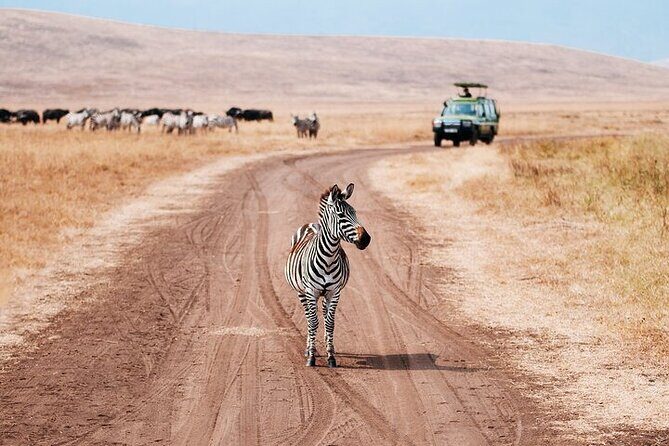
The best clue is how the plan names its zones and seasons. The Lobo area is flagged for the migration around July/August, with another pass sometimes seen in late October/November on the way toward the southern Serengeti National Park. Later, the plan shifts to the Wagakuria area, where the migration can often be found from August to October. That matters because you’re not just waking up hoping for the best—you’re traveling at a time and to a place with a logic.
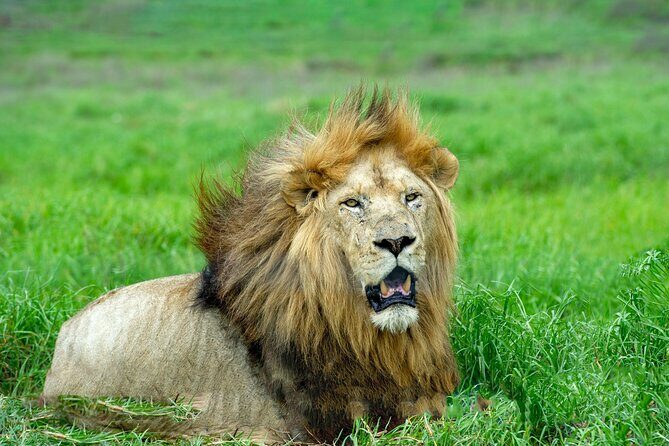
Even with timing uncertainty, this route still aims to keep you busy. The Lobo area and the area around the Grumeti River are described as having good resident game year-round. Translation: you shouldn’t feel stranded if the herd isn’t in the exact spot you hoped for on a given day. Your sightings may change from “migration spectacle” to “excellent wildlife concentration,” and that still beats a slow, generic safari.
A few more Moshi tours and experiences worth a look

Day 1: Arusha and a 600-meter drop into Ngorongoro
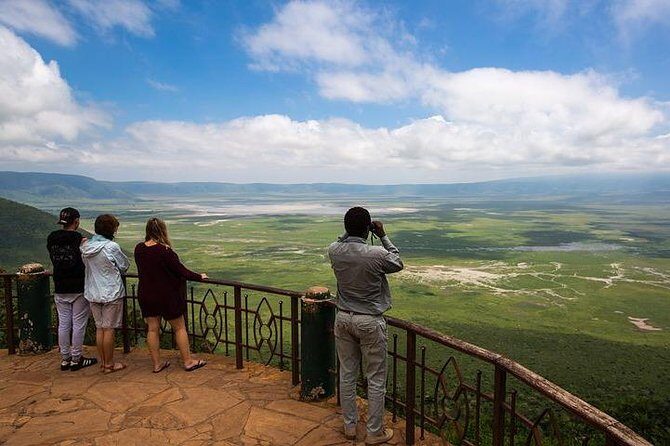
Day 1 centers on a crater-style safari with a dramatic clue built in: you descend over 600 meters into the crater to view wildlife. That descent is a big deal because it changes the whole viewing experience—thick animal presence, classic crater scenery, and a terrain that channels movement in ways you rarely see outside a crater environment.
The outing is described as an afternoon safari tour, and that timing is practical. Afternoon light can be very good for seeing animals clearly, and it’s often when you’ll catch predators moving between zones and when grazers are active enough to draw attention. You won’t be doing a “quick photo stop.” The crater experience is built to be enough time to actually watch behavior.
One more value point: this day gives you a wildlife payoff early, before you’ve burned days only traveling between park regions. If you’re coming from Kilimanjaro Airport, it helps you start your safari brain immediately, rather than waiting until the Serengeti to feel like you’re on safari.
Days 2–3: Serengeti Lobo area and the Grumeti corridor rhythm
The next step is the Serengeti National Park, with Day 2 linked to the Lobo area migration timing around July/August and also again in late October/November en-route toward the southern Serengeti National Park. This is where the trip leans into the “migration route” concept instead of treating migration as a random bonus.
Day 3 then doubles down on the Lobo area and the Grumeti River zone, which is described as having good resident game throughout the year. Two days here is smart. Herd movement doesn’t behave like a parade with a fixed schedule, and conditions shift. When you have a second day in the same region, you give yourself more chances to align with where animals are lingering, feeding, or crossing.
What you’re aiming to spot in this part of the route is the “ecosystem logic.” In real terms, that means you look for concentrated feeding areas, tracks and movement toward water, and predators riding the wave. Even when the wildebeest aren’t in massive numbers, the Grumeti corridor tends to support a constant background cast—so your day can still feel full, not empty.
Practical consideration: because Days 2 and 3 are both listed as about 8 hours, you should plan your stamina accordingly. If you’re the type who needs lots of breaks, think ahead about hydration, sun protection, and how you’ll handle long hours in a vehicle.
Day 4: Wagakuria for the August-to-October migration window
Day 4 moves the focus to Northern Serengeti, with a specific mention of the migration often being found in the Wagakuria area from August to October. That’s a strong month-based cue, and it’s the kind of planning that can pay off if you travel in-season.
Wagakuria is treated here like a change of gear. You’re no longer just watching the migration corridor you started with; you’re repositioning to a different part of the northern system where herd movement is commonly observed during that August-to-October period.
What this means for you on the ground: your wildlife viewing can become more “event-like,” with tighter clusters of animal activity. But also remember the key drawback of all migration safaris: you’re working with wildlife in motion. If the herd’s timing is off, you may still see excellent game and predators, but it may feel more like a strong Serengeti day than a full herd spectacle.
I like that this itinerary doesn’t act like migration is guaranteed. It plans around high-probability zones and still keeps resident game in the mix earlier in the trip. That makes the experience feel less fragile.
Day 5: Grumeti River waterholes, hippos, and huge crocodiles
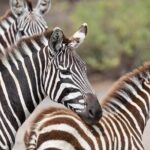
Day 5 is where the safari adds a very specific “river drama” promise: you can find large pods of hippos and huge crocodiles in the Grumeti River. That’s not just a random wildlife wishlist item. Hippos and crocodiles at a river tend to concentrate around predictable rhythms—especially near water access and the times animals are most likely to gather.
This day also highlights why waterholes matter: the wildebeest normally gather around waterholes around midmorning in such densities that they look like ants swarming around a nest. Whether you experience it exactly like that description or in a more moderate way, the logic is solid. Midmorning often brings movement to water sources as the day warms and feeding continues.
So on this day, you’re not only chasing the wildebeest. You’re watching a food-and-predator network. Hippos feeding nearby can mean crocodiles are positioned for ambush. Predators often orbit predictable water access points. It’s one of the reasons river zones can feel more intense than open grassland days.
A few more Moshi tours and experiences worth a look
Day 6: Kogatende airstrip transfer, then a final drive back toward Arusha
Day 6 has a different rhythm. After breakfast at the lodge, you depart to the Kogatende airstrip, with game drive time included en-route. The goal is a final wildlife window before you transition back toward Arusha and your Kilimanjaro Airport flight path.
This is a practical choice for a migration safari because it handles logistics without turning the last morning into pure travel time. You still get to watch the landscape and animals in motion, instead of feeling like the trip ends with a bus ride and a shrug.
You’ll also appreciate that the experience is designed as a loop: start at Kilimanjaro Airport and finish at Kilimanjaro International Airport. So you’re not guessing how to patch together separate transfers and local tours.
One thing to keep in mind: since the last day is listed at about 6 hours, it’s usually shorter than the earlier long days. That can be a welcome breather if you’ve been living on early starts and full safari hours.
Price reality check: what $3,700 covers, and what you must budget
At $3,700 per person, this is not a budget safari. But when you break it down, the structure looks built to protect your safari time.
Included items:
- All fees and taxes
- Full board accommodation on safari
- Transfer both direction
- Admission tickets are listed as free across the itinerary days
- Pickup is offered
- A mobile ticket is included
Not included:
- Tanzania visa: $50 for USA & Canada passport holders, $100 otherwise (based on the note provided)
Here’s the honest value angle: many safari costs hide in small print—entry fees, vehicle costs, park fees, and transfer gaps. This package makes those parts clearer up front. When that’s done well, you spend less time doing cost math and more time watching animals.
Still, there are two cost considerations I’d plan for:
- Your visa adds a real extra line item.
- You’ll likely spend on personal gear you want for comfort (binoculars, good sun protection, and rain layers), because the provided info doesn’t cover personal purchases.
If you’re traveling as a couple or as a small group that likes the convenience of transfers and meal coverage, the price can feel more reasonable. If you’re traveling solo and already have a flexible schedule, you might compare alternatives—but the “small group + focused route + full board” combo is exactly what you pay for.
Group size, pickup, and why the team details matter
This safari runs with a maximum of 6 travelers, and that’s one of the most underrated value points. Smaller groups typically mean less idle time, a smoother day when you’re trying to line up with animal movement, and more attention if you have questions.
Pickup is offered, and the start point is Kilimanjaro Airport. That matters because you don’t want to waste your first day figuring out where to meet, how to get transport, and how to confirm everything. You’re told you’ll receive confirmation at booking time, and you’ll have a mobile ticket.
The human side also shows up in the experience descriptions you shared. A coordinator named Faiza is praised for attention to detail and smooth communication. Guides named Laurent and Raymond are highlighted for being professional, adjusting safari time based on preferences, and answering questions confidently. One review also mentions a local number provided by the team if anything comes up. Even if you don’t get those exact individuals, the pattern is clear: the company is aiming for organized care, not just a vehicle and a map.
That kind of guidance helps most on migration safaris, where you’re constantly balancing timing, weather, and where the animals choose to be.
Migration timing: how to choose your month and set expectations
If you want the migration emphasis, you should treat your travel month like part of the itinerary.
Based on the route design:
- Lobo area: often around July/August, and again late October/November
- Wagakuria area: often August to October
- Grumeti corridor: described as strong for resident game year-round, which is useful if you travel slightly outside the peak windows
So when you pick dates, think in terms of probability, not certainty. If you go in the highlighted months, you’re aligning with a plan built around high-likelihood movement. If you go outside them, you’ll still get wildlife viewing, but your day may lean more toward resident game and predator action than a huge wildebeest wave at every stop.
I also like that the plan doesn’t make you choose between “migration” and “wildlife.” By splitting time across Lobo, Grumeti, and later Wagakuria, you’re keeping your options open even as conditions shift.
Practical safari planning for Moshi and long drive days
Most days are listed around 8 hours, so treat this like a full-day activity, not a casual half-day excursion. That affects what you wear, when you eat, and how you manage comfort.
Even with full-board accommodation included, I recommend you bring:
- a hat and sunscreen for long sun hours
- a light layer for cooler moments in the car or early morning
- a small day bag so you’re not hunting for things during drives
- binoculars if you like scanning—this kind of safari rewards patience
Also, build your expectations around vehicle time. The best days on safari rarely feel rushed, because wildlife is unpredictable. The itinerary structure helps, but the rhythm still belongs to the animals.
Finally, keep your paperwork straight. Your starting point is Kilimanjaro Airport, and you’ll need to handle the visa cost separately since it’s not included. If you’re traveling with someone else, make sure you both agree on document readiness before you leave.
Who this safari suits best
This works especially well if:
- you want a migration-focused Serengeti route with zone planning
- you prefer a small group (max 6) and smoother pacing
- you like the idea of a crater stop at the start, then multiple Serengeti days
- you’re okay with longer safari days to maximize sightings
It may not be ideal if:
- you hate long vehicle days
- you expect a guaranteed herd parade every day (migration safaris can’t promise that)
- you’re very budget-sensitive, since $3,700 is a premium price point
Should you book the 6Days Migration Safari?
I’d book this safari if your travel dates match the migration windows the route is built around—especially July/August, August to October, or late October/November. The focused Serengeti routing, the crater day, and the river-day hippo/croc expectations fit together into a coherent wildlife story instead of a random checklist.
You should also feel good about the value structure: full-board, transfers, fees/taxes, and admission tickets are included, which keeps the on-the-ground experience simpler. The biggest caution is classic but important—migration timing isn’t guaranteed. The itinerary handles that risk by building in resident game zones and giving you multiple days in key areas.
If you want a small-group migration safari that treats timing seriously and still keeps your chances strong even when conditions shift, this one deserves a place on your shortlist.
FAQ
How long is the 6Days Migration Safari?
It’s listed as approximately 6 days.
Where does the safari run?
The experience is based in Moshi, Tanzania, with safari time in Ngorongoro and multiple areas of Serengeti National Park.
How much does the safari cost?
The price is $3,700.00 per person.
What’s included in the price?
Included items are all fees and taxes, full board accommodation on safari, and transfers both directions. Admission tickets are listed as free for the itinerary days.
What is not included?
The Tanzania visa is not included. It’s listed as $50 for USA & Canada passport holders and $100 otherwise.
Is pickup offered and where does the tour start?
Pickup is offered. The start point is Kilimanjaro Airport, and the start time is listed as 12:00 am.
What’s the group size?
The tour/activity has a maximum of 6 travelers.
Does the safari include a mobile ticket?
Yes, mobile ticket is included.
Which Serengeti areas and months are mentioned for migration?
The plan references the wildebeest migration passing through the Lobo area around July/August and again in late October/November, and it also references migration being found in the Wagakuria area from August to October.
Where does the safari end?
It ends at Kilimanjaro International Airport, with the end address listed as Kilimanjaro Airport Rd, Tanzania.