REVIEW · MOSHI
6 Days Machame route Kilimanjaro climbing
Book on Viator →Operated by Habari Adventure · Bookable on Viator
Kilimanjaro is a mountain with a personality. This 6-day Machame route tour stands out for its local-led guidance, steady pacing, and clear safety systems. You hike through five different “zones” of altitude and vegetation, so the trip feels like you’re traveling across climates, not just climbing.
I especially like the way Habari Adventure builds in support—English-speaking guides, trained safety/first-aid focus, and gear that covers real altitude needs (oxygen and an oximeter). You also get meals handled end-to-end, including a properly timed summit night setup (tea and cookies before the big push).
One thing to consider: this is a serious itinerary. The summit day can run 12–15 hours, and it starts around midnight, so it’s not a relaxed stroll even if the route is generally non-technical.
In This Review
- Key Things I’d Lock In Before You Go
- Moshi Start: What Local Leadership Changes on Kilimanjaro
- Machame Route at a Glance: Forest to Alpine Desert (Yes, It Changes Daily)
- Day 1: Machame Gate to Machame Camp (2835 m) Through Coffee Country
- Day 2: Shira Plateau (Moorland) With Glimpses of the Western Breach
- Day 3: Lava Tower (4600 m) to Baranco Camp (3900 m) for Acclimatization
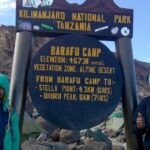
- Day 4: Barranco Wall to Karanga Camp, Then Barafu (Base Camp) at 4640 m
- Day 5: Midnight Summit Push to Stella Point (5756 m) and Uhuru Peak (5895 m)
- Day 6: Final Descent to Mweka Gate and Certificates, Plus a Real Shower
- Price and Logistics: Is $1,948.72 Good Value Here?
- Packing, Pace, and Altitude Reality Check (So You Don’t Burn Out)
- Who This Tour Fits Best (and Who Might Reconsider)
- Should You Book Habari Adventure for the 6-Day Machame Route?
- FAQ
- How long is the Kilimanjaro climb on the Machame route?
- Where does the trek start and how do you get there?
- Are meals included?
- Does the tour include oxygen and medical support equipment?
- What’s not included in the tour price?
- Which day is the hardest on this itinerary?
- Is there a refund if I cancel?
Key Things I’d Lock In Before You Go
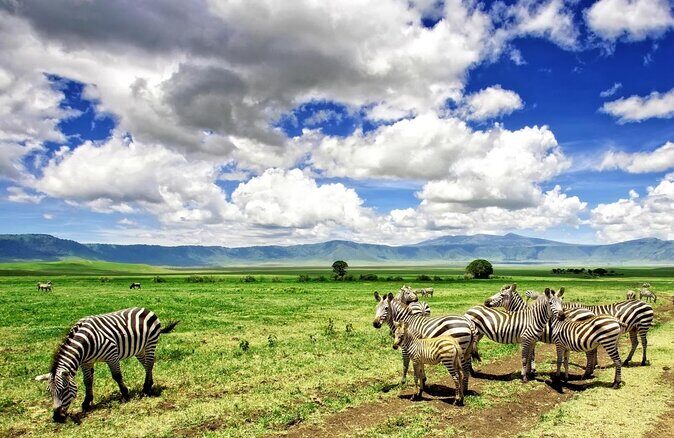
- Local guides with first-aid training: you’ll be in hands that know altitude, emergencies, and how the mountain behaves.
- Oxygen + oximeter included: that’s not a bonus add-on; it’s part of the plan.
- A route that “earns” acclimatization: you go higher, then drop to recover, which helps your chances.
- Machame’s variety is real: montane forest, moorland, alpine desert, scree—day after day.
- A summit night that’s organized: tea and cookies near the start time, then a sunrise target.
Moshi Start: What Local Leadership Changes on Kilimanjaro
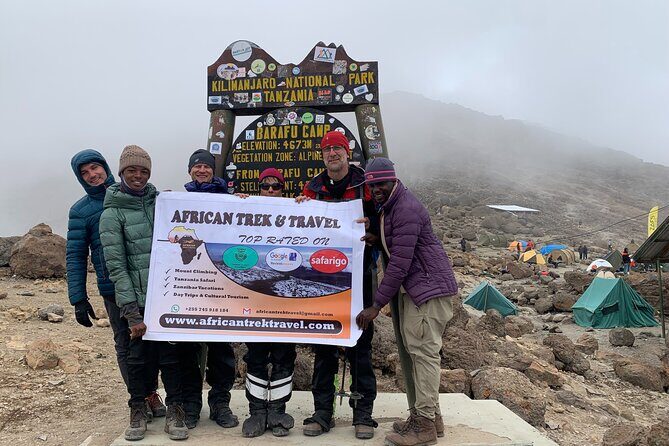
You feel it fast when your team is local. Habari Adventure’s guides are Tanzanian locals, drawn from Kilimanjaro and other regions, and they guide with more than just hiking knowledge. They’re trained in safety and first aid, and their background includes local flora and fauna, geography, history, archaeology, and anthropology—so you’re not just “moving uphill,” you’re learning what you’re walking through.
In the real-world examples I saw, names like Innno, Abdi, Leon, and Stan show up in the kind of praise that matters: people talk about feeling safe, cared for, and supported from the moment they arrived. For you, that translates into less uncertainty—your questions get answered, and your pace gets managed with a plan rather than guesswork.
Here’s the practical upside: when something feels off on a mountain, you want a guide who can read the situation quickly. This itinerary is built around that kind of readiness.
A few more Moshi tours and experiences worth a look
Machame Route at a Glance: Forest to Alpine Desert (Yes, It Changes Daily)
The Machame route is popular because it gives you variety. You don’t spend all day in one “look.” Instead, the mountain cycles through habitats as you climb:
- Montane forest (cooler, greener start)
- Moorland (wider, more exposed)
- Alpine desert (dry, stark, and tough on the legs)
- Then the final ridge/crater-rim sprint to sunrise at altitude
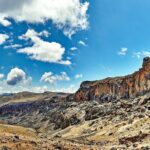
On paper, it’s still “just Kilimanjaro.” In real life, it changes how you feel each day. Forest days tend to feel more forgiving underfoot. Alpine desert days can feel harsher—more dust and scree, more exposure, more need to move with good rhythm.
This route also includes a classic acclimatization pattern: you’ll climb to higher ground, then descend to a lower camp to help your body adjust.
Day 1: Machame Gate to Machame Camp (2835 m) Through Coffee Country
Your day starts with a pickup and transfer out from Moshi. You’ll be collected around 8:00 am for the drive to Machame gate, and along the way you’ll pass Chagga-area coffee and banana plantations—a nice human warm-up before the mountain takes over.
At the gate, you do park formalities, then begin hiking through tropical rain forest. Expect about 7 hours total, around 11 km, up to Machame camp (2835 m). This first day is about easing into effort. It’s your chance to get your gear sorted, find your breathing tempo, and practice how you’ll handle stops and starts.
Lunch is handled as a picnic lunch on the route, and meals are fully included (breakfast, lunch, dinner). For first-time Kili climbers, this matters: you’re not rationing food or trying to work out schedules in a fog of altitude stress.
A small drawback: forest walking can feel slower because the terrain is packed with life—roots, shade, and frequent little turns. It’s not hard-core technical, but it can still wear you out.
Day 2: Shira Plateau (Moorland) With Glimpses of the Western Breach
Day two has you up around 8:00 am for about 3 hours of hiking time on this section (roughly 5 km). You’ll spend about an hour climbing from the forest zone, then transition into moorland with a gentler gradient for another hour.
After a short lunch with snacks and a break, you continue into rocky terrain toward the Shira plateau. The key “wow moment” here is the view: you may see the eastern direction and also a look across toward the western breach with its glacier.
This is where you start to understand why guides emphasize pacing. You’re not racing. You’re building a rhythm while your body adjusts to thin air.
What to watch for: when you shift from covered forest to more open moorland, wind and cooler air can affect your comfort. If you run cold, this is a day to be ready with layers.
Day 3: Lava Tower (4600 m) to Baranco Camp (3900 m) for Acclimatization
This is an acclimatization day that still feels like a mission. You’ll hike for about 6 hours (around 10 km). The plan is: go higher, then descend—so your body gets practice at altitude without camping at your highest point.
You’ll move into alpine desert, reaching Lava Tower (4600 m), then descend down to Baranco Camp (3900 m) over about 3 hours.
What I like about this structure for you: it reduces the “all-or-nothing” pressure early in the climb. Your body learns what altitude feels like, and you still end the day at a lower, workable camp altitude.
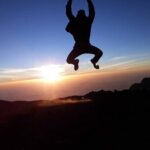
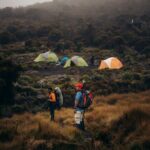
This descent also buys you a photography window. You get chances for views of the Western Breach and Barranco wall, and the campsite sits in a valley that can deliver a memorable sunset while you’re waiting for dinner.
A practical consideration: alpine desert hiking can be mentally tiring because it feels exposed and repetitive. Keep your focus on steady foot placement and consistent breathing.
Day 4: Barranco Wall to Karanga Camp, Then Barafu (Base Camp) at 4640 m
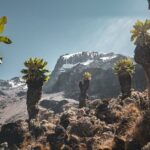
Day four is where the Machame character really shows up. You’ll start at Baranco Camp (well-known for giant groundsels) and climb the Barranco wall.
Hiking time is about 8 hours over roughly 8 km. The route is described as not technical, but it’s long and tiring, with lots of rock climbing effort—more “work” than “scramble.”
You’ll reach Karanga Camp, where you stop for lunch. Karanga is also your last key water stop before you continue on toward Barafu Camp (4640 m). After lunch, the walking shifts back through alpine desert.
Why this day matters: it sets you up for summit night by positioning you at Barafu, the jumping-off area for the final push. It’s also the day when you’ll want to protect your energy—because tomorrow is long and cold, and your legs will know it.
Day 5: Midnight Summit Push to Stella Point (5756 m) and Uhuru Peak (5895 m)
Today is the big one. You wake up extremely early, around 00:00, with light tea and cookies. Then the climb begins.
Expect 12–15 hours total, around 15 km. You’ll hike up scree for about 4–5 hours, gaining height quickly over a relatively short distance. The view from the scree zone is described as spectacular, which makes sense: as the air thins, the sky gets more dramatic.
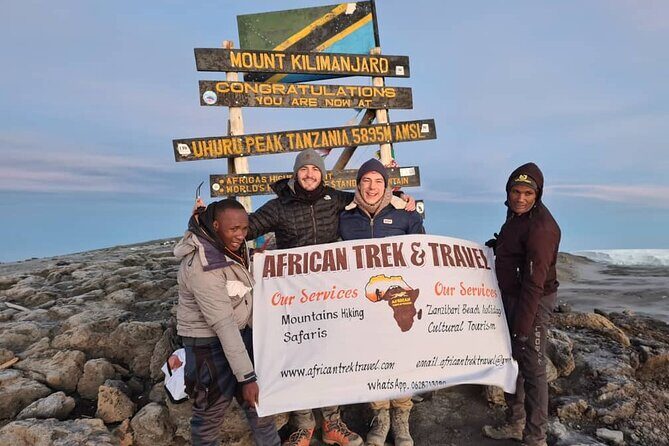
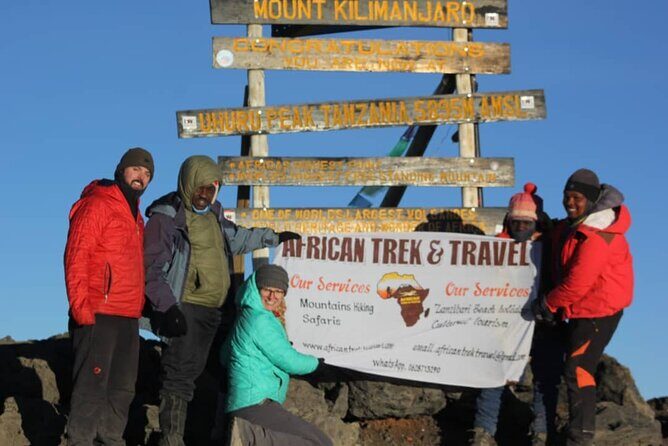
The target is the crater rim at Stella point (5756 m) as the first rays of sun hit. Then it’s about 1 hour from Stella point to Uhuru Peak (5895 m).
At Uhuru Peak, you’ll take photos for a few minutes, then start descending. You head back down to Barafu Camp for lunch and rest, then continue walking to Millennium Camp (3950 m) for dinner and overnight.
A balanced reality check: this isn’t a technical summit, but it is a stamina summit. The cold, the altitude, and the long hours matter as much as the steep bits. If you’re the kind of person who gets anxious in long, slow discomfort, plan for that mentally before you start.
Day 6: Final Descent to Mweka Gate and Certificates, Plus a Real Shower
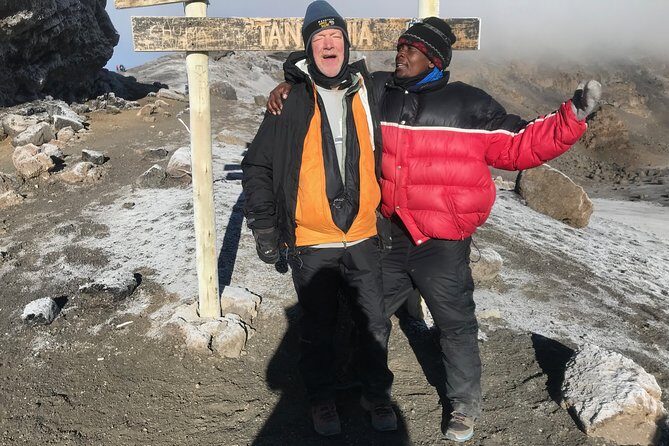
After sunrise comes the good part: finishing. Day six is about 5 hours total and around 14 km, with meals that include breakfast and lunch.
You’ll continue the final descent from Millennium campsite to Mweka Gate, where you’ll complete park formalities and collect your certificates. Then a private car takes you back to your hotel, and the day is framed as the moment you finally get a warm shower and celebrate what you did.
Habitat-wise, the route blends moorland and tropical rain forest, which is a nice emotional shift: you start the day thinking about endurance, then end it surrounded by the greener world you climbed out of.
Price and Logistics: Is $1,948.72 Good Value Here?
At $1,948.72 per person for a ~6-day climb, the big question is what’s included. This one packs in a lot that you’d otherwise be paying for separately on other operators.
Included items include:
- All fees and taxes
- Private transportation
- All meals (breakfasts, lunches, dinners)
- Oxygen, an oximeter, and a first aid kit
- Mountain equipment
- Admission tickets are included as well
Not included items include:
- Flights
- Entry visa
- Tips to mountain crew
- Personal items
- Portable flush toilet
Here’s how I think about value for you: oxygen, oximeter, and first aid aren’t the sort of thing you want to “upgrade later.” If you’re paying for a summit attempt, it’s smart when the safety toolkit is built into the core price.
Also, private transportation reduces friction. Kilimanjaro trips fail not on the mountain alone, but on the stress around it—missed meeting points, late transfers, unclear timing. This tour is set up to reduce that noise with clear pickup and car transfers.
Packing, Pace, and Altitude Reality Check (So You Don’t Burn Out)
The itinerary gives you timing and hiking distances, but your body is the deciding factor. You should have moderate physical fitness for this climb. Even so, your “fitness” on Kili includes how well you can handle long days at altitude.
A few practical points that match what this route implies:
- Expect the long day rhythm: you’ll do anywhere from ~3 hours (shorter sections) to 12–15 hours (summit day).
- Keep your layers ready for moorland-to-alpine desert shifts. Cooler wind and cold mornings aren’t rare.
- Drink and snack consistently. Meals are included, but your responsibility is taking in what your body needs rather than skipping because you feel tough.
- Mentally prepare for the summit night start around midnight. You’re trading comfort for timing, not because the route is optional.
And yes, the route is described as not technical on key sections like the Barranco wall, but it’s still tough. Long hours plus altitude is its own kind of difficulty.
Who This Tour Fits Best (and Who Might Reconsider)
This is a strong match if you:
- Want a structured climb with local guides focused on safety and first aid
- Prefer comfort in how meals and gear are handled
- Like learning as you hike, not just trekking silently
- Are okay with a physically demanding summit day that starts at midnight
You might reconsider if you:
- Don’t handle long cold nights well
- Are looking for a relaxed pace where you rarely exert yourself for half the day
- Are very sensitive to altitude stress and would struggle to tolerate early starts and long descents
A key detail that helps many people: this is set up as a private tour/activity, so your group is just your group. That can be a plus if you want a calmer experience and clearer communication with your guide.
Should You Book Habari Adventure for the 6-Day Machame Route?
Based on the consistent safety-and-service themes (trained guides, oxygen/oximeter included, and organized summit-day support), I’d say this is a solid operator choice for a Machame climb from Moshi. The local team angle matters here, because Kili is not just a hike—it’s risk management layered on top of effort.
Book it if:
- You want safety gear included rather than treated like an extra purchase.
- You value clear guidance and a team that keeps morale up during hard stretches.
- You’re aiming for the summit with a plan that includes acclimatization and a real sunrise target.
Think twice if:
- You’re not ready for the summit-day timeline (midnight start, long hours, and extreme cold risk at altitude).
- You’re hoping the price covers visa, flights, and crew tips—those aren’t included.
If you’re reading this as your Kili checklist moment, my advice is simple: choose the operator that makes you feel prepared before you even step into the park. This one is built around that idea.
FAQ
How long is the Kilimanjaro climb on the Machame route?
The trek runs for about 6 days.
Where does the trek start and how do you get there?
You’ll be picked up and transferred to Machame gate. The meeting point is Kilimanjaro Airport, and private transportation is included.
Are meals included?
Yes. Meals are included throughout the trek. Day 1 includes breakfast, lunch, and dinner, and day 6 includes breakfast and lunch.
Does the tour include oxygen and medical support equipment?
Yes. Oxygen, an oximeter, and a first aid kit are included.
What’s not included in the tour price?
Flights, entry visa, tips to the mountain crew, personal items, and a portable flush toilet are not included.
Which day is the hardest on this itinerary?
Day 5 is the hardest. It involves a very early start around midnight and can take about 12–15 hours, including the summit push.
Is there a refund if I cancel?
You can cancel for a full refund up to 24 hours before the experience start time. If it’s canceled due to poor weather, you’ll be offered a different date or a full refund.