REVIEW · KILIMANJARO
6 Days Climbing Mount Kilimanjaro Machame Route
Book on Viator →Operated by eddytours and safaris · Bookable on Viator
Altitude has a way of changing your plans. The 6-day Machame Route is a classic way to climb Kilimanjaro from Moshi because it gives you day-by-day altitude gains through multiple habitats, from rainforest to moorland and then on toward the alpine zone. If you want a route that feels like a real expedition, not just a long walk, this one hits that sweet spot.
Two things I really like about this trip are the practical support setup and the all-in feel. You get camping equipment (tent and mattresses), full-board meals at the camps, and admission tickets included, plus private transportation and pickup/drop-off. I also like that the operator has a reputation for smooth teamwork on mountain trips, with experienced guides and support roles people mention by name (for example Thomas or January as guides, and Chef Joseph and Waiter John in the food team).
One consideration: this is still Kilimanjaro. You’ll be dealing with big altitude (including a summit day reaching 5,895 m / 19,343 ft), long walking days, and colder, harsher conditions near the top. On top of that, the final descent can be wet and muddy at lower elevations—so plan for slippy trails and sore calves.
In This Review
- Key things that make this Machame climb feel worth it
- Why the Machame Route works so well for a 6-day plan
- Price and what you’re really paying for at $2,200
- Moshi start, park gate timing, and why the first day sets your pace
- Day 1: Machame Camp and rainforest footing (5-7 hours over 11 km)
- Day 2: Moorland changeover and Shira Cave Camp (4-6 hours over 9 km)
- Day 3: Lava Tower area and the Barranco Valley descent (5-7 hours over 15 km)
- Day 4: Barranco Wall and Karanga Valley to Barafu (6-8 hours, steep ridges)
- Day 5: Summit morning to Uhuru Peak and the long descent (up early, down fast)
- Day 6: Mweka Gate, summit certificates, and the muddy walkout (3-4 hours)
- What to watch for: altitude, pace, and comfort on a mountain schedule
- Should you book Eddy Tours and Safaris for this Machame climb?
- FAQ
- How long is the Kilimanjaro climb on this Machame route?
- Where does the experience start and end?
- What time do you start on the first day?
- Is pickup offered?
- Are meals included?
- Is camping equipment included?
- Are park fees and admission tickets included?
- Do I need a visa for this trip?
- Is medical insurance included?
- When do you get summit certificates?
Key things that make this Machame climb feel worth it
- 6 days built for acclimatization, so you’re not rushing the altitude ladder
- Full-board meals on the mountain with breakfast, lunch, and dinner handled for you
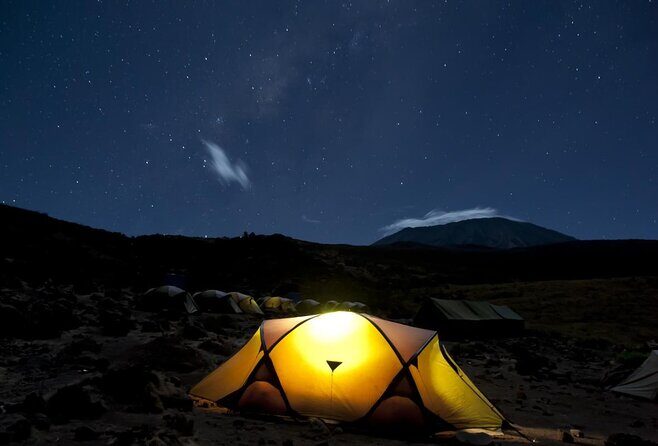
- Camping gear included (tent and mats), which cuts down the load you must manage
- A classic summit arc via Uhuru Peak and sunrise on the final push
- Support that’s organized, with a private group setup so you’re not just “one of many”
- Mud-smart advice for the descent, including gaiters and trekking poles
Why the Machame Route works so well for a 6-day plan
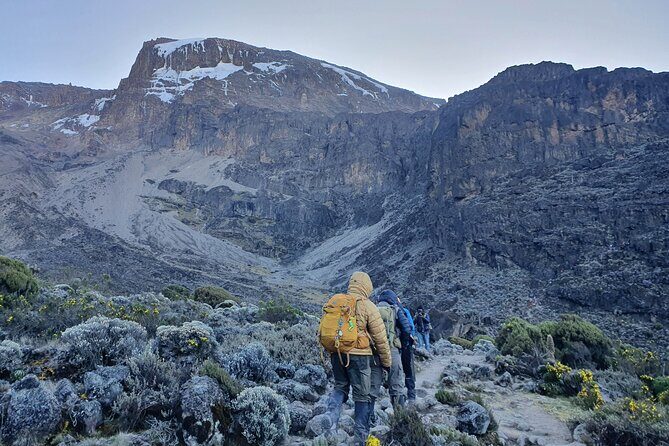
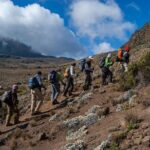
Machame is one of Kilimanjaro’s most popular routes for a reason: the mountain changes under your feet. You start in montane forest, climb out into moorland, then move through semi-desert before reaching the alpine desert zone. That means your body and your expectations both adjust gradually, which matters when you’re trying to reach the summit instead of just surviving the walk.
Also, the Machame profile gives you time to acclimatize without feeling like you’re stuck at one altitude all day. You’re not just climbing; you’re learning how your pace needs to change as you go higher. The route’s design includes ups and downs like the traverse toward the Lava Tower and the descent into the Great Barranco Valley, which helps break up the “always uphill” grind.
Finally, there’s a psychological boost built into the timing. You reach the Barafu area on Day 4 with views of the summit in the distance, then you leave early on Day 5 for the final ascent. That schedule helps you wrap your head around the summit push rather than feeling surprised by it.
A few more Kilimanjaro tours and experiences worth a look
Price and what you’re really paying for at $2,200
$2,200 per person is not a bargain, but it’s not “tour-only fantasy pricing” either. This cost is tied to a proper mountain operation, including:
- Camping equipment like tents and mattresses
- Full-board meals at camps (breakfast, lunch, dinner across the trek)
- All fees and taxes and admission tickets included
- Private transportation, plus pickup and drop-off
- Accommodation before and after the hike
What that means for you: you’re paying for fewer loose ends. On Kilimanjaro, the logistics pile up fast—permits, camp operations, food, and getting you to and from the trailheads. Bundling those things into the price is a big part of the value.
What’s not included is also clear, and that’s important for budgeting:
- Visa
- Medical insurance
- Tips to mountain crews
- Flights (both international and domestic)
- Personal expenses like laundry
If you already have your visa and travel insurance sorted, the rest looks like a fairly straightforward “mountain package.” If you don’t, make sure you budget for those missing items early so you’re not scrambling.
Moshi start, park gate timing, and why the first day sets your pace
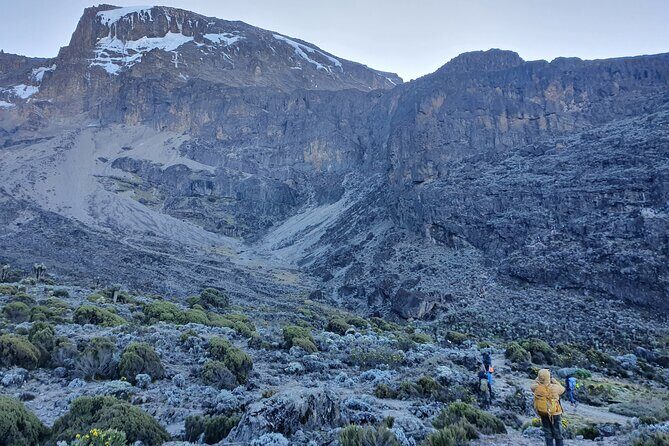
The climb is set up around Moshi, with a drive of about 50 minutes from Moshi to the Kilimanjaro National Park Gate. You’ll pass through Machame village on the lower slopes before entering the park area and starting the walk.
Your start time is listed as 7:00 am, with the meeting point at Kilimanjaro International Airport (Kilimanjaro Airport Rd, Tanzania). Even if you’re eager to start, the first hour or two are where you should keep it calm. The early terrain can be muddy and slippery, especially after rain, and you want your pace to feel controlled before the altitude starts to press.
This matters because your legs and lungs are not the same at altitude. A relaxed Day 1 pace helps you walk better on the days that really count.
Day 1: Machame Camp and rainforest footing (5-7 hours over 11 km)
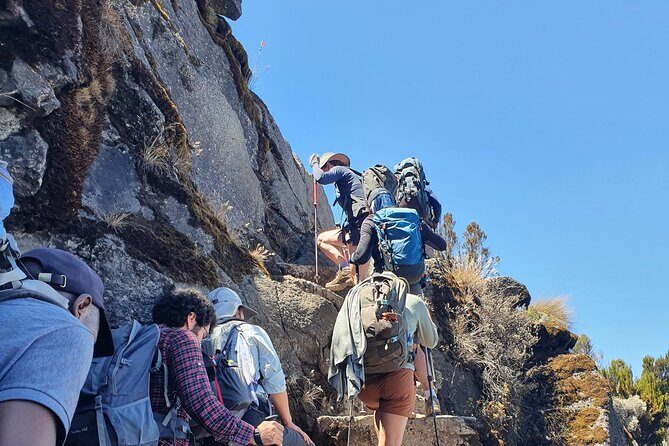
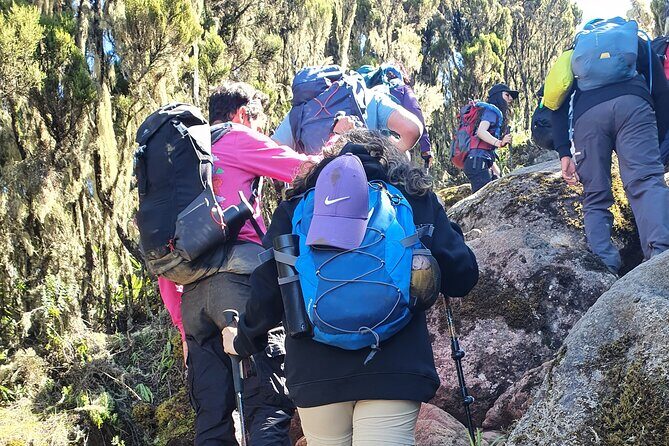
Day 1 is all about transition. You begin at roughly 1,830 m (3,000 ft) and climb up toward about 3,100 m (10,200 ft). The walking time is about 5-7 hours over 11 km, mostly through montane forest.
What you’ll likely feel:
- The trail starts in the rainforest and then moves onto a winding path up a ridge.
- Lower down it can be muddy and slippery, which is not the time to rely on luck.
Practical tip: gaiters and trekking poles are a smart idea here. This isn’t about looking fancy on Day 1; it’s about keeping your balance when the ground is wet and the trail is uneven.
You finish at Machame Camp, a good “first camp” height because it sets you up for the next day’s bigger move without throwing you directly into the hardest terrain.
Day 2: Moorland changeover and Shira Cave Camp (4-6 hours over 9 km)
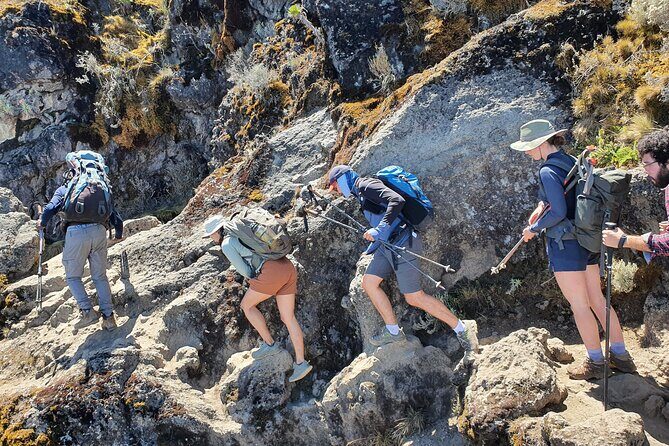
Day 2 climbs from about 3,100 m (10,200 ft) to around 3,840 m (12,600 ft) with roughly 9 km and 4-6 hours of walking. The habitat shifts to moorland, which feels different underfoot: often more exposed, often windier, and usually drier than the forest.
The route description points to steep work:
- You leave the forest glades and continue on an ascending path.
- You cross a valley along a steep, rocky ridge.
- The trail then turns west toward a river gorge before you reach Shira campsite.
This is where I pay attention to breathing and rhythm. Rocky ridges force a steadier cadence—short steps, consistent breathing, and no heroic pacing. If you go too fast here, you usually feel it later.
Day 3: Lava Tower area and the Barranco Valley descent (5-7 hours over 15 km)
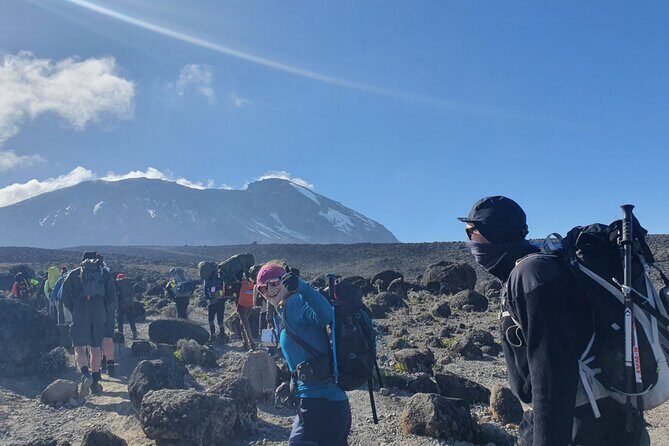
Day 3 moves you from about 3,840 m to 3,860 m and targets Barranco Camp at 3,950 m. Expect around 15 km and 5-7 hours, with semi-desert conditions.
One of the coolest parts of this day is the way it weaves in big landmarks along the Kilimanjaro route:
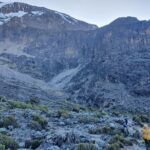
- You traverse the southwest side and pass underneath the Lava Tower.
- You go by the final section of the Western Breach.
- Lunch is described as being hot, eaten at the bottom of the Lava Tower (4,600 m).
- Then you descend into the bottom of the Great Barranco Valley (3,950 m).
Why that matters: the “walk under something famous” feeling can make altitude seem less abstract. And the Barranco descent is a helpful kind of challenge. You get panoramic views, but your legs also learn how to control downhill effort at height.
This day is long on paper, so if you’re deciding whether you can handle the trek, treat Day 3 as the reality check.
Day 4: Barranco Wall and Karanga Valley to Barafu (6-8 hours, steep ridges)
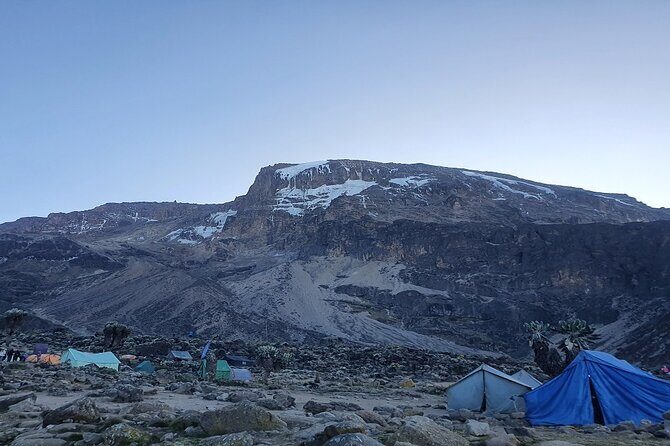
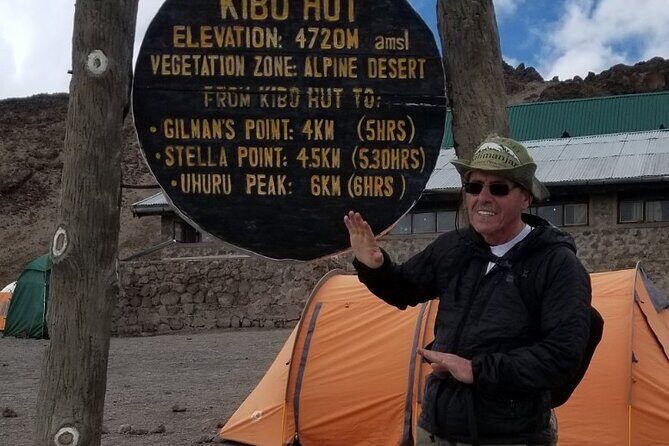
Day 4 is the “south circuit” day’s hard edge. You go from around 4,000 m / 13,000 ft up toward 4,700 m / 15,350 ft with about 9 km and 6-8 hours of walking. The habitat is described as alpine desert, which usually means colder-feeling air and a harsher, drier feel.
The route highlights:
- You leave Barranco and climb the Barranco Wall (around 4,250 m / 13,900 ft).
- Then you pass through the Karanga Valley (around 4,050 m / 13,250 ft).
- You reach a junction that connects with the Mweka Trail.
- Then you continue up to Barafu Camp.
You also get something you really want at this point: views of the summit in the distance. That’s not just nice for photos; it’s motivational. It tells you the summit push is real and close enough to plan for mentally.
If you tend to get anxious when a goal feels too far, Day 4 helps break that feeling.
Day 5: Summit morning to Uhuru Peak and the long descent (up early, down fast)
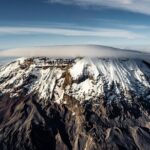
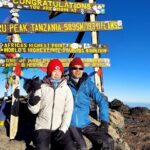
This is your summit day. You leave Barafu Camp early and head toward Uhuru Peak (5,895 m / 19,343 ft). The day is described as around 7 hours, with 6 km up and 13 km down. Conditions are listed as stone scree and ice-capped summit, so expect a surface that may crunch underfoot and icy-looking stretches near the top.
You’ll aim for the sunrise. The route description calls out the early-morning climb and the moment of sunrise over Africa before you reach the top. Standing on the Roof of Africa is the big emotional payoff here.
Then comes the part people underestimate: the descent to Mweka Camp around 3,090 m (10,150 ft). Even when your body wants to celebrate and stop, you still have work to do. A controlled downhill pace helps keep your knees from taking over the rest of the trek.
Day 6: Mweka Gate, summit certificates, and the muddy walkout (3-4 hours)
Day 6 is shorter but not effortless. You descend from about 3,090 m (10,150 ft) to roughly 1,680 m (5,500 ft). Walking time is about 3-4 hours over 10 km, and the habitat is forest again.
The key milestones:
- After breakfast, you continue down to the Mweka Park Gate.
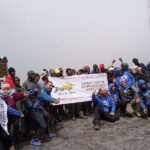
- You’ll receive your summit certificates there.
- You then get driven back to your hotel in Arusha or Moshi.
A realistic note: the lower elevations can be wet and muddy. That’s why the advice includes gaiters and trekking poles again. Shorts and t-shirts may work at this altitude drop, but keep rain gear and warmer clothing handy because mountain weather can flip quickly.
What to watch for: altitude, pace, and comfort on a mountain schedule
This route is built with acclimatization in mind, but your personal altitude response still matters. The trek is described for people with at least moderate physical fitness, which is honest. You’re not just “strolling.” Even the shorter days often run 4-7 hours walking, and summit day involves a major altitude jump and early start.
Here’s how I suggest you manage the mountain to improve your odds:
- Keep a steady pace on the earlier days so you arrive at Day 4 and Day 5 with usable energy.
- Use your tools: gaiters for mud and poles for stability on uneven terrain.
- Expect Day 5 to be the emotional and physical peak—then treat Day 6 like a recovery day, not a victory lap.
One more comfort factor: this is a private tour/activity, meaning only your group participates. That can make the experience feel more controlled and less chaotic, especially when you’re tired and you just want everything to run on time.
Should you book Eddy Tours and Safaris for this Machame climb?
If you want a structured, popular Kilimanjaro plan with full-board meals, camping gear included, and all fees and admission tickets handled, this Machame 6-day setup looks like solid value for $2,200. The itinerary also has the typical Machame rhythm—forest to moorland to semi-desert to alpine desert—with a summit push built around Uhuru Peak.
Book it if:
- You like clear logistics and want fewer things to arrange yourself
- You can handle long walking days at altitude
- You want the emotional payoff of a sunrise summit attempt
Consider another option (or do extra training) if:
- You’re worried about mud and slippery descents and don’t plan to use gaiters/poles
- You’re not comfortable with a very demanding summit day at 5,895 m
- You haven’t planned for items not included, like visa and medical insurance
FAQ
How long is the Kilimanjaro climb on this Machame route?
It’s scheduled for 6 days approximately, with day-by-day walking times ranging from about 3-8 hours depending on the day.
Where does the experience start and end?
It starts and ends from Moshi, Tanzania, with a drive to the Kilimanjaro National Park Gate and then a drive back to your hotel in Arusha or Moshi after the climb.
What time do you start on the first day?
The listed start time is 7:00 am.
Is pickup offered?
Yes. The package includes pickup and drop-off and private transportation.
Are meals included?
Yes. Meals are included across the trek, with breakfast, lunch, and dinner listed as included (full board at the camps).
Is camping equipment included?
Yes. Camping equipment such as a tent and mattresses is included.
Are park fees and admission tickets included?
Yes. All fees and taxes are included, and admission tickets are included.
Do I need a visa for this trip?
Visa is not included, so you’ll need to arrange it separately.
Is medical insurance included?
No. Medical insurance is not included.
When do you get summit certificates?
You receive summit certificates on Day 6 when you reach Mweka Park Gate after the final descent.