REVIEW · KILIMANJARO
7 Day Tour Machame Route
Book on Viator →Operated by Spirit of Kilimanjaro · Bookable on Viator
Seven days is a long time to stare at altitude.
The 7-Day Machame Route Kilimanjaro Trek is interesting because it mixes rainforest, moorland, and alpine terrain while giving you multiple “reset” days to adjust—plus you’ll be guided by a real team, not just a map and guesswork. I especially like the structured acclimatization that builds toward the summit, and the all-in rhythm of full board meals and included park fees. One consideration: Day 6 is a grind (big early-morning push to Uhuru Peak), so you’ll want solid fitness and patience with a slow pace.
You’ll start at Machame Gate and work through key highlights like Lava Tower, the Barranco Wall climb, and a dawn summit to Uhuru Peak. The trip also comes with a complimentary oxygen cylinder, which adds comfort for peace of mind on high-altitude days. If you’re hoping for an easy walk the whole time, this route will challenge you.
In This Review
- Key Things I’d Focus On Before You Go
- Why the Machame Route Turns Into a Real Journey
- Day 1: Machame Gate to Machame Camp (Rainforest Start)
- Day 2: Shira Camp and the Shift From Green to Open
- Day 3: Lava Tower First, Then Barranco Camp
- Day 4: Barranco Wall to Karanga Camp (The Climb That Sticks)
- Day 5: Barafu Camp and the Final Setup Before Summit Day
- Day 6: Uhuru Peak Before Dawn, Then Down to Mweka Camp
- Day 7: Mweka Gate Finish Through Rainforest, Plus Certificates
- What’s Included (And Why It’s More Valuable Than It Looks)
- The Crew, the Food, and the Oxygen Cylinder
- Price and Value: Is $2,205 a Smart Spend?
- Logistics That Help You Feel Prepared
- Who This Trek Fits Best (And Who Should Reconsider)
- Should You Book the 7-Day Machame Route With Spirit of Kilimanjaro?
- FAQ
- How long is the 7-Day Machame Route trek?
- Where do the trek start and end?
- What route highlights are included on the Machame itinerary?
- What’s included in the tour price of $2,205 per person?
- Is pickup included, and what time does the trek start?
- Are tips and towels included?
- What is the cancellation policy?
Key Things I’d Focus On Before You Go
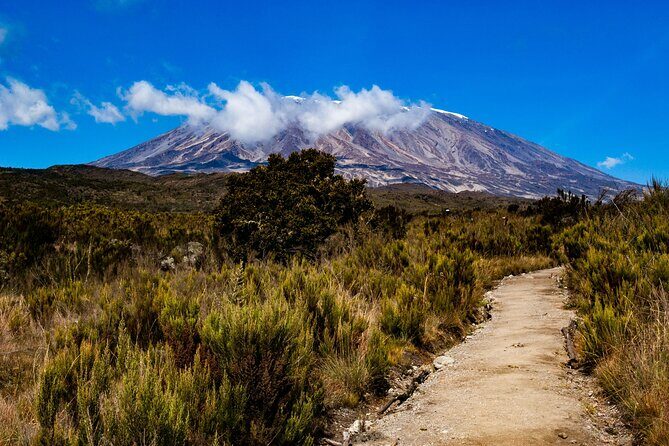
- Machame Route acclimatization plan: You gain altitude in stages and hit high points like Lava Tower before attempting the summit.
- Barranco Wall is the mental win: A short but memorable climb that helps set you up for what comes next.
- A clear 7-day pacing: From rainforest to moorland to the high alpine zone, the route changes often so you don’t feel stuck in one setting.
- Included full board meals + park logistics: Fees, accommodations, and meals are part of the package, so you can focus on the hike.
- Oxygen cylinder included: Not a substitute for good pace, but it’s reassuring to have it in the support plan.
- Small group size cap (up to 30): Enough people for a lively group vibe, still manageable for a trek operation.
Why the Machame Route Turns Into a Real Journey
The Machame Route earns its reputation because it doesn’t just throw you upward and hope for the best. Over seven days, you’ll climb, level off, climb again, and then climb once more—so your body gets chances to adapt before summit night arrives.
Another reason I like this route is the scenery shift. You start with rainforest hiking, then transition into moorland, and later you move into the harsher high alpine desert. That change matters because it keeps the trek from feeling monotonous, and it also helps explain why each day’s walking feels different.
A few more Kilimanjaro tours and experiences worth a look
Day 1: Machame Gate to Machame Camp (Rainforest Start)
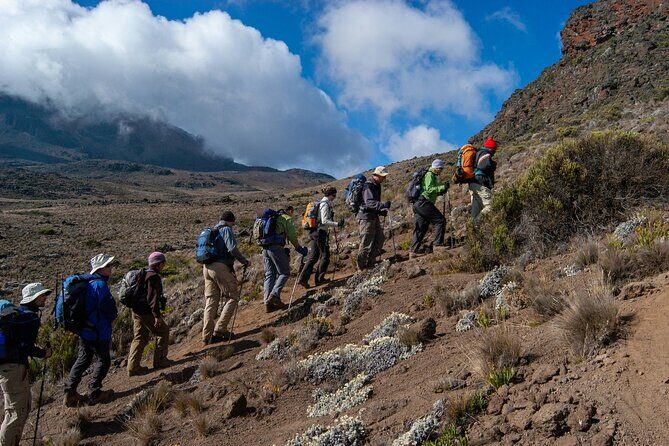
You begin at Machame Gate, where you handle registrations and meet your guides and porters. Then you walk into the rainforest zone, with lush greenery and lots of thick, living plant life along the trail.
The day is about 11 kilometers and takes around 4 hours, and you’ll finish at Machame Camp at roughly 3,000 meters. This is the day to keep your effort light and steady. If you go too fast here, you’ll feel it later, especially on summit push days.
Day 2: Shira Camp and the Shift From Green to Open
After breakfast, the trek continues as you gradually leave the rainforest and step into open moorland. This is where the air and the views start to feel more exposed, even before you get truly high.
You’ll hike about 5 kilometers (around 3 hours) to reach Shira Camp at roughly 3,800 meters. For me, Day 2 is a good example of why the Machame Route works: it’s not a random altitude leap, it’s a controlled move that gets you higher without hitting you with the full summit pressure yet.
Day 3: Lava Tower First, Then Barranco Camp
Today adds altitude and excitement at the same time. You ascend toward Lava Tower at about 4,600 meters, which plays a big role in acclimatization. Then you continue to Barranco Camp (around 3,960 meters).
The total walking is listed at roughly 10 kilometers and about 4 hours. You’ll get that classic Kilimanjaro feeling here: you can feel your body working harder, but the scenery turns into something stark and dramatic. It’s also a day where a consistent pace matters more than speed.
Day 4: Barranco Wall to Karanga Camp (The Climb That Sticks)
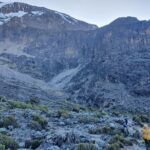
If you’re looking for a moment you’ll remember long after the trek, it’s often Barranco Wall. The route includes a challenging climb up the wall, followed by a hike to Karanga Camp at about 4,035 meters.
This day covers about 6 kilometers (around 4 hours). It’s shorter than some days, but it’s not a walk in the park. Treat it like a “technique day”: move carefully, keep your breathing steady, and don’t fight the slope.
Day 5: Barafu Camp and the Final Setup Before Summit Day
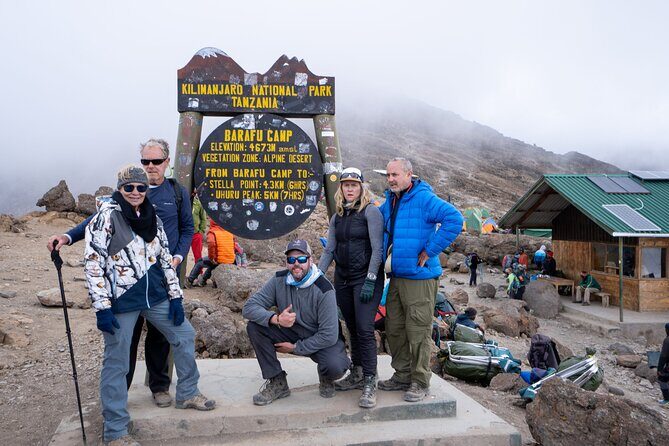
On Day 5, the trek turns into a shorter, high-stakes lead-in. You’ll walk about 4 kilometers (around 3 hours) to Barafu Camp, situated near 4,600 meters.
This is the last camp before the summit attempt, and the terrain becomes more rugged and alpine. Mentally, Day 5 is about conserving energy. Physically, it’s about staying warm, hydrating well, and preparing for an early start that will feel very early.
Day 6: Uhuru Peak Before Dawn, Then Down to Mweka Camp
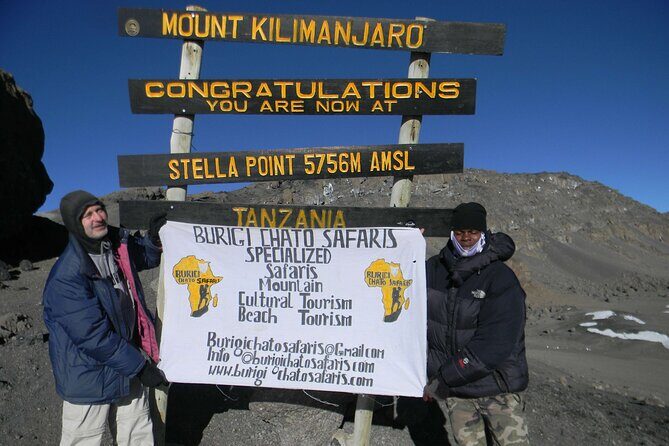
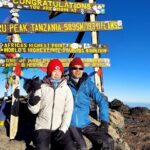
This is the day you came for. Your summit attempt starts in the early hours with a steep ascent to Uhuru Peak. The timing is designed for the climb to happen before the break of dawn.
After reaching the summit, you descend to Mweka Camp at about 3,100 meters. The route lists this day as about 18 kilometers total and describes it as a long, demanding effort. Even if the walking time feels compressed on paper, plan for the day to be physically heavy—short steps, controlled breathing, and careful attention to how you feel matter a lot.
Day 7: Mweka Gate Finish Through Rainforest, Plus Certificates
Your final trekking day drops you down from Mweka Camp to Mweka Gate, about 10 kilometers of descending. You’ll move back through the lush rainforest zone, which is a nice contrast after the higher, colder sections.
When you reach Mweka Gate, you receive your summit certificates and you’ll wrap up by saying thanks to your guides and porters. It’s a satisfying end: you get closure without immediately jumping into travel chaos.
What’s Included (And Why It’s More Valuable Than It Looks)
This trek is priced as a full package, and the inclusions are meaningful on Kilimanjaro because they remove a lot of uncertainty.
What’s included:
- All fees and taxes
- All accommodations
- Full board meals (breakfast, lunch, dinner every day)
- Drinking water
- A professional, English-speaking guide
- Fair and sustainable crew wages
- A complimentary oxygen cylinder
Two details matter for your day-to-day: the full board meals and the included guide + crew structure. When food, lodging, and logistics are handled, you spend your limited energy on altitude management—slow pace, hydration, and rest.
The Crew, the Food, and the Oxygen Cylinder
One of the strongest signals from the experience is the quality of the team. Guide Emanuele is specifically mentioned for support, and Joseph shows up in the same spirit—friendly, professional, and focused on keeping the group steady.
Food is another big deal here. The meals are described as excellent, with people comparing the quality to a higher-end hotel style. On a trek like this, that matters more than you might think. When you’re climbing and breathing harder, good meals help you keep strength for the next day.
Finally, the complimentary oxygen cylinder is included. It’s not a magic fix, but having it in the support plan can make the high-altitude part of the journey feel less intimidating.
Price and Value: Is $2,205 a Smart Spend?
At $2,205 per person for a 7-day trek, the price isn’t “cheap,” but it’s not just a ticket either. What you’re paying for includes park fees, accommodations, meals, guide services, and crew wages, plus that included oxygen cylinder.
The value gets better when you compare it to the cost of piecing together the basics on your own. Even without doing math, you can see the difference: hiring guides and arranging support, food, and lodging all costs money—and it also adds risk if anything slips.
Two things are not included: tips and towels. That’s fairly normal for treks, but it’s smart to plan for it. If you show up without a towel, you’ll have an annoying problem on top of an intense hike.
Logistics That Help You Feel Prepared
This trek starts at 7:30 am. Your start point is Kilimanjaro Airport, and the activity ends back at the meeting point. Pickup is offered, and the start location is also described as near public transportation.
The tour also notes a mobile ticket, which is convenient if you’re dealing with phone access instead of paper vouchers. The maximum group size is 30 travelers, so you’ll have a group dynamic without turning into a huge moving crowd.
Who This Trek Fits Best (And Who Should Reconsider)
This experience is best for people with moderate physical fitness who can handle steep days and an early summit start. If you’re comfortable with long walking hours and you can stick to a slow, steady pace, the Machame Route is a strong match.
You should reconsider if you want something mostly flat and relaxed. Day 4 includes a challenging segment (Barranco Wall), and Day 6 is the hardest day of the entire journey, even for people who are well-prepared.
Should You Book the 7-Day Machame Route With Spirit of Kilimanjaro?
I’d book this trek if you want a route that’s thoughtfully paced, with distinct ecosystems and classic Kilimanjaro highlights. The mix of rainforest-to-moorland-to-high-alpine walking helps you build acclimatization while still keeping each day interesting.
I’d hesitate only if summit-day effort sounds like it would make you anxious. This route is a real climb. It includes support, meals, and an oxygen cylinder, but the summit still demands patience and stamina.
If you do book, focus on the basics that make the biggest difference: pace yourself, stay disciplined on hydration and rest, and treat Day 6 like the serious event it is.
FAQ
How long is the 7-Day Machame Route trek?
It’s scheduled for 7 days approximately, from starting at Machame Gate through the summit attempt and finishing at Mweka Gate.
Where do the trek start and end?
The meeting point is Kilimanjaro Airport. The activity ends back at the same meeting point.
What route highlights are included on the Machame itinerary?
You’ll pass through major points like Machame Gate, Machame Camp, Shira Camp, Lava Tower, Barranco Wall, Barafu Camp, and the summit at Uhuru Peak, then finish through Mweka Gate.
What’s included in the tour price of $2,205 per person?
Included items are all fees and taxes, accommodations, drinking water, full board meals (breakfast, lunch, dinner for 7 days), a professional English-speaking guide, fair crew wages, and a complimentary oxygen cylinder.
Is pickup included, and what time does the trek start?
Pickup is offered, and the start time is listed as 7:30 am.
Are tips and towels included?
No. Tips and towels are not included.
What is the cancellation policy?
You can cancel for a full refund if you cancel up to 24 hours in advance. If you cancel within 24 hours of the start time, the amount paid is not refunded.