REVIEW · MOSHI
Rongai Route 6 Days 5 Nights/Kilimanjaro climb
Book on Viator →Operated by Migration Venture Africa Ltd · Bookable on Viator
A quieter northern Kilimanjaro climb starts with forest. This 6-day Rongai-style trek (about 5 nights) takes you from farming country into pine forest, then higher into moorland and dramatic alpine zones, with a summit push that starts around 1am. You also get real logistics help from Moshi, including pickup and organized registration at Kilimanjaro National Park.
What I like most is the chance to see Kilimanjaro from angles many people miss. The itinerary hits the Kikelelwa Caves area on the way up, with big crater-rim viewpoints when weather cooperates, and it times the day so you’re not just rushing upward.
One thing to weigh: this is still a high-altitude, long-day grind. The summit day can stretch anywhere from 10 to 16 hours total walking time, and you’ll be up very early, even if you pick this route for a calmer feel.
In This Review
- Key Things I’d Pack Into Your Decision
- Rongai, Loitokitok, Nalemuru: Getting the Trail Name Right
- Moshi Setup and Day 1 at Nale Moru (Around 1,950m)
- Day 2: Kikelelwa Caves and the “Second Cave” View
- Day 3: Grassy Slopes, Wilder Feeling, and Mawenzi Tarn Hut (4,330m)
- Day 4: The Lunar Desert Saddle Between Mawenzi and Kibo
- Day 5 Summit Attempt: 1am Wake, Gilman’s Point Sunrise, Uhuru Peak (5,895m)
- Day 6 Descent to Marangu Park Gate and Back to Moshi or Arusha
- Price and Value: What $1,850 Really Covers
- Guides, Crew, and the Calm-Logistics Advantage
- Practical Tips You’ll Appreciate on This Specific Route
- Who Should Choose This 6-Day Rongai Trek?
- Should You Book This Rongai 6 Days / 5 Nights Climb?
- FAQ
- How long is the Rongai route trek?
- What time does the trek start?
- Is pickup included?
- Does the price include park fees and camping equipment?
- What meals are included?
- What is not included in the $1,850 price?
- How big is the group?
- Do you have a summit day?
- How long is the final descent to the park gate?
- Is there free cancellation?
- What fitness level do you need, and are children allowed?
Key Things I’d Pack Into Your Decision
- Northern-route approach with less crowd pressure than the most famous trails (a common reason people choose Rongai).
- Kikelelwa Caves and Second Cave for crater views over Kibo and eastern ice fields, weather permitting.
- Acclimatization built in, including an afternoon walk near 4,500m after a steep-ish day.
- Sunrise at Gilman’s Point before continuing to Uhuru Peak.
- Small group size (max 15), which usually makes the trek feel less chaotic.
- All park fees and camping equipment included, so you’re not juggling extra costs mid-trip.
Rongai, Loitokitok, Nalemuru: Getting the Trail Name Right
Let’s clear up the confusion, because it affects expectations. The “Rongai Route” name you’ll see on maps isn’t the original one anymore. The older Rongai trail once started at the border village of Rongai, but authorities closed that starting point years ago.
Today, most north-side trekkers follow what’s often called the Loitokitok Route, named for the village near the start. Along the walk you may see signs using Nalemuru (or occasionally Nalemoru), which is another way the same overall trek can be labeled. So if you’re the type who likes everything to match on paper, expect some mismatched naming before day one.
A few more Moshi tours and experiences worth a look
Moshi Setup and Day 1 at Nale Moru (Around 1,950m)
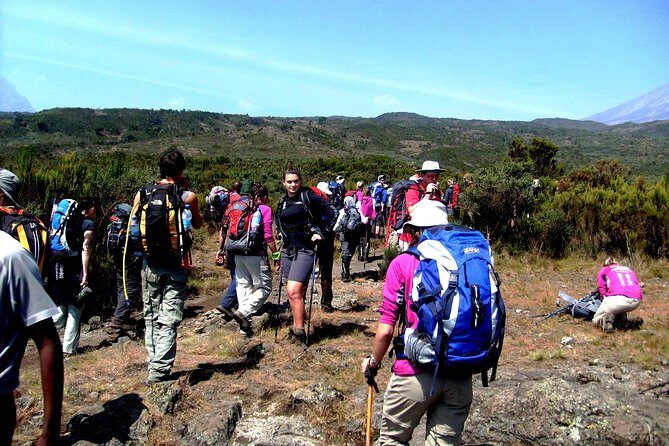
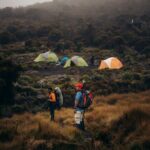
Your climb starts from Moshi, with a morning pickup and a drive into Kilimanjaro National Park for registration. After breakfast, your head guide takes you through the paperwork and then you transfer by vehicle to Nale Moru at about 1,950 meters.
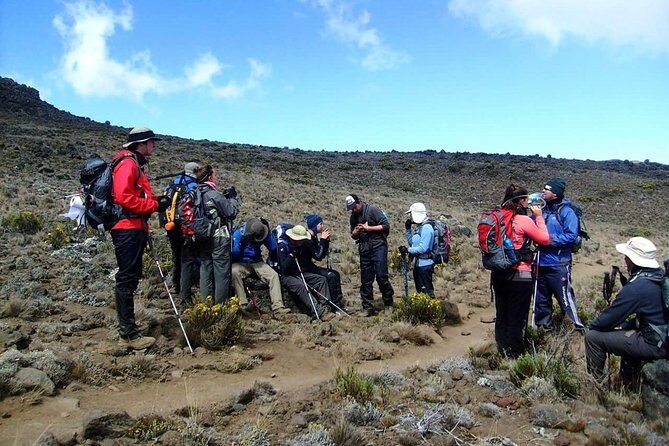
Day 1 is a gentle opener by Kilimanjaro standards: a 3 to 4 hour walk that threads through maize and potato fields before you reach pine forest. You gradually ascend through forest until you hit the edge of the moorland zone, and the payoff here is wide-open views over the Kenyan plains.
Weather matters on this first day. Rain can show up in the rainforest zone, so having waterproofs that you can actually use while walking is smart. You won’t just be “in the tropics” for scenery; you’ll be moving through it.
I also like how this start sets the tone: it’s not just altitude. It’s your first taste of the route’s rhythm—fields, trees, then the slower shift into higher terrain.
Day 2: Kikelelwa Caves and the “Second Cave” View
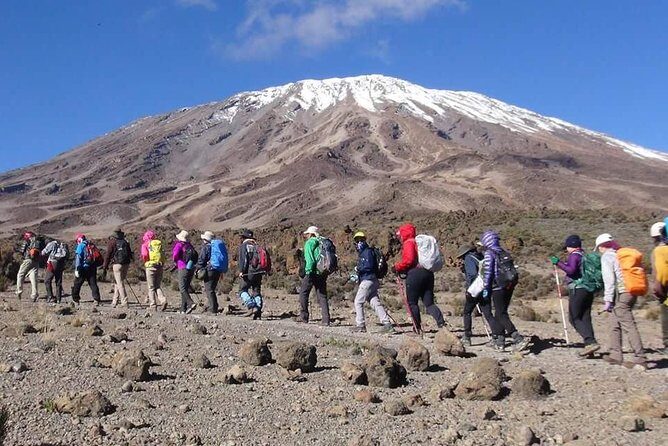
Day 2 is where the north-side character becomes obvious. After breakfast at camp, you head to the Kikelelwa Caves, walking about 5 to 6 hours with a steady ascent.
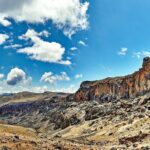
The itinerary aims for Second Cave at around 3,450m, and if conditions are right you’ll get superb views of Kibo, including the eastern ice fields on the crater rim. That’s the big theme of this day: you earn the view with time and height, not by walking a short loop and hoping for luck.
You camp near Kikelelwa Caves at about 3,800m. That altitude is high enough to make sleep a little different, even for people who feel fine during the day. If you’re the type who overthinks altitude, this is the day to keep it simple: hydrate, eat, and let the next climb come to you.
This is also a useful “weather test” day. If fog or clouds roll in, you’ll learn quickly that Kilimanjaro views are conditional. The good news is that the schedule gives you later chances too.
Day 3: Grassy Slopes, Wilder Feeling, and Mawenzi Tarn Hut (4,330m)
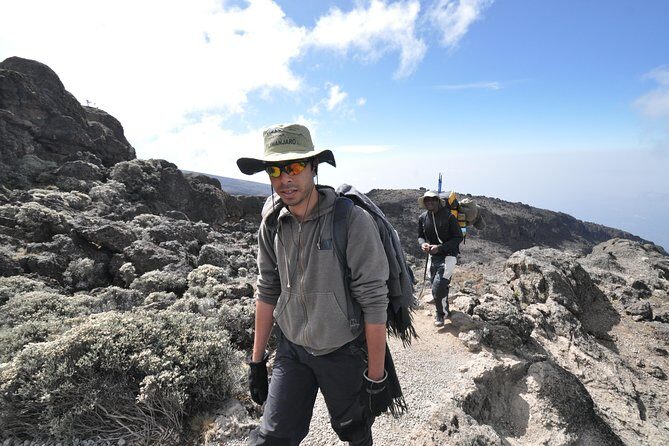
Day 3 is shorter—around 3 to 4 hours—but it includes steeper sections. You leave camp and climb grassy slopes before the trek transitions into a more stark, higher zone where the vegetation starts to thin out.
This is where many people feel the mountain’s mood change. The walk is not only about distance; it’s about that sense of wilderness you get when you’re moving away from trees and into open alpine terrain. The payoff is all-around views once the sky allows it.
You finish at Mawenzi Tarn Hut (4,330m), then dinner and overnight there. You also get an afternoon acclimatization walk up to about 4,500m. That matters because it keeps your body learning the altitude instead of just throwing you into the next big step.
In other words: this day is built to make the summit day more realistic. It’s not glamorous hiking; it’s smart hiking.
Day 4: The Lunar Desert Saddle Between Mawenzi and Kibo
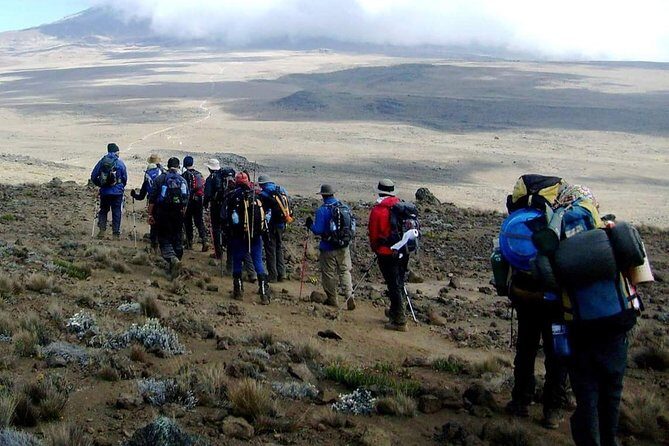
If Day 3 feels more open, Day 4 feels even more severe—in a good way. You cross the saddle area between Mawenzi and Kibo, described as a lunar desert. It’s a relatively steady hiking block of about 4 to 5 hours.
This is one of those trek days where your legs may feel okay, but your attention needs to be sharp. On the saddle, footing and pace matter because you’re higher and the terrain can feel rougher. Early dinner and overnight happens at Kibo Hut (about 4,700m), which sets you up for the summit push.
The schedule also keeps you from being out there too late. You’ll want to be ready for the early wake-up on Day 5, so treating Day 4 as a “save energy” day helps.
Day 5 Summit Attempt: 1am Wake, Gilman’s Point Sunrise, Uhuru Peak (5,895m)
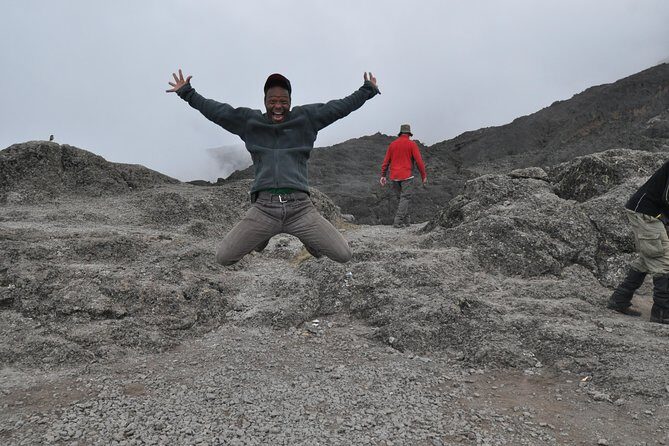
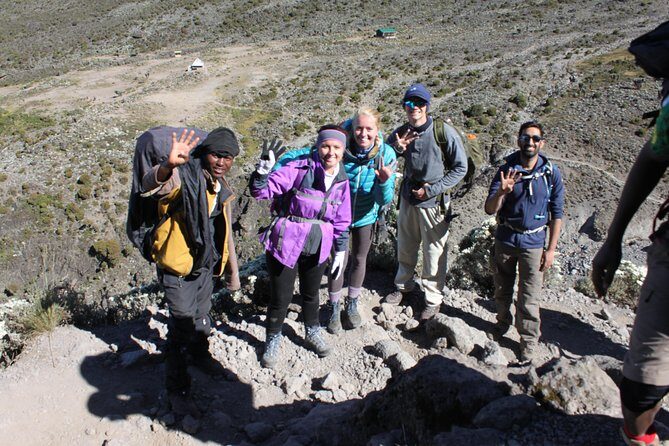
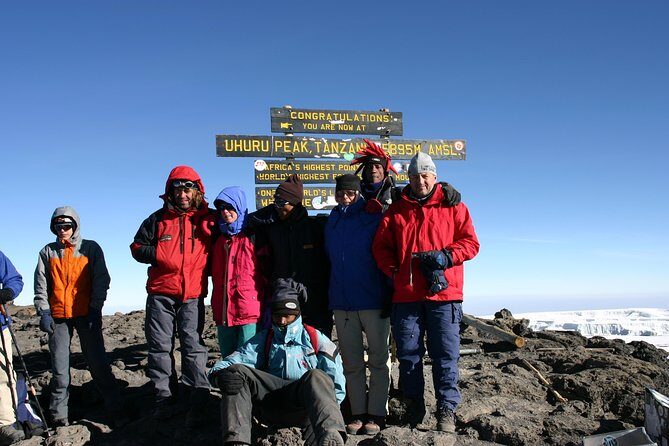
Day 5 is the famous one. You’ll be woken early—around 1am—with a hot drink and snack, then you hike very slowly by torchlight toward the crater rim at Gilman’s Point (5,685m).
Why so slow? Because the summit day is less about fitness bragging and more about managing effort at altitude. The plan has you take the time needed to keep breathing steady.
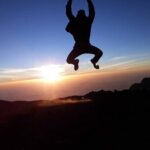
At Gilman’s Point, you pause to watch sunrise over Mawenzi peak if weather allows. Then you continue on to Uhuru Peak (5,895m), called the roof of Africa. After reaching the top, you descend back to Kibo Hut (around 4,700m) for rest and brunch, then continue down to Horombo Hut (about 3,720m).
Walking time on this day can total 10 to 16 hours depending on conditions. That wide range is normal on Kilimanjaro—cloud cover, trail conditions, and your pacing all play roles. Plan for a long day, and you’ll feel more in control when it stretches.
One more point: you’re not just “doing the summit.” You’re also doing the high-altitude descent that follows. That means you’ll still be working hard after the top, so don’t treat the summit as the end of the story.
Day 6 Descent to Marangu Park Gate and Back to Moshi or Arusha
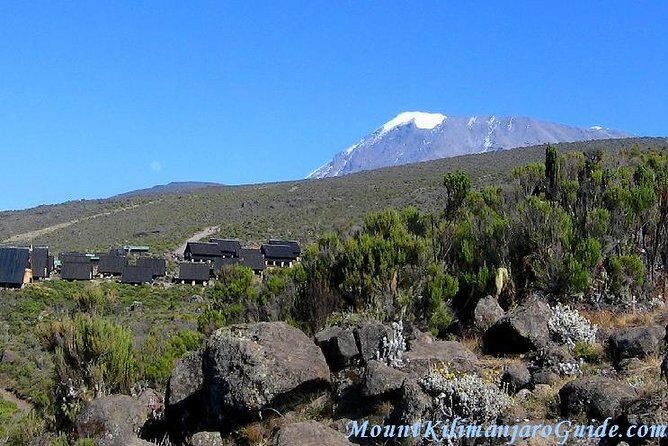
Final day is a relief, but it’s not a shuffle. You descend for about 5 to 7 hours to Marangu Park gate at roughly 1,700m, where you sign out.
The walk goes through lush forest on good paths, so your knees get a break compared to the sharper alpine scrambling you’ve seen higher up. After you meet your driver, you’ll transfer back to your hotel in Moshi or Arusha.
This day is about resetting. You’ll likely feel both tired and proud, and that’s a good mix after the earlier altitude grind. Make room for a proper meal and some real downtime once you’re back on the ground level.
Price and Value: What $1,850 Really Covers
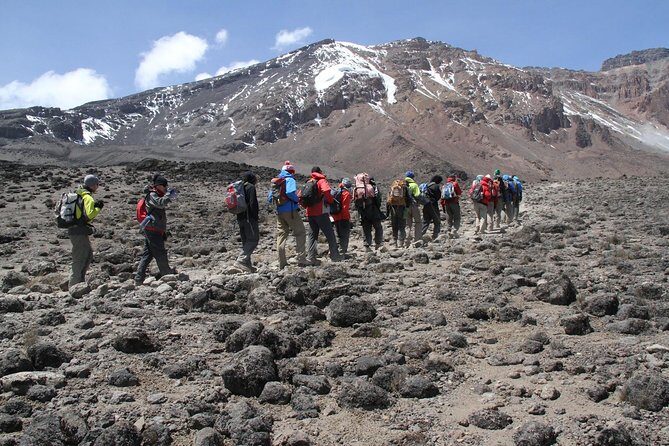
At $1,850 per person, this trek sits in the middle of common Kilimanjaro pricing. The real question is what’s included, because Kilimanjaro budgets can balloon if you’re missing park fees, equipment, or support.
Here, the included items are the big-ticket ones:
- Camping equipment
- All park fees
- Crew salary
- Accommodation and airport transfers
- Meals: breakfast (5), lunch (6), dinner (5)
That coverage matters because you’re not just paying for hikes. You’re paying for safety systems, logistics, and the people who carry the operation. It also reduces the number of surprise costs that can throw off your planning.
What’s not included:
- International flight
- Visa
- Alcohol and soft drinks
For many people, the most practical way to judge value is to compare this all-in package to a “cheap trek” that ends up charging extra for equipment or park access. Here, you’re buying the infrastructure so your focus stays on the mountain.
Guides, Crew, and the Calm-Logistics Advantage
This kind of climb is where good leadership turns a hard experience into a manageable one. Migration Venture Africa’s operation is tied to a director named Amos, and guide names that come up include Vitalis and Eric, plus Size Mrema and Nicholas Wiso on other Kilimanjaro climbs run by the same team.
Even if your exact guide pairing is different, the key idea is consistent: you want a team that handles the permits, transfers, and day-by-day rhythm without drama. That makes a real difference when you’re waking up at 1am, moving through altitude zones, and trying to keep schedules intact.
The group limit—15 travelers max—also helps. Smaller groups are usually easier to manage on narrow sections of trail, and it tends to reduce waiting around.
Practical Tips You’ll Appreciate on This Specific Route
A few details from the trek plan are worth planning around before you arrive:
- Rain and wet forest are possible early. Day 1 runs through zones where waterproofs may matter. Bring gear that doesn’t just sit in your pack.
- Summit start is around 1am. You’ll need warm layers that work at night, plus the patience to walk slow.
- Torchlight hiking is part of the plan. That means you’ll want to move calmly and avoid fast bursts that spike your breathing.
- Acclimatization is scheduled, not optional. The afternoon walk near 4,500m is there for a reason.
- Meals are included on most days. It helps to eat consistently even when you’re not very hungry at altitude.
Also, because alcohol and soft drinks aren’t included, consider how you’ll handle hydration and energy. You’ll likely do best with steady water intake and whatever drink options the crew provides as part of meals.
Who Should Choose This 6-Day Rongai Trek?
This itinerary fits best if you:
- Want a north-side route experience with a quieter feel compared to the busiest trails (many people choose it for privacy).
- Are okay with a long summit day and early wake-ups.
- Prefer an organized trek with small group operations and included logistics.
It also suits hikers with moderate physical fitness. The plan isn’t designed for total beginners, but it’s built around pacing and acclimatization rather than technical climbing skills.
If you’re traveling as a couple, a small group, or even solo, the maximum group size can help the experience feel more personal. You’ll still share the mountain with others, but it won’t feel like a busy highway.
Should You Book This Rongai 6 Days / 5 Nights Climb?
I’d book this trek if your priority is a well-run, included-operations Kilimanjaro climb that gives you meaningful scenery time: fields and pine forest on day one, caves and crater views on day two, Mawenzi–Kibo saddle on day four, and the classic summit arc from Gilman’s Point to Uhuru.
I’d think twice if you dislike very early mornings and long days. Day 5 can become a test of patience as much as stamina, and you’ll be hiking for a long stretch even after you reach the summit.
If you want a structured route with strong support, this one checks the boxes. You’ll still earn your view the hard way, but the schedule is designed to keep you moving in the right order.
FAQ
How long is the Rongai route trek?
It’s 6 days (about 5 nights), moving from roughly 1,950m up toward the summit and then back down to about 1,700m at the Marangu Park gate.
What time does the trek start?
The start time is 9:00am.
Is pickup included?
Yes. Pickup is offered, and you’ll also have transfers included as part of the package.
Does the price include park fees and camping equipment?
Yes. The package includes camping equipment and all park fees.
What meals are included?
Meals included are breakfast (5), lunch (6), and dinner (5).
What is not included in the $1,850 price?
Not included are international flights, visa, and alcohol and soft drinks.
How big is the group?
The trek has a maximum of 15 travelers.
Do you have a summit day?
Yes. You’ll wake up early (around 1am) for the summit attempt, reaching Gilman’s Point first and then Uhuru Peak, followed by a descent.
How long is the final descent to the park gate?
Day 6 includes a descent of about 5 to 7 hours to the Marangu Park gate, after which you sign out.
Is there free cancellation?
Yes. You can cancel for a full refund if you cancel up to 24 hours in advance of the experience start time. If you cancel less than 24 hours before, the amount is not refunded.
What fitness level do you need, and are children allowed?
You should have moderate physical fitness. Children must be accompanied by an adult.