REVIEW · MOSHI
8 Days Private Safari in Serengeti Tour
Book on Viator →Operated by Safaris Africa United · Bookable on Viator
A wild safari in your own pace is a rare thing. This 8-day private trip centers on real animal time, with a guide who works hard for the Big Five and mixes parks with Maasai-area culture. You’ll be picked up around Kilimanjaro Airport and keep going until the end of the service, based on your plans.
What I really like is the tight, personal feel. You travel in a private Toyota Land Cruiser 4×4 with a guide who speaks English or Spanish, and the service is set up for close, attentive guidance rather than a crowded group shuffle.
One thing to consider is the cost. At $4,928.58 per person, this is best viewed as a premium, pay-for-privacy safari, and you’ll also want to plan for drinks and tipping since they’re not included.
In This Review
- Key highlights
- Moshi to Serengeti: Why this circuit feels efficient
- Your private guide: the difference between seeing animals and understanding them
- Day 1 in Arusha: recover, then reset for safari mornings
- Tarangire National Park: elephants, baobabs, and dry-season energy
- Serengeti days 3–5: predators, migration timing, and long drive quality
- Day 3: views from Naabi Hill and a bush lunch plan
- Day 4: central Serengeti for predators, then far north for migration
- Day 5: Mara River area, unlimited drive time, then Pamoja Serengeti Luxury Camp
- Ngorongoro Conservation Area: crater descent for the Big Five close-up
- Lake Manyara: tree-climbing lions and a birds-first day
- Arusha National Park on day 8: the walking safari with an armed ranger
- Value and logistics: what $4,928.58 per person really covers
- Who this safari suits best
- Should you book this private Serengeti safari?
- FAQ
- What parks are included in this 8-day private safari?
- Is airport pickup and drop-off included?
- Is this tour private or shared with other groups?
- What’s included in the price?
- Are drinks included?
- Can I cancel for a full refund?
Key highlights
- Private Toyota Land Cruiser 4×4 for every park day, with a guide focused on your sightings
- Big Five strategy across Serengeti and Ngorongoro, with targeted time in predator zones
- Hot lunch inside the bush setups and planned meal stops, so you’re not just driving all day
- Mara River Great Migration access for July to October timing, when crossings can happen
- Ngorongoro Crater descent into a caldera known for high animal density and even black rhino presence
- Arusha National Park walking tour with an armed ranger, plus a different pace from the big parks
Moshi to Serengeti: Why this circuit feels efficient
Starting from Moshi is a practical choice. You’re not trying to compress too many hotel changes, and you get a calm night in Arusha before the parks start pulling your attention in every direction.
The route also makes sense because it layers animal types. You get dry-season-style elephant concentrations in Tarangire, long-game-drive days in the Serengeti (including migration timing), then a crater day at Ngorongoro where wildlife viewing is famously concentrated. After that, Lake Manyara adds a different habitat and a culture stop, and Arusha National Park gives you a final “closer-to-nature” walking moment.
You can also read our reviews of more private tours in Moshi
Your private guide: the difference between seeing animals and understanding them
This tour is built around a dedicated private safari guide. The guide speaks English or Spanish, and the whole point is that the same person is with you across multiple ecosystems, so the explanations don’t feel random or rushed.
From what’s been shared by past guests, guides here don’t just point and guess. People highlight how much their guides know about fauna, flora, and local customs, and that kind of context matters when you’re watching behavior (not just spotting bodies). The trip also leans toward close, personal attention, and you’re told you’ll be available until the end of the service.
There’s also a planning side to appreciate. Communication is described as very smooth with Cornelius and Monica, and past guests noted a warm beginning supported by Evans and Richard. Even if you’re the type who likes to keep things simple, having a team that responds helps you relax once you arrive.
Day 1 in Arusha: recover, then reset for safari mornings
On day 1, you’ll get a local pickup at Kilimanjaro International Airport and drive to your hotel in Arusha. It’s designed for the reality of travel days: long flights, waiting, and jet lag, followed by a full day ahead.
This “land and settle” start matters more than it sounds. On safari, your best animal sightings often happen early, and being rested helps you actually enjoy the drive days rather than just endure them.
Tarangire National Park: elephants, baobabs, and dry-season energy
Tarangire is one of Tanzania’s standout parks for a reason: it’s built for consistent wildlife encounters. You’ll travel from Arusha to Tarangire, which is about a 2-hour drive, and you’re there for a focused day.
You’re likely to notice two things fast: big elephant herds and giant baobab trees. The baobabs give you that iconic silhouette, but the elephants are the main event. During the dry season, Tarangire also has a “mini-wildlife migration” pattern, with about 250,000 animals entering the park, which can mean dense viewing when other places feel quieter.
A small consideration: Tarangire can feel intense because animal concentrations can be high. You’ll want to pace yourself, take breaks, and remember that the best sightings can come after the first few hours, once your eyes adjust.
Serengeti days 3–5: predators, migration timing, and long drive quality
Serengeti is where most people come for the drama, and this itinerary gives you more than one angle on it.
A few more Moshi tours and experiences worth a look
Day 3: views from Naabi Hill and a bush lunch plan
You’ll start early and drive toward Serengeti via the Ngorongoro Conservation Area, passing around the crater and descending the other side. There’s mention of a bumpy-road experience that many people describe as an African massage, which is basically safari math: the landscape is meant to be explored, not smoothed out.
At the Naabi Hill entrance gate, you can walk to a viewpoint with big plains views. Then lunch is part of the experience, with a hot lunch served either at the gate or en route, and even an option for a bush setup with your guide.
One note: you pass through areas that include Maasai villages on the way. The trip doesn’t frame it like a theme park stop, but it does position culture as part of the journey, which tends to feel more real when you’re already in “go-slow” mode.
Day 4: central Serengeti for predators, then far north for migration
This day is about targeted planning. You start with morning game drives in central Serengeti where there’s a better chance of spotting predators and non-migratory animals, including Big Five possibilities.
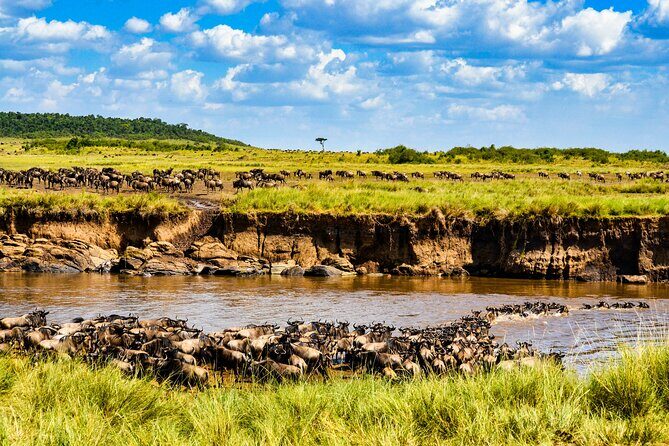
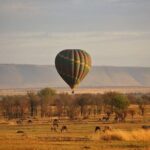
After lunch, you drive to the far north of Serengeti to follow the great migration. This is especially relevant for July to October, when wildebeest can be on the northern plains and you may see thousands crossing the Mara River. It’s not guaranteed, but the trip is clearly structured around giving you the right base for those moments.
Day 5: Mara River area, unlimited drive time, then Pamoja Serengeti Luxury Camp
You continue exploring north Serengeti around the Mara River in the morning, then head back toward central Serengeti for an evening game drive. Wildlife options remain broad here, including Big Five chances.
Lunch is planned inside the park around 12:30, with soft drinks and unlimited drinking water included. Then you get what safari people love: unlimited drive until you reach your tented camp or lodge. Dinner and overnight follow at Pamoja Serengeti Luxury Camp.
That “unlimited drive” block is also a value point. When you’re in the field with a guide who knows where animals are likely to be, time becomes a real commodity, not just a schedule.
Ngorongoro Conservation Area: crater descent for the Big Five close-up
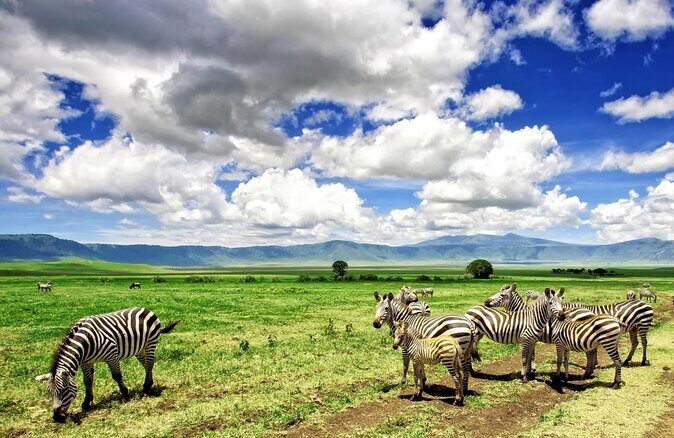
Day 6 takes you to the Ngorongoro Crater, and this is the one day that often makes people feel they’ve “seen Africa” in the classic way. The crater is described as a top East Africa place for the Big Five, and the setting really is the star.
You’ll depart early and do a game drive en route. Once you reach the edge, the caldera opens up—about a 20 km diameter—and then you descend. The day also includes a seasonally busy ecosystem: the site is called out as World Heritage and noted for being home to over 25,000 animals (including many birds, hyenas, and even endangered black rhino).
The other ingredient is human connection. The tour highlights interaction with Maasai people as part of the experience. If you care about more than just wildlife checklists, this adds a grounded, local layer.
Lake Manyara: tree-climbing lions and a birds-first day
Lake Manyara is a change of pace. Instead of only thinking predator drama, this park earns attention for habitat variety: floodplain, acacia woodland, and the birdlife.
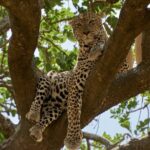
You’ll drive to Lake Manyara early, and it’s known as the home of tree-climbing lions and a birds’ paradise. The numbers given are impressive: more than 500 species present, and you could reasonably spot around 100 species in a day, even as a first-time Africa visitor.
The tree-climbing lions connection matters because it’s about behavior tied to the habitat, not just the animal’s presence. You’ll also have a mix of other wildlife options in the day’s game drive, with giraffes, zebras, hyenas, buffalo, hippos, elephants, and wildebeest listed.
After game drive time, the itinerary also includes a cultural stop at Mto mbu village. The exact length isn’t fully shown in your details, but the plan is clear: part of your day is meant to connect the safari to local life, not just the scenery.
Arusha National Park on day 8: the walking safari with an armed ranger
Day 8 returns to Arusha National Park, and this is where you get something different from all the vehicle-only viewing. The drive is short, about 45 minutes, which helps keep your last day from feeling rushed.
Once there, you’ll do a 2-hour walking tour with an armed ranger. That’s not a casual stroll—it’s a guided, safety-led walk inside a wildlife area. You’ll also have an evening package lunch and additional game drive time before returning to your hotel for dinner and overnight.
Arusha National Park may be small, but it’s described as wildlife-rich. You’re told to expect elephants, zebras, giraffes, buffalo, baboons, and antelopes, plus the park is home to rare black and white colobus monkeys. Mount Meru is also referenced, so you’re seeing a different kind of Tanzanian backdrop than the Serengeti circuit days.
One practical consideration: because this is a walking component with an armed ranger, you’ll want to be comfortable moving at least a bit under ranger-led guidance.
Value and logistics: what $4,928.58 per person really covers
Let’s talk money in a grounded way.
The price is high, but it’s not just for a seat in a vehicle. Included items are substantial: all fees and taxes, accommodations, transportation, arrival and departure transfers, a private Toyota Land Cruiser 4×4, a private safari guide, and your meals (breakfast every day listed, plus multiple lunches and dinners as specified). Admission ticket coverage is also stated as included/free for the parks in the itinerary.
That’s why this can be good value if you’re the type who wants privacy, flexible attention from a guide, and fewer compromises. You’re also not paying separate park entries along the way, and you’re traveling as one group rather than merging into a larger crowd.
What’s not included is equally important for budgeting: drinks, tipping, internal & local flights, visa, and medical and travel insurance. In practice, that means you should plan on cash/fees for drinks and tipping, and you should handle visa and insurance separately. If you’re counting every dollar, these add-ons can change the final number.
Also, there’s no mystery about the format: this is private, and the payoff is exactly that—time, attention, and fewer surprises from other groups’ schedules.
Who this safari suits best
This tour fits best if you want:
- A private safari pace with a guide who stays with you
- A plan that targets both predators and migration timing (especially July to October)
- A mix of big-name parks and a culture connection, rather than only driving for wildlife
- The “story” side of safari: local customs explained alongside animal viewing
It may be less ideal if you want a minimalist budget trip or you don’t like early starts and long driving days. Safari mornings begin early, and the itinerary is built around those hours.
Should you book this private Serengeti safari?
If you’re aiming for a serious, guide-led safari across Tarangire, Serengeti, Ngorongoro, Lake Manyara, and Arusha National Park, this itinerary is a strong match. The big win is the combination of private transport, structured game-drive days, and a guide who can explain what you’re seeing, not just where it is.
I’d book it if you’re comfortable paying a premium for privacy and planning to budget extra for drinks and tipping. I’d pause if you’re trying to keep the total cost very low or you only want a short, low-effort safari slice. This is built for time in the field, and it rewards people who like that rhythm.
FAQ
What parks are included in this 8-day private safari?
The itinerary includes Tarangire National Park, Serengeti National Park, the Ngorongoro Conservation Area/Ngorongoro Crater, Lake Manyara National Park, and Arusha National Park.
Is airport pickup and drop-off included?
Yes. You get arrival and departure transfers, with pickup at Kilimanjaro International Airport and drop-off at the airport or another place based on your plans on the last day.
Is this tour private or shared with other groups?
It is a private tour/activity, so only your group participates.
What’s included in the price?
The tour price includes all fees and taxes, accommodations, transportation, arrival and departure transfers, a private Toyota Land Cruiser 4×4, a private safari guide, and meals including breakfast, lunch, and dinner as listed.
Are drinks included?
No. Drinks are not included, and tipping is also not included.
Can I cancel for a full refund?
Yes, there is free cancellation. You can cancel up to 24 hours in advance for a full refund.