REVIEW · MOSHI
6-Day Big Five Magic Safari Tour
Book on Viator →Operated by Africa Magic Holidays & Tours · Bookable on Viator
Big Five sightings start at dawn. This 6-day Big Five Magic Safari Tour in Moshi, Tanzania is built around routes where spotting the five target animals is genuinely the point, not a side quest. I also love that your guide can work in your language, including Spanish, Italian, French, German, and English. One thing to weigh: the schedule is long and early, with a listed start time of 1:00 am, so you’ll need stamina from day one.
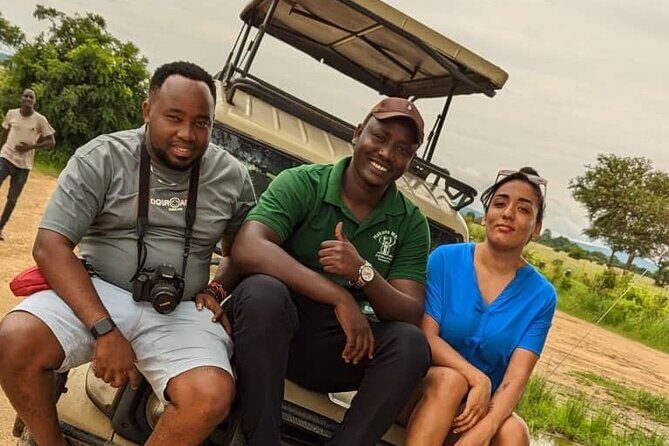
What makes this feel more grounded than a generic safari is the guide team. In past trips, people highlighted guides such as Justin, Steven, Lazaro (and Lazarus), David, and Miraji, and the common thread was fast, organized support—especially when plans shift or you want something adjusted.
Key things I’d spotlight before you book
- A route that stacks the right parks for Big Five chances, from Tarangire through Serengeti to Ngorongoro.
- Multilingual guiding (Spanish, Italian, French, German, English) so you can actually follow what you’re seeing.
- Big stretches of game driving—including an 11-hour day focused on Big Five hunting.
- Ngorongoro Conservation Area for black rhino and lion territory, not just a quick stop.
- Meals and park fees handled: breakfast (6), lunch (6), dinner (6), and admission ticket free.
In This Review
- Why Moshi and this route make sense for the Big Five
- The reality check: a 1:00 am start and long safari days
- Day 1 Tarangire National Park: a great first taste of the wildlife rhythm
- Day 2 Serengeti National Park transfer: “Siringet” open plains energy
- Day 3 in Serengeti: 11 hours of Big Five searching
- Day 4 Serengeti migration moments and the push to Ngorongoro
- Day 5 Ngorongoro Conservation Area: black rhino and lion prides
- Day 6 Lake Manyara finale: flamingo edges and shaded elephant moments
- Guides, Maasai village, and the personal side of a private safari
- Price and value: what $1,890 buys you here
- Should you book this Big Five Magic Safari?
- FAQ
- Where does the 6-Day Big Five Magic Safari Tour start and end?
- How long is the safari tour?
- How much does the tour cost?
- Which parks are included in the itinerary?
- Are park admission tickets included?
- What meals are included?
- Is pickup offered?
- What time does the tour start?
- Does the guide speak my language?
- Is it a private tour, and what about cancellation or bad weather?
Why Moshi and this route make sense for the Big Five
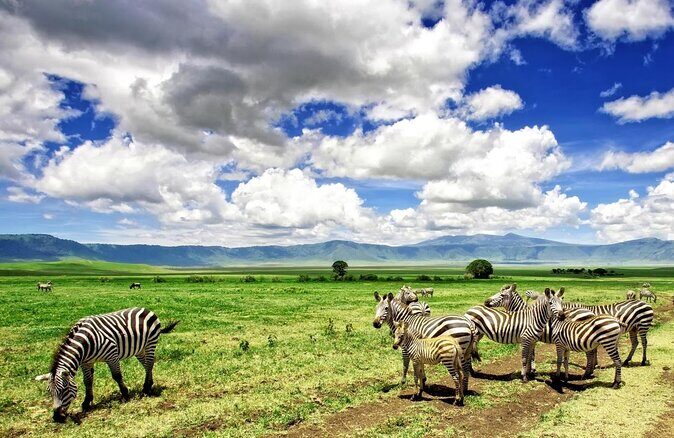
Moshi is a practical launch point for safaris in northern Tanzania. Your plan is built to move in a way that keeps your time in wildlife country productive, instead of wasting days on long, dead transfers. The itinerary runs through Tarangire National Park, Serengeti National Park, Ngorongoro Conservation Area, and Lake Manyara National Park—a sequence that matters because each park offers a different “feel” and animal mix.
If Big Five is your goal, the smart part here is how the days are weighted. You don’t just pass through Serengeti; you spend dedicated full days there. Then you funnel into Ngorongoro, which is highlighted as one of the best places in Tanzania to see black rhino and lion prides, including black-maned males.
The other practical win: the safari includes meals across all days and lists admission tickets as free, which helps you budget the trip without surprises (other than the tip for your guide).
The reality check: a 1:00 am start and long safari days
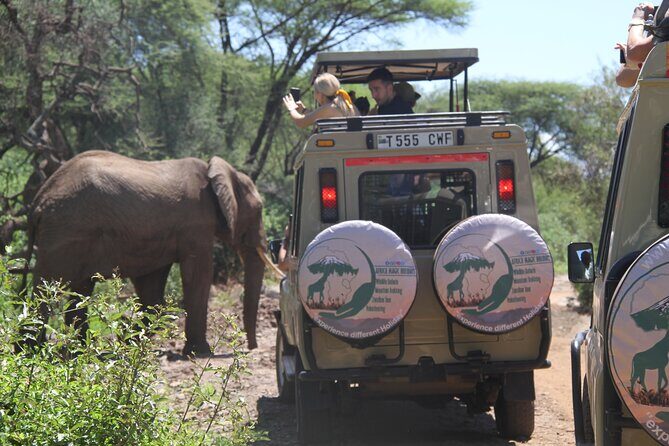
Your start time is listed as 1:00 am at Kilimanjaro Airport. That doesn’t mean you’ll be driving nonstop at that hour, but it does mean you should plan for an early pickup and a day that’s already in motion before breakfast-at-a-normal-hour life kicks in.
Then the itinerary continues with heavy safari time: Day 1 is an 9-hour day, Day 2 is 8 hours, Day 3 is 11 hours, and the remaining days are also long (10 hours each). That’s not a complaint—just math. Big Five safaris are not short strolls. They’re timing games: dawn, prime light, and long stretches in search of the animals you came for.
So go in with a simple strategy: treat this like an intense outdoor week, not a “relax and sleep in” vacation. If you’re okay with that, you’ll enjoy how much ground you cover.
A few more Moshi tours and experiences worth a look
Day 1 Tarangire National Park: a great first taste of the wildlife rhythm
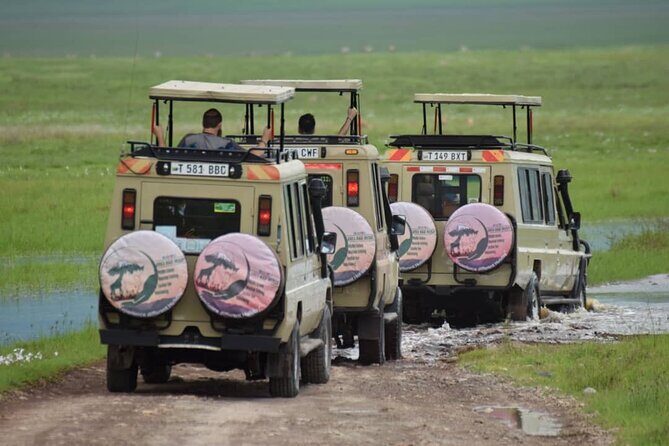
You start Day 1 with a drive from the Moshi area (listed as leaving from Charity hotel) to Tarangire National Park, around 2 hours. The day emphasizes an early drive inside the park because animal activity is best earlier in the day. What I like about this start is that you’re not only going for a single species—you’re getting a mix of the park’s personalities.
From the east approach described for Tarangire, the scenery cues are specific: monkeys jumping through branches, and elephants standing in shade on the escarpment. You also have frequent mentions of zebras, impalas, giraffes, buffalos, and hippos. That matters because on a Big Five safari, you want momentum right away. If the first day already delivers elephants and buffalo sightings, the rest of the week feels like it’s building.
The day includes a late evening drive toward Mto wa mbu near Lake Manyara, with an overnight at Green Village Poa Park. It’s a logical transition: you sleep near where you’ll set up for Serengeti next.
Potential drawback to note: Tarangire is often a “mix-and-match” park rather than the slam-dunk black rhino stop. So if your expectations are only black rhino and lions, Day 1 may feel like it’s still warming up—even if it’s still a strong wildlife day.
Day 2 Serengeti National Park transfer: “Siringet” open plains energy
Day 2 is a transfer day plus safari time. The drive from the Lake Manyara area to Serengeti takes about 3 hours, with a half game route along the way. The Serengeti introduction here leans on its Maasai name, Siringet, tied to the idea of endless open plains. You can expect the kind of terrain where you’re constantly scanning for movement at distance.
This day is about adjusting to Serengeti’s scale. The plan notes that Serengeti is Tanzania’s oldest and most popular national park, a UNESCO World Heritage Site, and it’s famous for the annual migration. The description even brings in a migration-size image: millions of hooves, not just a handful of animals.
You’re on the road for about 8 hours on Day 2. The value of this day isn’t only what you see—it’s how it sets your eyes for what Serengeti does best. Once you’ve spent a day in Serengeti’s rhythm, the full Big Five focus on Day 3 lands much better.
Day 3 in Serengeti: 11 hours of Big Five searching
Day 3 is the heavy-hitter. You spend the whole day dedicated to the Big Five with a full-day game drive. The day is described as 11 hours, and that’s the kind of time block where your odds improve in a meaningful way.
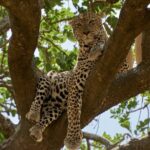
The way this day is framed is also important: it calls out not only lions and elephants but also leopard and black rhino as part of the Big Five targets in Serengeti. You’re told Serengeti holds an enormous variety of animals, including thousands of elephants and buffalos, several hundred leopards, and dozens of black rhinos.
Now, a quick reality note: “home to” doesn’t guarantee you’ll see every target every day. But what you’re paying for (and what makes this day special) is the search time. More hours means more chances—especially for animals that may appear briefly, or be heard before you see them.
If you want one day that feels like it’s truly about your dream list, this is it. I’d treat Day 3 as the day to keep your energy up and your eyes sharp.
Day 4 Serengeti migration moments and the push to Ngorongoro
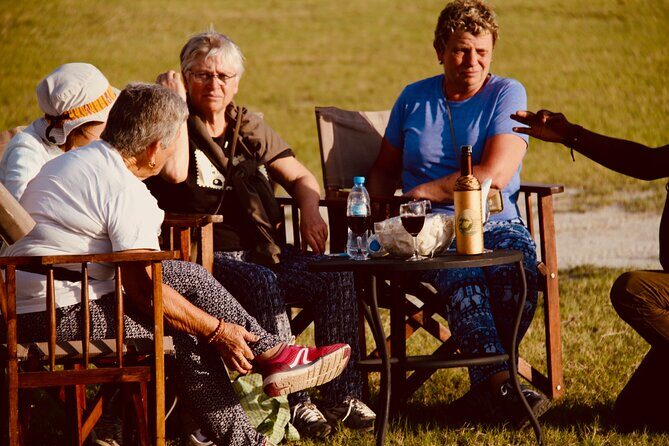
Day 4 starts with an early breakfast and then a morning game drive. After that, you get a full day of game viewing in Serengeti with a picnic lunch. You’re also told to watch for large herds like buffalo, plus elephant and giraffe groups, and lots of grazing animals such as eland, topi, kongoni, impala, and gazelle.
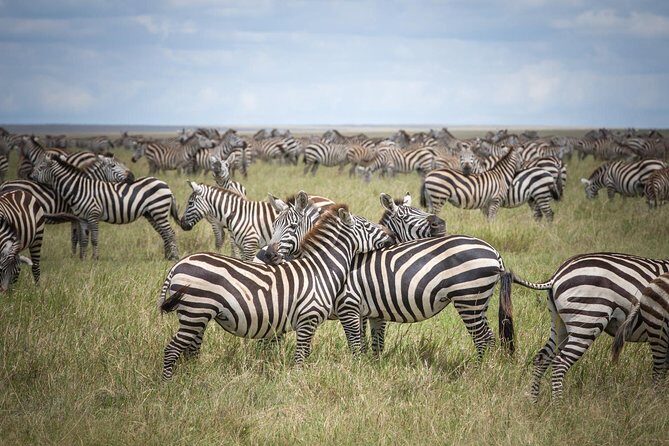
The big hook on Day 4 is migration timing. The plan specifically references seeing the best moments of the migration of about 1.1 million gnu, depending on the season. I like that this isn’t presented as generic safari viewing. Migration viewing is one of the rare times where Serengeti feels almost scripted—meaning your guide isn’t guessing as wildly as on a random day.
Then you shift gears in the evening. You’re driven to Ngorongoro and overnight at Hhando Coffee lodge. This transition is useful because Ngorongoro’s wildlife is often about concentration—more animals in a smaller space—so arriving and settling in helps you use the next day well.
A few more Moshi tours and experiences worth a look
Day 5 Ngorongoro Conservation Area: black rhino and lion prides
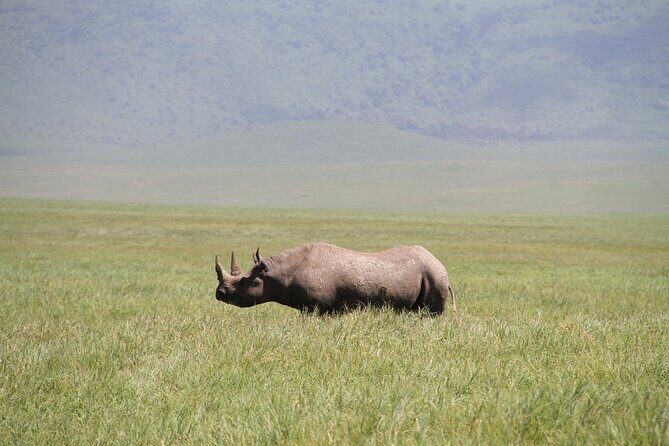
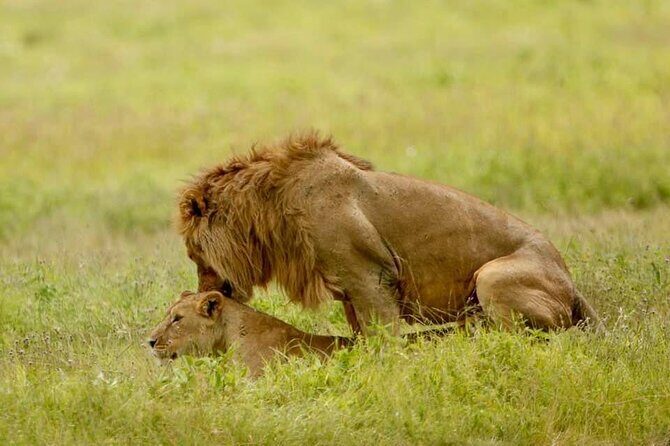
After breakfast, Day 5 is focused on the Ngorongoro Conservation Area with game drives. The crater is described as a small part of the broader conservation area, but the crater is where the action concentrates. This is where the tour explicitly calls out one of the best places in Tanzania to see black rhino as well as lion prides, including black-maned males.
You’ll also be dealing with a different ecology than Serengeti. The plan mentions flamingoes and other water birds, plus additional predators like leopards and cheetahs, and animals like hyena. There’s also a mention of antelope family members and smaller mammals.
I like how the day is framed: Ngorongoro isn’t just a sightseeing stop. It’s a target zone for specific Big Five goals, particularly black rhino and lions. Even if the exact sightings vary (because wildlife doesn’t schedule appointments), this is clearly the day designed to maximize your chance at the hardest targets.
Late evening, you’re driven back toward Migombani tented for the overnight. That night setup keeps the itinerary moving without losing a day to unnecessary backtracking.
Day 6 Lake Manyara finale: flamingo edges and shaded elephant moments
Day 6 closes the loop with Lake Manyara National Park. The drive from Migombani to Lake Manyara is short—about 10 minutes—so you start your morning game drive in the park earlier rather than later.
The approach described is dramatic: the Rift Valley escarpment looms on the horizon, and the lake forms the backdrop. You’re also given a set of expected “tells” for wildlife sightings: monkeys in the trees near ground-water forest areas, elephants standing in shade on the escarpment.
Lake Manyara is described as a rare scenic gem, with flamingos painting the edges pink by thousands. The game viewing circuit is said to be compact, which can be a plus. When you’re short on time at the end of an intense week, compact circuits help you keep eyes on the road and your chance of seeing something fresh.
Then you drive back to Charity hotel Arusha later in the day.
Small practical note: the activity end is listed as ending back at the meeting point. Your itinerary notes a return to Charity hotel Arusha. Before you go, confirm what “end” looks like for your exact booking.
Guides, Maasai village, and the personal side of a private safari
This is a private tour/activity, meaning only your group participates. That matters because it changes the feel of the day: you’re not stuck with random pacing, and your guide can adjust more easily around your interests and your group’s comfort.
The language support is also a big deal. A guide speaking Spanish, Italian, French, German, or English helps you catch details that make sightings feel smarter, not just lucky. In past feedback for this safari operation, people specifically thanked staff members like Justin, Steven, Lazaro, David, and Miraji for being professional and responsive.
You also get a Maasai village visit as part of the included activities. That’s valuable when you want more than wildlife photos. It adds cultural context, and it gives the trip texture beyond the safari vehicle.
Price and value: what $1,890 buys you here
At $1,890 per person, this isn’t a budget safari. So the question isn’t “is it expensive?” It’s “what costs did they handle for you?”
From the tour details, these items are included or covered:
- Park admission tickets are free (listed as free each day)
- Meals included: breakfast (6), lunch (6), dinner (6)
- A private tour setup (only your group)
- Pickup offered and the tour operates with a mobile ticket
What isn’t included:
- Guide’s tip (not included)
What’s not clearly spelled out in the included list is lodging specifics beyond the named overnight locations in the plan. The itinerary does name places you’ll overnight (Green Village Poa Park, Hhando Coffee lodge, Migombani tented), but I’d still confirm whether accommodations are fully packaged in your price or handled separately.
When the park fees and most meals are handled, your money is concentrated on the real safari engine: time, driving, and guiding. That’s the part you can’t DIY easily without risking wasted hours.
Should you book this Big Five Magic Safari?
Book it if:
- Big Five is your priority and you want a route that spends serious time in Serengeti plus a focused push into Ngorongoro for black rhino and lions.
- You like the idea of a multilingual guide, so you’re not just watching from the window.
- You want a plan that includes meals and lists park fees as free, so budgeting stays simpler.
Skip or pause if:
- You don’t do well with early starts and long driving days. The 1:00 am start and 8–11 hour safari blocks are real.
- You need absolute clarity on where you end the trip. The plan notes both returning to Charity hotel Arusha and ending back at the meeting point. Ask before you confirm.
If you’re ready for a full-on wildlife week, this is a strong match for Big Five goal-chasers who also care about understanding what they’re seeing.
FAQ
Where does the 6-Day Big Five Magic Safari Tour start and end?
The tour starts at Kilimanjaro Airport. The activity ends back at the meeting point, and the itinerary also notes a return to Charity hotel Arusha later on the final day. I’d confirm your exact drop-off with the provider.
How long is the safari tour?
It’s a 6-day tour (approx.). The schedule is built around multiple long game drive days across different national parks.
How much does the tour cost?
The price listed is $1,890.00 per person.
Which parks are included in the itinerary?
You’ll visit Tarangire National Park, Serengeti National Park, Ngorongoro Conservation Area, and Lake Manyara National Park. The plan also includes a Maasai village visit.
Are park admission tickets included?
Yes. The itinerary lists admission ticket free for the park days shown.
What meals are included?
The included meals list shows breakfast (6), lunch (6), and dinner (6).
Is pickup offered?
Yes, pickup is offered. The meeting/start point is Kilimanjaro Airport.
What time does the tour start?
The start time is listed as 1:00 am.
Does the guide speak my language?
The tour description states the guide speaks languages including Spanish, Italian, French, German, and English.
Is it a private tour, and what about cancellation or bad weather?
It’s a private tour/activity with only your group participating. The experience requires good weather, and if it’s canceled due to poor weather you’ll be offered a different date or a full refund. Cancellation is listed as free up to 24 hours in advance for a full refund.