REVIEW · ARUSHA
4 Days Mount Meru Climbing | Hiking | Trekking Tour
Book on Viator →Operated by KILIMANJARO CLIMBING TOURS · Bookable on Viator
Mount Meru feels like a controlled chaos. You start with wildlife on a forest path, then you’re chasing sunrise along a narrow volcanic ridgeline. This 4-day trek is also a smart warm-up for Kilimanjaro, because you’ll acclimatize step by step rather than rushing altitude.
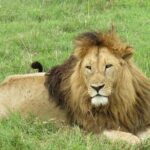
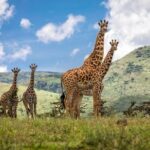
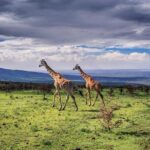
I especially like the armed ranger escort from the gate onward. It’s not just for safety theater; it matches the reality of Arusha National Park, where elephants, giraffes, buffalo, zebras, monkeys, and antelope can show up near the trail. I also like how the days are paced with hut nights at Miriakamba Hut and Saddle Hut, so you’re not improvising sleep arrangements at altitude.
One consideration: the summit push is early and long. On day 3 you’ll start around 1:30 a.m. and hike up steeply before sunrise, then descend a long way. It’s doable for many people, but you’ll want to be mentally ready for the hard parts, not just the view at the top.
In This Review
- Key takeaways before you hike Mount Meru
- Why Mount Meru is the smartest warm-up before Kilimanjaro
- From Arusha to Momela Gate: the ranger-escort start that changes everything
- Day 1 to Miriakamba Hut: montane forest pace, 10km comfort zone
- Day 2 to Saddle Hut: Little Meru’s steep ridge views
- Summit night on day 3: 1:30 a.m., ridgelines, and the sunrise payoff
- Day 4 descent to Momela Gate: fast relief through grassland
- Price and what $2,600 buys you (and what it doesn’t)
- What the best days feel like in real terms
- Who should book this Meru trek (and who should reconsider)
- Should you book this 4-day Mount Meru climb?
- FAQ
- What is the highest point reached on this climb?
- Do I hike at night?
- Where do we sleep during the trek?
- Are there armed rangers on the hike?
- What’s included in the $2,600 price?
- Are Mount Meru park fees included?
- What does free cancellation mean for this experience?
Key takeaways before you hike Mount Meru
- Ranger escort is required because wildlife is part of the trekking equation on the mountain
- Sunrise summit timing means you’ll aim for the peak when clouds can hide or reveal Kilimanjaro
- Hut-based nights at Miriakamba and Saddle keep the trek organized and altitude-friendly
- Little Meru is your “scenic bonus” with a short climb for big crater views near sunset
- Two-way elevation juggling: short climbs one day, long up-and-down the next
- Your crew matters: guides and porters focus on pace, questions, and morale
Why Mount Meru is the smartest warm-up before Kilimanjaro
Mount Meru sits in Arusha National Park, and it’s the kind of climb that teaches you altitude habits—slow steps, steady breathing, and patience with steep terrain. It’s the third highest peak in Africa and the second highest mountain in Tanzania, topping out around 4,568m. Even if Kilimanjaro is your big goal later, Meru gives your body a dress rehearsal.
The best part is that the trek is structured like a learning curve. Day 1 eases you from montane forest into higher ground. Day 2 adds steep effort and altitude gain without turning into an all-day grind. Then day 3 is the classic summit-night test: early start, steep sections, and a ridgeline that makes you pay attention.
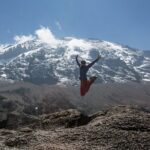
You’ll also get a view-oriented payoff. As you climb, the trail follows the north rim of the volcanic crater, and you’ll get crater views plus the possibility of spotting Kilimanjaro Peak above the clouds at the summit. On a trek where sunrise is part of the plan, that’s not a small detail—it’s the whole point.
You can also read our reviews of more hiking tours in Arusha
From Arusha to Momela Gate: the ranger-escort start that changes everything
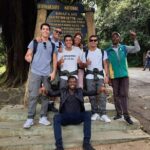
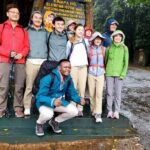
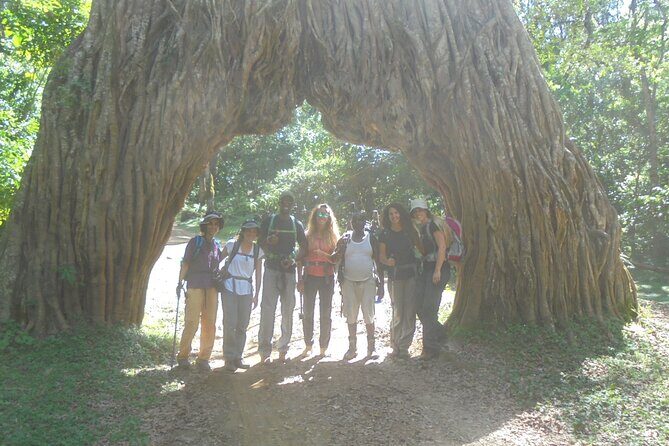
Your day begins with a drive from Arusha toward Momela Gate, where you register before setting out. The trekking route here matters because you’re not in some empty trail system. You’re hiking inside a national park where wildlife is legitimately part of the experience, and you climb with a full armed ranger escort due to that mix.
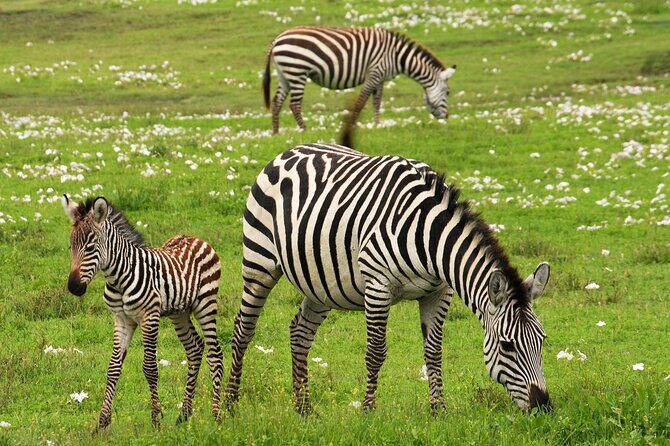
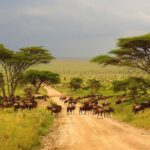
That escort affects your whole feel of the day. Instead of just thinking about your legs, you’re also scanning the trail edges and learning how quickly animals can appear. On the lower slopes, the information you’ll be working with points toward sightings like elephants, giraffes, buffalo, zebras, monkeys, and antelope. You don’t need to force it. You just watch and react calmly if something is nearby.
The hike to Miriakamba Hut is a solid first step: about 10km and roughly 4–6 hours, with elevation moving from around 1,387m to 1,500m. It’s long enough to get warm and settle into rhythm, but it’s not the day you’re trying to conquer altitude extremes.
By the time you reach the hut area for dinner and your first overnight, you’re set up for the next day’s rhythm. You’re not just arriving—you’re starting to live the trekking schedule.
Day 1 to Miriakamba Hut: montane forest pace, 10km comfort zone
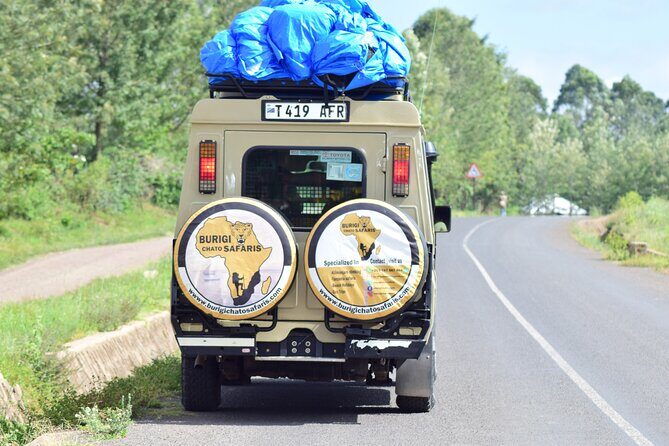
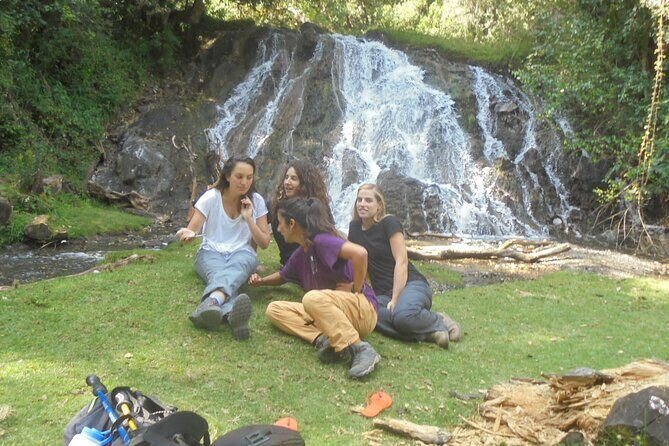
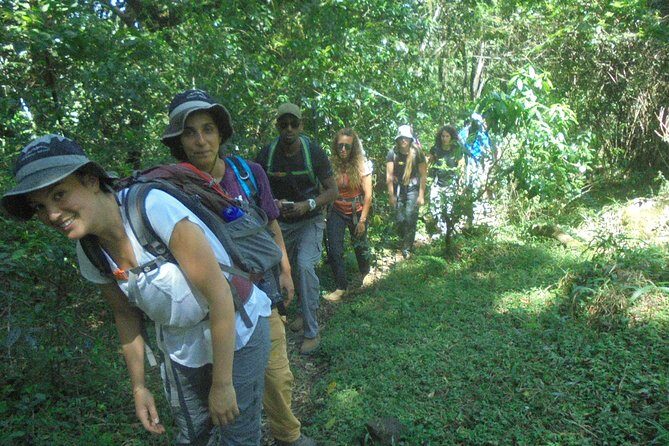
Day 1 is your “get your bearings fast” day. You walk from Momela Gate toward Miriakamba Hut through montane forest, where the air tends to feel more sheltered and the terrain feels more forgiving than later on. You’re still hiking in a park environment, with wildlife possible, but the goal is to start steadily.
You’ll be covering about 10km in 4–6 hours. That time window is realistic if you keep your pace controlled and don’t rush early. The trek also has a wildlife element, so a fast pace can make you miss the moments that make Meru special.
You’ll sleep at Miriakamba Hut after dinner. Even without over-romanticizing it, hut-based nights are a practical advantage. You’re not scrambling to find shelter or guessing how to manage warmth and downtime at altitude. The plan is built around designated huts along the way, which keeps the experience smooth.
If you’re coming in for Kilimanjaro training, treat day 1 like a rehearsal for discipline: drink water regularly, eat when it’s offered, and pace like you’ll still be climbing tomorrow.
Day 2 to Saddle Hut: Little Meru’s steep ridge views
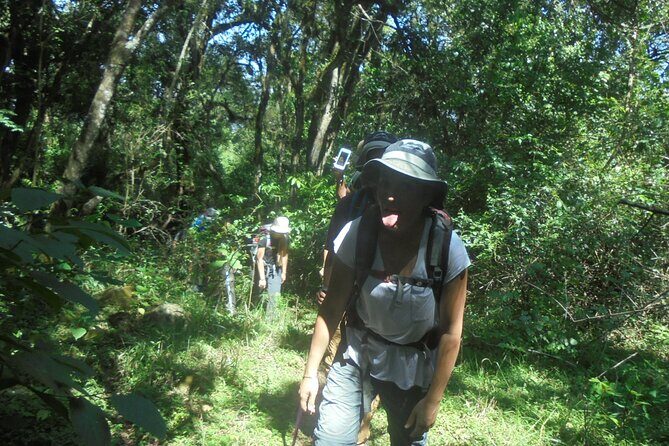
Day 2 starts with a short but steep climb from Miriakamba Hut to the saddle below Little Meru. This is where Meru starts teaching you altitude planning in a new way: the effort increases even though the day doesn’t look long on paper.
You’ll hike about 8km and expect roughly 3–5 hours. Habitat changes from forest toward moorland, and the information you’ll be working with highlights ridge walking with views of the Meru crater and the Ash Cone. This is the day you start seeing the mountain as more than a single trail. You’re looking into a whole volcanic system.
At the saddle, you stop for hot lunch at Saddle Hut. Then there’s a short climb option to the summit of Little Meru (about 3,820m) for views just before sunset. It’s not just a “walk up a hill” add-on. It’s a strategic move: you get altitude exposure while you’re still in a controlled daytime window.
You’ll spend the second night at Saddle Hut. That matters because it prepares you for day 3’s dramatic early push. In other words, day 2 isn’t only about views—it’s about setting you up to succeed when the clocks get brutal.
Summit night on day 3: 1:30 a.m., ridgelines, and the sunrise payoff
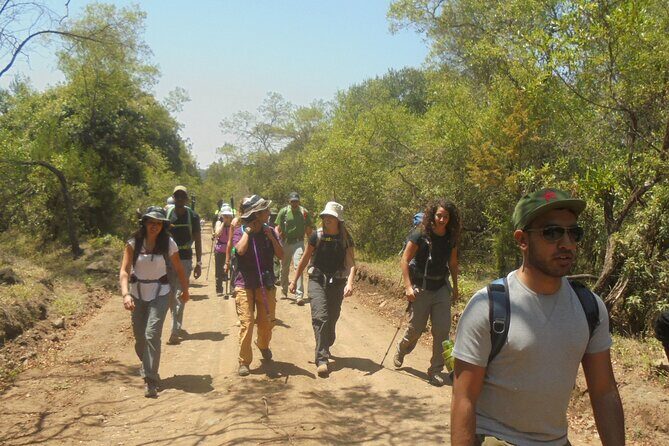
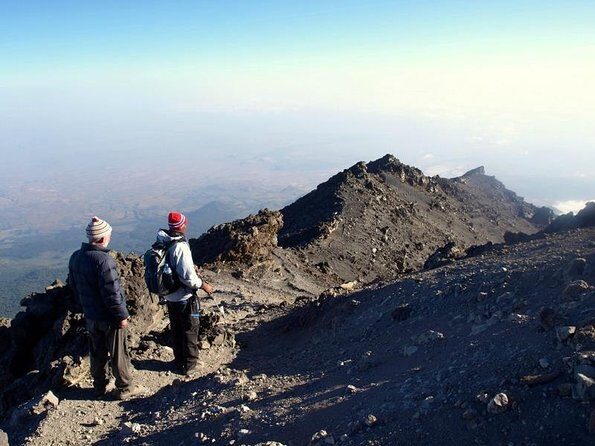
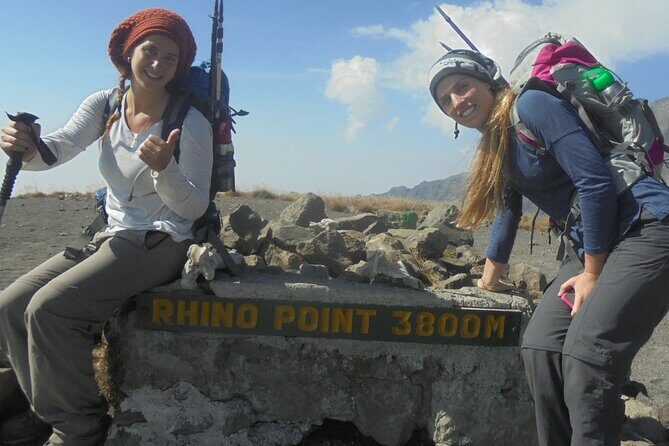
Day 3 is the centerpiece of the whole trek. You start at about 1:30 a.m., and you’re hiking steeply toward Rhino Point (around 3,800m) and then Cobra Point (around 4,350m). Your summit target is around 4,566m.
This is the part where you’ll feel why Meru is often used as a warm-up for Kilimanjaro. It’s not only altitude—it’s stamina plus time pressure plus cold-dark effort. When people talk about “the hard night,” this is exactly what they mean.
The route is described as a spectacular narrow ridgeline between inner cliffs and the outer crater wall. That tells you what to expect emotionally: fewer places to ignore the surroundings, and more reason to stay focused on footing and pacing. Even if you’re tired, you’re still climbing in a way that keeps your attention sharp.
You’re aiming for sunrise at the summit. There’s also a possibility of seeing Kilimanjaro Peak above the clouds from up there—one of those moments that makes the early start feel worth it even if you’re questioning your life choices at 2 a.m.
Then comes the long work of descending. After a rest and brunch at Saddle Hut, you continue downhill to Miriakamba Hut. The distances given for day 3 are about 5km up and 13km down, with a 10–12 hour hiking window. Plan your mindset around that: the summit is huge, but your knees still have a job to do after the celebration.
A few more Arusha tours and experiences worth a look

Day 4 descent to Momela Gate: fast relief through grassland
Day 4 is your release valve. You take a short and fast descent through open grassland and mixed forest, with a possibility of spotting wildlife again before reaching Momela Gate in late morning.
You’ll cover about 10km, and the hike time is about 2–4 hours. Elevation drops from around 2,514m down toward 1,500m and then to about 1,387m. That rapid descent is why day 4 can feel like you suddenly remember how to walk—until you realize you still have a trail, still have uneven footing, and you’re still moving in mountain terrain.
Your transfer is waiting at Momela Gate to take you back to your hotel in Arusha/Moshi, depending on where you’re staying. It’s a clean wrap-up: after a hard summit night, you get back to normal life while your legs are still recovering.
Price and what $2,600 buys you (and what it doesn’t)
At $2,600 per person, this trek is in the mid-to-higher range for a 4-day climb in Tanzania. The value question isn’t just the total—it’s what’s covered and what you’re protected from.
What you get included:
- Airport pickup and drop up, plus gate transfer
- Crew wages
- Meals: breakfast (3), lunch (4), dinner (3)
- Mobile ticket
What’s not included:
- Flights and visas
- Tipping the crew
- Mount Meru park fees (paid directly to the park or via your operator)
That breakdown helps you compare fairly. A climb like this relies on logistics: rangers, guides, porters, cooking support, and hut coordination. When crew wages and meals are built in, you’re not trying to piece together a working trekking team after you arrive.
The park fees being extra is common, and it’s worth planning for so you don’t get surprised at the gate. Also, tipping is listed as not included, so budget for that if you choose to tip your team.
One more practical note: the tour description says the group can be up to 200 travelers. In reality, on mountains you usually feel like you’re in smaller clumps because schedules and ridgeline spaces control the flow. Still, treat “up to 200” as a sign you should ask your operator how group size feels on the trail, especially for the summit night.
What the best days feel like in real terms
The strongest praise for this trek clusters around three things: reaching the summit, good organization, and a guide/crew who keeps you moving the right way.
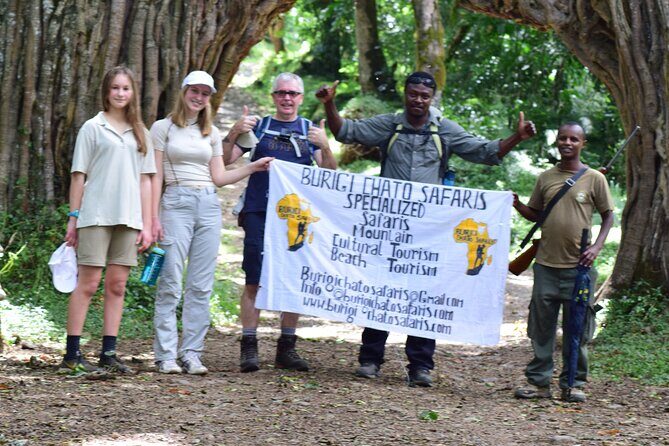
One review highlights an experienced guide named Geofrey who answered questions clearly, with food and accommodation handled well. Another describes the team as awesome and notes that the crew includes guide, cook, porters, and office support. There’s also repeated emphasis on morale—songs and encouragement on summit night and after reaching the top.
That matters because summit success often depends on the less glamorous stuff: staying calm when you’re cold, not burning yourself out early, and having someone who understands the mountain enough to coach your pace.
You might also notice that the trail can feel less worn than busier routes. One review mentioned fewer footprints and a sense of fresh tracks in places. Whether you feel that exactly or not, the practical takeaway is the same: you should hike like the trail conditions are changeable, not like you’ll have a perfectly marked sidewalk.
And finally: the “get prepared” message is real. Even when the trek is described as a short hiking warm-up, day 3 is still a long, steep endurance day. Bring training, don’t bring ego.
Who should book this Meru trek (and who should reconsider)
This tour is a good match if:
- You’re prepping for Kilimanjaro and want an acclimatization climb that teaches pacing
- You’re comfortable with an early start on summit night
- You want a guided trekking structure with meals and hut nights
- You’re excited by the idea that wildlife sightings can happen on the trail
You might rethink it if:
- You hate cold, darkness, and long hours on your feet (day 3 is built around that)
- You’re looking for a leisurely walk with minimal physical strain
- You’re not ready for a steep final push and a long descent afterward
This is also a smart choice for people who want nature and planning in the same package. You get wildlife potential, crater views, sunrise at the top, and a timetable that keeps everything coordinated.
Should you book this 4-day Mount Meru climb?
I’d book it if your goal is to train smart for Kilimanjaro and experience a sunrise summit without chaos in the logistics. The structure—gate registration, ranger escort, hut nights, and a day 3 summit plan—turns a daunting mountain into a system you can follow.
But I’d also go in with eyes open. This isn’t a casual stroll. Day 3 is long, steep, and early, and the descent still counts. If you prepare, pace yourself, and trust your guide and crew, you’ll have the kind of “we made it” summit day that sticks.
If you want, tell me your fitness level, your Kilimanjaro schedule (if you have one), and your hiking experience. I can suggest how aggressive your prep should be for a Meru summit night.
FAQ
What is the highest point reached on this climb?
The summit of Mount Meru is listed at about 4,566m. There’s also a side climb option to Little Meru at about 3,820m.
Do I hike at night?
Yes. The summit day (day 3) starts around 1:30 a.m. to hike to the summit in time for sunrise.
Where do we sleep during the trek?
You sleep in designated huts along the trail, including Miriakamba Hut and Saddle Hut.
Are there armed rangers on the hike?
Yes. Because the mountain is within Arusha National Park and wildlife is present, hikers climb with a full armed ranger escort.
What’s included in the $2,600 price?
Included items are airport pickup and drop-off, gate transfers, crew wages, and meals (breakfast, lunch, and dinner across the days). A mobile ticket is also provided.
Are Mount Meru park fees included?
No. Mount Meru park fees are not included and can be paid directly to the park or via the tour operator.
What does free cancellation mean for this experience?
You can cancel up to 24 hours in advance for a full refund. If you cancel less than 24 hours before the start time, the amount paid is not refunded.