REVIEW · MOSHI
10-Day Predators Tanzania Safari Luxury Package
Book on Viator →Operated by Gosheni Safaris (T) Limited · Bookable on Viator
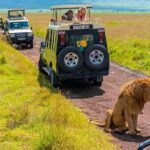
Tanzania safari circuits like this one are built for sightings that feel close to the action. This 10-day luxury route from Moshi strings together Tarangire elephants, Manyara’s birds and tree-climbing cats, Serengeti predator country, and the massive Ngorongoro crater for big-day wildlife viewing. I also like that the trip is set up like a real program, not a loose hop-between-parks plan.
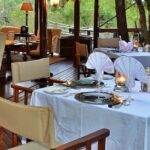
What I especially like is the on-safari food setup: your driver prepares a proper hot lunch with soup, bread rolls, fruit salad, and tea/coffee (and even a glass of wine on the schedule). A second strong point is the variety of safari styles, including a walking safari in Tarangire escorted by an armed ranger.
One consideration: this is a long road-and-park itinerary, so if you hate long drive days or early starts, you’ll want to think hard about whether the full pace fits your style.
In This Review
- Key reasons this safari itinerary works
- Moshi and Arusha: where your safari really starts
- Tarangire day game drives: elephants, birds, and a quieter kind of wildlife
- Tarangire walking safari with an armed ranger: seeing the ecosystem at ground level
- Manyara National Park: birdlife first, then the cats
- Serengeti Seronera days 5 to 7: predator hunting with good odds
- Day 8 transition: positioning for Ngorongoro’s crater drama
- Ngorongoro Crater and Lake Magadi: 600 meters down, then birds on alkaline water
- Lake Eyasi on Day 10: Datoga and bushmen encounters before your drop-off
- Food, comfort, and what luxury means on safari
- Price and value: what $8,074 per person is buying
- Guide and driving quality: the sightings you remember
- How to plan your expectations for predator-focused days
- Practical tips for a smoother safari week
- Should you book this 10-day predators luxury package?
- FAQ
- Where does the safari start?
- Do I get picked up?
- Is this a private tour?
- Which parks and areas are included?
- Is there a walking safari?
- What meals are included?
- Are park fees included?
- What about tickets?
- What’s the tipping guideline?
- Can I cancel for free?
Key reasons this safari itinerary works
- Private by default: only your group participates, so schedules and pacing can be smoother than in big shared tours
- Hot meals on safari: lunch is prepared for you in the bush, not just packed and eaten on the move
- Walking safari in Tarangire: a ranger-escorted morning adds a different kind of wildlife awareness
- Seronera Serengeti focus: multiple full days in one strong area helps you keep momentum searching for cats
- Ngorongoro plus Lake Magadi: crater wildlife viewing paired with alkaline-lake birdlife
- End with Lake Eyasi culture: Datoga and bushmen encounters add a human layer before you fly home
Moshi and Arusha: where your safari really starts
Most people think the safari begins when the vehicle rolls into the parks. With this plan, it actually starts sooner, at Kilimanjaro Airport and then down into Arusha for your first night. You get a meet-and-greet on arrival, plus help if there are any visa or passport control issues before you settle in.
Arusha is a practical base at the base of Mount Meru, and it’s roughly the gateway point for many northern safari routes. After arrival, you’ll transfer to a hotel in Arusha for dinner and an overnight, which makes Day 2 feel far less rushed.
A few more Moshi tours and experiences worth a look
Tarangire day game drives: elephants, birds, and a quieter kind of wildlife
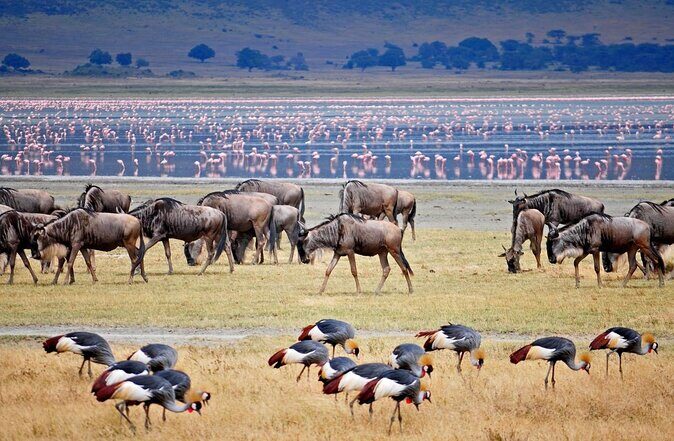
On Day 2, you head to Tarangire National Park for a full game drive, with an afternoon lunch break and then more driving through evening. Tarangire is known for its “real” feel—partly because it sits a bit off the main safari track, so it can feel less crowded than the headline parks.
Tarangire’s star power is elephants, including the way herds move through the dry river beds. It’s also a strong birding park, and if you like the mix of predators with everyday wildlife drama—things like antelope, baboons, and big herds—Tarangire does that well.
A small detail that matters: lunch here isn’t treated like an afterthought. Your driver sets up a hot meal with soup, bread rolls, and fruit salad, and you’ll have tea and coffee after.
Tarangire walking safari with an armed ranger: seeing the ecosystem at ground level
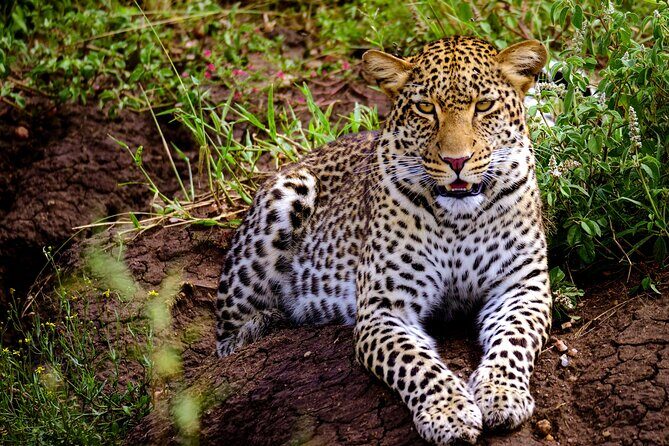
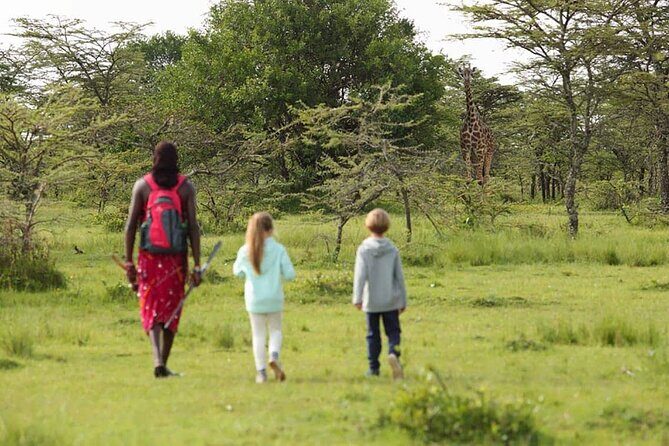
Day 3 is a morning walking safari in Tarangire, escorted by an armed ranger, followed by another round of day game driving. A walking safari changes your sense of distance. Tracks, dung, calls, and smaller movement patterns start to matter more, and you notice how predators depend on what’s happening at ground level.
From there, the plan returns to a classic game drive rhythm for more wildlife searching. Tarangire is described as a major wildlife concentration point outside the Serengeti ecosystem, and the park’s mix of dry-country species can make sightings feel varied, not repetitive.
This is also one of those days where “luxury” doesn’t mean just comfort—it means having enough time in the day to slow down without losing momentum.
Manyara National Park: birdlife first, then the cats
Day 4 shifts you to Lake Manyara National Park for a full day drive. Manyara is one of Tanzania’s best places for bird watching, with more than 400 recorded species, and it’s realistic to see a large chunk of them in one day if you’re paying attention.
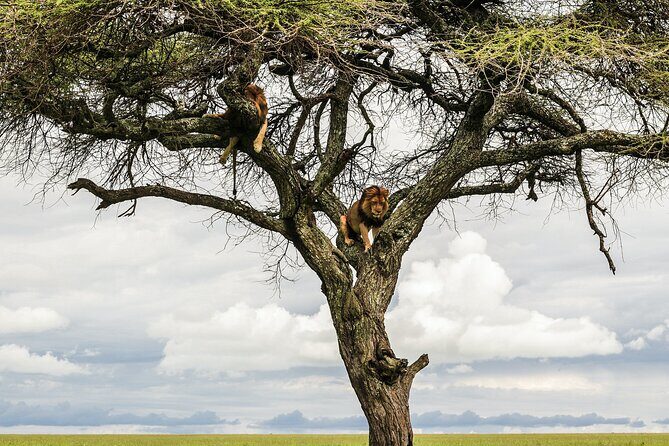
Then there’s the other draw: tree-climbing lions. Manyara also has a narrow belt of acacia woodland that’s favored by these legendary climbers, plus elephants and plenty of other large mammals.
If you care about variety—birds in the morning, big animals later—Manyara gives you that. The schedule keeps the same on-safari lunch rhythm and ends with a drive to your lodge for dinner.
Serengeti Seronera days 5 to 7: predator hunting with good odds
Days 5, 6, and 7 are based around Serengeti National Park’s central Seronera area, which is a smart way to build safari chances. Instead of bouncing between far-flung zones every day, you stay in a strong wildlife region and keep your search pattern consistent.
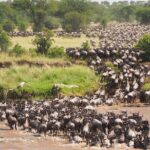
Day 5 starts with a game drive into Serengeti, then an afternoon lunch stop, then more driving until evening check-in at the lodge. Day 6 is a full day in the same area with special attention to the great migration and continued predator searching.
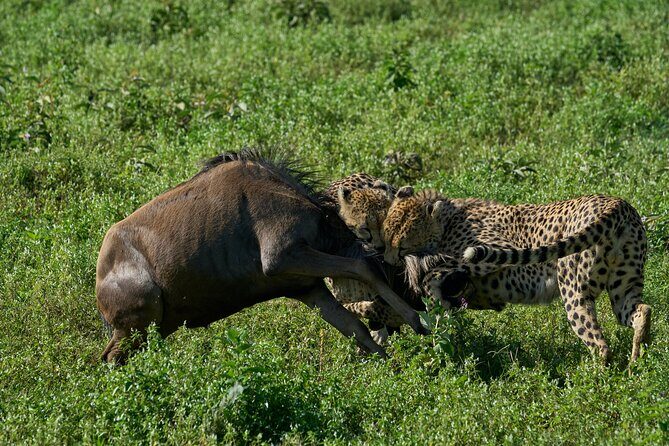
Day 7 adds another full day of scanning for big cats and the Big Five. The classic Serengeti cycle is highlighted by the way large herds move in long columns, including crocodile-infested river crossings as part of the migration rhythm.
One practical note: migration timing can shift year to year, so your best “prediction” isn’t a date on a calendar—it’s how your guide positions you based on where movement is happening on the day. That’s where the guide quality becomes a bigger deal than the itinerary page.
A few more Moshi tours and experiences worth a look

Day 8 transition: positioning for Ngorongoro’s crater drama
After breakfast on Day 8, you do another Serengeti game drive, again with a predator focus, then you drive toward Ngorongoro to reach your camp for dinner and overnight. This is a useful transition day because it keeps you from feeling like the safari slows down after three Serengeti days.
Ngorongoro is all about a different kind of wildlife density. Instead of wide-open plains, you get a massive enclosed environment created by a volcanic caldera, which changes animal behavior and how you spot them.
You also get a chance to keep scanning for large cats right up to the crater day, which is great if your priority is predators.
Ngorongoro Crater and Lake Magadi: 600 meters down, then birds on alkaline water
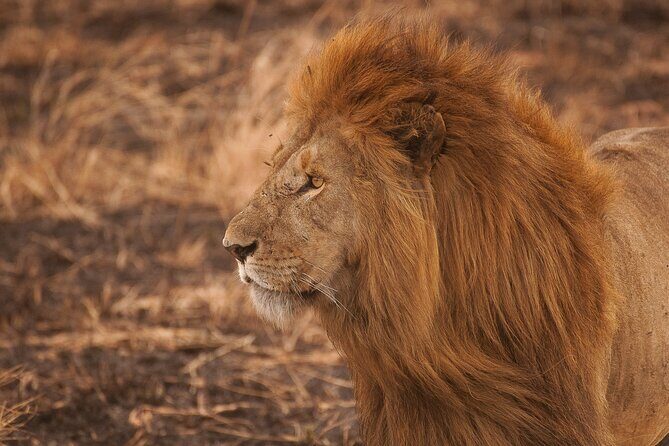
Day 9 is a full Ngorongoro crater tour with a morning game drive inside the crater area. The crater is described as about 20 km across, 600 meters deep, and roughly 300 sq km in area—so yes, it’s big enough to feel like a whole separate safari world.
Your schedule also includes Lake Magadi in the crater’s south western corner. The plan notes this as a shallow alkaline lake where you can usually spot flamingos, hippos, and other water birds.
In terms of “what’s worth it,” this is the combination that makes many people love Ngorongoro. You’re not only chasing big animals in one place—you’re also getting a different habitat type that attracts different species.
Then the day ends with an evening drive toward Lake Eyasi for overnight at your lodge.
Lake Eyasi on Day 10: Datoga and bushmen encounters before your drop-off
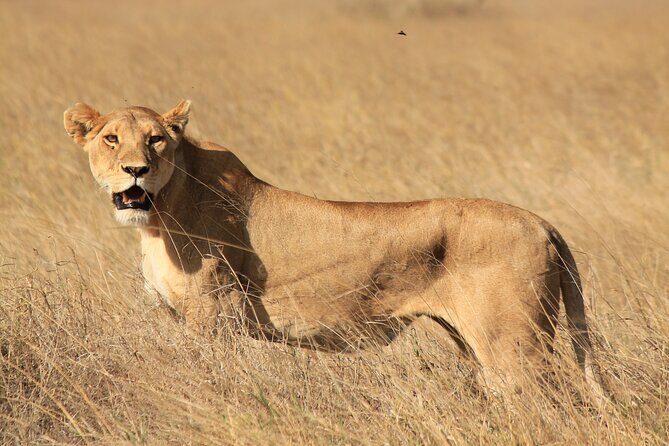
Day 10 starts with an early look at Lake Eyasi and then visits the Datoga and bushmen communities with a focus on cultural interaction. The schedule says a couple hours for this encounter, followed by a return to the lodge for lunch.
After lunch, you drive back to Arusha and are dropped at the airport. This is a nice way to end: you finish on something human-scale and local, rather than ending the trip with another long drive day in search of animals.
The added context here is that small groups of hadzabe/bushmen live around Lake Eyasi, and their language is described as click-like. That kind of detail is exactly what makes a cultural stop more than just a photo op.
Food, comfort, and what luxury means on safari
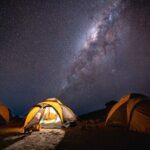
“Luxury” on safari can mean different things, and this itinerary treats it as practical comfort tied to how the day is managed. The biggest comfort wins are the way lunch is handled and the consistent structure of each safari day.
You’ll repeatedly have lunch planned with soup, bread rolls, a main dish, and fruit salad, plus tea and coffee after. That matters when you’re spending hours in open air or bouncing around in a safari vehicle—having real food at a real stop keeps energy up for longer wildlife scanning sessions.
Dinner is included for nine evenings, which fits the pacing of a safari-to-airport final day. If you have dietary needs, it’s smart to mention them early, because menus and timing are easier to adjust before you’re already on the road.
Price and value: what $8,074 per person is buying
At $8,074 per person, this is not a budget safari. What makes it feel more defensible is that the price includes the parts that usually add up fast on East Africa trips: a professional driver/guide, park fees for non-residents, and all transportation unless something is marked optional.
It also includes a large chunk of your daily costs: breakfasts are included for 10 days, lunches for 9, and dinners for 9. With road time and park fees stacking up, a package that covers those basics can cost less than piecing it together yourself, especially if you’re aiming for Serengeti plus Ngorongoro plus a cultural stop at Lake Eyasi.
What’s not included is also clear: international flights, tipping, extra accommodation before/at the end of the tour, and personal items. If you want to compare value fairly, add in the likely cost of park fees and guide/driver time you’d otherwise need to pay on your own.
Guide and driving quality: the sightings you remember
In safaris, the guide is the multiplier. This itinerary is run by Gosheni Safaris (T) Limited, and the review highlights repeatedly point to sharp driving, strong wildlife-finding skill, and calm management of the day.
Names that show up in standout feedback include Juma, George, William, James, Ombeni, Calvin Kileo, Cleopa, Dennis, Edward Masaki, Samir, Laban, and Pendo. People credit these guides with knowing where to look and how to position for the Big Five, plus attention to safety and guest needs.
One recurring theme: guides aren’t just naming animals. They’re reading the landscape and adjusting, which is why people feel they got real value out of the predator focus. If your guide is strong at finding the day’s best action, the same route can feel twice as exciting.
How to plan your expectations for predator-focused days
This is a predators-first itinerary, but it’s still safari math: animals are not on a timetable. Serengeti days are structured for repeated searching, with full days in the Seronera area and dedicated time for big cats and Big Five opportunities.
If you’re coming for lions, cheetahs, leopards, and the whole predator chain, give yourself enough patience. The itinerary gives you multiple chances—Tarangire adds overall wildlife density, Manyara adds bird and woodland energy, Serengeti is your main predator block, and Ngorongoro adds a separate intensity.
Also, keep your cameras ready but your mind flexible. The best sighting often comes from being open to what’s happening right now, not what you pictured in your head.
Practical tips for a smoother safari week
Because your days include long drives and early starts, pack for comfort and practicality. Bring a hat and sun protection for daytime game drives, and plan for cooler moments—especially when crater air and early mornings do their thing.
You’ll also be in a setup where your driver prepares food at safari stops. That means you should still carry a small personal water bottle and snacks for between-meal hunger, just in case you need it.
Finally, have a tipping budget ready. The guideline listed is US$10 per person per day, and it helps to plan it early so you don’t scramble on Day 9 or Day 10.
Should you book this 10-day predators luxury package?
If you want a single, well-paced circuit that hits Tarangire, Manyara, Serengeti Seronera, Ngorongoro crater, and Lake Eyasi—and you want that circuit run with strong guiding and organized comfort—this package fits. It’s also a good choice if you value a guided plan where lunch isn’t a sandwich you eat while driving.
Skip it or adjust expectations if you’re very sensitive to driving days, want zero early mornings, or are chasing an extremely specific sighting like leopards on a particular date. Safari outcomes aren’t guaranteed, and the itinerary is built for opportunity rather than certainty.
If you’re flexible and you want that predator-focused mix with real meals and a human finale at Lake Eyasi, this is the kind of safari that can make you forget the hassle of planning.
FAQ
Where does the safari start?
It starts at Kilimanjaro Airport. There’s a meet-and-greet by an airport office representative to assist if you run into any visa or passport control issues.
Do I get picked up?
Yes. Pickup is offered (as listed in the tour details).
Is this a private tour?
Yes. It’s a private tour/activity, and only your group participates.
Which parks and areas are included?
You’ll visit Tarangire, Manyara, Serengeti National Park (Seronera area), Ngorongoro Crater/Ngorongoro Conservation Area, and Lake Eyasi.
Is there a walking safari?
Yes. On Day 3, you’ll do a morning walking safari in Tarangire, escorted by an armed ranger.
What meals are included?
The package includes breakfast for 10 days, and lunch and dinner for 9 days each, based on the listed inclusions. Lunch is described as a prepared hot meal setup during safari days.
Are park fees included?
Yes, park fees are included for non-residents.
What about tickets?
You’ll receive a mobile ticket.
What’s the tipping guideline?
Tips are not included, and the listed guideline is US$10 per person per day.
Can I cancel for free?
Yes. There’s free cancellation if you cancel at least 24 hours in advance for a full refund. If it’s canceled due to poor weather, you’ll be offered a different date or a full refund.