REVIEW · MOSHI
Kilimanjaro 7 Days Machame Route Private Tour
Book on Viator →Operated by Kilele Climb Tours Co Ltd · Bookable on Viator
Kilimanjaro tests your lungs and your will fast. I like this Machame Route private climb because it focuses on acclimatization pacing and real mountain support: certified Wilderness First Responder guides travel with a professional crew, plus you get pulse oximeters and portable oxygen tanks along with a first aid kit. It’s the kind of package that keeps you moving efficiently, with a kitchen team setting up camp life while porters carry your load.
The one drawback to plan for: the summit night is long and brutal. You’ll wake around midnight for a pre-dawn push, then hike up to Uhuru Peak and come back down as your altitude drops, so you need to be ready for a 12-14 hour day at thin air.
In This Review
- Key Highlights Worth Noting Up Front
- Machame Route: Why This Plan Is Built for Acclimatization
- Moshi Pre-Trek Day: Briefing, Equipment Check, and Getting Set
- Your 7 Days on the Mountain: Machame to Uhuru Peak
- Day 1: Moshi briefing and gear review
- Day 2: Machame Gate through montane forest to Machame Camp
- Day 3: Into moorlands with big views toward Meru and Kibo
- Day 4: Acclimatization day via Lava Tower, then down to Barranco
- Day 5: Great Barranco Wall up to Karanga Camp
- Day 6: Karanga to Barafu, then summit prep
- Day 7: The summit night to Stella Point and Uhuru Peak
- Day 8: Mweka descent through montane forest and signing out
- Day 9: Moshi free day and optional next steps
- Camp Life That Actually Helps You Climb
- Safety and Medical Support: What’s Included Here
- Price and Value: Is $1,895 Fair for This Machame Private Tour?
- Fitness Reality Check: How Hard This Will Feel
- What Past Climbers Seem to Love Most
- Should You Book This Machame Private Tour?
- FAQ
- What route is this, and how many days are on the mountain?
- Is pickup from the airport included?
- What start time should I plan for?
- What’s included in the camping and meals?
- Does the tour include oxygen or medical equipment?
- What happens if I need to cancel?
Key Highlights Worth Noting Up Front
- Machame route pacing with multiple altitude “checks” that help your body adjust before the big summit push
- Certified Wilderness First Responder guides plus pulse oximeters and portable oxygen
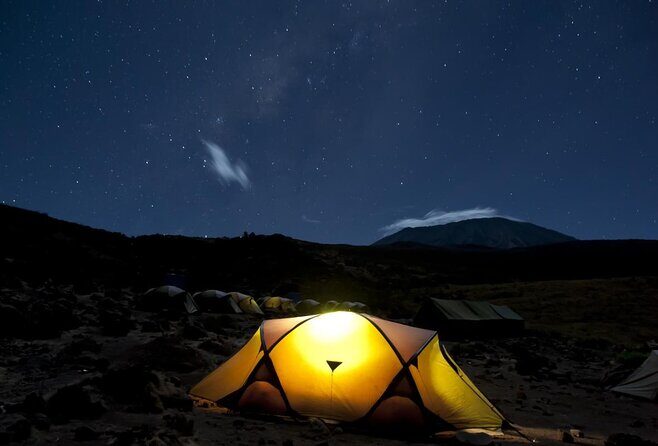
- Camp setup and kitchen support handled for you, with tents, pads, and table seating included
- Practical itinerary flow through rainforest, moorlands, alpine desert, and back into forest on descent
- Private experience for your group only, so logistics tend to feel calmer than big-group climbs
Machame Route: Why This Plan Is Built for Acclimatization
The Machame Route earns its reputation because the itinerary doesn’t rush you straight from rainforest into summit altitude. Instead, it layers elevation gains with habitat changes that naturally slow your pace and give your body time to respond.
On this climb, your early days move you from montane forest into moorlands, then up into alpine desert. You’ll feel the difference in how the air behaves and how your body deals with exertion. The schedule also includes an important acclimatization day where you go higher and then drop back down—exactly the pattern you want on Kilimanjaro.
Two days matter a lot:
- The longer acclimatization push around day 4, where you’ll head toward Lava Tower (around 4600m) and then continue to Barranco.
- The approach to the summit, where day 6 brings you up to Barafu (4643m) and then you rest and prepare for the midnight start.
This is not about making it easy. It’s about making it smarter.
You can also read our reviews of more private tours in Moshi
Moshi Pre-Trek Day: Briefing, Equipment Check, and Getting Set
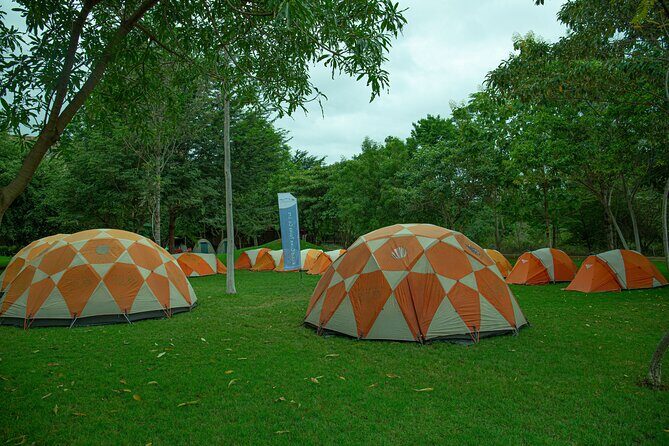
You base your trek in Moshi, with optional airport transfers from Kilimanjaro Airport. The trip is designed so you’re in place before the first trail day, and that matters more than people expect.
On day 1, you’ll:
- Meet your guide for a pre-trek briefing at your hotel in Moshi
- Review your equipment
- Rent any gear that you need from the tour’s store (if applicable)
You’ll also want to think of this day as your “do-not-skip” buffer. Arriving at least a day early gives you time to handle last-minute clothing issues, let travel fatigue fade, and ask questions before you’re at altitude and moving for 6-8 hours a day.
The tour lists a start time of 9:00am for the overall experience, so plan around that with your local schedule and flights.
Your 7 Days on the Mountain: Machame to Uhuru Peak
What I like about this itinerary is that each day has a job. Some days are about walking. Others are about adjusting. A summit success plan is usually a chain of good days, not one heroic day.
Day 1: Moshi briefing and gear review
You transfer (if you opted in), meet your guide, and go over everything from what to wear to how the team runs camp life. This is also when you check or rent gear. If you’re short on essentials, this is your last comfortable chance to fix it.
Day 2: Machame Gate through montane forest to Machame Camp
- Elevation range: ~1200m to ~3000m
- Distance: 13km
- Hiking time: 5-7 hours
- Habitat: Montane forest
You drive from Moshi to Machame gate, register, and then start into rainforest. Expect a steady day where the goal is to get height while staying controlled. You’ll reach Machame camp with tents already set up, then dinner and overnight at the campsite.
A few more Moshi tours and experiences worth a look
Day 3: Into moorlands with big views toward Meru and Kibo
- Elevation range: ~3000m to ~3800m
- Distance: 9km
- Hiking time: 5-6 hours
- Habitat: Moorlands
After the rainforest glades, you climb through little valleys and steep rocky ridges edged with heather. This is one of those days where the scenery starts feeling more open and expansive, and you can see key landmarks more clearly. The schedule calls out views of Mount Meru, the Shira Plateau, and Kibo Peak, plus sunset.
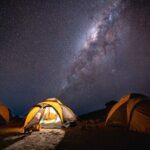
Camp here is also a psychological win: you’re higher, the mountain looks more serious, and you’re gaining confidence because your day-by-day plan is working.
Day 4: Acclimatization day via Lava Tower, then down to Barranco
- Elevation range: ~3800m to ~3950m
- Distance: 13km
- Hiking time: 7-8 hours
- Habitat: Moorland
This is a long day and it’s important. You start early, trek east toward a junction that leads up to Lava Tower at about 4600m for acclimatization, then continue down to Barranco camp.
Why this matters: when you gain higher and then descend, your body gets practice dealing with altitude without being hammered by a nonstop climb toward the summit that same day. It’s the “go high, come down” rhythm that helps reduce the odds of you falling behind.
Day 5: Great Barranco Wall up to Karanga Camp
- Elevation range: ~3950m to ~3963m
- Distance: 5.5km
- Hiking time: 4-5 hours
- Habitat: Alpine desert
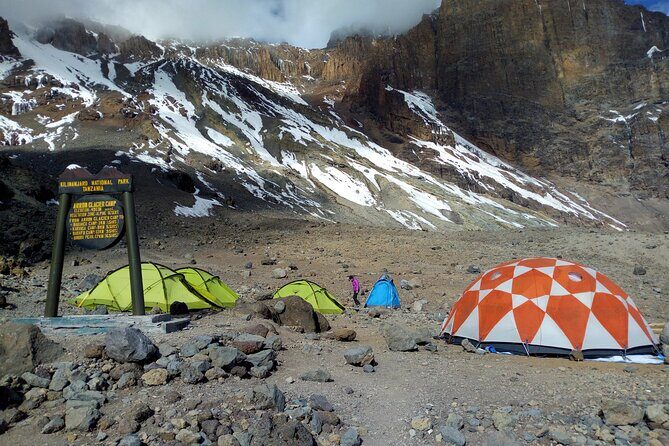
Today begins with descending into the Great Barranco ravine. Then you exit steeply, climbing the Great Barranco Wall. The description is clear: it’s not technical, but it is long and tiring.
From there you pass underneath the Heim and Kersten glaciers and head toward Karanga valley. The night stop is Karanga Camp at about 3963m.
There’s also a smart optional touchpoint for people who are feeling strong: a mid-afternoon acclimatization hike to around 4200m before returning to camp. That flexibility is useful if your pace and breathing feel steady.
Day 6: Karanga to Barafu, then summit prep
- Elevation range: ~3963m to ~4643m
- Distance: 3km
- Hiking time: 3-4 hours
- Habitat: Alpine desert
Even though the distance is short, the steepness and the altitude make it tough. You’ll cross desolate scree slopes with little to no vegetation. When the air is thin, your legs do more work per step.
You reach Barafu Camp (4643m), eat, and rest for the summit attempt. This day is partly physical, partly tactical. You’ll prepare your equipment, including:
- Your ski stick (if you use one)
- Thermal clothing
- A fresh headlamp and camera gear (the itinerary specifically flags a headlamp check and replacement)
This is also where it helps to keep your summit plan simple. Your job is to pack, stay warm, rest as best you can, and be ready to move when midnight arrives.
Day 7: The summit night to Stella Point and Uhuru Peak
- Elevation: ~4620m up to ~5895m, then down toward ~3100m
- Distance: 15km
- Hiking time: 12-14 hours
- Habitat: Desert and ice
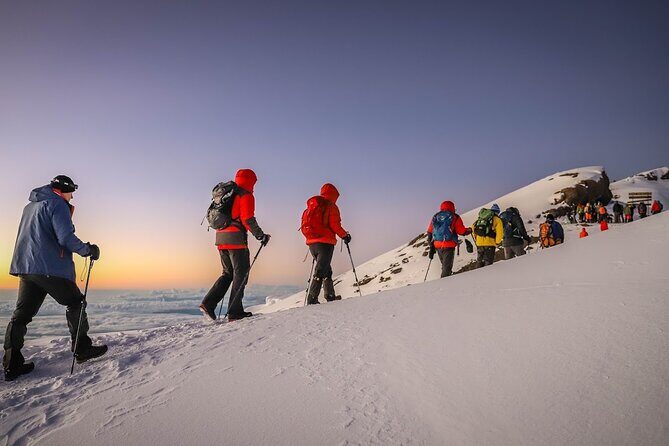
This is the day. You wake at midnight for a light breakfast, then start the ascent before dawn. The route follows steep switchbacks up scree (and potentially snow), reaching Stella Point on the crater rim around 4-5 AM at about 5850-5861m.
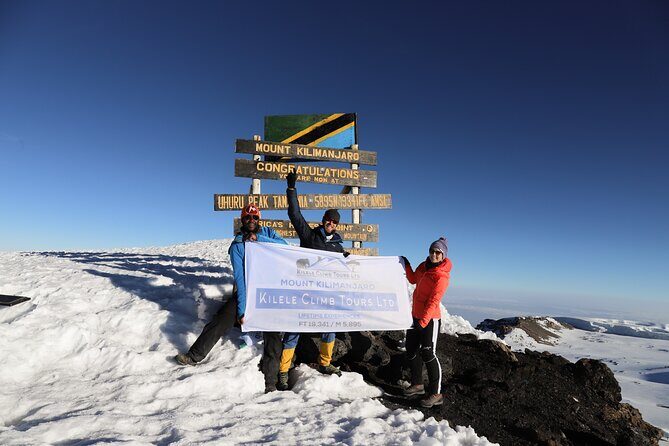
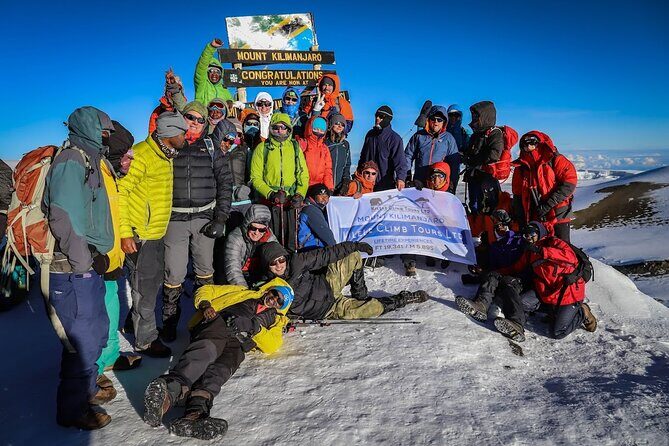
At Stella Point, you get views of the crater and its glaciers. Then you hike about an hour along the crater rim near the snows before continuing to the Kilimanjaro true summit, Uhuru Peak.
After the summit, you begin your descent. The itinerary’s elevation data suggests you end the day back around the 3100m range, then sleep and recover for your final descent day.
One of the most encouraging bits from past feedback is that the team has supported climbers with very different backgrounds and even prosthetics, with a successful summit reported in one standout story. That doesn’t mean the mountain is easy. It does suggest the crew is attentive to real-world needs and pacing.
Day 8: Mweka descent through montane forest and signing out
- Elevation range: ~3100m to ~1700m
- Distance: 9km
- Hiking time: 3-4 hours
- Habitat: Montane forest
After breakfast, you descend to Mweka Park Gate. The trail is across montane forest and the hike time is shorter than earlier summit logistics, which is exactly what you want.
At the gate you sign out and then get ready for a transfer back to the hotel for certificate presentation and a celebration.
Day 9: Moshi free day and optional next steps
Day 9 is your recovery day off the mountain. You check out by 10:00am. If you booked a transfer, you’ll be dropped at the airport. If you’re continuing with safari, the Kilele Climb guide meets you in the evening for a pre-safari briefing.
You can also choose to stay in the hotel during the day for an extra cost (the itinerary notes day room from check-out until 18:00).
Camp Life That Actually Helps You Climb
One reason organized Kilimanjaro trips work is that they remove decisions you don’t want to make at altitude. This tour includes camping support like:
- Dining tent, table, chairs
- Sleeping tents and sleeping pads
- Crockery and cutlery
Your tents are set up when you arrive at camp, and the kitchen team cooks your meals. Your crew also includes porters who carry your equipment, so you can hike without turning your body into a delivery vehicle for all your bags.
In past trip feedback, people repeatedly pointed to nice food, good organization, and how comfortable the whole setup felt even though everyone is far from home. That’s the value you’re paying for: less chaos on the trail.
Safety and Medical Support: What’s Included Here
Kilimanjaro safety is never only about gear, but the included medical support is a big deal. This tour includes:
- Certified Wilderness First Responder guides
- Pulse oximeters
- Portable oxygen tanks
- First aid kit
- A professional mountain crew
Practically, this means your team has tools to monitor key altitude effects and respond quickly if someone needs help. The best-case outcome is that everything stays routine and steady. The more realistic outcome is that the team can make smart decisions faster, instead of guessing in the dark.
Price and Value: Is $1,895 Fair for This Machame Private Tour?
At $1,895 per person, this is not a cheap adventure. The smart question is what you’re getting for the price.
What’s included:
- Camping equipment and camp support (tents, pads, dining setup, tableware)
- All fees and taxes
- Certified guide team and professional mountain crew
- Fair wages for the mountain crew as approved by KINAPA
- Pulse oximeters and portable oxygen tanks, plus first aid kit
- Meals: 8 breakfasts, 7 lunches, and 6 dinners
What’s not included:
- Personal hiking gear (boots, outfit, sleeping bag, etc.)
- Tips for the mountain crew
Here’s the value logic: you’re paying for a high-touch operation on a high-risk schedule. If you try to piece it together yourself, you still end up paying for guides, park costs, camp infrastructure, and medical readiness. The difference is that you might not get the same “everything runs on time” system.
Also, it’s private. The tour notes that it’s private, so only your group participates. Fewer people usually means fewer bottlenecks at camps, registration, and during the summit push timing.
Fitness Reality Check: How Hard This Will Feel
The tour states moderate physical fitness is required. That’s a good starting point, but the itinerary gives you the real picture.
You’ll hike for 5-7 hours on day 2, then 5-6 on day 3. Day 4 stretches to 7-8 hours. Day 7 is the hardest day of all at 12-14 hours.
Altitude is the equalizer. Even if the trail looks manageable on paper, your breathing slows you down at higher elevations. That’s why the itinerary includes:
- Long acclimatization day 4 with Lava Tower
- Great Barranco Wall day 5 to keep you progressing without jumping directly to summit altitude
- Rest and preparation at Barafu before midnight
If you’re the type who wants lots of shortcuts and comfort, this route won’t be for you. If you’re okay with slow progress, staying warm at night, and leaning on the support crew, it fits well.
Practical prep helps:
- Train for steep walking and long hours
- Build endurance for 12-14 hour days
- Plan your gear so you’re not improvising at 4000m
What Past Climbers Seem to Love Most
Even without naming every trip, a few themes show up clearly in feedback:
- Highly organized logistics: luggage and equipment handling, timing, and smooth coordination
- Experienced guides and cooks: people praised expertise and kindness on the mountain
- Good food: not gourmet, but satisfying and consistent for long hike days
- Crew care that feels human: laughter during the hardest parts of the summit push came up more than once
- Strong communication: people mentioned communication as flawless
One standout story also mentions a successful summit attempt by climbers with prosthetics, which speaks to the team’s attention to capability and support.
If you want your Kilimanjaro experience to feel safe, structured, and well-run, those points matter.
Should You Book This Machame Private Tour?
I’d book this trip if you want a classic Kilimanjaro challenge with modern safety support, strong camp logistics, and a route plan that takes acclimatization seriously. The included medical tools (pulse oximeters and portable oxygen) and the professional crew make it feel less like a gamble and more like a managed expedition.
You might hesitate if:
- You know you struggle with very long summit-day efforts
- You’re not ready to invest in personal gear and warm clothing
- You want a fully “easy hiking” experience (this is not that)
With an overall rating reported at 4.9 and 100% recommended in the provided feedback summary, plus repeated praise for organization, food, and guide professionalism, this is a solid choice for people who want Machame on a private basis and prefer having the details handled.
FAQ
What route is this, and how many days are on the mountain?
This is the Kilimanjaro Machame Route with about 7 days of hiking on the mountain. The full experience runs about 9 days including Moshi briefing and a final day for recovery.
Is pickup from the airport included?
Pickup is offered as an option. If you choose the optional airport transfers, you’ll be collected from Kilimanjaro Airport and taken to your hotel in Moshi/Arusha.
What start time should I plan for?
The experience start time is listed as 9:00am.
What’s included in the camping and meals?
Camping equipment is included, such as dining tents, table and chairs, sleeping tents, sleeping pads, and tableware. Meals include 8 breakfasts, 7 lunches, and 6 dinners.
Does the tour include oxygen or medical equipment?
Yes. The package includes pulse oximeters, portable oxygen tanks, and a first aid kit, with certified Wilderness First Responder guides.
What happens if I need to cancel?
You can cancel up to 24 hours in advance of the experience start time for a full refund. If you cancel less than 24 hours before, the amount paid is not refunded.