REVIEW · ARUSHA
7-Day Mt. Kilimanjaro Hiking: Machame Route
Book on Viator →Operated by Makanjanja safaris · Bookable on Viator
Kilimanjaro on the Machame route starts fast. This 7-day hike uses the popular Machame path for big scenery, while still demanding solid effort thanks to a steep, tighter schedule. It’s a great trip if you want a classic climb with real mountain days, not a slow stroll.
I love the way your days are structured to help your body adjust, even though the overall route is tough. The team approach is also a huge win: Abouh (head guide), plus guides Samuel, Edgar, and Justin, are repeatedly described as cheerful, motivating, and focused on safety. On top of that, the porters are treated like partners in the plan, not afterthoughts.
One real drawback to weigh: Machame can be wet, cold, and steep, especially early in the rainforest and later on the summit approach. If you get discouraged easily by mud, wind, or short stints at high altitude, this route may feel like a lot.
In This Review
- Key things that matter on this Machame climb
- Machame Route: why this “Whiskey” trek attracts hard hikers
- Price and what you’re actually getting for $2,500
- The real logistics start in Arusha, then you shift into mountain mode
- Day 1 in the rainforest: muddy steps, warm teamwork
- Day 2 to Shira Plateau (3,840m): moorland breathing and glacier views
- Day 3 to Lava Tower and Barranco: the toughest day so far
- Day 4: Great Barranco Wall and Karanga Valley acclimatization
- Day 5 Barafu Camp (4,550m): steep exposure and the last water stop
- Day 6 summit night: Stella Point (5,685m) and Uhuru Peak (5,895m)
- Day 7 down via Mweka Gate: celebration, certificates, and forest air
- Why the guide team and porters make this feel safe
- Who should choose Machame, and who should think twice
- Should you book this Machame trek with Makanjanja Safaris?
- FAQ
- Where does the tour start, and what time do we depart?
- How long is the Machame Route trek?
- Is pickup from Arusha included?
- What route is this, and is it also known by another name?
- Are park fees and meals included?
- What water is provided during the trek?
- Is camping equipment and portage included?
- Do I need to bring my own mountain gear?
- What about tips, certificates, and cancellation?
Key things that matter on this Machame climb
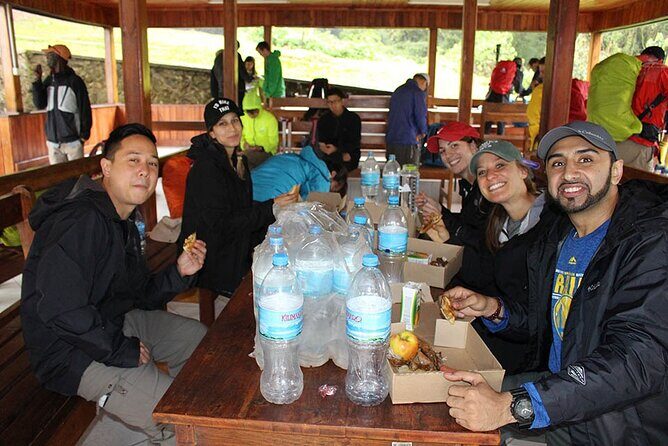
- Machame’s “Whiskey” nickname fits the feel: scenic and classic, but the trail is challenging and not padded with extra slack days.
- Rainforest start can mean mud and slipping: you may walk the gate approach if the road is rough, and the first climbing is through forest terrain.
- Shira to Lava Tower is where people start to feel altitude: it’s often the toughest day so far, with symptoms like headaches and irritability possible.
- Great Barranco Wall is a confidence-builder for acclimatization: it’s described as class 2, usually easier than it looks.
- Barafu Camp has no accessible water: that changes your priorities the moment you get there.
- Summit push is timed for sunrise: you’ll move in the night to Stella Point (then continue to Uhuru Peak).
Machame Route: why this “Whiskey” trek attracts hard hikers
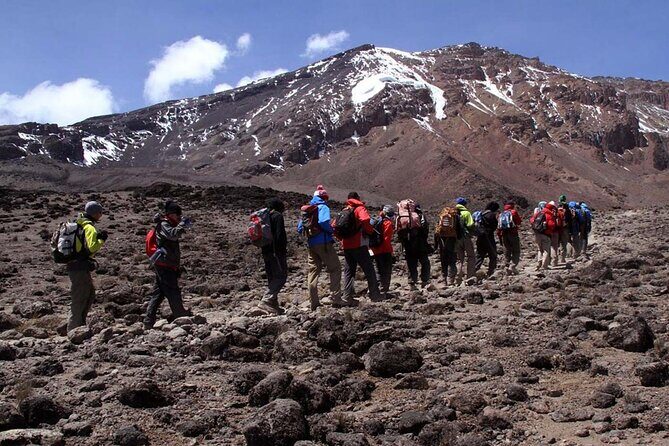
The Machame route, often called the Whiskey route, is one of the most popular ways up Kilimanjaro for a reason: the scenery changes a lot, and the climb feels like you’re passing through different worlds in a short time. You start in lower forest country, then step into moorland, then semi-desert and alpine desert terrain, before moving into the crater rim zone for the summit attempt.
The big catch is that Machame is not gentle. Your itinerary is shorter, and several days ask for real altitude effort. That’s why I’d call this best for folks who already have hiking stamina, are comfortable with steep climbs, and know how to keep going when your breathing feels off.
If your goal is a more relaxed, long acclimatization schedule, you might look elsewhere. If your goal is a strong Kilimanjaro climb with classic route character and you can handle cold and discomfort, Machame can be a very satisfying choice.
You can also read our reviews of more hiking tours in Arusha
Price and what you’re actually getting for $2,500
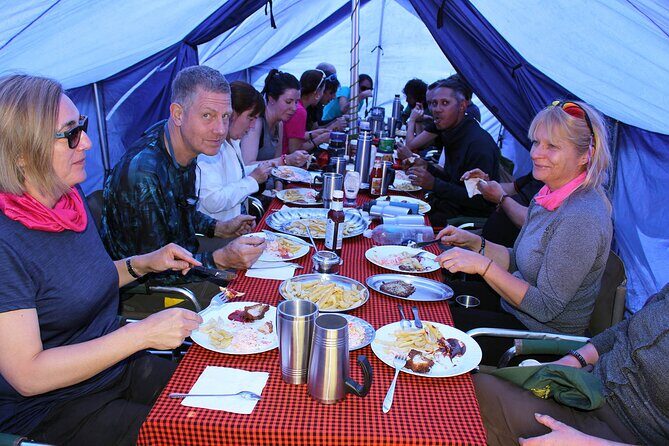
At $2,500 per person, this trip is priced like a serious guided expedition rather than a budget hike. The value is in what’s included, and in the fact that you’re not juggling logistics on your own.
Included items you should feel good about:
- Meals and water: bottled water (3 liters or more a day) plus breakfast, lunch, and dinner.
- All fees and taxes: including the park fees.
- Camping equipment: so you’re not hunting gear in Tanzania last minute.
- Portage: porters carry loads, which matters a lot on a climb this steep.
- Professional English mountain guide and cooker.
- Lunch and dinner daily as listed across the days.
Not included, which matters for your budget:
- Tips (you’ll present them during the celebration at the end).
- Flights and visas fee.
- Mountain gear: you’ll still need to bring your personal clothing and climbing essentials.
My quick take: if you already own good hiking boots, a warm layering system, and the basic cold-weather gear, this price can feel fair for a guided, fully catered Kilimanjaro week. If you have to buy a lot of equipment from scratch, budget extra so you’re not stuck assembling your kit under pressure.
The real logistics start in Arusha, then you shift into mountain mode
The day starts in Arusha with pickup offered, aiming for a start time of 7:00 am from Arusha Airport. You’ll head out from the city (around 1,400m) toward Machame Village. That initial drive sets expectations: you’re going from town rhythm into mountain rhythm quickly.
Once in Machame Village, you can pick up mineral water, receive a packed lunch, and then move toward the Machame gate. Depending on road conditions, you’ll either drive partway, or take a muddy 3 km walk that can take about an hour.
This is a small detail, but it changes how you feel on Day 1. If you know you get grumpy when you’re wet and cold early, bring a calm mindset and keep your pace steady from the gate onward.
You’ll also be in a small group for this operator, with a maximum of 15 travelers. That size tends to work well on Kilimanjaro: you get a group pace, but you’re not swallowed by a crowd.
Day 1 in the rainforest: muddy steps, warm teamwork
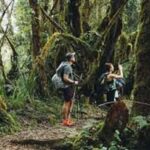
Day 1 is all about getting altitude started and establishing your routine. After breakfast and the pickup, you register at the gate office and begin climbing. The big theme is that you enter the rainforest almost immediately.
Expect:
- A strong possibility of rain
- A trail that becomes soggy, muddy, and slippery
- A welcome lunch stop about halfway
This is one of those days where you shouldn’t chase speed. Slow, careful foot placement saves energy later. If you’ve ever done a wet trail hike and felt your body getting tense, you’ll want to relax your grip and focus on stable steps. Porters and guides typically keep the group moving efficiently, and the mood you get here carries forward.
You’ll finish the day at your first camp after about 8 hours total activity.
Day 2 to Shira Plateau (3,840m): moorland breathing and glacier views
Day 2 starts with an early climb after breakfast at Machame camp. You go up about an hour to leave the forest zone, then move through moorland for roughly two hours with a gentler gradient. This day is often where people start to understand the pace of the Machame route: still hard, but with breathing room compared to later pushes.
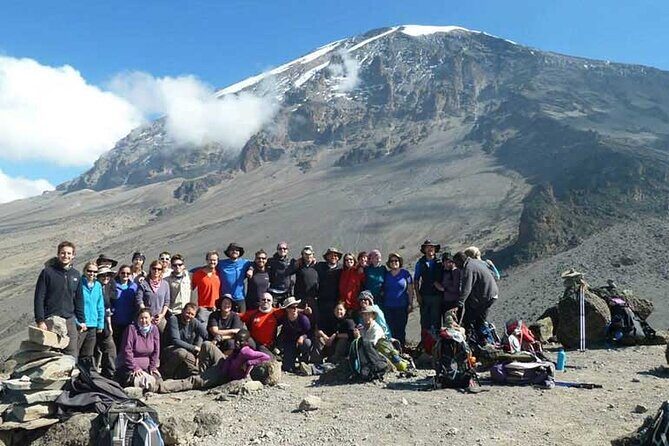
After lunch and rest, you hike onto a rocky ridge and then reach the Shira plateau. This is where you start getting view breaks, including an easterly look toward the Western Breach and its glaciers. You’ll also be due west of Kibo at this stage.
You’ll reach Shira campsite at 3,840m after around 7 hours.
A practical note: nights at elevation hit hard. This camp is exposed, and temperatures can drop well below freezing. Dinner comes after the porters boil drinking and washing water. Even if you’re not thinking about it yet, treat hydration as a daily habit, not a last-minute panic.
A few more Arusha tours and experiences worth a look
Day 3 to Lava Tower and Barranco: the toughest day so far
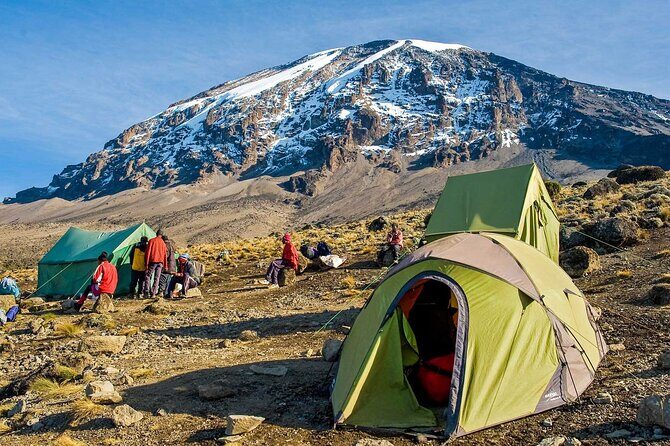
Day 3 is where Machame can feel like a turning point. You leave the Shira area heading into a semi-desert and rocky zone around Lava Tower.
You reach about 4,630m after around 5 hours of walking, then eat lunch at the designated area. This is described as the toughest day so far for many climbers, and that matches what you’d expect: altitude + effort + rocky terrain in a tight schedule.
Possible altitude symptoms that can show up around here include breathlessness, irritability, and headaches. I’m not telling you to panic. I am saying you should take it seriously if you feel off. Slow down, drink water steadily, and tell your guide if anything feels wrong.
After lunch, you descend nearly 680m toward the Barranco camping area, staying around 4,600m near Lava Tower. That descent is the acclimatization payoff of the day: you get a breather at slightly lower elevation, which helps the next days feel more manageable.
Plan for about 8 hours total.
Day 4: Great Barranco Wall and Karanga Valley acclimatization
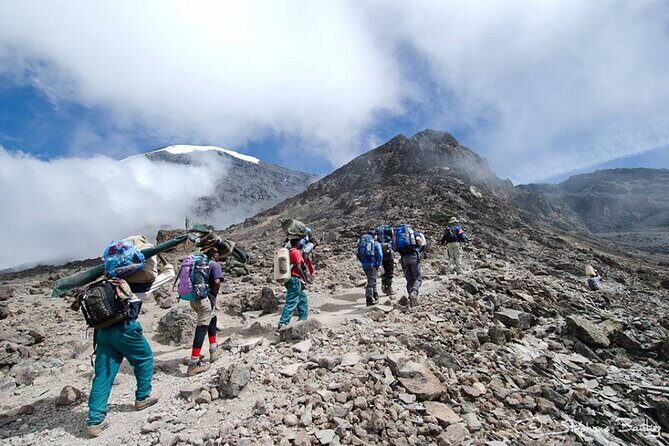
On Day 4, you tackle the Great Barranco Wall. It may look intimidating at first glance, but the route is described as a class 2 hike, and many hikers find it easier than they expected.
At the top, you should get a view of Heim Glacier. You may also feel like you’re above the clouds, which is one of those mental moments that helps you keep perspective.
After the wall, the trail winds up and down through the Karanga Valley. This is an important kind of day on Kilimanjaro: the goal is acclimatization, not suffering. The pacing here matters. If you try to turn it into a race, you’ll pay for it later.
Day 4 runs about 4–5 hours of hiking, around 7 hours total day time.
Day 5 Barafu Camp (4,550m): steep exposure and the last water stop
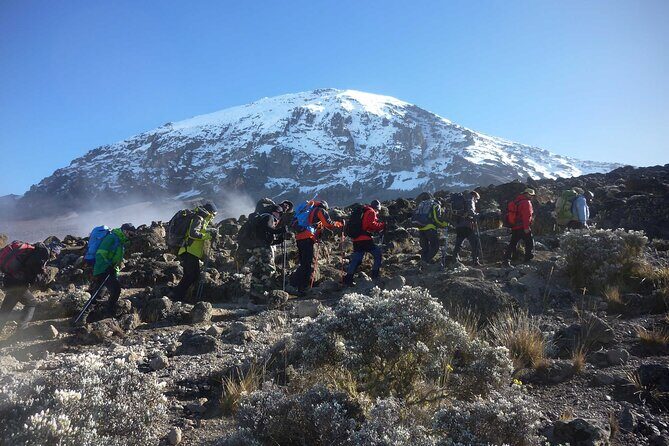
Day 5 is shorter hiking time, but it’s full of key logistics you shouldn’t ignore. After breakfast at Karanga Camp (around 3,959m), you hike along terrain that intersects the Mweka Route. That matters because you’ll later use Mweka for descent days, so this is when you start “meeting” the traffic pattern of the final itinerary.
About an hour after leaving Karanga Camp, you reach Barafu Hut. This is crucial because it’s the last water stop for the porters; there’s no accessible water at Barafu Camp (about 4,550m).
“Barafu” means ice in Swahili, and the vibe fits: you’re on a rocky, exposed ridge with wind and cold. Your tents can get hammered by weather and rocks, so take time to get oriented at camp before darkness. Early dinner helps you rest, because the next day starts in the night.
Expect about 2–3 hours hiking, with the whole day around 7 hours.
Day 6 summit night: Stella Point (5,685m) and Uhuru Peak (5,895m)
This is the day most people remember. You rise around 23:30, then have tea and biscuits before the night hike. The group heads north-westerly and ascends through heavy scree toward Stella Point on the crater rim.
This trek to Stella Point is called one of the most mentally and physically challenging segments on the whole route, with about 6 hours of walking for many climbers.
At Stella Point (5,685m), you stop briefly and, if weather permits, you get one of the most famous rewards: a sunrise that can feel surreal. After that, you continue for roughly 2 hours to Uhuru Peak (5,895m).
The summit time depends on conditions. Weather matters, and so does your ability to keep yourself moving without burning too much energy. At this altitude, small decisions feel big. A steady pace, good footing, and listening to your guide make a huge difference.
Plan on about 8 hours total from the start of the night hike through the summit area.
Day 7 down via Mweka Gate: celebration, certificates, and forest air
Day 7 starts with a well-deserved breakfast and then a celebration on the mountain: dancing and singing. This is also when you present your tips to the guide, assistant guides, chefs, and porters. If you’re the type who likes to show appreciation in a clear way, this is a meaningful moment.
After the celebration, you descend about 3 hours back to Mweka Gate, then continue down into Mweka village for about 1 hour over roughly 3 km.
The National Park requires you to sign your name to receive a completion certificate. Here’s a detail that’s easy to miss but rewarding when you’re there: if you reached Stella Point (5,685m) you receive a green certificate, and if you reached Uhuru Peak (5,895m) you receive a gold certificate.
You also finish with a hiking day that includes forest terrain, which can feel like a soft reset after exposed high-altitude conditions.
Total day time is about 7 hours.
Why the guide team and porters make this feel safe
On Kilimanjaro, the mountain is the mountain. But the experience you remember often comes down to who’s moving with you.
In the feedback you provided, the most repeated theme is support and good energy. Abouh is highlighted as head guide and described as cheerful and caring. Guides Samuel, Edgar, and Justin are also named as motivating and reassuring, with an emphasis on helping you at each stage so the ascent feels more manageable.
The porters get real credit, too. They’re described as courageous, helpful, and cheerful throughout the climb. That matters because your comfort and safety depend on more than your legs. Someone has to keep equipment functioning, water handled, tents managed, and the group organized at changing altitudes.
If you want the trip to feel human, not robotic, this kind of team culture is a big part of the value.
Who should choose Machame, and who should think twice
This Machame trek is best for:
- Hikers with some altitude, hiking, or backpacking experience
- People who handle steep trails and don’t need a slow pace to feel okay
- Travelers who can accept cold, wind, and possibly wet trail conditions
- Anyone who appreciates a supported camping expedition with porters carrying loads
Think twice if:
- You’re worried about steep, rocky days and short acclimatization gaps
- You tend to struggle when trails get muddy and slippery early in the trip
- You dislike night hiking, since the summit push starts around 23:30
There’s no shame in choosing a different route. Kilimanjaro is hard. Your goal should be reaching it in a way that still feels mentally workable for you.
Should you book this Machame trek with Makanjanja Safaris?
If you want a classic Kilimanjaro challenge and you’re comfortable with a steep, scenic, and demanding itinerary, I think this is a solid option. The included package is practical: camping gear, portage, cooked meals, and English-speaking guiding mean you spend less energy on logistics and more energy on the climb.
I’d only hesitate if you’re looking for a gentle acclimatization plan or if night hiking and cold camps will genuinely stress you. On Machame, those parts are part of the deal.
If you’re ready for a serious week on the mountain, this route plus a supportive team like Abouh, Samuel, Edgar, and Justin can make the effort feel not only doable, but memorable.
FAQ
Where does the tour start, and what time do we depart?
The trek starts in Arusha, Tanzania, with the meeting point listed as Arusha Airport. The start time is 7:00 am.
How long is the Machame Route trek?
The itinerary runs for 7 days (approximately).
Is pickup from Arusha included?
Pickup is offered.
What route is this, and is it also known by another name?
This is the Machame Route, also known as the Whiskey route.
Are park fees and meals included?
Yes. All fees and taxes are included, and the package includes breakfast, lunch, and dinner, plus bottled water.
What water is provided during the trek?
You receive bottled water (3 liters or more a day). At Shira camp, porters boil water for drinking and washing.
Is camping equipment and portage included?
Yes. Camping equipment and portage are included.
Do I need to bring my own mountain gear?
Mountain gear is not included, so you should expect to bring your personal trekking and cold-weather setup.
What about tips, certificates, and cancellation?
Tips are not included, and you’ll present them during the end-of-trip celebration. Certificates depend on whether you reach Stella Point (green) or Uhuru Peak (gold). The experience offers free cancellation up to 24 hours before the start time for a full refund.