REVIEW · MOSHI
6-Day Kilimanjaro Umbwe Route–Steep,Adventurous, Challenging Path
Book on Viator →Operated by PINNACLE ADVENTURES & SAFARIS LTD. · Bookable on Viator
One of Kilimanjaro’s most demanding routes starts with mud. The 6-Day Umbwe Route is built for hikers who want a steep, direct line to Uhuru Peak with fewer people on the trail. I like how it mixes serious altitude work with clear daily goals and a progression through rainforest, moorland, semi-desert, and stone-scree zones. The main drawback: this route is challenging by design, so you’ll want strong fitness and you should respect how altitude can hit fast.
What really makes this climb feel well-run is the practical setup: you get return transfers from the airport, your staff handle camp logistics, and you’re not left guessing about day-to-day needs like hot wash water. I also like the safety inclusions such as emergency oxygen (for emergencies only) and a basic first aid kit. Just know the Umbwe Route can mean rain, fog, and wet trail conditions early on, and that affects comfort as much as effort.
In This Review
- Key points to know before you go
- Steep and direct: what makes the Umbwe Route a real test
- Price and value: what $2,310 covers (and what it doesn’t)
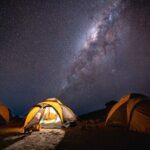
- Day 1: Umbwe Trail rainforest start, mud, and your first camp at 2,940m
- Day 2: moorland ascent to Barranco Camp with Great Barranco Wall views
- Day 3: Lava Tower and the scramble to Arrow Glacier Camp (altitude ramps up)
- Day 4: Western Breach to Crater Camp at 5,700m plus Ash Pit optional day hike
- Day 5: the 4am summit attempt to Uhuru Peak, then a long push down to Mweka
- Day 6: Mweka trail forest descent, celebration, and completion certificates
- Who this Umbwe climb suits (and who should reconsider)
- Safety, staff, and the kind of support that makes a difference
- Should you book the 6-Day Umbwe Route?
- FAQ
- FAQ
- Where does the trek start and end?
- How long is the Kilimanjaro Umbwe Route trek?
- What is the biggest physical challenge of this route?
- When do you start the summit push for Uhuru Peak?
- What meals and water are included?
- Are airport transfers included?
- Is emergency medical support included?
- Do I need to bring my own trekking gear?
- How do certificates work for Stella Point vs Uhuru Peak?
- What is the cancellation policy for a full refund?
Key points to know before you go
- Umbwe is steep and direct, with a faster feel than more gradual routes
- 4am summit start (tea and biscuits), then a long descent toward Mweka
- Altitude climbs happen early, with Lava Tower and Arrow Glacier Camp as major markers
- Camp setup is handled for you, and you’ll get hot water for washing daily
- The plan includes emergency oxygen plus a basic first aid kit
- Summit certificates are tied to where you reach, including Stella Point vs Uhuru Peak
Steep and direct: what makes the Umbwe Route a real test
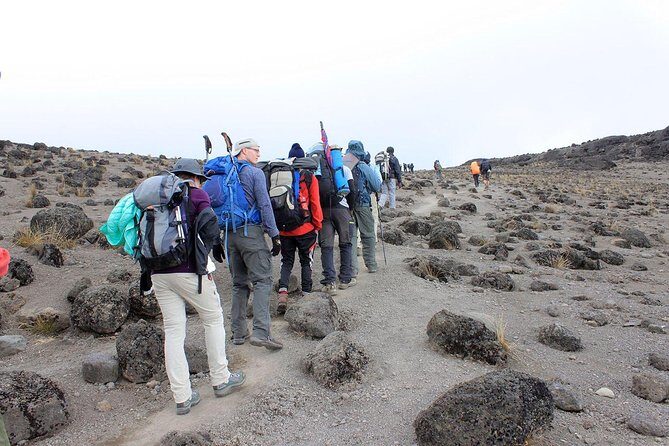
The Umbwe Route earns its reputation because it pushes upward more quickly than many other Kilimanjaro itineraries. In plain terms: you get less time to ease into the altitude. That can be great for experienced trekkers who like a focused challenge, but it also means you have to be smart with your pace and conservative with your expectations.
This trek is designed around a clear climb rhythm. You’ll move from rainforest beginnings into higher vegetation zones, then transition into rocky, bleak terrain as altitude rises. The big draw is the variety packed into six days: you’re not just climbing snow and rocks—you’re moving through multiple climate zones that feel like stepping into different worlds day by day.
Also, you should know the Umbwe experience is often wet and gloomy early. The plan specifically notes rain, mud, and fog on the first ascent into the rainforest. That doesn’t mean the trek is a bust. It means your boots will be working overtime and your layers need to handle damp air.
A few more Moshi tours and experiences worth a look
Price and value: what $2,310 covers (and what it doesn’t)
At $2,310 per person for about six days, the key question is what’s included versus what you’ll still need to pay yourself. Here’s the value picture based on what’s covered:
Included value you’ll actually feel:
- All fees and taxes
- Return transfers between Kilimanjaro airport and Moshi
- Qualified guides, assistant guides, porters, and chef wages
- Camping equipment (tents, camp chairs, tables, sleeping mattress)
- Meals: breakfast 5 times, lunch 6 times, dinner 5 times
- Fresh drinking water plus hot water for washing daily
- Emergency supplies: emergency oxygen (emergencies only) and a basic first aid kit
Not included (so you budget for it):
- Visas and flights
- Travel/health insurance
- Personal hiking/trekking gear (rental is available in Moshi)
- Personal medicine and water purifying tablets
- Meals and drinks outside what’s specified
- A portable toilet is optional but strongly recommended
Where this adds up: if you’re looking for a route where the logistics are handled and your food and camp setup are built in, you’re paying for fewer unknowns. If you prefer to bring everything, you might feel the price is high. If you’d rather have the plan manage the basics so you can focus on moving safely, this is the kind of package that usually feels fair.
Day 1: Umbwe Trail rainforest start, mud, and your first camp at 2,940m
Day one begins with an early breakfast in Moshi, then pickup and a drive to the Umbwe Gate. This is where you get a practical head start: you can buy mineral water, you register with Tanzania National Park (TANAPA), and your lunch is packed.
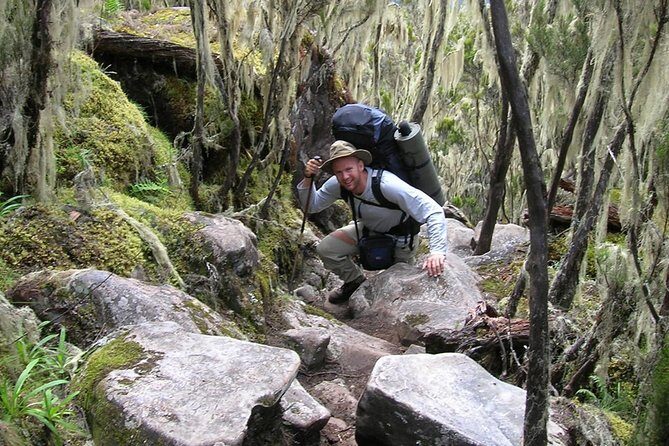
Then comes the real character of Umbwe—rainforest trekking. The plan calls out rain, mud, and fog, so expect slow footing and wet conditions. You might also see wildlife such as Colobus monkeys, which is a nice reminder that you’re not just training for a summit. You’re moving through a living ecosystem.
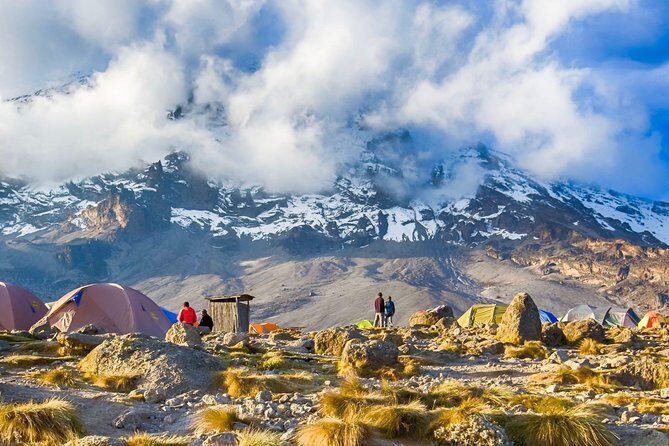
Halfway up, you’ll take lunch and then push on toward your first overnight at Bivouac Camp (2,940m). Camps like this are set up to make your night easier: your porters and chef manage camp logistics, and you’re not arriving to a blank slate.
Practical thought: if you’re the type who gets cold easily, this is the day you should take layering seriously. Wet air at lower altitude can still drain you, and day one sets your energy tone for everything after.
Day 2: moorland ascent to Barranco Camp with Great Barranco Wall views
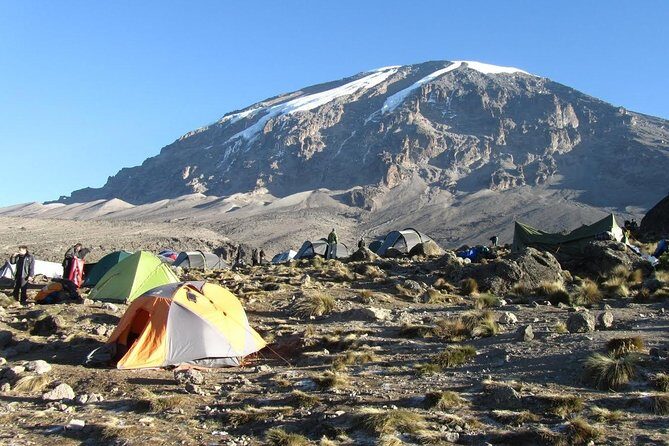
You start with breakfast, then climb away from the rainforest into moorland and heathland vegetation. This is where the trek starts to look and feel different—less canopy, more open sky, and that higher, exposed feeling.
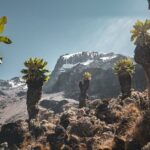
The plan highlights plant sightings in this zone, including giant lobelia and groundsel. Even if you don’t go plant-nerdy on the trail, it helps you understand why the route changes: conditions at elevation change how the land grows, and the scenery follows.
Expect around 6 hours of hiking. The trail gives you a spectacular view of Kilimanjaro as you climb, then it flattens and descends into the Barranco Valley. You’ll reach Barranco Camp, a setting that sounds pleasant on paper and probably feels even better after a day of effort: you’re near a stream with views toward the Western Breach and the Great Barranco Wall.
Logistically, you’ll get the same camp comfort pattern as day one. Tents are set up before you arrive, and drinking and washing water are prepared.
Consideration: day two includes a descent to camp. That can feel easier than climbing, but downhill steps still take a toll on knees and ankles—especially on a route that’s already steep. I’d treat this as a day to go steady, not fast.
Day 3: Lava Tower and the scramble to Arrow Glacier Camp (altitude ramps up)
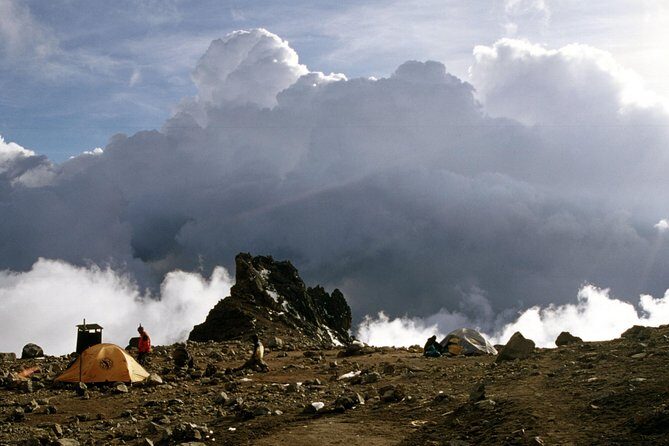
Day three is where many hikers start to feel altitude more seriously. After breakfast, you leave moorland for a semi-desert and rocky landscape. The terrain shifts from vegetation-heavy to stone-heavy, which changes how your body works. Less mud, more rock. Different kind of fatigue.
After about 5 hours eastward, you reach Lava Tower (4,630m). Lunch is served at the Tower, and if conditions allow, there’s an option to climb it. The plan notes that altitude effects like headaches and shortness of breath can start around this stage. That’s not a scare tactic; it’s part of planning smartly.
Next, you’ll scramble up a Class 2 trail toward Arrow Glacier Camp (4,800m). Vegetation here is sparse, and you’ll likely feel the climb more through your breathing and leg strength than through terrain obstacles.
On a trek like this, the way you handle discomfort matters. If you feel off, you don’t need hero moments. Slow, steady breathing and staying hydrated are your best friends. The itinerary already gives you a daily structure; your job is to keep your effort matched to your body.
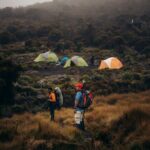
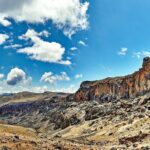
Day 4: Western Breach to Crater Camp at 5,700m plus Ash Pit optional day hike
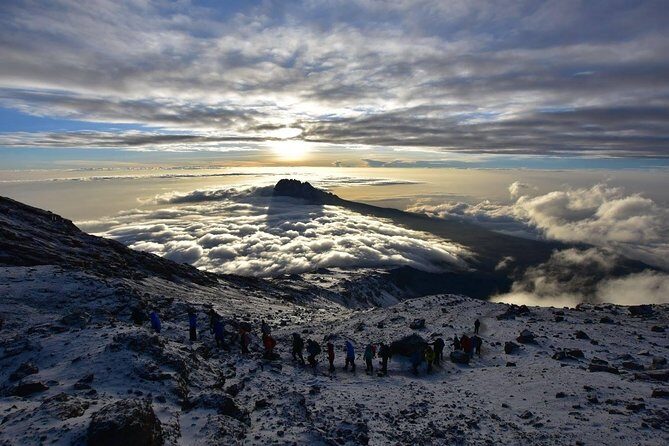
Day four pushes higher into the dramatic, exposed part of the climb. You start early and continue scrambling on rocky sections. The plan mentions that during the rain season, you may need an ice axe and crampons because conditions can be icy. Even if you rent gear, make sure you’re actually trained on how your team expects you to move safely with these tools.
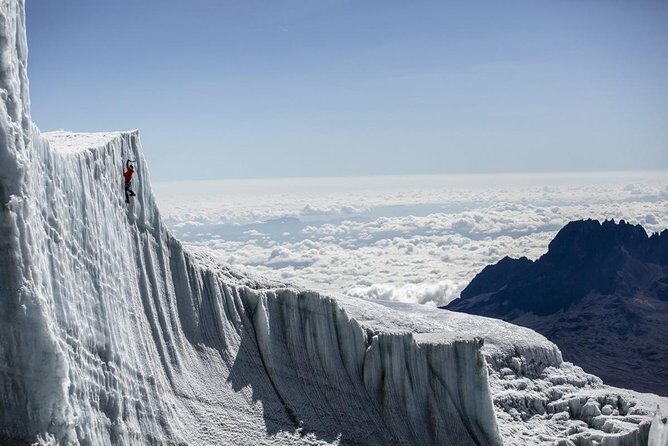
You’ll work your way up toward the Crater (5,700m) via the Western Breach. When you reach the top, the view is the payoff: you can see Northern Ice fields with the Furtwangler Glacier in front of you.
At camp, there’s an option to do a day hike to the Ash Pit (about 1.5 hours). The plan notes the Ash Pit is roughly 340m across and 120m deep. It’s one of those Kilimanjaro features that sounds almost unreal until you’re there looking down.
Dinner comes after hiking, and here’s a special detail: the plan says you may be among a few fortunate hikers staying at the inner, snow-covered crater of Mount Kilimanjaro. Even if you don’t get that exact spot, the day is still designed to feel like you’re living inside the mountain.
Practical thought: day four is where cold management matters. You’ll likely feel wind and temperature drops more than you did in the lower zones. Keep your spare layers dry when you can.
Day 5: the 4am summit attempt to Uhuru Peak, then a long push down to Mweka
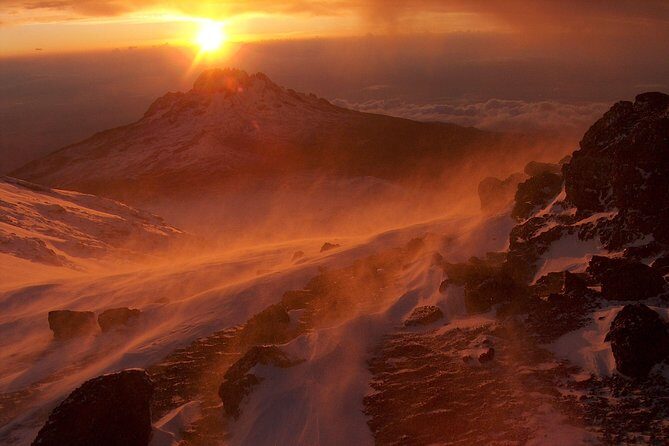
This is the day most people imagine when they think of Kilimanjaro, and it’s also the day where mental control matters as much as strength.
You’ll start around 0400 for tea and biscuits. Then the summit attempt begins. The plan says many hikers find this the most mentally and physically challenging stretch. That makes sense. You’re going upward into thin air while the clock is pressing and energy is being rationed.
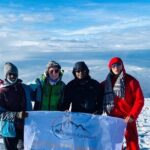
For about two hours, you’ll hike on a snow-covered trail to Uhuru Peak (5,895m). When you reach the summit, you’ll have time for photos and a short break. After that, the real work is the descent. It’s listed as 7–8 hours to Mweka (3,100m), with approximate distances of about 7km ascent and 23km descent.
A steep summit day can be deceptive. People focus on reaching the top, then the legs feel like they’ve forgotten how to function on the way down. Pace and foot care matter because the descent is longer than the ascent.
One more key detail: the mountain includes official stopping points that affect your certificate. The plan notes Stella Point (5,685m) gives green certificates, while reaching Uhuru Peak (5,895m) gives gold certificates. It’s a good incentive to climb carefully and work with your guide rather than rushing.
Day 6: Mweka trail forest descent, celebration, and completion certificates
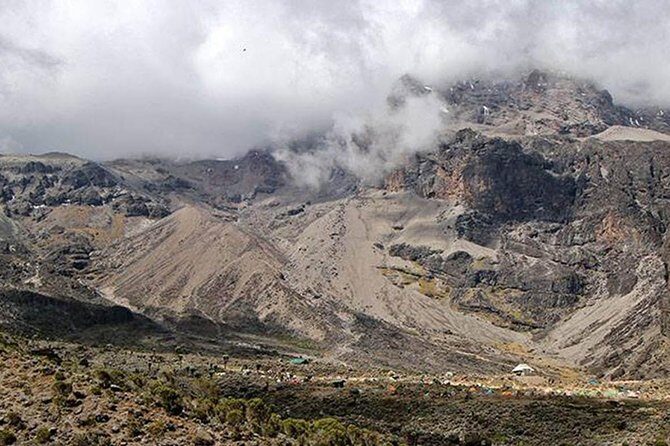
Day six starts with a well-earned breakfast and a staff-led celebration. The plan describes dancing and singing right on the mountain, and you’ll present your tips to the guide, assistant guides, chef(s), and porters. This is one of those small cultural moments that can make the ending feel richer than just check-the-box success.
Then you descend for about three hours back to Mweka Gate. The national park requires a signature for completion certificates. The plan spells out the certificate colors again: green for Stella Point and gold for Uhuru Peak.
After certificates, you descend into Mweka village for about an hour (the plan mentions this as part of the last segment). This is a useful reset. Even if you feel tired, it helps you transition out of summit mode and back into real-world altitude recovery.
Who this Umbwe climb suits (and who should reconsider)
This is not a casual trek. It’s a steep, fast-feeling route with altitude rising quickly and terrain that turns rocky and exposed. The plan specifically says you should have a strong physical fitness level, and that’s the right filter.
Best fit:
- You’ve done multi-day treks before and you understand how to pace uphill
- You want a route that’s less crowded and more adventurous in feel
- You’re comfortable with early altitude effects and sustained effort
Consider switching plans if:
- You’re new to high-altitude trekking
- You’re hoping for a gentler acclimatization pace
- Wet, muddy conditions early in the hike would likely break your motivation
The good news: the trek is also set up to reduce the chaos. Since it’s private and your team handles camp setup and meals, you get fewer distractions. That can help you focus on the main job: moving safely.
Safety, staff, and the kind of support that makes a difference
This climb includes real support structure. You’ll have a qualified mountain guide, assistant guides, porters, and a cook, with their wages covered. Tents, sleeping mats, tables, and chairs are included, and you’ll get fresh water plus hot water for washing daily.
Safety-wise, the plan includes emergency oxygen for emergencies only and a basic first aid kit. It’s not described as summit oxygen or as a substitute for acclimatization. Think of it as contingency planning.
I also like the human support signals from past clients who credited the team for keeping things organized and taking care of them. In one account, someone credited Frazier for helping coordinate transportation and lodging when the trip was planned on short notice. Another mentioned head guide Godfrey and praised how the hike accommodations, food, and customer service felt solid from start to finish. That matches what you want on Kilimanjaro: calm, competent leadership when the altitude makes everything feel louder.
Should you book the 6-Day Umbwe Route?
Book it if you want:
- A steep, direct route to the summit with a serious trekking challenge
- More daily structure and fewer logistics headaches
- Included meals, camp gear, transfers, and strong staff support
Think twice (or choose a slower itinerary) if you:
- Need extra acclimatization time to feel comfortable at altitude
- Are easily discouraged by rain, mud, and fog on day one
- Prefer a less demanding pace through the high zones
If your fitness is solid and you’re ready to work steadily without rushing, this route can feel like a clean, focused Kilimanjaro mission—from rainforest to the snowline to Uhuru Peak.
FAQ
FAQ
Where does the trek start and end?
The experience starts in Moshi (Moshi Urban) and ends back at the meeting point.
How long is the Kilimanjaro Umbwe Route trek?
It runs for about 6 days.
What is the biggest physical challenge of this route?
The Umbwe Route is known for a steep, direct climb, and the trek requires a strong physical fitness level. Altitude can also start causing symptoms around the middle of the trek.
When do you start the summit push for Uhuru Peak?
You begin the summit attempt around 0400 for tea and biscuits, then hike on a snow-covered trail toward Uhuru Peak.
What meals and water are included?
Breakfast is included 5 times, lunch is included 6 times, and dinner is included 5 times. You’ll also have fresh water for drinking and hot water for a wash daily.
Are airport transfers included?
Yes. Return transfers are included between Kilimanjaro airport and Moshi, and Moshi and Kilimanjaro airport.
Is emergency medical support included?
The package includes emergency oxygen (for emergencies only) and a basic first aid kit.
Do I need to bring my own trekking gear?
Personal hiking/trekking gear is not included. You can rent gear from equipment stores in Moshi.
How do certificates work for Stella Point vs Uhuru Peak?
You sign for completion certificates at the park. The plan says hikers who reached Stella Point (5,685m) get green certificates, and hikers who reached Uhuru Peak (5,895m) get gold certificates.
What is the cancellation policy for a full refund?
You can cancel up to 3 days in advance for a full refund. If you cancel less than 3 full days before the experience’s start time, the amount you paid is not refunded.