REVIEW · ZANZIBAR
3 Hours Private Stone Town Walking Tour
Book on Viator →Operated by KIB tours and safaris · Bookable on Viator
Stone Town reads like a living map.
This private walking tour in Zanzibar lines up the island’s key stories—forts, palaces, churches, markets, and sea views—into a smart 2 to 3 hour loop from Forodhani back to Forodhani, with bottled water included. It’s built for walking through the narrow streets, where history feels close enough to touch.
I especially like the guide-led street story, with explanations that connect the architecture and neighborhoods to the people who shaped Zanzibar over time. I also like the pacing that keeps things human: quick stops for photos and details, then a longer break for food at Lukmaan Restaurant.
One thing to plan for: a couple of the most popular add-on stops have extra entry fees, including the Freddie Mercury Museum and Hamamni Persian Baths (each noted as $8 if you go inside). So your final spend can be more than the headline $20.
In This Review
- Key highlights before you go
- Entering Stone Town the way you’re meant to: on foot
- Forodhani Gardens: the sea-front starting point and food energy
- Ngome Kongwe Old Fort: Omanis built it, Zanzibar repurposed it
- House of Wonders: Swahili and Arab style, royal past to museum present
- Freddie Mercury Museum: outside photos now, $8 inside if you want it
- The Old Slave Market and Anglican Cathedral: a heavy stop with context
- People’s Palace Museum and Saint Joseph’s Cathedral: quick hits, clear design
- Darajani Bazaar and Lukmaan: shopping senses plus a real food break
- Jaws Corner and the Swahili House rooftop: people-watching with payoff views
- Hamamni Persian Baths: outside architecture first, $8 if you go in
- Pickup, timing, and how long 2 to 3 hours really is
- Price and value: $20 buys a route, not just a list of stops
- Who this private Stone Town walk fits best
- Quick practical tips so you enjoy it more
- Should you book this Stone Town walking tour?
- FAQ
- How long is the Stone Town walking tour?
- Where does the tour start and end?
- Is the tour private?
- Is pickup offered?
- What is the price?
- What entrance fees should I expect to pay separately?
- Is bottled water included?
- What is the cancellation policy?
Key highlights before you go
- Private, not crowded: only your group joins the walk
- Forodhani start and finish: easy to plug into your day
- Architecture hopping: Omanis, Swahili/Arab influences, Persian baths, and European-style church design
- Optional entry fees: Freddie Mercury Museum and Hamamni Persian Baths are paid if you enter ($8 each noted)
- Food with real local focus: Forodhani evening market area and a dedicated meal stop at Lukmaan
- Big photo moments without big entry costs: lots of outside views, plus the Swahili House rooftop needs a drink purchase
Entering Stone Town the way you’re meant to: on foot
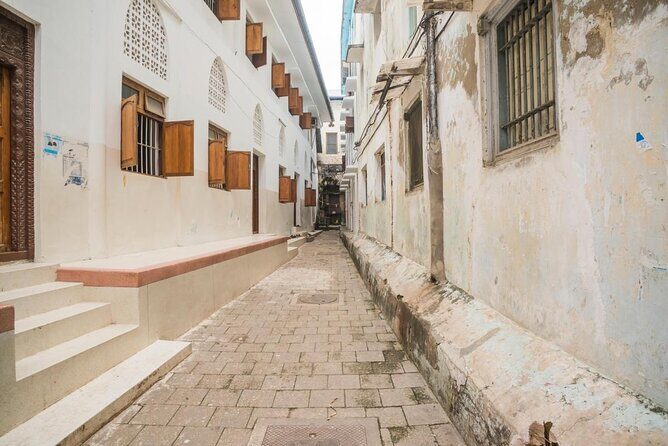
Stone Town can feel like a maze the first time you see it, with narrow lanes and buildings packed close together. This tour is a practical fix. You get a guided route that moves, instead of you wandering for hours trying to stitch landmarks together yourself.
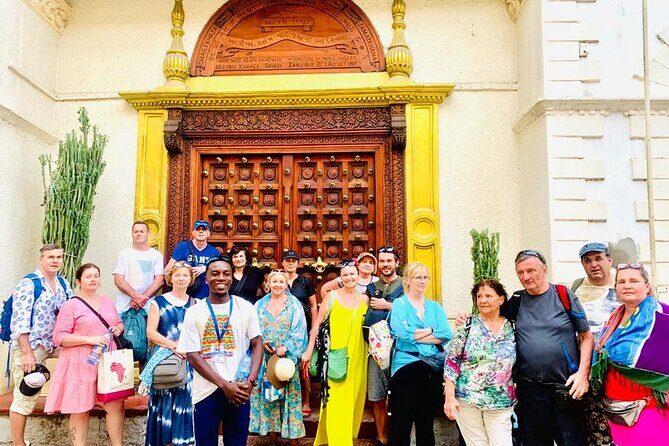
Because it’s private, you can keep the pace that fits your legs and your attention span. Many guests specifically praise guides like Rakib and Nasir for adjusting to the group and for making the history stick in a way that feels understandable, not like a lecture.
The route also keeps logistics simple: you start in the Forodhani area and end back there. That matters in Stone Town, where crossing town on your own can eat up precious time.
You can also read our reviews of more walking tours in Zanzibar



Forodhani Gardens: the sea-front starting point and food energy

Most walks start with a signpost. This one starts with a scene. Forodhani Gardens sits along the water, and it’s also linked to the famous evening food market vibe (even if you go earlier in the day, you’ll still feel why people come back).
From a value perspective, this stop is smart because it gives you two things quickly: orientation and appetite. You’ll understand where you are in the city, then you’ll get a taste of what Zanzibar’s street food culture looks like in real life.
The tour notes that this is a short stop (about 10 minutes). If you’re hungry, use that moment to spot what you might want later—seafood, Zanzibar pizza, and other local bites are commonly associated with this area. Then the day continues with history instead of getting stuck in a long queue.
Ngome Kongwe Old Fort: Omanis built it, Zanzibar repurposed it
Next comes the Old Fort, also known as Ngome Kongwe. The key story here is time. Built in the 17th century by the Omanis, it later became something else: today it’s a cultural center area with art galleries and shops.
That mix is why I like this stop on a walking tour. You’re not only looking at stone from the past. You’re seeing how the present uses old power structures—an ongoing pattern across Stone Town.
The tour schedules it as a quick visit (around 10 minutes), with no admission ticket required for that area. If you like architecture and street-level context, you’ll leave with a clearer sense of why forts mattered so much in Zanzibar’s trading world.
House of Wonders: Swahili and Arab style, royal past to museum present
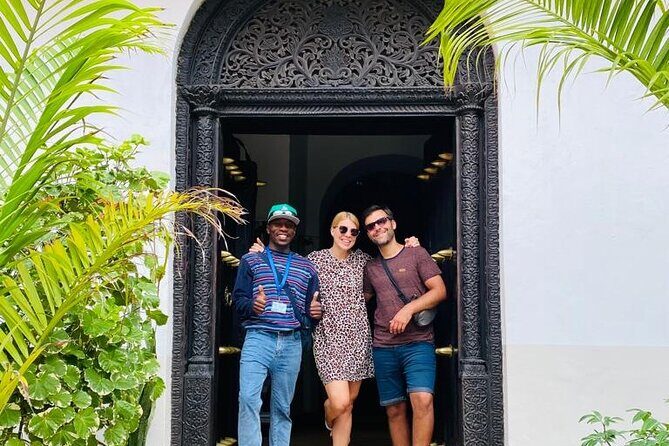
Then you’ll reach the House of Wonders—an impressive palace-scale building tied to the Zanzibar royal family. This is one of those landmarks where you can “read” the place with your eyes, because the architecture is part of the lesson.
The tour keeps this to a short stop (about 5 minutes) and notes admission is free for the museum visit at this viewpoint level. The real value is what your guide points out while you stand there: the blend of Swahili and Arab design, and what it implies about Zanzibar’s connections across the Indian Ocean.
If your time is limited and you want to learn fast, don’t skip this. It’s a pivot point in the day, moving you from forts and public spaces toward the scale of royal and ceremonial Zanzibar.
Freddie Mercury Museum: outside photos now, $8 inside if you want it
Freddie Mercury is one of those modern links that can pull people in instantly. Here, though, the tour handles it in a practical way.
You’ll visit the Freddie Mercury Museum area and focus mainly on the outside for photos. If you decide to go inside, the tour lists an entrance fee of $8 per person, and the museum is described as small but packed with information about his life and career.
This is a good option because it lets you choose your own intensity. Want the quick photo stop and move on? You can do that. Want the full story? Pay the entry and spend more time.
You can also read our reviews of more private tours in Zanzibar





The Old Slave Market and Anglican Cathedral: a heavy stop with context
This is the emotional center of the tour. You’ll head to the former slave market area and the nearby Anglican Cathedral, built on the site associated with Zanzibar’s role in the slave trade. A nearby memorial is described as a moving tribute to victims.
Expect this to take around 15 minutes. And it’s not the kind of stop you rush through, even when you’re on a set schedule. A good guide here matters, because you’re not just looking at architecture—you’re absorbing a painful part of Zanzibar’s history.
One practical note: the information you have says entrance fees for the old slave market site are not included. So if you feel like going into specific areas or platforms, have a little extra cash or payment options ready.
People’s Palace Museum and Saint Joseph’s Cathedral: quick hits, clear design

From there, the walk keeps momentum with two religious/royal-linked landmarks.
At People’s Palace Museum (the former palace of the sultans), you get a short look (about 5 minutes) with admission noted as free for the visit described. Even in a quick time window, this stop helps you connect the royal power stories you saw at House of Wonders to the political center of Zanzibar’s past.
Then you’ll reach Saint Joseph’s Cathedral. The tour describes it as constructed by French missionaries in the 19th century, with a design similar to Marseille Cathedral in France. That comparison is useful because it gives you a visual anchor: you’re not only seeing a church, you’re seeing Zanzibar’s connections back to Europe through missionaries and architectural style.
Again, these are short stops. That’s the tradeoff for a compact 2 to 3 hour tour. If you want longer time inside museums or churches, you’ll likely need an add-on later—but this layout gives you a strong foundation fast.
Darajani Bazaar and Lukmaan: shopping senses plus a real food break
Stone Town isn’t only history stones. It’s also commerce, spices, and everyday life. That’s why the tour includes Darajani Bazaar, a busy market where you can browse and purchase items like spices, fruits, vegetables, and textiles.
This stop is about 10 minutes. Use it like a sampler. Look, smell, and get your bearings. If you buy something, buy small and keep it light—Stone Town’s streets are not ideal for carrying heavy bags all day.
Right after that, the tour gives you a longer food moment at Lukmaan Restaurant. The stop is listed as 45 minutes, and it’s described as a beloved spot for authentic Zanzibari cuisine. The helpful part is pricing: it’s noted as affordable for tourists, with meals not more than $20 per person, which matches typical on-the-day budgeting.
Lunch isn’t included in the tour price. So think of Lukmaan as your scheduled chance to eat without hunting. If you’re unsure what to order, ask your guide for a recommendation once you’re seated—your guide is already walking you through local culture, so you’ll get better choices than if you guess from a menu alone.
Jaws Corner and the Swahili House rooftop: people-watching with payoff views
Then comes a classic Stone Town social stop: Jaws Corner. The tour describes it as an iconic gathering place with a lively atmosphere and local interactions. It’s short (about 5 minutes), but the value is the pause. After looking at monuments and buildings, you get a quick reality check: this is a living city, not a theme park.
Next is the Swahili House, which the tour describes as a hotel with a restaurant and a rooftop viewpoint. The rooftop view is free for everyone, but you should buy a drink once you’re up there—water, soda, coffee, or whatever you like.
This is one of my favorite “value-for-feeling” add-ons on the route. You get the view without paying an entry ticket for the rooftop itself. Just budget the cost of a drink and treat it like part of the experience.
Hamamni Persian Baths: outside architecture first, $8 if you go in
You’ll finish this stretch at Hamamni Persian Baths. The tour frames them as 19th-century baths showing Persian and Arabian influence on Zanzibar.
Here’s the practical approach: the tour notes that you’ll visit just outside to see the architecture, which is free. If you want to enter, the entrance fee is listed as $8 per person.
This is a smart design for a walking tour because baths can take longer than you expect—standing, reading signage, and moving through rooms at your own pace. By giving you both options, you can decide based on your energy level and how much you care about interiors versus exterior design.
Pickup, timing, and how long 2 to 3 hours really is
The duration is listed as approximately 2 to 3 hours. That’s short enough to keep Stone Town from eating your whole day, but long enough to cover meaningful landmarks on foot.
Pickup is offered, and some guests report being collected from their hotel in an air-conditioned new van. If you have mobility limits or you simply don’t want the stress of finding your way to the meeting spot, pickup can be worth it.
The meeting point is Forodhani, and the activity ends back at the same meeting point. That’s helpful for planning your next activity—especially if you’re pairing this with a beach day, a sunset plan, or a dinner nearby.
Price and value: $20 buys a route, not just a list of stops
At $20 per person for a private walking tour, the value comes from how the time is organized. You’re not just seeing names on a map. You’re getting a guided walk connecting the sites into a story that makes Stone Town easier to understand.
Bottled mineral water is included, which sounds small but matters in the heat and on a walking schedule.
Where costs can change is in optional or un-included site entrances. The tour notes entrance fees are not included for certain places such as the old slave market site, Swahili House, sultan’s palace areas, and the Freddie Mercury Museum. It also specifically lists $8 entrance fees for the Freddie Mercury Museum and Hamamni Persian Baths if you want to enter.
So I’d budget in two layers:
- Your tour cost: $20 per person
- Your add-on layer: decide whether you want the $8 museum and $8 baths, plus any other on-site entry costs you choose
If you like to keep spending under control, you can still get a lot from the outside views. If you prefer going inside and reading more, you’ll likely spend extra, but it’s still predictable because the big two are explicitly listed.
Who this private Stone Town walk fits best
This is a great choice if you want a focused Stone Town highlights route without planning every turn yourself.
It’s also a good fit for people who like structure. Some visitors prefer a guided route because Stone Town can be confusing at first, and the guided pacing helps you avoid wasting time.
It says most travelers can participate, and service animals are allowed. Still, this is a walking tour through narrow streets. Wear comfortable shoes, and plan for the day to be mostly on foot.
If you’re visiting with kids, keep expectations realistic: the stops are short, but the content can include serious history at the old slave market site.
Quick practical tips so you enjoy it more
First, wear shoes you trust. Stone Town lanes are uneven in places, and you’ll be on your feet for hours.
Second, bring a bit of cash or payment flexibility. The tour flags at least two $8 entrances (Freddie Mercury Museum and Hamamni Persian Baths), and it notes some other site entry fees aren’t included.
Third, plan your lunch separately. The restaurant stop is on the route at Lukmaan, but lunch isn’t included in the tour price, so you’ll need to pay for what you order.
Finally, if you care about views, decide early whether you’ll do the Swahili House rooftop. It’s free to access, but you should plan to buy a drink to enjoy it.
Should you book this Stone Town walking tour?
Yes, if you want a compact, well-paced way to understand Stone Town’s big themes—trading-era power, mixed architectural influences, religious landmarks, and the city’s living street culture—without spending your day bouncing between distant points.
Book it especially if you value strong guiding. The guide names Rakib and Nasir show up in the feedback because people liked the clarity of the explanations and the way the walk stayed comfortable.
I’d hesitate only if you know you don’t want any paid entrances. The outside stops work fine, but at least two major add-ons are clearly optional-and-paid, and one heavy-history stop may also involve entrance considerations. If you’re okay with that, this is a solid $20 way to turn Stone Town from confusing into coherent.
FAQ
How long is the Stone Town walking tour?
It runs about 2 to 3 hours.
Where does the tour start and end?
The tour starts at Forodhani, Zanzibar, Tanzania, and it ends back at the meeting point.
Is the tour private?
Yes. It’s a private tour/activity, with only your group participating.
Is pickup offered?
Pickup is offered.
What is the price?
The price is $20.00 per person.
What entrance fees should I expect to pay separately?
The tour notes entrance fees are not included for some sites, including the Freddie Mercury Museum and the old slave market area, as well as the Swahili House and sultan’s palace. It also lists $8 per person for entering the Freddie Mercury Museum and $8 per person for entering the Hamamni Persian Baths.
Is bottled water included?
Yes. Mineral waters are free.
What is the cancellation policy?
Free cancellation is available. You can cancel up to 24 hours in advance for a full refund, based on the local start time.