REVIEW · ARUSHA
5 Days Classic Kilimanjaro Climb via Marangu route
Book on Viator →Operated by Golden Trips Tanzania · Bookable on Viator
Five days up Kilimanjaro is real work. What makes this trip special is the Marangu Route, often called the Coca-Cola Route, with a slower-feeling pace and a clear plan from Arusha to the huts and back.
I like that you sleep in proper huts along the way (Mandara, Horombo, Kibo) instead of living in tents, which makes the days feel more manageable. I also love the payoff schedule: rainforest contrasts on Day 1, big altitude views at Horombo, then the sunrise moment from the crater rim before you tackle Uhuru Peak.
One consideration: the summit day starts around midnight and runs very long, so you’ll need to be ready for cold, fatigue, and steady climbing in the dark.
In This Review
- Key highlights at a glance
- Why the Marangu Route feels like Kilimanjaro’s best intro
- Getting to the gate: Arusha pickup and the smooth start you want
- Day 1: Rainforest hiking to Mandara Hut and Maundi Crater views
- Day 2: Timberline, heath and moor, and Horombo Hut at 3700m
- Day 3: The long grind to Kibo Hut via Last Water and the Saddle
- Day 4: Midnight summit to Uhuru Peak, with Gillman’s Point and Hans Meyer Cave
- Day 5: Descent through heath and rainforest back to the Marangu gate
- What’s included, and why it’s worth paying attention to
- Price and value: Is $2,178 a fair deal for this 5-day plan?
- The team vibe: Dickson, Bob, and crew support that keeps things moving
- Who should choose this trip, and who should think twice
- Final verdict: Should you book the 5 Days Classic Kilimanjaro via Marangu route?
- FAQ
- How long is this Kilimanjaro trek?
- What route does the climb follow?
- What time does the trek typically start, and when can you meet?
- What meals are included during the trek?
- Does the price include park fees and rescue fees?
- Are airport transfers included?
- What is the cancellation policy?
Key highlights at a glance
- Hut-based route: Mandara Hut, Horombo Hut, and Kibo Hut make the climb feel more structured than tent camping.
- Real mountain views on purpose: Mawenzi, Kibo, and the Masai steppe are part of the journey, not just the summit reward.
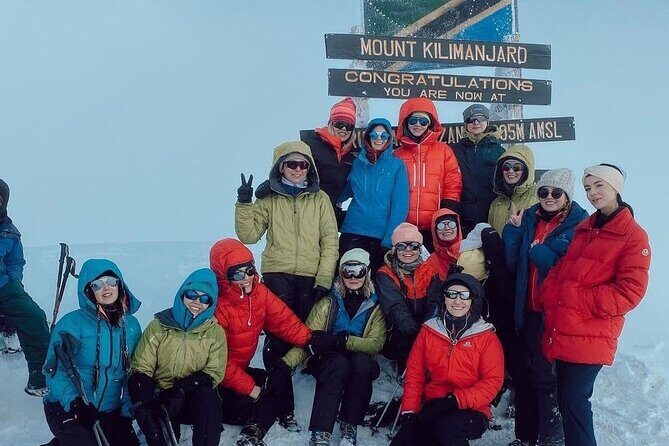
- Midnight summit plan: A long Day 4 with Hans Meyer Cave, Gillman’s Point, and Uhuru Peak at 5895m.
- Included support team: Guides, cooks, and porters are part of the package, plus an emergency first-aid kit.
- Meals and washing covered: Treated drinking water and hot water for washing help you function better after long days.
- Golden Trips Tanzania energy: The guides and crew (including Dickson and Bob) are highlighted as friendly and safety-minded.
Why the Marangu Route feels like Kilimanjaro’s best intro
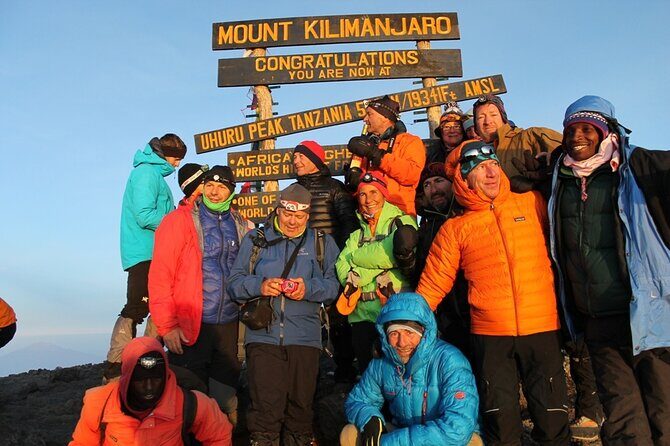
If you’ve ever worried that Kilimanjaro is too chaotic or too hard to plan, the Marangu Route is usually where people start. Here, the rhythm is straightforward: climb from gate to hut, rest, climb higher, rest again, and then go for the summit in a single big push.
The route description calls it relatively gentle compared with other routes. That matters because “gentle” doesn’t mean easy. You still climb from the gate area up into the crater zone, and you still finish with the altitude challenge of Uhuru Peak at 5895m. But a gentler grade can help you manage your pace and breathing.
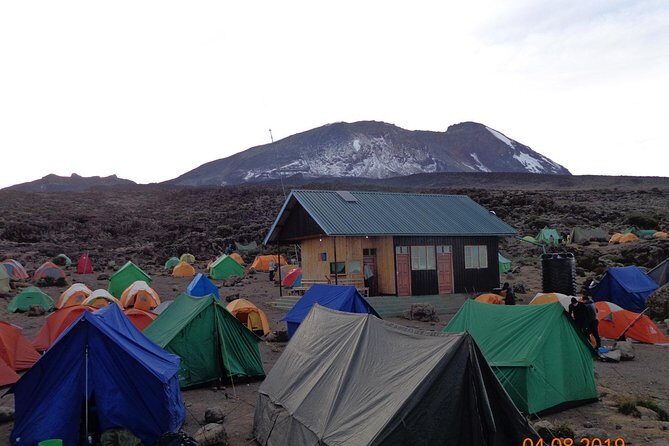
Another big comfort factor: this trek is hut-based. You’re not sleeping on the ground the whole time. You still get thin air and real cold, but your “base camp” each night is a hut—Mandara, Horombo, then Kibo. That alone can change the mood of the trek.
A few more Arusha tours and experiences worth a look
Getting to the gate: Arusha pickup and the smooth start you want
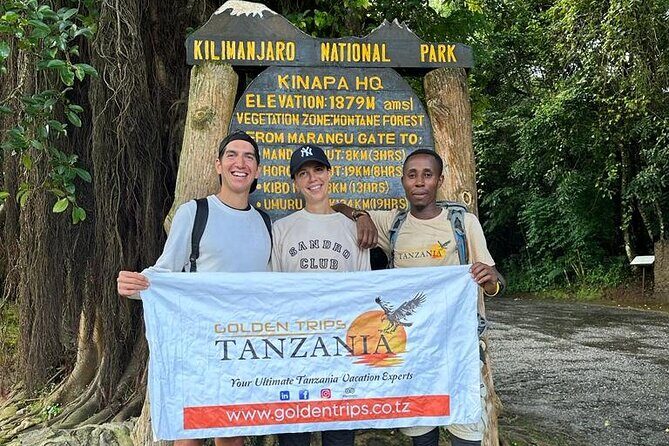
This trip is built around logistics that reduce stress before you even hit the first trail. You can be picked up from your lodge in Arusha after breakfast and transferred to the Marangu gate, where you’ll do the required paperwork.
You’re also covered for transport that connects the mountain with normal life. The package lists private transport to and from Kilimanjaro International Airport and your accommodations in Arusha. Then there’s the gate-side transfer during the climb, plus a return ride back to Arusha after you finish.
This matters because Kilimanjaro is not a “wander in and see what happens” kind of trip. When the schedule is tight, you want a company that handles the boring steps—timing, paperwork, and moving people safely.
Day 1: Rainforest hiking to Mandara Hut and Maundi Crater views
Day 1 is all about crossing from normal weather into the mountain’s world. After Arusha pickup and gate paperwork, you hike through dense rainforest toward Mandara Hut. Dense rainforest on Kilimanjaro means you’ll feel the humidity and the constant green. It’s also where wildlife can show up—there’s mention of primates along the way.
A key detail on this day: you’re not rushing straight up to a higher altitude and stopping there. You get time to settle into the trail, then rest at Mandara Hut.
And here’s a bonus built into the plan. Your guide can take you to the Maundi Crater, which is framed as a chance to enjoy a wide view of the Kenyan interior. Even if you don’t remember every detail of Day 1, you’ll likely remember that the hike isn’t just about altitude. It’s also about moments of scenery.
Day 2: Timberline, heath and moor, and Horombo Hut at 3700m
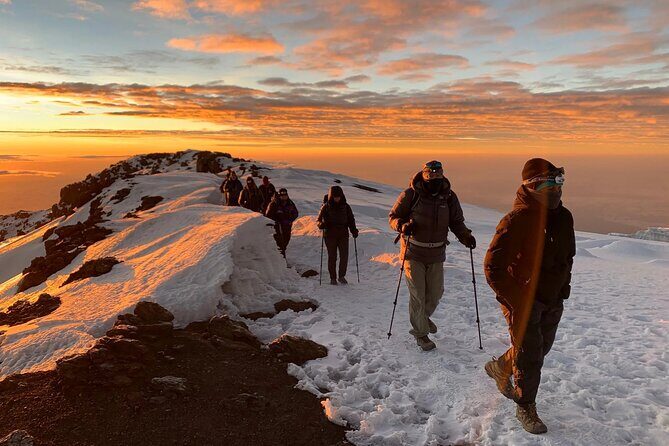
On Day 2, you get the shift in vegetation that makes Kilimanjaro feel like a vertical journey through zones. After leaving Mandara Hut and getting an early start, you reach the timberline, then transition into heath and moor.
This segment is designed to build altitude while still giving you a big breathing window. The plan calls for roughly 4 to 6 hours before Horombo Hut comes into view at 3700m. Distance is listed as 12.5km, taking about 9 hours.
From Horombo Hut, the views are part of the rest. You look out toward Mawenzi, Kibo, and the wide Masai steppe plain. Seeing those forms from your resting point helps you understand the mountain’s shape instead of just measuring it with a GPS screen.
Day 2 also matters for acclimatization. You’re not going for the summit yet. You’re giving your body a chance to adjust while the route continues upward.
Day 3: The long grind to Kibo Hut via Last Water and the Saddle
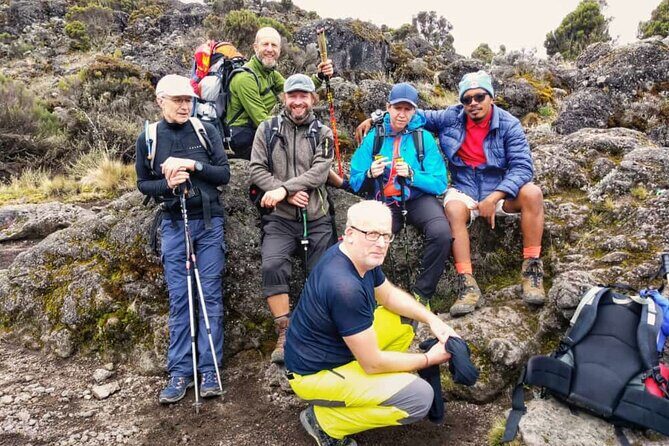
Day 3 is where the trek starts feeling more serious. The stage is described as long and tough, and it follows a strong, well-built trail through changing terrain.
Two named waypoints help you picture the day:
- Last Water point
- The saddle, described as a nearly vegetation-less plateau joining Kibo with Mawenzi
This is one of those days where the landscape can look simpler, but the altitude makes it harder. Distance here is 9.5km, but it’s listed around 7 hours—so you’re spending more time moving carefully than you might expect from the mileage.
Your destination is Kibo Hut, usually reached in about 5 to 6 hours. The plan emphasizes an early evening meal and an early night because the night will be short. That’s not a random scheduling choice. It sets you up for the midnight summit push the next day.
Day 4: Midnight summit to Uhuru Peak, with Gillman’s Point and Hans Meyer Cave
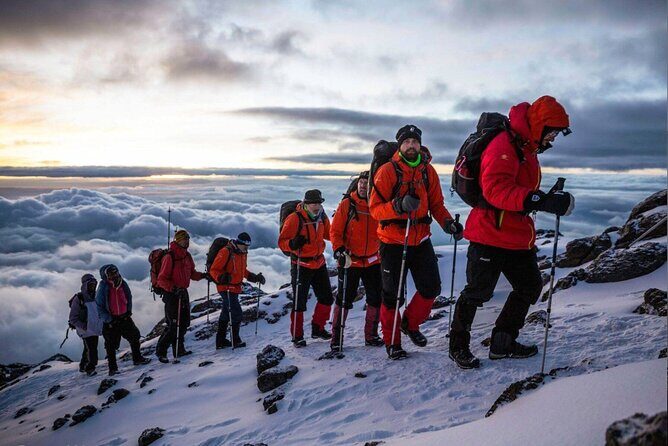
Day 4 is the headline: the big summit day. You start your final ascent around midnight, and yes, it’s described as long and strenuous. This is the part where people feel the real mountain. Cold, fatigue, and thin air all show up fast.
The route passes Hans Meyer Cave at 5220m, then continues upward slowly but steadily. The climb is timed so that when daylight arrives, you’re in a place to experience it.
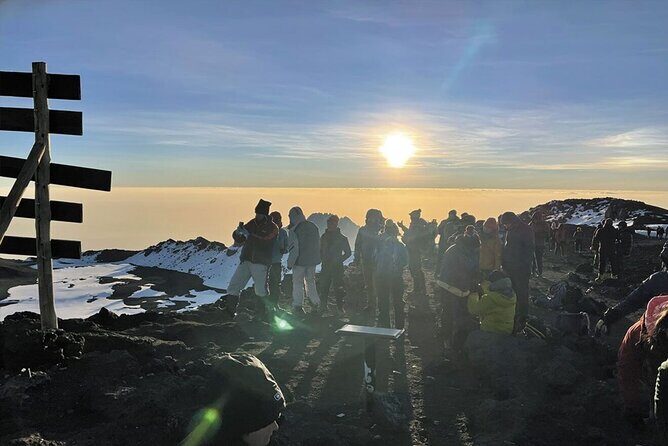
At sunrise, you reach Gillman’s Point (5681m), described as the crater rim. You also get a key psychological boost: the sun starts warming the land. That moment matters because it helps you stop thinking about the cold and start focusing on the finish.
After Gillman’s Point, there’s another hike of roughly 1 to 2 hours to Uhuru Peak (5895m).
Then it’s down again, and that’s part of the challenge people forget. You return to Kibo Hut for a warm meal, get a short break (about 1 to 2 hours), and continue descending to Horombo Hut.
Distance for the day is listed as 22km, and the total time is around 15 hours. So even if the summit itself feels like the main event, the whole day is what will test your stamina.
Day 5: Descent through heath and rainforest back to the Marangu gate
Day 5 is often emotionally mixed. You’re done with the hardest part, but you still have work to do. The plan takes you through heath and moor back toward Mandara Hut (2700m), where there’s a warm lunch.
After Mandara Hut, you move back through tropical rainforest and continue down to the Kilimanjaro National Park Gate at 1860m. The total trekking time is listed at about 6 hours, with distance around 20.8km.
Once you reach the gate, you say goodbye to your mountain guides, then transfer back to your hotel in Arusha. The trip also highlights the simple reward that matters after long days: a warm shower and time to celebrate your summit success.
What’s included, and why it’s worth paying attention to
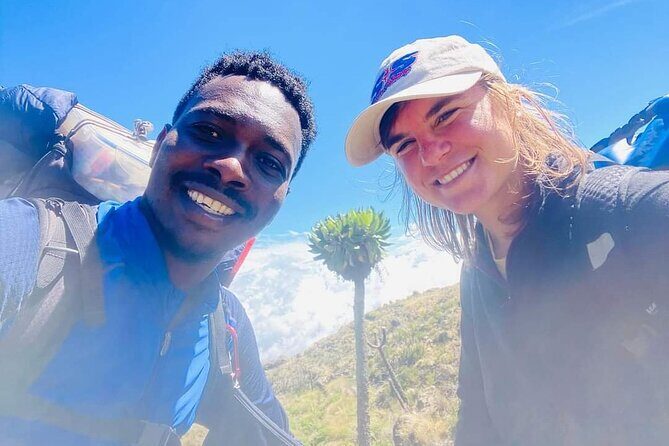
A good Kilimanjaro price isn’t only about the trek itself. It’s about what’s handled for you so you can focus on walking, resting, and staying safe.
Here’s what’s included:
- All fees and taxes, plus VAT (18%)
- Team Kilimanjaro Rescue fees
- Transportation to and from the Kilimanjaro gate, and private transport between Kilimanjaro International Airport and your Arusha accommodations
- Hired mountain support: friendly, professional mountain guides, cooks, and porters
- Treated and filtered drinking water throughout the trek
- Hot water for washing
- An emergency first-aid kit
- Fair wages for the mountain crew
- Meals included: 4 breakfasts, 5 lunches, 4 dinners
- 1 night of accommodation in Arusha on the last day
There’s also mention of a mobile ticket, which is a small thing but usually means fewer headaches with paperwork.
This package reads like it’s built to reduce friction on the mountain. Treated water and hot water aren’t glamorous, but they help you keep your head clear and your body moving.
Price and value: Is $2,178 a fair deal for this 5-day plan?
At $2,178 per person, this isn’t a budget climb. But it also isn’t priced like a “just show up at the gate” situation. What you pay for is the combination of route support and the costs that many climbers forget to calculate.
The value logic here is that the price includes:
- Park fees and taxes
- Rescue fees
- Meals across the trek
- Treated drinking water
- Hot water for washing
- Guide/cook/porter team
- Transport between Arusha, the gate, and the airport
What’s not included is also clear. You’ll need to budget separately for travel insurance, flights, and tips for guides/porters/cook, plus personal items and toiletries. Meals and drinks at your hotel before and after the climb are also not included.
If you want a climb where the “admin load” is handled and your money goes into the mountain team and logistics, this price can make sense. If you’re already covering flights and you’re planning your own guide and porters, then the cost might feel steep compared to a more DIY option.
The team vibe: Dickson, Bob, and crew support that keeps things moving
The human side is a big part of why people remember Kilimanjaro, and this trip’s support team gets repeated praise. Golden Trips Tanzania is highlighted for organization and safety-minded guidance.
Specific names come up: Dickson and Bob. They’re described as making the climb fun, with porters and cooks/waiters working hard to support the group. In one account, there was even a bubbly-style celebration at the base after reaching the summit, which tells you something about morale—not just mechanics.
For me, the takeaway is simple: you don’t just want someone who can lead the route. You want a team that helps you keep a steady pace, follows the plan, and keeps everyone confident through the long summit day.
Who should choose this trip, and who should think twice
This is a classic Marangu Route climb, and the trip summary says most travelers can participate. It also frames the route as relatively gentle, which is a big clue about who it fits.
It’s a good match if you:
- Want a hut-based route with a clear step-by-step plan
- Prefer predictable logistics (pickup, transfers, and gate procedures handled)
- Like the idea of a structured acclimatization sequence (Mandara → Horombo → Kibo, then Uhuru Peak)
You should think twice if you:
- Struggle with very long days and a midnight summit start
- Know you’ll find cold nights and early waking difficult
- Are not willing to budget for what’s not included, especially travel insurance and tips
Final verdict: Should you book the 5 Days Classic Kilimanjaro via Marangu route?
If you want Kilimanjaro with fewer unknowns, this one is worth serious consideration. The plan is tight and logical: rainforest intro, altitude builds through Horombo, then a long summit push to Uhuru Peak with a sunrise at Gillman’s Point, followed by a full descent day.
The best reasons to book are practical: huts, included meals, treated water, hot water for washing, rescue fees, and a real support team led by Dickson and Bob. The big downside is also practical: Day 4 is a monster. If you’re ready for that midnight start and long hours, you’re choosing a route with a lot of structure behind it.
One last check before you commit: confirm your budget includes tips and travel insurance, and plan your packing around cold early hours and long walking days.
FAQ
How long is this Kilimanjaro trek?
It’s listed as 5 days (approx.) on the classic Marangu route.
What route does the climb follow?
This is the 5 Days Classic Kilimanjaro Climb via the Marangu route through Kilimanjaro National Park, using huts like Mandara Hut, Horombo Hut, and Kibo Hut.
What time does the trek typically start, and when can you meet?
The meeting hours are 8:00 AM to 6:00 PM, Monday through Sunday.
What meals are included during the trek?
Meals included are 4 breakfasts, 5 lunches, and 4 dinners.
Does the price include park fees and rescue fees?
Yes. The tour includes all fees and taxes, and it also includes Team Kilimanjaro Rescue fees.
Are airport transfers included?
Yes. The package includes private transport to and from Kilimanjaro International Airport and your accommodations in Arusha.
What is the cancellation policy?
You can cancel for a full refund up to 24 hours in advance. If you cancel less than 24 hours before the experience starts, the amount paid is not refunded.