REVIEW · MOSHI
Mt Kilimanjaro Climbing; 6 Days Machame route
Book on Viator →Operated by Kilimanjaro Safari Experience · Bookable on Viator
One mountain day is never just walking. On this 6-day Machame Route from Moshi, you climb through rain forest, moorland, semi-desert, and alpine terrain, then finish with a summit bid to Uhuru Peak. The route is known as the Whiskey Route because it’s tougher than Marangu and you sleep in tents, not huts.
What I like most is how practical the pacing feels, with a built-in acclimatization moment around Lava Tower. You also get a strong support setup: guides and porters are part of the plan every day, and the food service runs like clockwork at camp.
One thing to consider: Machame is harder than the more hut-based routes, so if you want the easiest “big mountain” option or you dislike camping in cold conditions, this may feel like a lot.
In This Review
- What makes Machame feel like the real Kilimanjaro
- Machame Route, the Whiskey Route, and why it’s worth the extra effort
- Moshi pickup and getting to the gate with a plan
- Day 1 to Machame Camp: rain forest ridgeline and muddy trail discipline
- Day 2 to Shira Camp: moorland walking with Kibo and Mount Meru views
- Day 3 toward Lava Tower and down to Barranco: the acclimatization payoff
- Day 4 Great Barranco, Karanga Valley, and Barafu Camp: glacier country before the summit
- Day 5 summit bid from Barafu: Stella Point, Uhuru Peak, and the snow edge
- Day 6 down to Mweka Park Gate: certificates and the final walk out
- Camps, tents, meals, and filtered water: what comfort looks like up high
- The crew’s role: organization that makes you feel safe
- Gear tips that match this Machame route
- Price and value: where the $2,200 goes
- Who this Machame 6-day climb suits best
- Should you book this 6-day Machame route?
- FAQ
- How long is the Kilimanjaro Machame Route climb?
- Where does the climb start and what time?
- Is transportation included?
- What is included in the $2,200 price?
- Does the Machame Route include sleeping huts?
- What happens on the last day?
- Is there free cancellation?
What makes Machame feel like the real Kilimanjaro
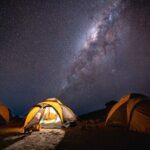
- Tents, not huts: You sleep in camps (no hut beds), so you should plan for real camping conditions.
- Clear altitude rhythm: Lava Tower to Barranco is a key spot where acclimatization starts to pay off.
- Big scenery beats: Western Breach and Breach Wall photo chances show up on the descent.
- Glacier-country Day 4: Karanga Valley sits under icefalls like Heim, Kersten, and Decken.
- Summit stages named on purpose: You push from Barafu toward Stella Point, then Uhuru Peak.
- Daily meal structure: Multiple breakfasts, dinners, and five lunches keep you fueled for the climb.
Machame Route, the Whiskey Route, and why it’s worth the extra effort
Machame is the second most popular route on Kilimanjaro for a reason. It has a reputation for being more demanding than Marangu, and that translates into a more varied climb day to day. You’re not just going up a single “type” of ground; you’re changing ecosystems as you climb.
The big difference for your comfort is also the biggest decision. Machame does not use sleeping huts, so you’ll be relying on tents at camp. That can be a deal-breaker for some people, but it also makes the experience feel more like a true high-mountain expedition.
If your goal is to earn the summit with a route that keeps moving through stunning terrain, Machame is a strong match. If your goal is maximum comfort in high altitude, you may want to compare with routes that offer huts.
A few more Moshi tours and experiences worth a look
Moshi pickup and getting to the gate with a plan
This trip starts in Moshi. You’re picked up from Moshi Urban with a start time of 8:00 am, and pickup is offered from hotels in Arusha or Moshi as well. After you travel to the Mount Kilimanjaro National Park gate, you head past the village of Machame on the lower slopes.
That initial travel part matters more than it seems. It helps you start your first hike early and reduces the “where do we even begin” stress. Plus, you’ll ease into the day as you transition into the rain forest trail.
One practical point: you’re walking on natural surfaces right away. The first day can mean mud and slippery sections, so having the right footing support (like gaiters and poles) isn’t optional.
Day 1 to Machame Camp: rain forest ridgeline and muddy trail discipline
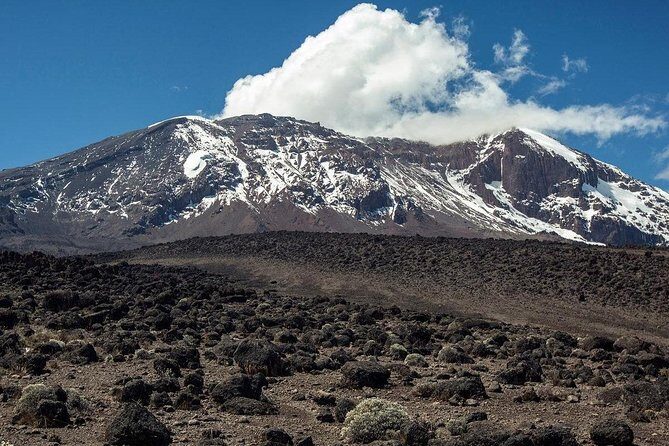
Your first hiking day takes you about 11 km with roughly 5–7 hours on the trail, moving through rain forest habitat to Machame Camp. This is a longish opener, but it’s the kind of hike where your pace and footing make the difference between relaxed and exhausting.
Rain forest trails can be muddy and slippery, so it’s smart to bring trekking poles and gaiters. They help you keep balance on uneven ground, and that saves energy for the next days when altitude gets more demanding.
When you reach Machame Camp, you’re settling into the rhythm of camp life. The win here is that Day 1 sets the tone: it’s a real hike through real terrain, not a quick “warm up” stroll.
Day 2 to Shira Camp: moorland walking with Kibo and Mount Meru views
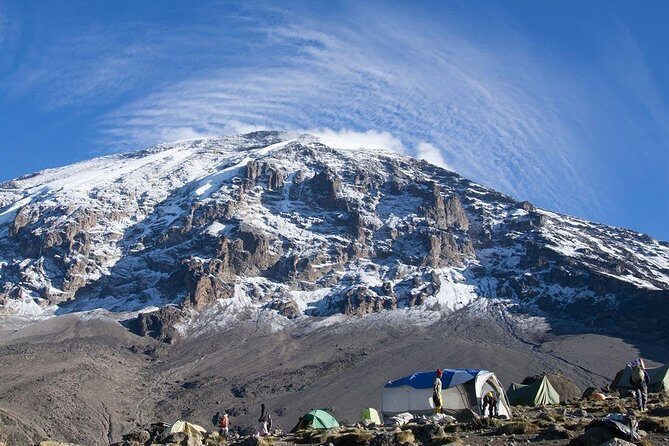
Day 2 is about 5 km and around 4–6 hours, and the habitat shift is the headline. Trees thin out and the walk transitions into moorland, where you feel the mountain start to open up.
Shira Camp sits on a small plateau in the high moorlands. From here, you can look toward Kibo in the northeast and Mount Meru in the west. You also get small wildlife moments, including white-necked ravens seen during the day, which adds character to the trek.
If you like a short side adventure, there are small caves near camp called Shira Caves. It’s not a huge detour, but it’s a nice way to break up the stillness of high moorland.
The main consideration on Day 2 is mental. Moorland can feel exposed, and the air can feel sharper. Keep your pace steady and don’t turn this into a race.
Day 3 toward Lava Tower and down to Barranco: the acclimatization payoff
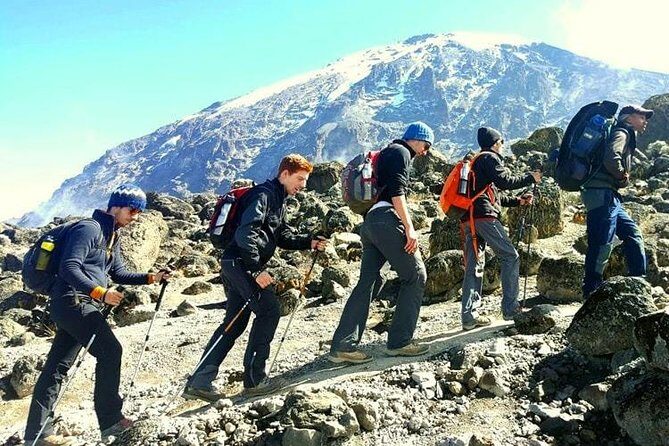
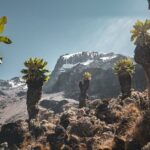
Day 3 covers about 10 km and 6–8 hours, and it changes again. You head east into rocky semi-desert surroundings around Lava Tower.
Lunch is served in a designated area before you ascend toward Lava Tower. That structure helps because it keeps you from getting stuck “just beyond hunger” at high altitude.
After lunch, you descend again to the Barranco camping area. You’ll reach Lava Tower around 4600 m, and that’s where the real benefit of acclimatization starts to show. The practical takeaway: this day gives your body a chance to adjust before the push gets harder.
Also, this is when you get some standout photo opportunities. The descent offers chances to photograph the Western Breach and Breach Wall. Even if you don’t consider yourself a photographer, this is the kind of view that makes you stop and look longer than you planned.
Day 4 Great Barranco, Karanga Valley, and Barafu Camp: glacier country before the summit
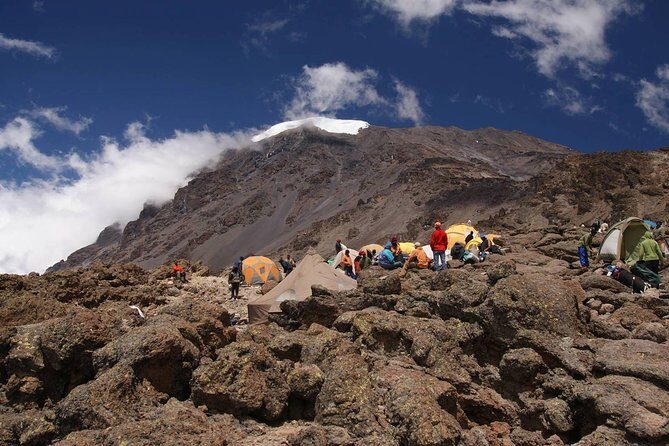
Day 4 is about 9 km with roughly 8 hours, and it’s a big one. After breakfast, you scramble to the top of the Great Barranco, then traverse over scree and ridges toward Karanga Valley.
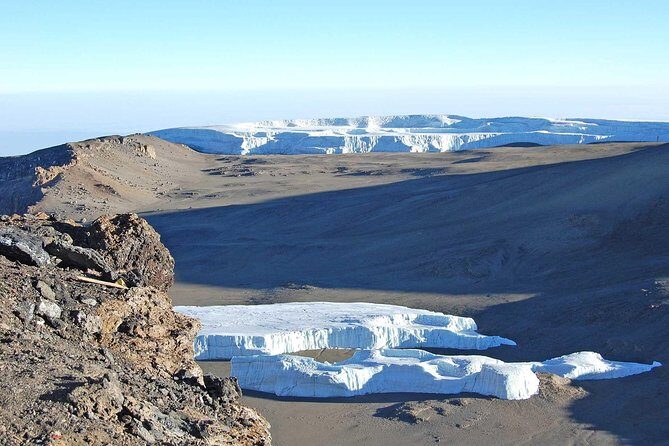
The glacier setting is one of the most impressive parts of Machame. Karanga Valley sits beneath icefalls from glaciers like Heim, Kersten, and Decken. That means you get that “Kilimanjaro is real and huge” feeling in a way that’s hard to fake with photos.
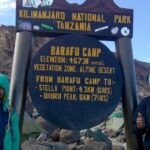
After a break, you continue toward the junction that connects with the Mweka Trail, the route used later for descent. From there, you head up to Barafu Camp, where you rest, have dinner, and prepare for summit day.
Barafu also gives you a view you shouldn’t skip. From here you can see two volcanic cones, Mawenzi and the Kibo peak, and the look is dramatic. Spend a few extra minutes just getting your bearings and taking it in.
The only consideration: this day asks for focus. Scree, ridges, and elevation fatigue mean you’ll want a calm pace and careful steps.
Day 5 summit bid from Barafu: Stella Point, Uhuru Peak, and the snow edge
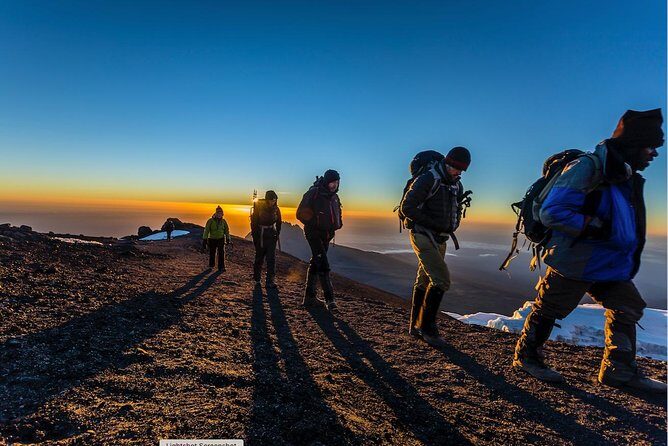
Day 5 is the hardest day. It’s described as 5 km ascent / 12 km descent, with about 7–8 hours for ascent and 4–6 hours for descent. You start early for the rim of the Kibo crater between the Rebmann and Ratzel Glaciers.
The last section before the rim can sometimes be snow-covered. If conditions call for it, an ice-axe or a ski stick can be useful for balance. Even if you’re not a winter hiker, this is exactly the kind of moment where good balance and careful steps matter.
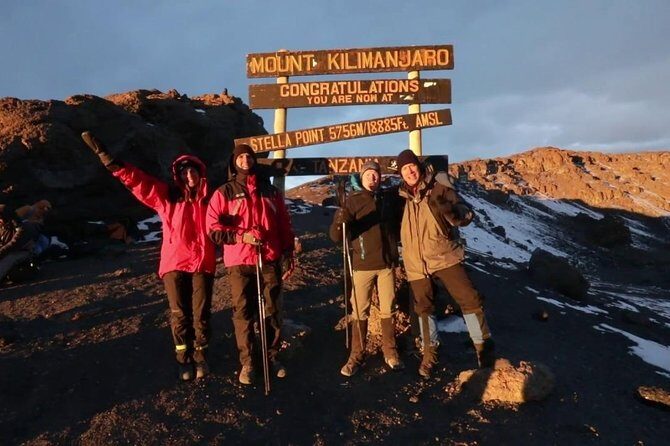
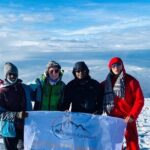
At the rim you reach Stella Point. From there, there’s about an additional hour to Uhuru Peak, where you’ll take a photo break and then start descending. Many people remember the sunrise on summit morning as pure magic, and your timing will likely make that possible.
After the peak, you descend back to the Barafu Hut for rest and lunch. Then you continue down past Millenium camp to Mweka Hut in the giant heather zone on the forest edge.
The practical reality: your legs will feel used up, but you’re still not “done.” This is a long descent that demands steady movement, not speed.
Day 6 down to Mweka Park Gate: certificates and the final walk out
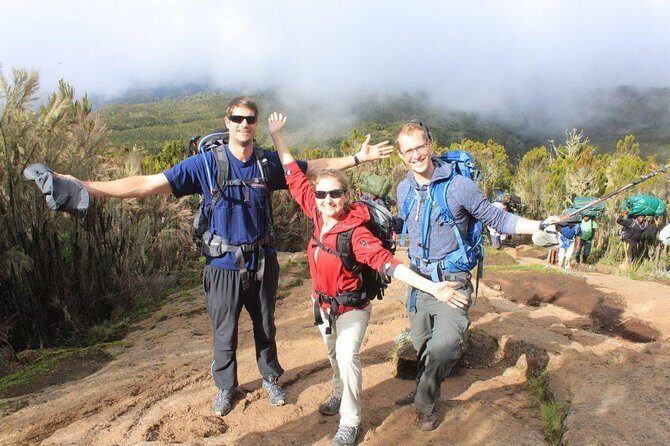
Your final day starts with breakfast, then it’s a descent down to Mweka Park Gate to receive your summit certificates. From the gate, you continue for about another hour to Mweka Village.
A vehicle meets you at the village to drive you back to your hotel in either Moshi or Arusha. This is the part where you stop thinking like a hiker and start thinking like a person who wants a hot meal, warm shower, and an early night.
The win here is closure. You’re not spending Day 6 in limbo; you’re returning with proof, then heading back to normal life.
Camps, tents, meals, and filtered water: what comfort looks like up high
This climb runs on a pretty clear system. You get sleeping tents, filtered water throughout the trek, and meals every day. Breakfast is included for 6 days, dinner for 5, and lunch for 5.
In practice, that means you don’t have to manage complicated food logistics at altitude. You’re not guessing where your calories are coming from; meals are scheduled as part of camp life.
Meals matter on summit day because your body needs fuel earlier than you think. On this route, the camp setup helps keep you from “falling behind” on nutrition during long walking segments.
One thing I recommend: since filtered water is provided, bring a bottle or container you’re comfortable using daily. It’ll make refilling easier and helps you avoid last-minute scramble.
The crew’s role: organization that makes you feel safe
One theme that comes through clearly is organization and attention. Guides and porters are part of the experience from start to finish, and the overall setup is described as very safe and professionally run.
What I love about this kind of operation is that it removes guesswork. When your guide is experienced, they can manage the pace and keep you moving in a way that helps your body adjust. That’s especially important on summit day when small timing issues turn into big problems.
The other big win is how the crew treats you day to day. Porters are described as friendly, and the chef is credited with delicious meals. If you’re trekking alone, that supportive presence matters even more, because you’re not left to “figure it out” when something changes.
Gear tips that match this Machame route
You don’t need every gadget on Earth for Kilimanjaro, but Machame does reward smart basics.
- Bring gaiters and trekking poles for muddy, slippery sections on the Day 1 rain forest trail.
- For Day 5, be prepared for conditions where the last part before the rim can be snow-covered, and bring an ice-axe or ski stick if the trek plan calls for it.
- Pack for camp life in tents, since Machame does not include sleeping huts.
Beyond that, focus on gear that helps you walk efficiently. On Kilimanjaro, small comfort wins add up over 6 days.
Price and value: where the $2,200 goes
The price is $2,200 per person for this private, 6-day Machame climb. What makes that feel like value is what’s included rather than what’s excluded.
Included basics: private transportation, all fees and taxes, guide and porter salaries, sleeping tents, filtered water, and your meals (six breakfasts, five lunches, five dinners). When those are covered, you can focus on the hike instead of piecing together mountain logistics.
What’s not included is also clear: visas, insurance, flights, gratuities for your mountain crew, items of personal nature, laundry services, and alcohol or non-alcoholic beverages. If you want a smoother budget, plan for those in advance instead of assuming they’re part of the base cost.
For most people, the biggest “hidden variable” is personal spending, not the climb itself. Decide your comfort level on gratuities and daily extras, then the rest is straightforward.
Who this Machame 6-day climb suits best
This is a good fit if you want a challenging route with real camping and you’re aiming for the summit experience. Machame’s mix of habitats is part of the appeal, and the route is known as the Whiskey Route for a reason.
It’s also a strong match if you prefer a private group. This is listed as a private tour/activity, meaning only your group participates, not a crowded assembly line.
It may feel too hard if you’re hoping for hut comfort or a low-effort climb. Since Machame uses tents and involves glacier-area terrain and a long summit day, you should only book if you’re ready for demanding hiking and cold, high-altitude conditions.
Should you book this 6-day Machame route?
If you want a Kilimanjaro climb that feels like a real expedition, this is a solid choice. The combination of expert guides, friendly porters, tent camping, scheduled meals, and a summit push from Barafu to Uhuru Peak is exactly what many people come to Kilimanjaro for.
I’d book if you’re mentally ready for a tougher route than hut-based options, and if you can handle a cold, early summit start and a long descent on Day 5. You’ll likely leave with memories tied to sunrise views and the feeling of earning the top.
I’d hesitate if you want maximum comfort or you’re not confident about camping and long high-altitude hikes. On Machame, your preparation and pacing make or break the experience.
FAQ
How long is the Kilimanjaro Machame Route climb?
It’s a 6-day climb, approximately 6 days total.
Where does the climb start and what time?
The meeting point is Moshi Urban, Tanzania, with a start time of 8:00 am.
Is transportation included?
Yes. Private transportation is included, and you can be picked up from Arusha or Moshi for the drive to the park gate.
What is included in the $2,200 price?
The price includes private transportation, all fees and taxes, guides and porters salaries, sleeping tents, filtered water throughout the trek, and meals: 6 breakfasts, 5 lunches, and 5 dinners.
Does the Machame Route include sleeping huts?
No. Machame does not have sleeping huts; you use sleeping tents at the camps.
What happens on the last day?
You descend to Mweka Park Gate for your summit certificates, then continue to Mweka Village. A vehicle meets you at the village and drives you back to your hotel in Moshi or Arusha.
Is there free cancellation?
Yes. You can cancel up to 24 hours in advance for a full refund. If you cancel less than 24 hours before the experience starts, the amount paid is not refunded.