REVIEW · ARUSHA
Arusha City Culture and Historical Walking Tour
Book on Viator →Operated by Jovial Safaris · Bookable on Viator
Arusha feels personal on foot. This Arusha city walking tour mixes landmarks and street life with easy explanations, from the Clock Tower on Boma Road to museum stops that connect colonial-era stories to Tanzania’s post-independence path. I especially like the way the day builds around real places you can point to, and I like the chance to interact with local makers instead of just buying souvenirs.
One thing to plan for: Old Boma Museum costs $5 extra at the entrance, even though the rest is handled. Also, it’s a 5-hour walk in town—so wear comfortable shoes and expect you’ll be on your feet for most of the experience.
In This Review
- Key highlights worth knowing before you go
- Getting oriented in Arusha: pickup, pacing, and what’s included
- Old Boma Museum: a German outpost turned into a local history lesson
- Tanzanite Experience: how rare stone becomes a polished product
- Clock Tower on Boma Road: Cairo–Cape Town midpoint as a practical landmark
- Maasai Market Curios and Crafts: buy with intention, not impulse
- Arusha Chini neighborhood hour: markets, local shops, and a quick taste of daily life
- Arusha Declaration Museum: why 1967 still matters in plain language
- Price and value: how $35 becomes a day with few surprises
- Logistics that make or break a walking tour
- Who should book this tour—and who should consider another option
- Should you book this Arusha city culture and historical walking tour?
- FAQ
- How much does the Arusha City Culture and Historical Walking Tour cost?
- How long is the tour?
- Does the tour include hotel pickup and drop-off?
- What admissions are included, and what costs extra?
- Is bottled water provided?
- Is this tour private or shared?
- Will I get a mobile ticket?
- Is group discounts available?
- What is the cancellation policy?
- When will I receive confirmation?
Key highlights worth knowing before you go
- Old Boma Museum is housed in a former German military outpost, with exhibits that cover tribes, natural history, and art
- Tanzanite Experience includes interactive displays and a look at cutting and polishing before you shop for certified jewelry
- Clock Tower on Boma Road is a well-known meeting point and the midpoint between Cairo and Cape Town
- Maasai Market Curios and Crafts focuses on handmade items like beaded jewelry, carvings, and textiles
- Arusha Chini gives you an hour of local markets and everyday neighborhood energy
- Arusha Declaration Museum explains the 1967 policy and the role of Julius Nyerere
Getting oriented in Arusha: pickup, pacing, and what’s included
Jovial Safaris keeps this tour simple to start. You get hotel pickup and drop-off, plus a guided walking route designed for a smooth flow between indoor stops and street stops.
The day runs about 5 hours, with set time at each place so you’re not stuck rushing through museums or idling too long in shops. You also get bottled water, and the tour lists all fees and taxes as included, which matters because it reduces the “what did that cost?” moments during the day.
This is a private tour/activity, meaning only your group participates. That usually helps the guide move at a pace that fits your questions and comfort level.
You can also read our reviews of more walking tours in Arusha

Old Boma Museum: a German outpost turned into a local history lesson

Old Boma Museum is the kind of stop that gives you context fast. It sits in a former German military outpost, and that building itself helps explain why Arusha carries colonial layers.
You spend about 45 minutes here, and the exhibits cover local tribes, natural history, and art. If you like museums that connect place and people, this one is worth your time because it doesn’t just show objects—it frames them within the region’s story.
Budget one extra line item: Old Boma Museum admission is $5, paid at the entrance. Everything else about the tour includes fees and taxes, but this is the one spot where you’ll need cash or a quick payment plan on the day.
Tanzanite Experience: how rare stone becomes a polished product
Next up is the Tanzanite Experience, a museum and retail space focused entirely on tanzanite. You get about 30 minutes, and admission is included, so you don’t have to calculate another add-on fee.
What makes this stop useful isn’t just the shopping. You learn the gemstone’s history, the mining process, and why it matters in Tanzania. Then you get to see interactive exhibits and the cutting and polishing process, which helps you understand what you’re looking at when you’re comparing jewelry pieces.
If you’re the type who likes to buy souvenirs you can explain, this is a good match. Bring your curiosity to the display, then use the time at the end to look for jewelry described as certified by the venue.
Clock Tower on Boma Road: Cairo–Cape Town midpoint as a practical landmark
The Clock Tower is one of those places that works for orientation. You’ll have only about 15 minutes at this stop, but it’s positioned as a central city landmark on Boma Road.
The tower is famously described as the midpoint between Cairo and Cape Town, and it functions as a local meeting point too. Even if you don’t care about the trivia, you’ll appreciate it as a “we’re really in Arusha now” marker—useful for getting your bearings.
Since admission is free, this is also a low-stress stop. It’s short, it keeps your day moving, and it gives you a recognizable photo spot without burning a big chunk of time.
Maasai Market Curios and Crafts: buy with intention, not impulse
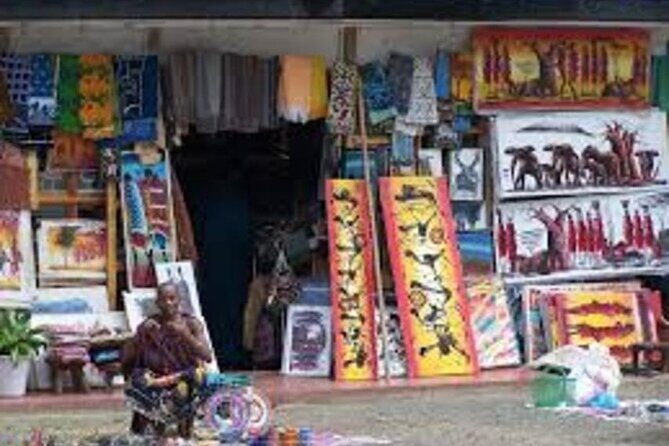
The Maasai Market Curios and Crafts stop gives you hands-on culture in a shopping setting. You spend about 25 minutes here, with admission included, and it’s built around handmade goods: Maasai jewelry, beaded crafts, wood carvings, textiles, and other local art.
This is the kind of market where the guide’s role matters. You’ll get interaction with local artisans, which can turn shopping from a checklist into an actual conversation—who made it, what materials are used, and what the piece represents.
Practical tip: decide what you want before you start browsing. If you go in with one or two categories—like beaded jewelry or a carved item—you’ll spend less time comparing everything and more time finding something you genuinely like.
You can also read our reviews of more city tours in Arusha

Arusha Chini neighborhood hour: markets, local shops, and a quick taste of daily life

Arusha Chini is where the tour shifts from “sightseeing” to “living city.” You get about 1 hour, and admission is free, so this is your flexible pocket of time.
The area is described as a busy neighborhood with local markets, shops, and cultural hubs. That means you’re likely to see everyday trade and everyday faces, which is exactly what makes this hour valuable: it’s not a staged stop.
There’s also room for small food breaks if you want them. One person’s experience mentioned trying street food like samosas during the day, which fits the kind of local market setting Arusha Chini is known for. If you’re interested, keep it simple—choose a snack you can eat quickly and keep moving.
Arusha Declaration Museum: why 1967 still matters in plain language
The final museum stop is the Arusha Declaration Museum, with about 40 minutes on site and admission included. This is where you get Tanzania’s post-independence story tied to policy decisions rather than just dates.
The museum focuses on the Arusha Declaration of 1967, explained in connection with Tanzania’s socialist and self-reliance journey. Exhibits cover the declaration’s principles and how it shaped socio-economic development.
It also includes Julius Nyerere’s role as Tanzania’s first president. If you’ve ever felt that African history in textbooks can be vague, this kind of museum can help because it organizes the ideas into a timeline you can follow during the visit.
Price and value: how $35 becomes a day with few surprises
At $35 per person, this tour is priced to be accessible, especially because it bundles a lot of what usually costs extra in a city tour. You get pickup and drop-off, a guided walking tour, bottled water, and all fees and taxes handled.
The only clearly stated extra is Old Boma Museum admission ($5). If you add that in, you’re still in a pretty reasonable range for a guided half-day that includes multiple stops, plus market time.
Another practical value point: the tour lists group discounts and also notes that people often book it months in advance (the average is 172 days ahead). That usually means it’s a popular way to get oriented without spending your whole day piecing things together.
Logistics that make or break a walking tour
This is a walking tour, and while the tour notes that most people can participate, you should still think like a walker. You’ll be moving between sites, and the overall structure is designed so you’re not spending your entire day stuck in a single location.
A few choices that help:
- Wear comfortable shoes you can stand and walk in for hours
- Bring a small amount of cash for the $5 Old Boma Museum entrance fee
- Use the mobile ticket if that’s how you’ll manage your confirmations on the day
- Plan for weather changes by bringing a light layer if your trip schedule is variable
Also, the tour says it’s near public transportation. That’s useful even with pickup, because it gives you flexibility if you ever need to adjust on the day.
Who should book this tour—and who should consider another option
This tour fits best if you want a guided blend of history, markets, and everyday neighborhoods without turning the day into a long scramble. If you like learning while you walk, and you enjoy stopping at places where you can ask questions, you’ll probably feel like your time in Arusha is well used.
It’s also a strong choice for people who want a smaller-group feel. The tour is private for your group, so it’s easier to get a real conversation going with your guide.
If you dislike walking through busy streets or you want a more relaxed pace with lots of long breaks, you may find the schedule a bit tight. The tour is built around set visit times, so you’ll be happier if you’re okay with moving from stop to stop.
Should you book this Arusha city culture and historical walking tour?
I’d book it if you’re trying to do two things at once: understand Arusha’s layers and still have time to shop and talk with makers. The mix of Old Boma Museum, the Tanzanite Experience, and the Arusha Declaration Museum gives you a strong storyline, and the market stops—Clock Tower area, Maasai Market crafts, and Arusha Chini—make it feel like you’re part of daily life, not just passing through.
I’d think twice if you want only modern city sights or if museums don’t hold your attention. Also, if you really dislike paying extra at entrances, remember that Old Boma Museum is not included in price.
If you do book, go in with two shopping goals and a question or two for your guide. That turns the markets into real learning time instead of just browsing.
FAQ
How much does the Arusha City Culture and Historical Walking Tour cost?
It costs $35.00 per person.
How long is the tour?
The duration is about 5 hours.
Does the tour include hotel pickup and drop-off?
Yes. Hotel pickup and drop-off are included.
What admissions are included, and what costs extra?
Admission to the Tanzanite Experience is included, Maasai Market is included, Clock Tower is free, Arusha Chini is free, and the Arusha Declaration Museum is included. Old Boma Museum costs $5 per person and is paid at the entrance.
Is bottled water provided?
Yes. Bottled water is included.
Is this tour private or shared?
It’s private for your group only.
Will I get a mobile ticket?
Yes, the tour offers a mobile ticket.
Is group discounts available?
Yes, group discounts are offered.
What is the cancellation policy?
You can cancel for a full refund up to 24 hours in advance. If you cancel less than 24 hours before the start time, the amount paid is not refunded.
When will I receive confirmation?
Confirmation is received at the time of booking.