REVIEW · ARUSHA
03 days Serengeti and Ngorongoro Crater group (camping)
Book on Viator →Operated by Crater explorer tours and safaris · Bookable on Viator
Crater sunsets are hard to beat. This 3-day Serengeti and Ngorongoro camping safari is built around two stand-out stages: first, the open-roof 4WD game drives across Serengeti’s endless grassland, and second, sleeping near the Ngorongoro rim so you get that wide, dramatic caldera view at golden hour. I also love how the plan keeps moving—morning drives for fresh wildlife activity, plus a crater descent early on Day 3 when the wildlife is easiest to spot.
One consideration: this is camping, not lodge luxury. You’ll also start early (pickup is at 6:30am), and some days are long, because you’re covering big distances between parks and returning toward Arusha.
In This Review
- The Quick Highlights You’ll Feel Immediately
- Serengeti’s Endless Plains: What You’re Really Paying For
- Day 1 Drive: Serengeti First Impressions and Kopjes Magic
- Day 2 in Serengeti: More Time in the Right Habitat
- Day 3 in Ngorongoro: The Wildlife Concentration Effect
- Simba Camp Camping: The Honest Version
- Price and Value: Is $815 Fair for 3 Days?
- The Driver-Guide Factor: Why It Changes Everything
- Getting There: Kilimanjaro Pickup and the 6:30am Reality
- Who Should Book This Safari Camp Package?
- Final Call: Should You Book Crater Explorer’s 3-Day Camping Safari?
- FAQ
- What is the duration of the safari?
- Where is the meeting point and what time does pickup start?
- Is this tour private or shared?
- What’s included for transportation and viewing?
- Are park and camping fees included?
- Does the price include meals?
- What is the cancellation policy?
The Quick Highlights You’ll Feel Immediately
- Open-roof 4WD game drives in Serengeti so sightings feel close, especially when predators are moving near the grassland edges.
- Kopjes views (those odd granite rock outcrops) that break up the savannah and help explain where animals like to hunt and watch from.
- Simba Camp sunset on the crater rim—you’re camping for the view, not just for the bed.
- Early Ngorongoro crater descent with wildlife diversity concentrated in a single, “contained” landscape.
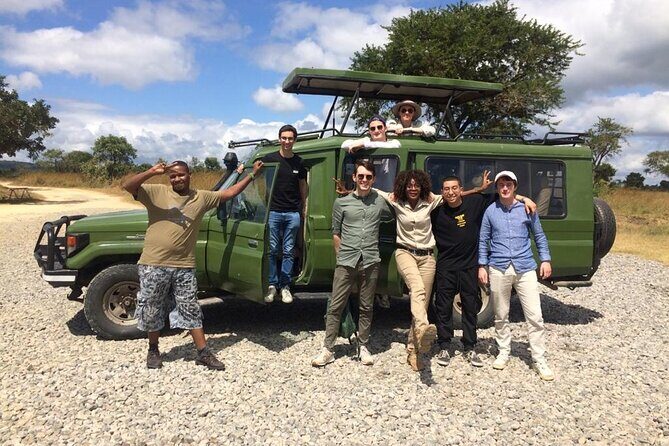
- A private safari feel (only your group), with an experienced driver/guide handling the pace and searching for animals.
- Food included during the safari days, which matters when you’re out all day.
Serengeti’s Endless Plains: What You’re Really Paying For
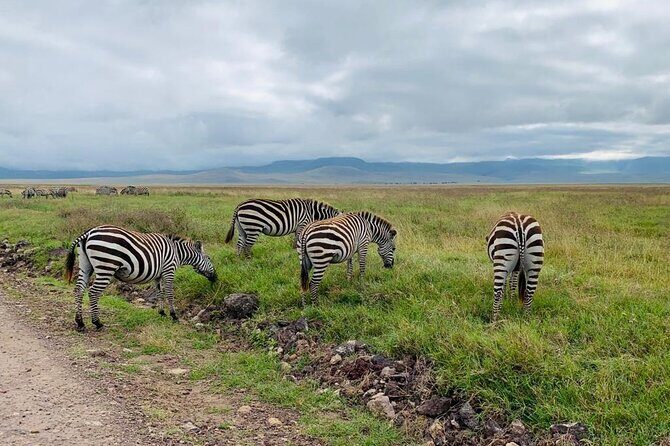
Serengeti is famous for a reason: the view goes on and on. The Masai name Siringitu—endless plains—fits the scene perfectly, especially when the grassland stretches to the horizon and the landscape only interrupts itself with kopjes. Those kopjes are granite outcrops sculpted by time, and they’re more than pretty rocks. They create natural “platforms” where predators can wait, and they give animals cover paths to move through the open.
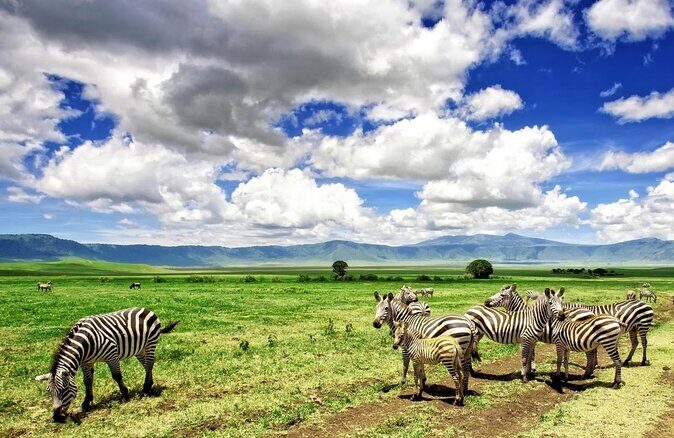
From the vehicle, the big thrill is how wildlife sightings come in layers. You might start with the familiar herds—wildebeest and zebra—and then suddenly the attention shifts to bigger drama: lions, leopards, cheetahs. The safari is timed so you’re out during daylight when animals are active and the light isn’t flat and gray. You’re not just driving around hoping; you’re doing structured game drives, with the guide looking for the kinds of habitats that support predators.
Also, I like that Day 1 doesn’t waste your time with a “drive-by” approach. You’re heading into the park first thing after pickup, and you’ll be in the savannah where the wildlife is. That matters because Serengeti isn’t a zoo. If you only spend an hour or two, you’ll feel rushed. Here, you have real time.
You can also read our reviews of more tours and experiences in Arusha.
Day 1 Drive: Serengeti First Impressions and Kopjes Magic
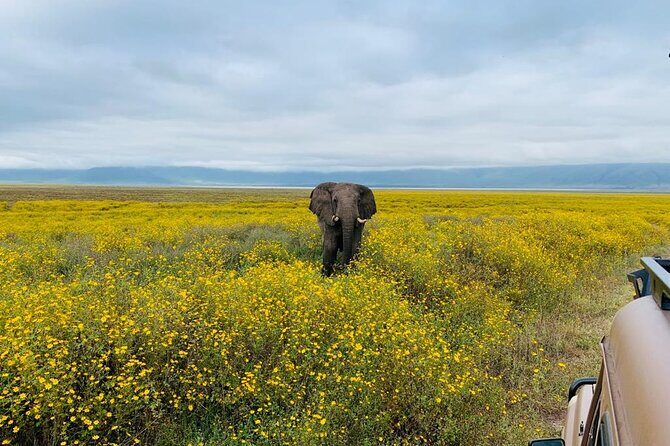
Your day starts with a pickup from Kilimanjaro Airport at 6:30am. Then you’re transferred by 4WD with a viewing roof toward Serengeti. Day 1 is built for that first shock of landscape: open plains, then kopjes, then animals appearing in small clusters that gradually add up.
Here’s what I’d watch for early: movement patterns near rock formations and along savannah edges. Leopards in particular often use elevation and cover, and kopjes are one of the best clues for where to look. Even if you don’t spot a leopard right away, you’re learning the park’s logic—how the land funnels behavior.
The pace on Day 1 is set up so you’ll reach your camp destination in the afternoon. So you’re not stuck in a never-ending drive with no payoff at the end of the day. You get the experience, then you get to recharge before the next big stage.
Day 2 in Serengeti: More Time in the Right Habitat
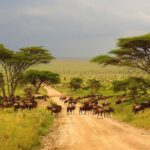
After breakfast, you continue game drives in Serengeti, focusing around areas like the Seronera Valley. This is where the “big herd, big predator” rhythm often shows up: hundreds of wildebeest and zebra, with the chance that lions and other big cats—leopards and cheetahs—appear in between the action.
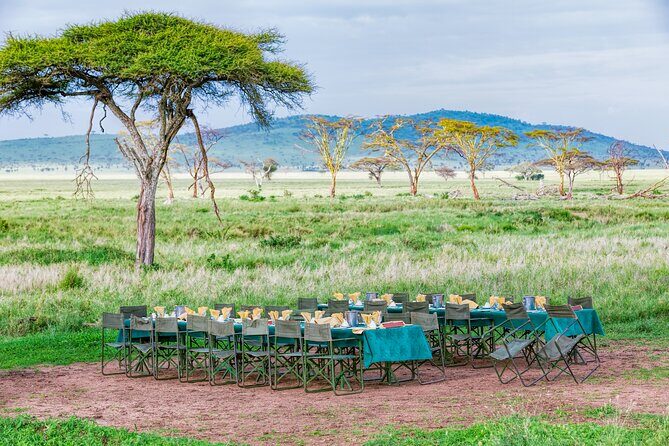
You’ll have lunch at a picnic site. That sounds basic, but on safari it’s a real comfort. You’re out on the move all day, so a proper break helps you stay sharp for the afternoon drive. Then the day pivots toward the Ngorongoro area.
The drive toward Ngorongoro leads to that classic moment: you reach the edge of the crater and the caldera opens up in front of you. It’s one of those “wait—this is real?” landscapes. You’re going from savannah plains to a massive natural bowl, and it changes how wildlife seems to behave. From the rim, you can see why Ngorongoro is such a wildlife magnet.
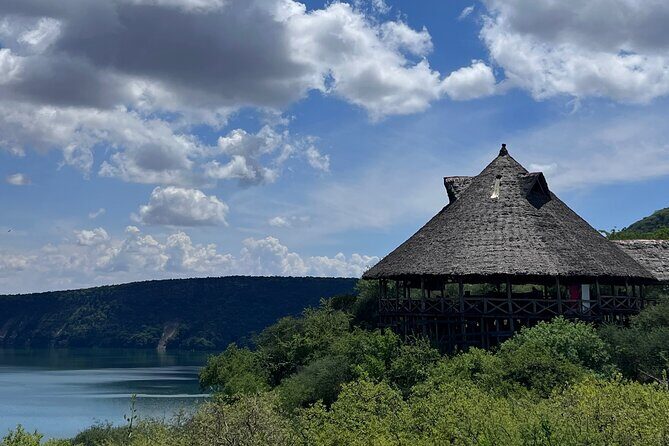
That night, you camp at the crater edge, enjoying the viewpoint as the sun drops at Simba campsite. If you’re the type who loves photos, this is your golden-hour setup. If you’re not a photo person, it still hits—because the sky and the caldera shape make the silence feel larger.
Day 3 in Ngorongoro: The Wildlife Concentration Effect
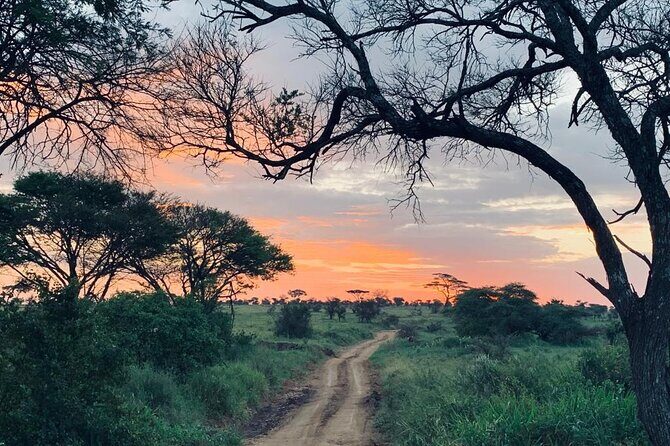
Ngorongoro’s biggest advantage is simple: it compresses wildlife into one place. The crater is the largest unbroken caldera, and the diversity can feel almost unreal once you’re inside it. You’ll start with an early breakfast at daybreak, then head down into the crater.
Inside, you’ll travel across grass steppe and acacia tree woods. This combination matters because it covers multiple habitat needs—open areas for grazing and movement, and trees for shade, cover, and ambush potential. The plan also notes an important detail: you’ll find almost all species found in East African savannah here, with a few exceptions—topis, giraffes, and impalas aren’t part of the mix. That’s useful to know so you don’t spend the day thinking you missed something you just assumed would be there.
Then comes the practical part: big cats and big mammals often show up on a tight schedule here. The safari description notes that you can often observe the Big Five (lion, elephant, buffalo, rhino, and leopard) within a couple of hours. Reality check: sightings are always wildlife-dependent, and your luck matters. But having multiple chances concentrated into a few hours is exactly how you stack the odds.
After your crater time, you’ll drive to Arusha for an overnight stay. If you’re flying afterward, the plan indicates you can return by flight at night the same day or on the second day. Either way, the flow is designed so your safari experience ends with travel handled rather than leaving you scrambling.
Simba Camp Camping: The Honest Version
Camping on safari can mean different things depending on the provider, but this trip is clearly designed around making the experience work, not just “roughing it.” Since camping fees and meals are included, you’re not dealing with the usual extras that pile up at the last minute. And because you’re camping at the crater edge, you’re not commuting away from the best scenery. You’re sleeping near the place you came to see.
The main trade-off is comfort. You’re trading the convenience of a lodge room for the experience of being right there at the rim with the day ending under the crater’s shadow. If you’ve camped before and you like the rhythm—out all day, then your campsite evening—this will feel rewarding. If you hate cold nights or you want a lot of creature comforts, you may feel the limits.
Still, the reviews highlight that the overall setup feels smooth, safe, and well run. People describe the driver as experienced, the car as comfortable, and the experience as organized from start to finish.
Price and Value: Is $815 Fair for 3 Days?
At $815 per person for a 3-day private Serengeti + Ngorongoro camping safari, the value comes down to what’s included and what you avoid.
You’re not just buying “access.” You’re buying:
- Transport with a qualified driver/guide in 4WD vehicles with viewing roof
- Camping fees
- All meals during the safari days (the exact meal list isn’t spelled out here, but meals are included)
- Park access described as admission ticket free in the itinerary timing
You also get the big logistical advantage: pickup from Kilimanjaro at 6:30am, and a route that links Serengeti to the crater without you managing transfers on your own. That reduces stress and saves time, which is a real part of safari value. On short trips, every hour counts.
Is it the cheapest way to do Serengeti and Ngorongoro? Probably not. But for a 3-day run that combines early starts, multi-day park coverage, and crater camping, it’s positioned as mid-range value. The best sign isn’t the number—it’s that the experience is described as organized and handled smoothly, with professional guides and good food.
The Driver-Guide Factor: Why It Changes Everything
In safari land, the guide isn’t a bonus. It’s the job. This trip includes a qualified driver/guide, using 4WD with a viewing roof, and the overall rhythm depends on their experience and judgment.
The feedback you’ll care about: guides and drivers are described as professional, with good wildlife explanations and a serious effort to find animals. Some reviews mention names—Innocent (a professional guide), Charles (a kind driver with good explanations), and Emanuel (often involved in planning and communication). That gives you a clue about how responsive the team can be, including pre-trip clarity and keeping things on track.
You’ll also appreciate that the safari is private for your group. That means you’re not sharing the guide’s attention with strangers who can slow down decision-making when the animals appear. When a lion or leopard decides to make itself visible, the window can be short. Private group dynamics help you use those windows well.
One small but real reminder: there can be small vehicle issues anywhere. One review mentions a flat tire, and the operation handled it quickly. That’s part of travel reality, and it’s good to know problems don’t automatically derail the day.
Getting There: Kilimanjaro Pickup and the 6:30am Reality
Pickup is from Kilimanjaro Airport with a 6:30am start time. That’s early, no sugarcoating. But it’s also how you protect your best daylight hours inside the parks.
Because your time is tight across three days, this structure makes sense. If you’re planning additional activities in Arusha right before safari, keep buffer time. Aim to sleep well the night before, and pack so you’re not hunting for things mid-drive.
Also remember that this is a safari, not a city walking tour. You’ll want practical clothing for warm daytime drives and cooler early mornings, plus gear that stays usable when you’re sitting in a vehicle for long stretches.
Who Should Book This Safari Camp Package?
This is a great fit if you want:
- A classic Serengeti + Ngorongoro combo in a short time window
- Camping with real scenery payoff, especially the crater rim night
- A private safari feel with a driver-guide focused on your group
- A trip plan that includes meals and handles the transitions toward Arusha and flight timing
You might think twice if you:
- Know camping nights are a deal-breaker for you
- Want zero early mornings (because daybreak matters here)
- Prefer to spend your time with fewer driving hours
Final Call: Should You Book Crater Explorer’s 3-Day Camping Safari?
If you want the essentials—Serengeti’s big-cat potential, Ngorongoro’s wildlife concentration, and the emotion of camping at the crater edge—then yes, this is a strong option. The price looks fair for what’s included: transport with viewing 4WD, camping fees, and meals, plus a route that keeps your safari time efficient.
I’d book it if you’re excited by the idea of starting early, riding through endless savannah, and ending your days with crater views instead of trading scenery for comfort. And if you’re the type who cares about being well looked after, the feedback around smooth organization, safe experienced driving, and guides like Innocent and Charles is exactly what you hope to see before you hand over your time.
FAQ
What is the duration of the safari?
The safari runs for about 3 days.
Where is the meeting point and what time does pickup start?
The start time is 6:30am, with pickup from Kilimanjaro Airport.
Is this tour private or shared?
This is a private tour/activity, meaning only your group participates.
What’s included for transportation and viewing?
The tour includes transport with a qualified driver/guide in 4WD vehicles with a viewing roof.
Are park and camping fees included?
The itinerary indicates admission ticket free for the park days, and it includes camping fees.
Does the price include meals?
Yes. The tour includes all meals during the safari days.
What is the cancellation policy?
You can cancel up to 24 hours in advance for a full refund. If you cancel less than 24 hours before the experience starts, the amount paid is not refunded.