REVIEW · MOSHI
5 Day Mount Kilimanjaro Climbing via Marangu Route
Book on Viator →Operated by Kentau Safaris · Bookable on Viator
Kilimanjaro humbles even the fit. This 5-day Marangu route uses dorm-style huts instead of camping, so you trade gear-heavy nights for a steadier climb through rainforest, heathland, and high moor. The route is also the most “direct” approach, which many people pick for its gentler feel—though the calendar gives your body less time to adjust.
I like two things a lot. First, the hut setup: you sleep in bunk beds with mattresses and pillows (but you still need your own sleeping bag). Second, the way this trip is run by Kentau Safaris—professional crew work, attentive guides, and a pace that keeps things organized. You’re not left to figure out timing, permits, meals, or basic safety on your own.
One consideration: Marangu’s biggest trade-off is less time for altitude acclimatization. It can be a meaningful challenge, even if the trail grades feel friendlier than other routes.
In This Review
- Key points before you go
- Marangu’s Kilimanjaro style: huts, bunks, and that gentle-but-not-easy reputation
- Moshi to Kilimanjaro National Park Gate: rainforest start and wet, slippery footing
- Day 2 from the rainforest to Horombo: heathland, Mawenzi views, and colder nights
- Day 3 across the saddle: moonscape hiking and prepping for the summit push
- Day 4’s midnight-to-sunrise grind: switchbacks, scree, and Gillman’s Point
- Day 5 descent back to Mandara and the park gate: warm weather, muddy trails, and certificates
- Huts, toilets, and sleep comfort: the real Marangu trade-offs
- Crew and food: when the operation feels smooth, you hike better
- Price and value at $1,650: what you’re paying for on this route
- Who should choose Marangu, and who should reconsider it
- Booking with Kentau Safaris: what matters for a smooth climb
- Should you book the 5-day Marangu Kilimanjaro climb?
- FAQ
- Is the Marangu route the one with huts instead of camping?
- What do I need to sleep in the huts?
- What are the hut bathroom facilities like?
- How long is the climb each day?
- When do you start the summit push?
- What meals are included?
- What is included in the price besides food and huts?
- What is not included?
- How big is the group?
Key points before you go
- Dorm hut sleeping instead of camping: bunks at Mandara and Kibo, and more beds at Horombo, plus basic washrooms.
- Rainforest to moorlands, with classic views: Mawenzi shows up clearly from mid-climb stops.
- A late-night summit start: early pushing hours between midnight and 2 a.m., aimed at sunrise near Gillman’s Point.
- Hike conditions can be slippery: especially lower down, where mud and wind make footing tricky.
- Food is included and hut meals are part of the rhythm: dinners, lunches, and breakfasts are on the package plan.
- Small group cap: up to 15 travelers, which usually makes logistics smoother on a crowded mountain.
Marangu’s Kilimanjaro style: huts, bunks, and that gentle-but-not-easy reputation
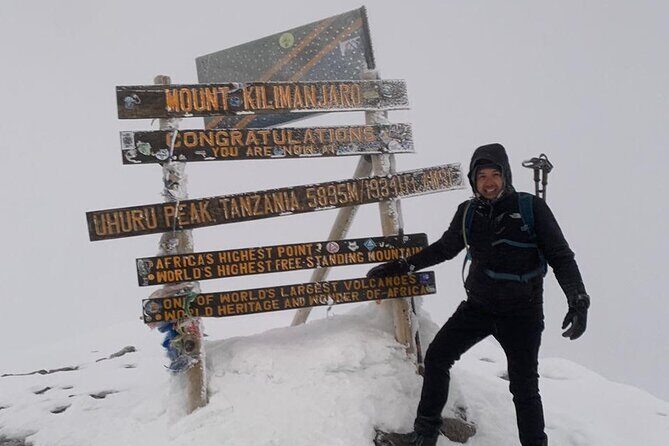
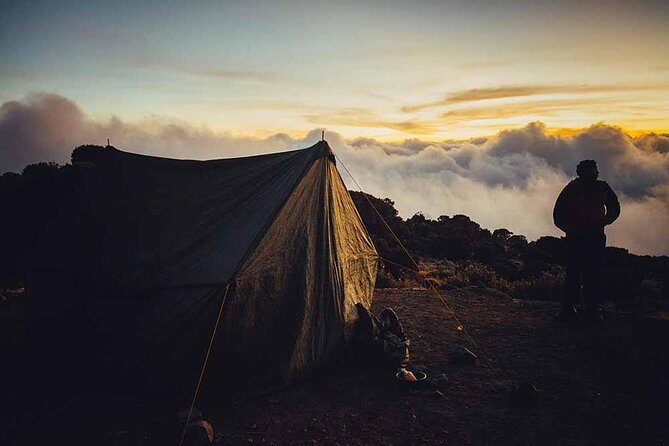
The Marangu route—often called the Coca-Cola route—has a reputation for being the oldest and most established way up Kilimanjaro. Here, that reputation translates to one big comfort factor: huts instead of camping. Rather than sleeping on the mountain in a tent setup, you move through the altitude zones with roofed dorm accommodations and communal meal spaces.
Practically, that means your trip is less about managing campsite logistics and more about walking, acclimatizing as best you can, and staying warm when the temperature drops. The trail profile is also a major reason people pick Marangu. It’s described as the easier path thanks to a gradual slope and a more direct line up the mountain. But here’s the catch: Marangu is short. With only about 5 days, you’ll face altitude demands with less cushion than longer itineraries.
Also, Marangu isn’t the most scenic option. The ascent and descent follow the same basic path, so you don’t get the “new views every day” feel you can find on other route styles. If you love variety in scenery, Marangu may feel a bit repetitive. If you want a straightforward plan with built-in lodging, it’s easier to manage.
A few more Moshi tours and experiences worth a look
Moshi to Kilimanjaro National Park Gate: rainforest start and wet, slippery footing
Day 1 begins with a drive from Moshi to the Kilimanjaro National Park Gate (about an hour). You pass through the Village of Marangu, then you wait while permits are issued—an unglamorous but necessary ritual that also gives you a first look at all the crews preparing for their climbs.
Once you start hiking, you’re in lower elevation country around 1,830m to 2,740m. The trail runs through rainforest scenery, and you’ll likely feel the dampness quickly. The description is clear: at these lower elevations, the trail can be muddy and slippery, especially with wind and wet ground underfoot. This is exactly where gaiters and trekking poles become more than “nice to have.” They help you keep your feet planted and reduce the strain of constant micro-corrections.
Day 1 timing is about 5 hours, which is long enough to settle into the rhythm but not so long that you’re exhausted before the altitude even starts biting. It’s also a good day to pay attention to how your body handles pacing, because the next days climb higher and higher.
Day 2 from the rainforest to Horombo: heathland, Mawenzi views, and colder nights
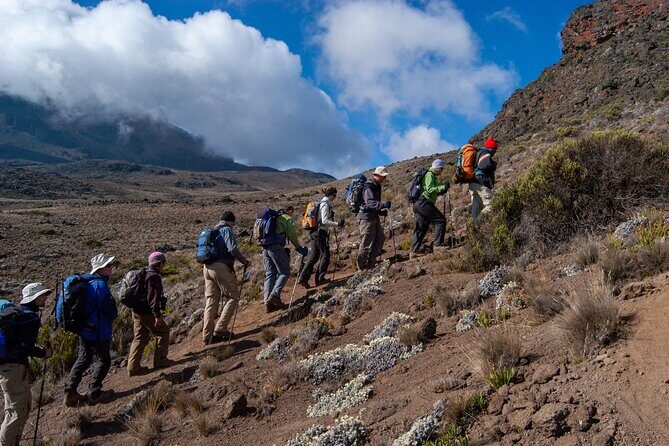
On Day 2, you climb from about 2,740m up to around 3,690m, with roughly 7 hours on the move. After a breakfast and a night of bunk-bed sleep, you emerge from the rainforest and continue ascending into heathland and then open moorlands.
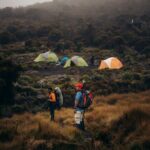
This is the day where the vegetation story changes fast. You’re walking through terrain where giant lobelias and groundsel may appear, then into moorland with small shrubs dominating the view. It’s also a day with a morale boost: there’s a lunch stop halfway that comes with amazing views of Mawenzi. Mawenzi is one of Kilimanjaro’s iconic peaks, and getting that view before you’re fully committed to the high-zone grind makes it feel more real.
You arrive at Horombo Huts late afternoon, under a spectacular viewpoint of the Kibo summit area. Temperatures begin to drop—don’t ignore that. On Kilimanjaro, cold often shows up faster than you expect, especially at higher camps where evenings can feel sharp.
What I like about Day 2 is that it balances effort with scenery and structure: ascent, a midpoint break, then a clear finish at Horombo where you can recover.
Day 3 across the saddle: moonscape hiking and prepping for the summit push
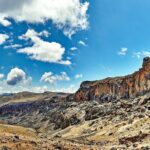
Day 3 takes you from around 3,690m up to about 4,695m (about 6 hours). The hike transitions from dwindling heathland into something almost surreal: a moonscape. You’re crossing into the wide saddle that connects Mawenzi and Kibo, and the whole area feels exposed and dramatic.
You’ll stop for lunch on this saddle, and later you cross it—described as surprisingly large. This matters because it sets expectations for what comes next. In just a few hours, you’ll start the summit climb.
If you’re the type who needs mental checkpoints, Day 3 helps. You get a clear sense of the geometry of the mountain: the saddle, the direction of travel toward Kibo, and the fact that the summit plan starts soon. It’s not just walking anymore—it’s your “this is the final phase” day.
The drawback is obvious: you’re already in high altitude before the real push starts. So keep your pace steady. Save your legs. Don’t treat this as a day to prove anything.
Day 4’s midnight-to-sunrise grind: switchbacks, scree, and Gillman’s Point
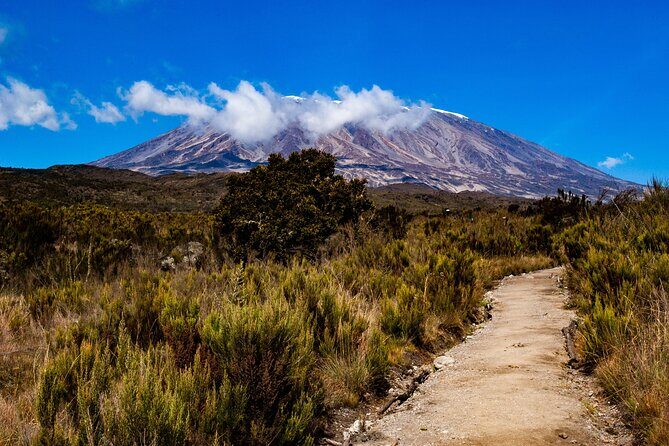
Day 4 is the one people remember. You start the morning between midnight and 2 a.m., which means you’ll be hiking before you feel fully awake and long before daylight makes things easier.
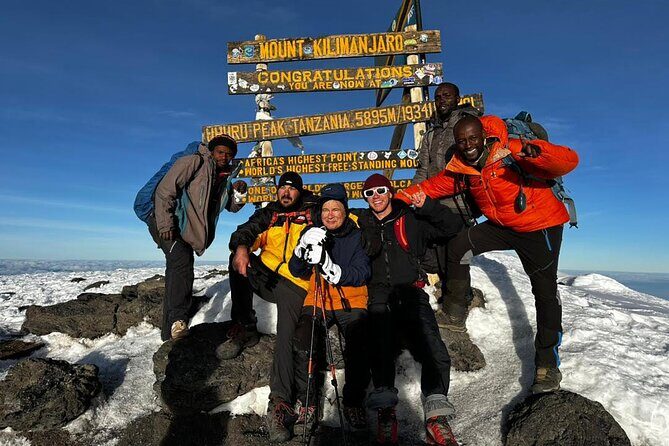
This segment is described as the most mentally and physically challenging portion of the trek. And it makes sense. You climb from about 4,695m up to roughly 5,895m, then descend later down to about 3,690m. In other words: it’s not only the summit effort—there’s also a hard reset afterward.
The climb to the crater rim involves switchbacks through heavy scree and possibly snow. That combination is work. Scree shifts underfoot, and snow adds cold and slipperiness. You’re also told to stay warm and focused on the sense of accomplishment ahead. That kind of mind work matters because this is where motivation can run out quickly if you set an overly aggressive pace.
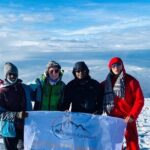
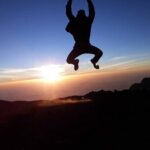
You’ll reach Gillman’s Point on the crater rim and get a summit sunrise reward. The sunrise here is highlighted as the most magnificent moment during the short rest. Faster hikers may continue to the summit and catch the sunrise from there, but the key win is the rim experience and the crater sunrise itself.
Then comes the descent back down toward Horombo around 3,690m. It’s not the “easy way down” you want after a summit push. Wet, tired legs still need control, and the terrain is still demanding.
Day 5 descent back to Mandara and the park gate: warm weather, muddy trails, and certificates
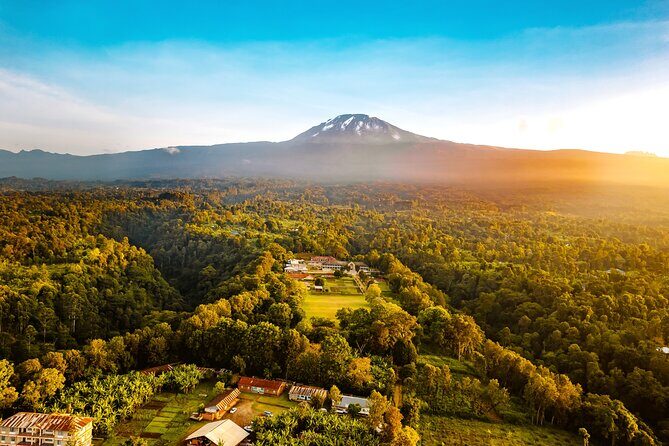
Day 5 brings you from around 3,690m back to about 1,830m. The total hike time is about 6 hours, with a descent that feels both like relief and a new kind of challenge.
You’ll have a morning ceremony with your crew—an appreciation and team-bonding moment. That’s one of those details that can seem soft until you’re on the mountain and realize how much work the crew is doing to keep your hike running. When the climb ends, this kind of closing ritual helps it feel less transactional.
You stop at Mandara Huts for lunch on the descent. Then you continue toward the Marangu Park Gate. At the gate, you receive summit certificates. Finally, a vehicle meets you and drives you back to your hotel in Moshi (about 45 minutes).
Expect the terrain to be warmer and wet. The route is described as muddy and steep near the end, and that’s when trekking poles and gaiters earn their keep again. You’ll also want to remember tipping. Guides, cooks, and porters often get left behind at the huts once you reach the gate, so plan for that moment.
Huts, toilets, and sleep comfort: the real Marangu trade-offs
The Marangu route’s signature feature is hut living. Here’s what that means in the real world:
- Mandara and Kibo Huts each have 60 bunk beds, while Horombo Hut has 120 bunk beds.
- You’re supplied with mattresses and pillows, but you must still bring a sleeping bag.
- Dining is communal, with shared dining halls.
- Washrooms vary by altitude: lower huts may offer flushing toilets and running water, while Kibo Hut is more basic, with long drop toilets and buckets of water.
So your nights aren’t like a hotel, but they also aren’t like camping with everything exposed. You’ll sleep in dorm-style bunks, share space, and work around basic facilities. The upside is shelter and less gear management. The downside is that dorm life means space is tight and comfort depends on weather, temperature drops, and how cold you run at altitude.
If you hate hauling bulky camp gear, Marangu is a strong fit. If you want privacy and total comfort, it’s not the style to choose.
Crew and food: when the operation feels smooth, you hike better
This itinerary is built around a climbing crew and safety equipment included in the price. In plain terms: that support matters because Kilimanjaro is not just a hike. It’s permits, pacing, meal timing, and logistics that can overwhelm you if you have to manage it alone.
From the experience setup, it’s clear they’re trying to keep the climb organized. Private transportation and transfers to the trailhead reduce stress before you even step onto the mountain. And on the mountain, the crew is there to manage the climbing side—so you can focus on your breathing and your steps.
Meals are included too: breakfasts (4), lunches (5), and dinners (4). That matters more than it sounds. Consistent meal timing helps you maintain energy for altitude. The meals are also described as pretty good, and that’s a welcome detail. When you’re walking for hours in cold air, food becomes a morale tool.
For solo travelers, one of the most reassuring themes in the feedback is the sense of safety and comfort with the team. You’re not hiking alone, and the crew structure helps you feel looked after. That matters on a mountain where the environment does the talking.
Price and value at $1,650: what you’re paying for on this route
At $1,650 per person, this Marangu climb sits in the “serious adventure with real support” bracket. The best way to judge the value is to look at what’s included versus what you’d normally have to handle yourself.
Included:
- Transfer/drop-off to the trailhead and entry to Kilimanjaro National Park
- All fees and taxes
- Private transportation
- Hiking and safety equipment
- Hut accommodations on the mountain
- A full climbing crew
- Meals: breakfasts, lunches, dinners
Not included:
- Tips for the crew
- Visa
- Internal and external flights
So your cost is largely paying for the mountain infrastructure: permits, park entry, logistics, and the crew system that runs the whole climb. The hut lodging and meals being built into the price also protects you from a common budget problem—forgetting that you can’t just stop anywhere for food on Kilimanjaro.
One practical way to think about budget: if you’re comparing this to a self-arranged approach, the crew, huts, and fees usually cost more than people expect once you price them out. If you want an established, lower-friction route with lodging built in, $1,650 can feel fair.
Who should choose Marangu, and who should reconsider it
Marangu is best for you if you:
- Want hut accommodation instead of camping
- Prefer a more gradual slope and a direct path
- Appreciate strong structure: permits, transfers, and a crew-based system
- Are okay with a route that’s less scenic because the ascent and descent share the same overall path
Marangu may not be ideal if you:
- Need more time for altitude acclimatization
- Want the most varied scenery (because this route is more repeat-path than loop-path)
- Are expecting an easy walk just because it’s labeled the simplest route
Even with gentler grades, Kilimanjaro still requires respect. The itinerary itself admits the short time frame makes acclimatization more difficult. So choose Marangu if you can commit to pacing and patience, not if you want a quick thrill.
Booking with Kentau Safaris: what matters for a smooth climb
Kentau Safaris runs this climb with a max group size of 15 travelers, which can be a big deal on a mountain that attracts many teams. Smaller groups often mean less waiting, less crowding pressure during logistics, and a calmer feel during key moments.
They also provide a mobile ticket, which reduces the hassle of paper documents. And your start point is Moshi, ending back at the meeting point, which keeps your Tanzania planning simpler.
Most importantly, the crew approach is consistently described as professional and attentive. That shows up in details like guides managing the journey, making the climb feel fun, and caring for safety. On summit day, that kind of calm leadership is worth more than any extra gear.
Should you book the 5-day Marangu Kilimanjaro climb?
You should book this climb if you want a well-established route with dorm huts, included meals, and a crew that handles the mountain logistics while you focus on walking and acclimatizing as best you can.
I’d say go for it if huts are a must for you and you’re comfortable with a challenging summit day that starts very early. The sunrise near Gillman’s Point is a serious payoff for the effort.
I’d pause if you know you struggle with altitude and need more time than a 5-day schedule gives. Marangu can still work, but it asks you to be disciplined about pace and recovery.
If you want, tell me your age range, recent hiking height gain (or longest hike), and whether you get cold easily. I can suggest whether Marangu’s short schedule feels like a fit or a gamble.
FAQ
Is the Marangu route the one with huts instead of camping?
Yes. Marangu is the route that offers dormitory-style sleeping huts rather than camping. You’ll sleep in bunk beds at Mandara and Kibo, and there are more bunks at Horombo.
What do I need to sleep in the huts?
You’ll be supplied with mattresses and pillows, but you still need a sleeping bag.
What are the hut bathroom facilities like?
Washrooms vary by altitude. Lower huts may have flushing toilets and running water, while Kibo Hut uses long drop toilets and buckets of water.
How long is the climb each day?
The hiking time varies by day, ranging from about 5 hours on Day 1 to about 7 hours on Days 2 and 4. Day 4 includes the early summit start and also includes descent to the lower camp.
When do you start the summit push?
The most challenging portion starts very early, between midnight and 2 a.m., with the sunrise goal near Gillman’s Point.
What meals are included?
Meals are included on the mountain: 4 breakfasts, 5 lunches, and 4 dinners.
What is included in the price besides food and huts?
The price includes transfers to the trailhead, entry gate to Kilimanjaro National Park, all fees and taxes, private transportation, hiking and safety equipment, and the climbing crew.
What is not included?
Tips for the crew, visa, and internal and external flights are not included. You’ll need to budget for tipping separately.
How big is the group?
This activity has a maximum of 15 travelers.