REVIEW · ARUSHA
4 Day: Hiking Mount Meru
Book on Viator →Operated by Serengeti Camping Safari · Bookable on Viator
Mount Meru starts with animals nearby. This 4-day hike out of Arusha mixes classic Big-Game-country wildlife with a serious summit attempt at 4,566m, plus a smart acclimatization plan before you go for the top. I also like how the schedule gives you chances to adjust your pace, including an optional add-on hike for extra acclimatization. One thing to weigh: this is a long, high-altitude grind, including a midnight wake-up and a 10–12 hour day on summit push.
You’ll walk in Arusha National Park, register with the Tanzania National Parks, and hike with an armed ranger for required safety. It’s private too, so your group sets the tempo instead of being absorbed into a big crowd. My only caution is simple: good weather matters, and if conditions are poor, the hike may be moved or refunded.
In This Review
- Key highlights you’ll feel on this hike
- Why Mount Meru is such a smart Arusha climb
- Wild animals on the way up, with an armed ranger
- Day 1 to camp: the walking-safari feel + first big elevation shift
- Day 2: the steep ridge, then a camp that sets up the midnight push
- Day 3: wake at 00:30, summit around 1:30 am, and back down fast
- Day 4: final descent to Momella Gate and back to Arusha
- What’s included (and how that affects real value)
- Service quality matters on summit nights
- Price and logistics: what to plan so it feels smooth
- Who should book this Mount Meru hike
- Should you book this Mount Meru trek?
- FAQ
- FAQ
- How long is the Mount Meru hiking experience?
- Where does the hike start and end?
- What’s the highest point on this hike?
- Do I need an armed ranger during the hike?
- What elevations do the huts/camps include?
- Is there time for acclimatization besides the main climb?
- Are meals included in the price?
- What happens if weather is bad?
Key highlights you’ll feel on this hike

- Arusha National Park wildlife on the trail (giraffes, zebras, buffalo, and more)
- Required armed ranger for the whole hike—park safety is taken seriously
- High-altitude hut routine with specific altitude stages (Miriakamba, Saddle Hut, Rhino Point)
- Overnight summit timing (tea and biscuits at 00:30; start around 1:30 am)
- Real acclimatization options like Little Mt. Meru when you reach camp
- Private hiking with support staff (guide, cook, porters), plus pickup/drop-off
Why Mount Meru is such a smart Arusha climb
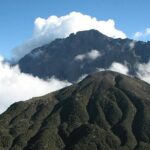
Mount Meru sits just outside Arusha and is often the first big peak you see when you’re in town. The numbers alone make it tempting: it tops out around 4,565–4,566m (about 14,990 feet), making it Tanzania’s second-highest peak after Kilimanjaro. It also has two notable high points—Meru Summit and Ash Cone, the smaller summit inside the crater from later volcanic activity.
What I like most is the “warm-up mountain” idea. Many hikers take Meru before Kilimanjaro because it helps your body get used to altitude. Even if you never plan to climb Kilimanjaro, the way this hike is paced can still teach you how to move at height—slow, steady, and focused on breathing.
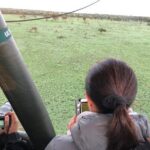
And this isn’t just “climb until you’re done.” On the early stretches, you’re moving through Arusha National Park in a way that feels a bit like walking safari—animals don’t just appear in a distant viewing area. They can be right on your route.
You can also read our reviews of more hiking tours in Arusha
Wild animals on the way up, with an armed ranger

The first day starts after breakfast in Arusha (around 1,400m) with pickup from your hotel, then a drive to Momella Gate in Arusha National Park. You’ll register with the park while your porters organize and pack what you won’t carry yourself. Then the trail begins.
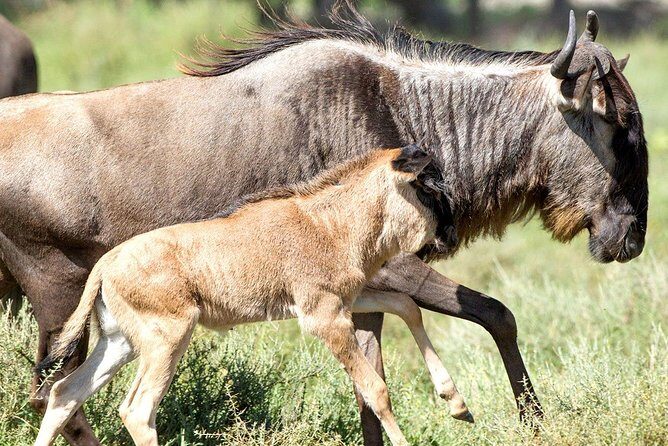
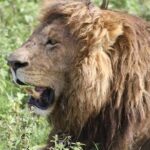
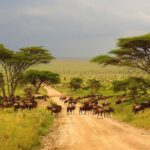
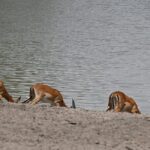
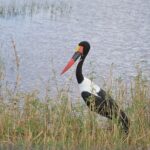
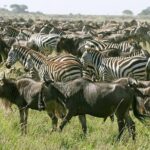
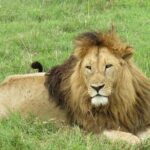
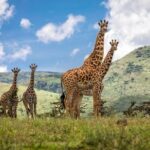
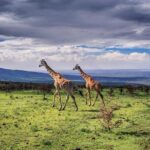
Here’s what makes Day 1 special: it can feel like an on-foot wildlife encounter. Along the way, you might see giraffes, zebras, antelope, buffalo, and possibly elephants near the trail. And because the possibility of wildlife is high, you hike with an armed ranger hired through the National Park for the duration of the hike.
That ranger detail matters. It turns the experience from “adventure guessing” into something structured around park rules. You’re not doing this totally independently—you’re learning the area with the people who manage it.
Day 1 to camp: the walking-safari feel + first big elevation shift

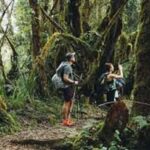
Expect your first hike day to run about 7 hours, and it’s described as similar to a walking safari. You start at Momella Gate and begin ascending through the park. This is the part where you’re settling into rhythm: stop when your guide tells you, drink consistently, and don’t try to power up the trail like you’re sprinting to a lookout.
Two practical takeaways here:
- Start slow even if you feel fine. The climb continues to build in intensity.
- If wildlife shows up, you don’t “rush past” it. You follow the guide’s pace and keep things calm.
Also, since porters are handling gear organization, you can plan on having fewer distractions. You still carry your personal items, but the big load isn’t yours.
Day 2: the steep ridge, then a camp that sets up the midnight push
After breakfast on Day 2, you start ascending a steep trail along the ridge of the saddle. As you move, you can get views of Mt. Meru crater areas and the Ash Tray (these names show up in the trail descriptions), so you’re not hiking blind.
This day has two parts: the climb to camp, then the option to acclimatize further. When you arrive, you’ll reach Miriakamba Hut (2,500m) early enough in the route-building process to set your body up for what comes next. From there, you have an option to hike Little Mt. Meru (3,820m) with your guide, which is specifically framed as an acclimatization step.
The time window is usually 3–5 hours of hiking for the main day, and you should plan for camp logistics too. An early dinner then helps you rest before the midnight summit attempt.
Why I like this setup: it’s not just “go higher, suffer later.” You get a built-in choice that can make the summit day more manageable, depending on how your body feels.
Day 3: wake at 00:30, summit around 1:30 am, and back down fast
Day 3 is the long one: 10–12 hours of hiking. Your guide wakes you at 00:30 for tea and biscuits. Then you start the summit attempt at 1:30 am.
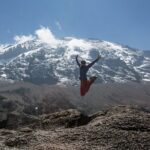
The climb begins steep from Rhino Point (3,800m) to Cobra Point (4,350m). Near the top, you scramble on a rocky ridge between the crater and inner cliffs of Meru. Then comes the payoff: you reach the summit at about sunrise, around 4,565–4,566m, with views of Mt. Meru Ash Tray and Mt. Kilimanjaro.
The descent is part of the experience too. After a short summit break at Saddle Hut (3,500m), you continue down to Miriakamba Hut (2,500m) for dinner and overnight.
A realistic way to think about Day 3 is this: it’s intense, it’s long, and it’s timed. You don’t get to “sleep in,” you don’t get to drift along. This is the day where following your guide’s pacing is the difference between arriving at sunrise still feeling human and feeling cooked.
A few more Arusha tours and experiences worth a look
Day 4: final descent to Momella Gate and back to Arusha
After a long rest, Day 4 is your release day. You start the final descent toward Momella Gate and work down from about 2,500m back to Arusha around 1,400m.
The hiking time is shorter, about 2–3 hours. It’s through forests and meadows, and wildlife is again likely. Then your driver picks you up at the base and takes you back to Arusha.
This day is worth mentally “earning.” It’s when you get closure on the climb and, frankly, when you appreciate that your feet are finally not staring straight up for once.
What’s included (and how that affects real value)
This hike runs about $1,155 per person for roughly 4 days. That price is high compared to day hikes, but it makes sense if you look at what’s built in.
Included:
- All fees and taxes, plus admission ticket included for the hiking days
- A professional guide, cook, and porters
- Meals: breakfast (4), lunch (4), and dinner (3)
Not included:
- Tips for guide/cook/porters
- Personal items
- Travel insurance and visa fees
- International flights
Why I think the value is solid: you’re paying for more than a “walking route.” You’re paying for the safety structure (armed ranger), the park permissions/entry costs, the logistics of huts and meals, and the staffing needed to run a high-altitude trek without you hauling everything yourself.
Also, this is a private hiking experience—so you’re not sharing the day with random extra people. Private doesn’t just mean quieter. It usually means less waiting and fewer pace mismatches.
Service quality matters on summit nights
Mount Meru succeeds or fails based on how well your team runs the night logistics—waking on time, meals, pacing, and communication if anything shifts. The provider behind this experience has strong customer-service signals in their other bookings: easy communication, quick replies, and planning that can be personalized to what you want to focus on.
For you, that translates into one less anxiety point. You want clear coordination before a midnight start. It’s the kind of detail that’s easy to overlook when you’re booking, but it matters a lot once the alarm goes off.
Price and logistics: what to plan so it feels smooth
A few practical notes to keep you from getting surprised:
- The hike is private and designed around your group.
- You get pickup and drop-off service (free) connected to your arrival/departure timing.
- You’ll receive a mobile ticket after confirmation.
- The experience requires good weather. If it’s canceled due to poor weather, you’re offered a different date or a full refund.
Even with perfect planning, weather can decide whether the mountain is safe on the day you’re scheduled. So I’d book this with enough flexibility in your Tanzanian days so you can handle a change without stress.
Who should book this Mount Meru hike
This is a fit if you:
- Want an acclimatization-friendly alternative (or stepping stone) before Kilimanjaro
- Like structured guiding with park safety support
- Are comfortable with early starts and a long summit day
- Prefer a private trek rather than a big-group shuffle
It may feel like too much if you’re looking for a relaxed stroll, because Day 3 alone is a long haul and the start is early.
If you’re an outdoor-minded traveler who enjoys both wildlife-country scenery and serious altitude trekking, this can hit the sweet spot.
Should you book this Mount Meru trek?
Yes, if you want the best combo of park wildlife atmosphere and a true high-altitude summit attempt with support. The value is strongest when you want everything handled: guide, porters, ranger requirements, huts, and meals.
Think twice only if you know you struggle with long hiking days and strict timing. The midnight start isn’t a detail you can ignore—it’s the core of the experience.
If your plan includes climbing Kilimanjaro later, this is the kind of hike that can make that future summit feel more doable. And if Kilimanjaro isn’t in your future, you’ll still get a real taste of Tanzania’s big mountains without the longer, higher chaos of a longer mega-route.
FAQ
FAQ
How long is the Mount Meru hiking experience?
It runs for about 4 days.
Where does the hike start and end?
The hike starts in Arusha, Tanzania, with pickup from your hotel, and it ends back at the meeting point in Arusha after the descent.
What’s the highest point on this hike?
The summit attempt reaches about 4,565–4,566 meters.
Do I need an armed ranger during the hike?
Yes. An armed ranger hired through the National Park is required to hike with the team for the duration of the hike.
What elevations do the huts/camps include?
The route includes camps/huts such as Miriakamba Hut at 2,500m and Saddle Hut at 3,500m, along with key points like Rhino Point at 3,800m and Cobra Point at 4,350m.
Is there time for acclimatization besides the main climb?
Yes. When you arrive at camp, you have the option to hike Little Mt. Meru (3,820m) with your guide to further acclimate.
Are meals included in the price?
Yes. Breakfast is included for 4 days, lunch for 4 days, and dinner for 3 days.
What happens if weather is bad?
The experience requires good weather. If it’s canceled due to poor weather, you’ll be offered a different date or a full refund.