REVIEW · ARUSHA
3-Day Private Ngorongoro Crater and Serengeti Park Tour
Book on Viator →Operated by Makanjanja safaris · Bookable on Viator
Three days, two worlds, endless safari sightings. This private tour links the Serengeti’s endless plains with the drop into Ngorongoro’s caldera, all paced around real wildlife viewing time. From a 6:00 am start in Arusha to sunset lodge moments, it’s designed for maximum sightings, not just check-the-box photos.
I especially like the focus on big-cat viewing from a 4WD with a viewing roof, plus the calm, well-organized flow that keeps you moving when the animals are active. And yes, the human side matters: guides like Abouh stand out for being gentle, respectful, and well prepared, with Tanzania and animal knowledge you can actually use out there.
One thing to consider: the days are long and early. With a 6:00 am start and game-drive-heavy schedules (including a long crater day), expect fatigue if you’re not used to safari timing and long stretches in the vehicle.
In This Review
- Key highlights
- Why this Serengeti + Ngorongoro combo works
- Timing and daily rhythm: early starts, long drives, real safari hours
- Day 1 in Serengeti: kopjes, open-roof spotting, and Seronera Valley lodge nights
- Day 2: Serengeti morning sightings, picnic lunch, and the Ngorongoro edge wow
- Day 3 in Ngorongoro: early crater descent and big-five chances within hours
- The guide factor: what Abouh-style guiding adds to the wildlife
- Price and logistics: what $1,300 per person really covers
- Comfort, vehicle time, and how to handle the long days
- Who should book this 3-day private safari
- Should you book it?
- FAQ
- What time does the tour start?
- Is this a private tour?
- What’s included in the $1,300 per person price?
- Are park admission tickets included?
- Where do you stay overnight during the safari?
- What is the cancellation policy?
Key highlights
- Private group with the whole experience built just for you
- 4WD with a viewing roof, helping you spot cats without craning your neck all day
- Serengeti kopjes and Seronera Valley stops that set up classic savannah viewing
- Ngorongoro edge viewpoints and crater descent, including big-five chances within hours
- Meal plan plus lodge nights, so you’re not hunting logistics while you’re chasing animals
Why this Serengeti + Ngorongoro combo works
If you love safari, this itinerary is smart because it hits two very different “camera angles” of Tanzania’s wildlife country. Serengeti is about scale: grassy savannah stretching out to the horizon, interrupted by rock outcrops called kopjes. Ngorongoro is about concentration: a natural amphitheater where the wildlife density can feel tighter, and where the caldera view alone tells you you’re somewhere special.
What I like about pairing them is how it changes your expectations from day to day. In the Serengeti, you’re watching open plains—great for seeing herds moving and for scanning for predators along the grassland edges. In Ngorongoro, you’re operating differently: you drive down into the crater and spend more time in a set of habitats that include grass steppe and acacia tree woods. That habitat shift is one reason people get strong animal results over a short timeframe.
Also, this tour is private. That matters more than it sounds. You’re not stuck with a rigid pace dictated by strangers. Your guide can time stops, adjust where you look, and keep the day running in a way that feels smoother when you’re staring at the same horizon for hours.
You can also read our reviews of more private tours in Arusha
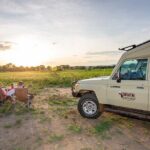
Timing and daily rhythm: early starts, long drives, real safari hours
This safari runs on a straightforward but intense schedule. The day begins at 6:00 am, and the itinerary keeps you out in the field for most of the day. Day 1 runs about 8 hours, Day 2 about 12 hours, and Day 3 about 10 hours. That structure is ideal if you want more than one shot at seeing big wildlife.
Each day also has a “theme”:
- Day 1 is about settling into Serengeti and reaching your lodge in the bush.
- Day 2 is about one more long Serengeti drive, then transitioning toward Ngorongoro with a crater edge viewpoint and another lodge night.
- Day 3 is the crater day: early breakfast, drive down into Ngorongoro, then return toward Arusha.
Meals are built into the timing: breakfast twice, lunch three times, and dinner twice. In other words, you’re not relying on roadside snacks while you wait for lions to show up. You still want to be ready for a day that feels “full,” but at least you’re not worrying about where the next meal happens.
One more useful detail: pickup is offered, and you’ll receive a mobile ticket. That’s helpful if you’re trying to keep your pre-safari admin simple. And because the tour is private, it’s easier to coordinate the start time than with shared departures.
Day 1 in Serengeti: kopjes, open-roof spotting, and Seronera Valley lodge nights
Day 1 starts with a classic Serengeti introduction. The name Serengeti comes from the Masai word Siringitu, described here as meaning endless plains. And once you’re out there, you understand why: the grassland savannah stretches far to the horizon, with the notable interruption of kopjes, those odd rock formations created by weathered granite outcrops.
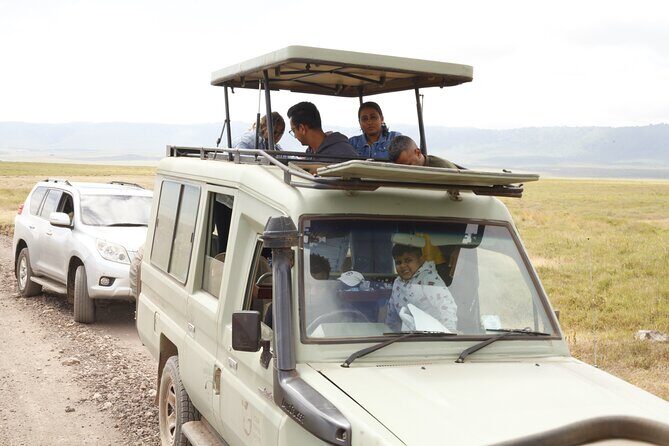
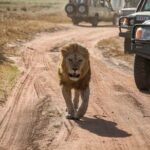
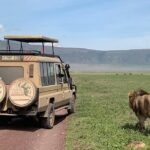
From a spotting standpoint, Day 1 is tuned for predators. The plains act like hunting country, and leopards and other big cats are specifically called out as targets you may see. The tour uses a 4WD viewing-roof setup, which is a practical advantage. When you’re searching for movement in tall grass or on rocky edges, being able to see from a higher vantage without fighting the roofline can save time and frustration.
In the afternoon, you move toward Seronera Valley in the central Serengeti area. This is where the day turns from “arrive and look around” into “settle in and start scanning consistently.” Then you spend the night in a lodge in the middle of the African bush. That matters because it keeps you close to the action the next morning, rather than making you commute long distances immediately after a wildlife-heavy day.
Possible drawback for Day 1: the Serengeti is huge and sightings are never guaranteed. You might see lots of wildlife movement, including the big-cat possibilities, but it can still be a patience game. The good news is that your guide’s job is to help you focus your attention—where to look, what signs matter, and how to read what you’re seeing.
Day 2: Serengeti morning sightings, picnic lunch, and the Ngorongoro edge wow
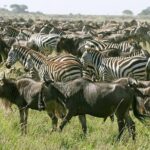
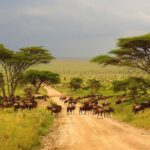
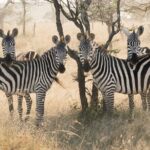
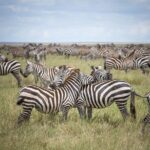
Day 2 begins with more Serengeti game drive time. The itinerary describes seeing hundreds of wildebeests and zebras in the Seronera Valley, with frequent mention of lions and other big cats like leopards and cheetahs. That’s not just about spotting individual animals—it’s also about understanding how predators use the rhythms of herds and open grass.
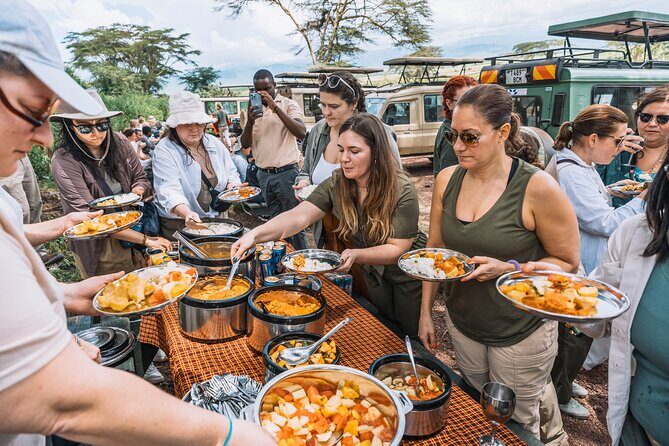
After your morning viewing, there’s a picnic lunch at a designated site. This type of stop is valuable on a long safari day because it breaks up the driving and gives you a reset without losing half the day. It’s also a good moment to regroup so you can return to scanning with fresh attention.
Then comes the transition: you drive toward Ngorongoro Conservation Area and, once you reach the edge, the view opens up as the caldera reveals itself. This is one of the most dramatic “sight” moments on the itinerary—because even before you go down into the crater, you can see how this is a different kind of wildlife theater. Ngorongoro is described as a large, unbroken caldera, and that scale is part of the experience.
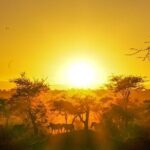
You’ll end Day 2 with another lodge night, including time to enjoy the fantastic sunset view as the light changes. This matters more than it sounds. In safari country, lighting affects both animal behavior and how easy it is to see details. A guide who knows when to slow down can help you take advantage of that.
Day 3 in Ngorongoro: early crater descent and big-five chances within hours
If Day 2 is the buildup, Day 3 is the payoff. After an early breakfast at daybreak, you drive down into the crater. The Ngorongoro Crater is described here as the largest unbroken caldera, with unbelievable wildlife diversity. In practical terms, that means you spend your time in habitats where you’re more likely to see multiple species in a shorter window than in a more open, stretched-out setting.
The itinerary highlights two main environments inside the crater: grass steppe and acacia tree woods. It also notes that you can find almost all East African savannah species except for topis, Masai giraffes, and impalas. That’s helpful because it sets realistic expectations. If you’re hoping to see a specific animal category, knowing what the crater is less likely to offer can save disappointment.
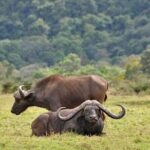
Then there’s the headline: quite often, you can observe the Big Five (lion, elephant, buffalo, rhino, leopard) within a couple of hours. Nothing in safari is guaranteed, but that time frame is exactly the kind of detail that helps you plan how you’ll spend that day. It also explains why this day is structured as a crater-focused block rather than a split schedule.
After the crater drive, you head to your hotel in Arusha for the overnight. And if timing is tight, a flight back in the same day at night is described as possible. That’s useful if you’re connecting onward and don’t want to add another day in Arusha. If you do have extra time, you can also spend more time in Arusha instead.
A few more Arusha tours and experiences worth a look
The guide factor: what Abouh-style guiding adds to the wildlife
Even with the right route, safari success often comes down to the guide. In the reviews, Abouh is repeatedly described as caring and respectful, and as someone who is genuinely interested in other cultures. That shows up in a way you’ll feel during the drive: you’re not only scanning for animals, you’re learning what you’re looking at and why it matters.
The reviews also underline organization. People who did multiple trips with the same guide describe him as gentle, well prepared, and good at explaining. Another point that comes through clearly is his habit of checking in to make sure everything is fine with you. That’s a small thing, but in a safari built around long days and early starts, it helps you relax and stay present.
Practically, trained guidance is what turns a random drive into a useful search pattern:
- Where to focus first when the vehicle stops
- How to read animal movement and habitat cues
- How to adjust expectations when the day changes
This tour specifically includes a guide in a 4WD vehicle viewing roof, and that combination is a big part of the value. You’re not just paying for a car—you’re paying for someone to make that car count.
Price and logistics: what $1,300 per person really covers
At $1,300.00 per person, this is not a budget outing. But it’s also not priced like a bare-bones self-drive. The included costs are substantial:
- All fees and taxes
- Transport and a guide
- Game viewing in 4WD vehicles with a viewing roof
- Meals: lunch three times, dinner twice, breakfast twice
- Lodging for the nights in the bush/lodge and a hotel in Arusha (as described in the itinerary)
That’s the value story: you’re paying for access, time on safari, and the full operating machine of the tour. When you compare the cost to what it would take to arrange transport, guide time, and park access across multiple days, the price begins to look more logical.
What’s not included is also important. The tour states personal spending like visa fees, souvenirs, and flights are not included. That means you should budget separately for anything beyond the safari package itself.
One more logistics note: this is a private tour/activity, so only your group participates. That reduces waiting and adds flexibility. If you’re traveling as two (or a small group) and you want a quieter, more controlled safari day, private can be worth it.
Comfort, vehicle time, and how to handle the long days
Safari days are “work,” even when they’re fun. Expect long hours in the vehicle, especially on Day 2. The good part is the planning: breaks are included via meal stops and lodge nights. Also, because this is a private setup, you can often move at the pace your guide chooses, rather than constantly adjusting to other people’s timing.
There’s also a key comfort advantage built in: the viewing roof design. That’s meant to help you see and shoot without constantly repositioning. When you’re scanning for big cats across open plains, small visibility improvements can make a real difference.
Still, be honest about Day 3: driving down into the crater is physically different from a normal plains drive. Your best move is to approach it as an active day. Bring a calm mindset and accept that spotting can happen in bursts. When it does, you want your attention sharp.
If you’re sensitive to early mornings or long travel time, this is the only real “watch-out” with this itinerary. The route is intentionally aggressive to fit Serengeti + Ngorongoro in three days.
Who should book this 3-day private safari
This tour fits best if you want:
- Big-five possibilities and real wildlife concentration
- Serengeti plains plus Ngorongoro crater in one trip
- A private experience with a guide who explains and organizes well
- A tour where meals are handled and you’re not scrambling for day-to-day logistics
It may not be your best choice if you hate early starts or you’re looking for a slow, relaxed schedule. The structure here is built around morning game driving and crater timing.
Based on the guide impressions in the reviews, this is also a good match if you care about communication—not just seeing animals, but understanding what you’re seeing. Abouh is described as respectful, culture-minded, and very prepared, which can add a lot to the experience beyond the view.
Should you book it?
I’d book this if you’re aiming for a classic Serengeti-and-Ngorongoro hit in a tight timeframe, and you want a private, guided setup with meals and lodges already planned. The itinerary is designed for frequent scanning: Serengeti for open-plains predator chances, then Ngorongoro for a crater-day that can deliver Big Five observations in a short span.
One final decision tip: if $1,300 per person feels high, think about what that price buys you here—time, access, guiding, and the operational details, not just a vehicle ride. If you value those, the cost starts to look fair.
If you do book, I recommend you take the early mornings seriously. Sleep, pace yourself, and let the guide drive the day. The best moments are often the ones you don’t rush.
FAQ
What time does the tour start?
The tour start time is 6:00 am.
Is this a private tour?
Yes. It’s described as private, meaning only your group participates.
What’s included in the $1,300 per person price?
The tour includes all fees and taxes, transport, a guide in 4WD vehicles with a viewing roof, and meals: lunch (3), dinner (2), and breakfast (2).
Are park admission tickets included?
The itinerary notes admission ticket free for Day 1. Admission ticket included is listed for Day 2 and Day 3.
Where do you stay overnight during the safari?
Day 1 includes an overnight at a lodge in the middle of the African bush. Day 2 includes another lodge overnight with a sunset view. Day 3 includes travel to a hotel in Arusha overnight.
What is the cancellation policy?
There is free cancellation up to 24 hours in advance for a full refund. If you cancel less than 24 hours before the start time, the amount paid is not refunded.