REVIEW · MOSHI
Discover Our Latest 6 Days Climbing Kilimanjaro – Marangu Route
Book on Viator →Operated by AFRICA NATURAL TOURS · Bookable on Viator
Kilimanjaro starts with a short drive. From Moshi, you get picked up and taken straight to Marangu Gate, then guided through rainforest, high meadows, and hut-to-hut trekking on the classic Marangu route. I like that this plan focuses on your own private party, not a random mix of strangers, so the pace and teamwork feel more personal.
What really sold me is the built-in rhythm: you gain height gradually, then spend a full day at Horombo Huts to acclimatize and walk toward the Mawenzi side. I also like that hut accommodation and meals are included, which means less logistics stress and more energy left for breathing hard at altitude.
The main thing to consider is that this is still a serious climb: the summit night is long, cold, and steep. Even with the smoother Marangu route and a guide team, you’ll need to be ready for a midnight start and a physically demanding day five.
In This Review
- Key highlights you’ll feel on the trail
- Marangu Route: why this 6-day plan feels more manageable
- Moshi to Marangu Gate: the start that sets your mood
- Mandara Hut to Horombo: rainforest fades into open moorland
- Horombo acclimatization day: the walk that helps your body learn
- Horombo to Kibo Hut: the saddle, the Last Water point, and arid air
- Summit night and Uhuru Peak: midnight climbing and sunrise timing
- Downhill to Marangu Gate: recover, breathe, and let gravity help
- Price and what $1,150 really buys you
- Guides, porters, and the “private party” comfort factor
- Day-by-day timing: what you should expect physically
- Packing and prep: what matters on a hut-based Marangu climb
- Who this Kilimanjaro climb fits best
- Should you book this 6-day Kilimanjaro via Marangu?
- FAQ
- How long is the Kilimanjaro climb?
- Where does the trek start and end?
- What route is used to climb Kilimanjaro?
- What accommodation is provided on the mountain?
- Are meals included?
- What’s included in the price?
- What costs are not included?
- Do I need to bring my own hiking gear?
- How big is the group?
- What if the weather is bad?
Key highlights you’ll feel on the trail
- Private guided experience with your own party, plus a professional guide team for safety and pacing
- Marangu Route simplicity, known for being the most straightforward way up Kilimanjaro
- Acclimatization day at Horombo, paired with a famous walk that climbs you step-by-step
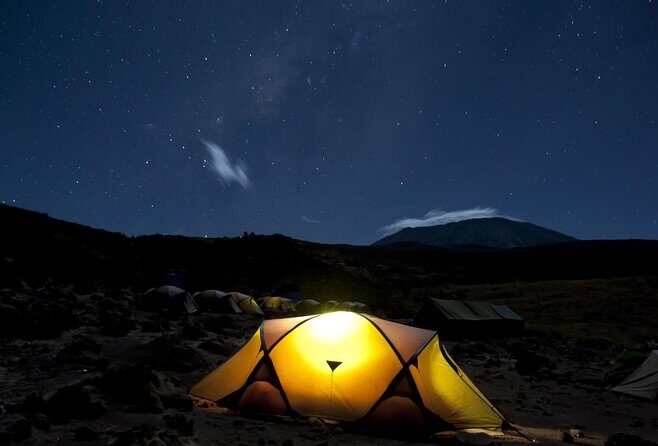
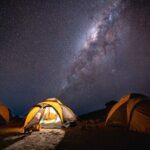
- Hut stays at Mandara, Horombo, and Kibo, including dormitory-style lodging and meals
- Summit push timing, with a late-night ascent and dawn views toward Mawenzi
- Return transport from Moshi, so you’re not piecing together the logistics after the big hike
Marangu Route: why this 6-day plan feels more manageable
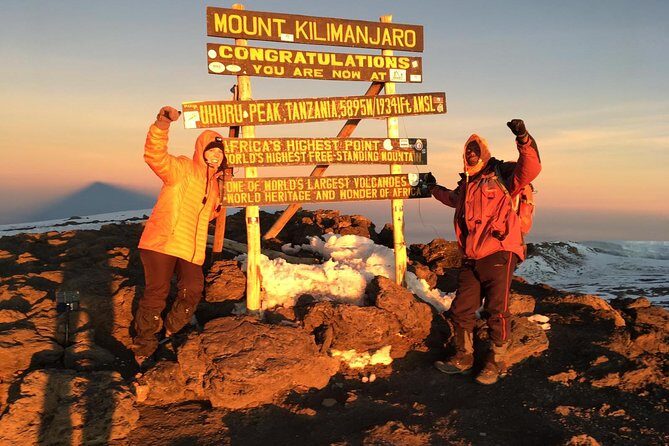
The Marangu Route is often called the easiest way up Kilimanjaro, and you can feel why once the days start stacking. You’re not jumping from one extreme trail condition to another; instead, you move from rainforest into alpine moorland, then into colder tundra as you approach the Kibo area. That gradual progression matters, because altitude doesn’t care about your motivation.
This 6-day structure also gives you a rare gift: a whole acclimatization day at Horombo Huts. Many Kilimanjaro plans either shorten that window or skip it. Here, the schedule is designed so you can adjust before you attempt the final summit climb.
One more practical point: Marangu is a hut route. You’re sleeping in dorm-style mountain huts rather than in tents every night. That usually means you’ll spend less time dealing with camp setup, and more time focused on recovering for the next day.
A few more Moshi tours and experiences worth a look
Moshi to Marangu Gate: the start that sets your mood
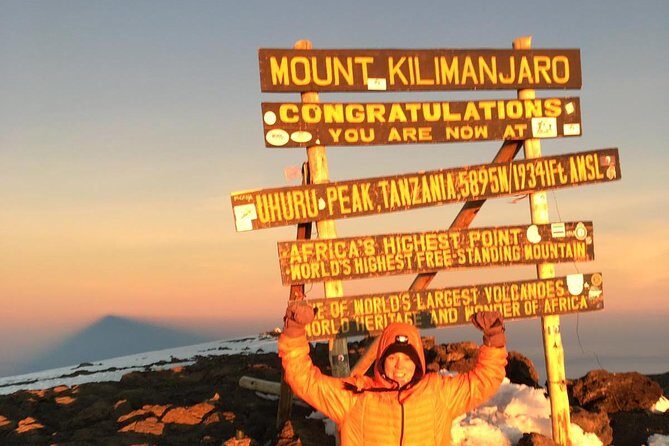
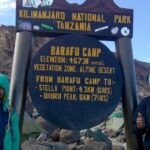
Day one begins early. You’re picked up from your hotel in Moshi and driven to Marangu Gate with your guide and porters team waiting for you there. After registration, the hike starts by climbing out of the park buildings and into the forest.
This is where Kilimanjaro already feels like an adventure, not just a challenge. In the rainforest, you might spot colorful birds, including colobus monkeys, plus mosses, lichens, flowers, and even orchids. If the sky is clear, you may also catch a view of Moshi down on the plain.
The walk on day one is long enough to wake up your legs—about 4–5 hours of climbing out of the park area toward Mandara Hut. The upside is that you’re not thrown into the highest altitude immediately. The tradeoff is that day one is still a real start, so don’t burn yourself out just because you’re comfortable at the beginning.
Value tip: The earlier you treat your effort like a steady job (slow and consistent), the better you’ll feel later when the schedule becomes harsher.
Mandara Hut to Horombo: rainforest fades into open moorland
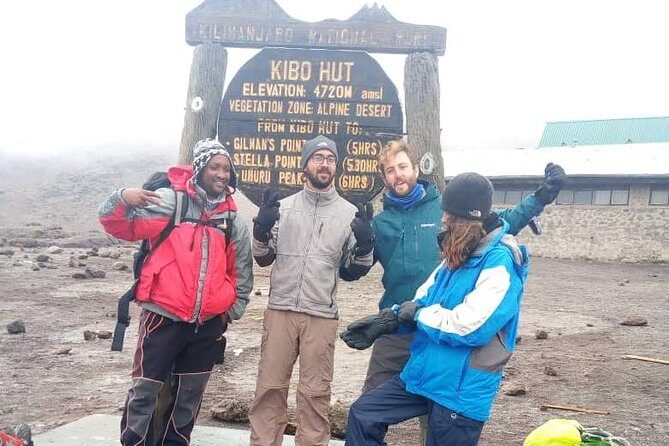
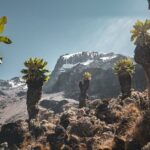
On day two, after breakfast, the trail shifts. The Marangu route continues with a difficult ascent through the rainforest, then it gradually opens into rolling alpine meadow. You’ll see enormous heather and wide open moorland where the big summits come into view—Kibo and Mawenzi.
Day two gains about 1,000 meters of elevation and can take roughly 5–7 hours, depending on your pace. That’s a good day to practice your strategy: keep your steps controlled, use short rests, and aim for steady breathing rather than speed. You’re moving upward, so pushing hard early can backfire when altitude starts to feel more present.
You’ll finish at Horombo Huts at around 3,720 meters. Horombo becomes your staging area—comfortable by Kilimanjaro standards, but still high enough that you feel the thin air right away.
Horombo acclimatization day: the walk that helps your body learn
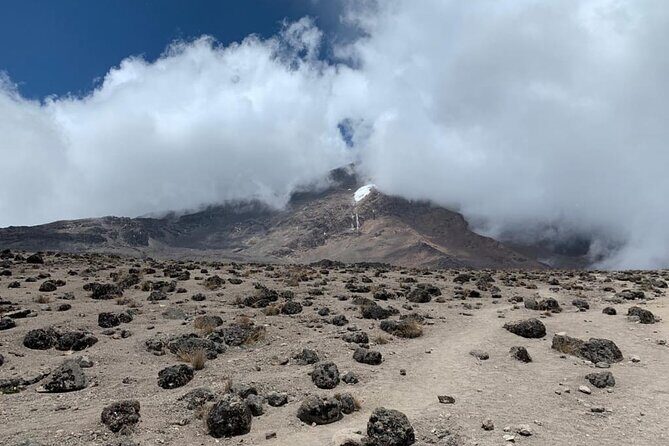
Day three is the acclimatization day, and it’s not wasted time. The point is simple: step-by-step adjustment at altitude. This plan includes a well-known walk that many climbers use to help their bodies adapt.
You’ll take a hike in the local area that leads toward the base of Mawenzi Peak—the dramatic eastern summit of Kilimanjaro. The round trip takes about 4–5 hours and reaches around 4,600 meters, then you return to Horombo Hut for dinner and the night.
This is where you get two things at once:
1) A physical acclimatization stimulus that’s high enough to matter.
2) A mental reset, because you’re not jumping straight to the summit attempt.
Possible drawback to expect: Horombo day is “shorter” than summit day, but it can still feel demanding if you go too fast on the acclimatization walk. Treat it like training, not like a personal record attempt.
Horombo to Kibo Hut: the saddle, the Last Water point, and arid air
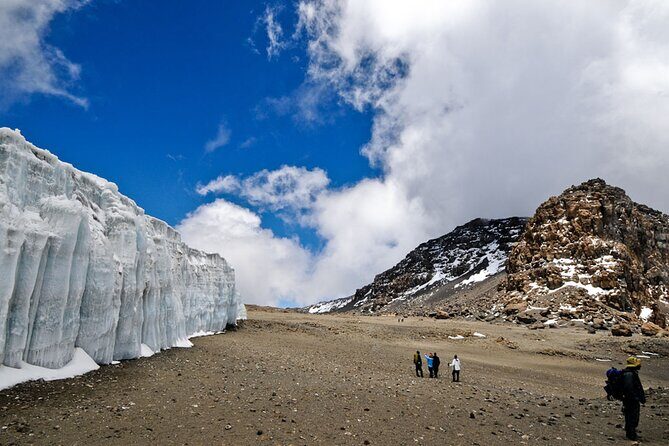
Day four is your move toward the upper zone. The scenery changes again. Instead of meadows and forest, you’ll see everlasting flowers and unusual alpine flora, then the terrain becomes stonier and more arid. You’re heading toward the colder, higher Kibo region, so the air will feel different even before you reach the hut.
The day typically takes 5–7 hours. You skirt Mawenzi Peak, pass the Last Water point, and travel through an environment that can feel almost lunar—desolate and stark as you approach the broad tundra desert of the saddle between Mawenzi and Kibo.
You’ll arrive at Kibo Hut (4,705m). The hut is described as a dry-stone-walled place with dorms and limited amenities. That limited setup is normal for this altitude. Your job is to rest, keep warm, and prepare for the summit night.
A practical detail that can make a difference: you’ll want to repack and pass any unnecessary items to the porters so you’re not carrying extra weight when the cold and fatigue hit.
Summit night and Uhuru Peak: midnight climbing and sunrise timing
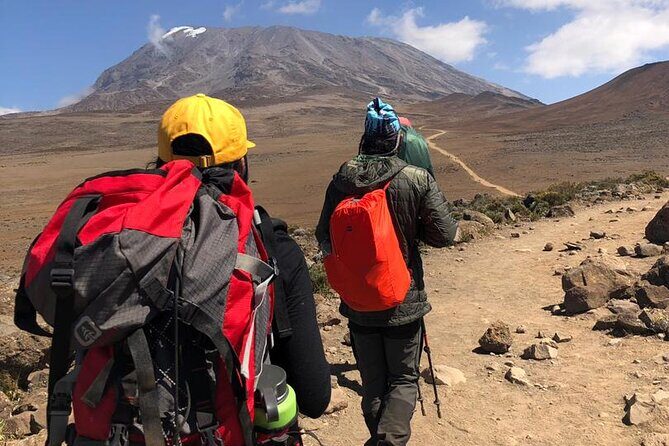
Day five is the day you trained for, and it’s also the day that tests you. The guides wake you shortly after midnight. You’ll start up a lengthy slope of scree while using a torch. The text notes that the scree can be frozen at this hour, which can make walking on it simpler than you’d expect—but it’s still slow work.
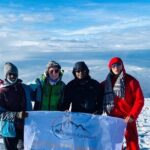
You’ll reach Hans Meyer’s Cave after about two hours, then continue up toward Johanne’s Notch, which sits at the crater rim. From there, the ascent steepens. The route continues to Gillman’s Point (5,685m) in time for dawn, described as a short struggle from the notch.
And then comes the reward: the view of sunrise over the ice fields, with Mawenzi’s jagged peaks visible as the light comes up. Even if your body is in full suffering mode, the timing helps. Dawn views are one of those moments that can flip the whole experience from pain to power.
Key consideration: This day can take around 12 hours and requires a steady pace. If you start too fast, altitude will punish you. If you stay controlled, your odds improve.
Downhill to Marangu Gate: recover, breathe, and let gravity help
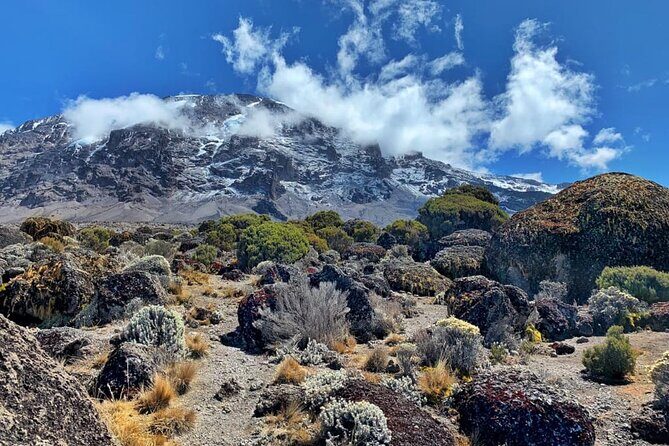
Day six brings the long descent. You’ll make your way down across alpine meadow and through rainforest past Mandara Hut back to Marangu Gate, then return to Moshi by vehicle.
The pace picks up on this last day, which can feel great after summit night. Still, downhill doesn’t mean easy. Your legs will be tired from altitude and from the grind up.
The day is estimated at about 8 hours, and the route covers around 20.8 km / 12.9 miles. You’ll finish with the satisfaction of completing the climb, plus a quick vehicle ride back to town instead of having to manage connections yourself.
Price and what $1,150 really buys you
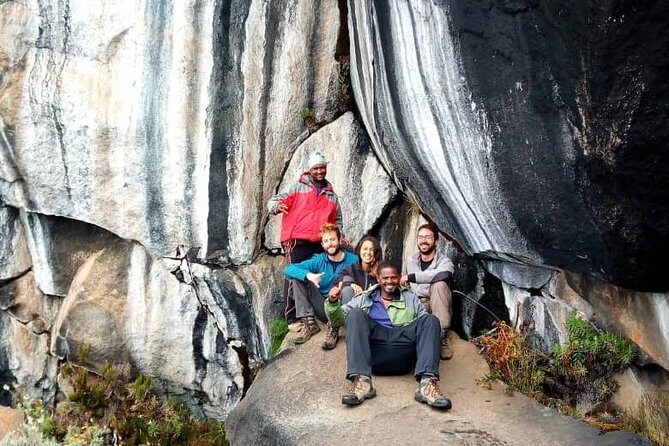
At $1,150 per person, this price isn’t just paying for a view. It’s covering a lot of the heavy lifting that makes Kilimanjaro more manageable:
Included in the experience:
- pick-up from your hotel in Moshi to Marangu Gate, and drop-off back after the trek
- a professional guide and trekking team support
- briefing and a trekking certificate
- hut accommodation and meals during the trek (breakfast, lunch, dinner)
- camping fees (as listed), plus return transport that saves time and hassle
What’s not included matters too. You’ll need to budget for:
- all Mount Kilimanjaro Park Fees (paid to the park or via the operator)
- tips for mountain crew
- travel/medical insurance
- the hotel before and after the trek in town
- any flight costs
- personal hiking gear (you bring your own)
So is it good value? For many people, yes—because the included private transport and hut-meal setup reduces a chunk of the stress and extra planning that can add cost later. The price becomes less straightforward if you already know you’ll need to purchase substantial gear and pay park fees on top. But that’s true for nearly every Kilimanjaro climb.
My take: If you want fewer moving parts and a plan built around acclimatization, this sits in a sensible value zone.
Guides, porters, and the “private party” comfort factor
One of the strongest signals in the experience design is the focus on your own private party. Practically, that can mean less negotiating your pace with people you didn’t come with. It also tends to support better communication—especially on the toughest days.
Your guide isn’t just there for directions. On summit day, the route involves long stretches of cold scree and steep climbing. Having a supportive, safety-focused team helps you keep moving when motivation fades.
The same team concept carries through the whole climb. Porters and guides support your day-to-day needs, and it’s noted that you can hand over unnecessary stuff before the summit push. That can make a real difference when the goal is to keep energy for the climb.
Day-by-day timing: what you should expect physically
Here’s the practical reality of what the schedule means for your body:
- Day 1: about 4–5 hours from Marangu Gate into the rainforest and toward Mandara Hut
- Day 2: 5–7 hours, a mix of rainforest ascent and open moorland movement, finishing at Horombo Huts
- Day 3: 4–5 hours for acclimatization walk, then back to Horombo for rest
- Day 4: 5–7 hours into colder, arid terrain toward Kibo Hut
- Day 5: roughly 12 hours total, starting shortly after midnight and ending with the dawn summit experience
- Day 6: about 8 hours downhill back to Marangu Gate and Moshi
If you’ve climbed before, you’ll recognize the pattern: steady days early, one major acclimatization push, then the long summit night. If this is your first big high-altitude trek, treat slow and steady as your superpower.
Important: The plan requires good weather. If weather is poor, you may be offered a different date or a refund.
Packing and prep: what matters on a hut-based Marangu climb
The tour includes huts and meals, but it does not include personal hiking gears. So plan on bringing what you need for a high-altitude hut trek and a cold summit attempt.
Because the summit start is described as just after midnight with frozen scree, your gear and layering strategy matters. You’ll be outside in temperatures that feel brutal compared to Moshi, and you’ll likely spend long hours moving slowly.
Also, think about how you’ll carry your essentials while keeping weight manageable. The schedule includes advice to repack and hand extra items to porters before summit night—use that moment well.
Who this Kilimanjaro climb fits best
This 6-day Marangu climb is a strong option if you:
- want the classic Marangu route rather than a more technical, more rugged approach
- prefer hut-based accommodation over full camping
- value a schedule that includes an acclimatization day at Horombo
- like the comfort of private party guiding rather than being shuffled into a mixed group
It may not be your best choice if you:
- want a short, low-stress hiking holiday (this is still a demanding climb)
- struggle with long nights and extreme physical effort on summit day
Should you book this 6-day Kilimanjaro via Marangu?
I’d book this plan if you want a traditional Kilimanjaro experience with structure, hut comfort, and a clear acclimatization window. The included meals, transport from Moshi, guide support, and trekking certificate remove a lot of friction that can steal energy from the mountain.
I’d think twice if you’re not ready for summit day: the midnight start, steep scree, and long duration are not “almost there.” Also remember the price sits alongside additional items like park fees and crew tips, plus you’ll handle insurance and your own gear.
If your goal is Uhuru Peak on the Marangu Route with a schedule that’s built around acclimatizing first, this is the kind of plan you choose for the mountain, not for the paperwork.
FAQ
How long is the Kilimanjaro climb?
This experience runs for 6 days (approximately).
Where does the trek start and end?
You start at Marangu Gate and the trek returns back to Marangu Gate, then you’re taken by vehicle back to your hotel in Moshi.
What route is used to climb Kilimanjaro?
The climb uses the Marangu route.
What accommodation is provided on the mountain?
You stay in dormitory-style huts on the route, including stops at huts such as Mandara, Horombo, and Kibo.
Are meals included?
Yes. Breakfast, lunch, and dinner during the trekking are included.
What’s included in the price?
Included items are pickup and drop-off from Moshi, a briefing, trekking certificate, a professional guide, and meals during the trek, plus camping fees as listed.
What costs are not included?
Not included: Mount Kilimanjaro park fees, tips to mountain crew, travel/medical insurance, your hotel before and after the trek, flights, and personal hiking gears.
Do I need to bring my own hiking gear?
Yes. personal hiking gears are not included, so you’ll need to bring your own.
How big is the group?
The experience lists a maximum of 90 people. The hike is described as having your own private party.
What if the weather is bad?
The climb requires good weather. If it’s canceled due to poor weather, you’ll be offered a different date or a full refund.