REVIEW · MOSHI
7-Day Kilimanjaro Climb–Lemosho R. Scenic Adventure to the summit
Book on Viator →Operated by PINNACLE ADVENTURES & SAFARIS LTD. · Bookable on Viator
Kilimanjaro gets real fast, in the best way. What I like most about the Lemosho Route is how it starts in lush montane forest, then gradually hands you higher, drier terrain for steadier acclimatization. The second thing I like is the way the experience is run by a full team that takes care of the details you usually don’t think about until you are on the mountain, from medical checks to smooth camp setup; in one set of climbs, guides like Isa and Baraka were singled out for keeping people confident and safe.
One consideration: you will face real cold. Nights can drop below freezing at exposed camps, and the summit day begins in the dark, with long hours of stone-scree walking that many people find mentally demanding.
In This Review
- A summit plan with enough structure to keep you sane
- Key highlights you should care about
- Choosing the Lemosho Route: quiet pace, varied terrain, and smarter altitude timing
- Day 1: drive to Londorossi Gate and hike into montane forest (with Colobus on the radar)
- Day 2: Shira Camp Two at 3,840m for moorland walking and glacier views
- Day 3: Lava Tower and the semi-desert push, ending back at Barranco
- Day 4: Great Barranco Wall to Karanga Camp (short hike, big acclimatization payoff)
- Day 5: Barafu Camp ridge night—last water, exposed wind, and early rest
- Day 6: The summit push from 23:30, Stella Point sunrise, then Uhuru Peak
- Day 7: Mweka Trail forest descent, certificates, and a real team celebration
- Price and value: what $2,676.39 gets you, and where you should budget extra
- Who should book this Lemosho 7-day climb (and who should reconsider)
- Should you book Pinnacle Adventures & Safaris for the Lemosho 7-day Kilimanjaro climb?
- FAQ
- What route is this climb based on?
- How long is the summit day and when do you start?
- Is pickup or airport transfer included?
- What is included with the price?
- What should I bring since gear and medical items are not included?
- What is the cancellation deadline for a full refund?
A summit plan with enough structure to keep you sane
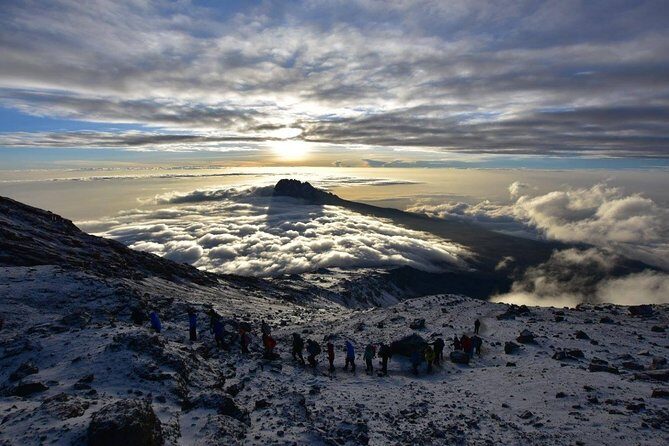
You get a clear rhythm: drive in, hike out, sleep high, then move again with built-in adjustment days. By the time you reach Uhuru Peak, the plan has already helped you work through the hardest altitude questions—slow pacing, rest stops, and staging that lets sunrise on the crater rim feel like a reward, not just another checkpoint. And after the hard part, there is a proper celebration—dancing and singing—and the park certificate moment is handled on the ground, not as a last-minute afterthought.
Key highlights you should care about
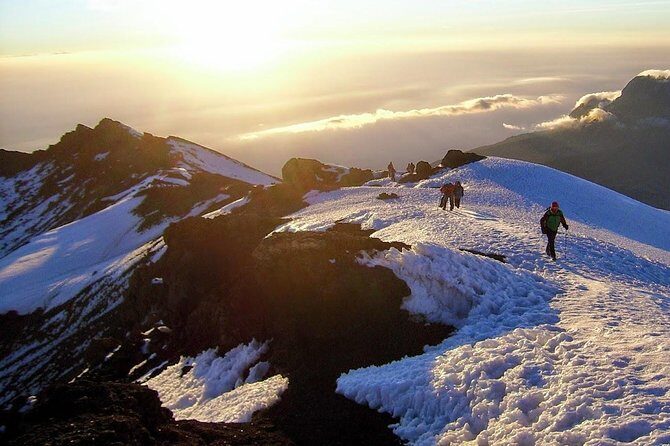
- A quieter-feeling approach on the Lemosho Route, with big variety over 7 days rather than nonstop stress
- Forest wildlife at the start, including a good chance of seeing Colobus monkeys in the montane zone
- Shira Two at 3,840m with views toward the Western Breach glaciers (and a cold wake-up risk)
- Great Barranco Wall on a shorter acclimatization day, so your summit legs are not totally wrecked
- Uhuru Peak timing from around 23:30, with Stella Point at about 5,685m and sunrise before the final stretch
- Camp-to-camp organization, including tents, mattresses, hot water for washing daily, and daily meals
A few more Moshi tours and experiences worth a look
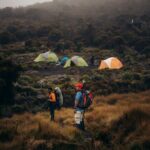
Choosing the Lemosho Route: quiet pace, varied terrain, and smarter altitude timing
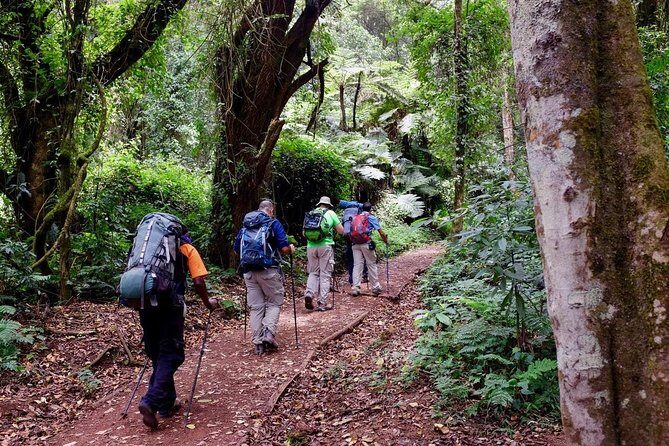
The Lemosho Route is often chosen because it does not rush you through altitude the way some faster itineraries try to do. Over a full 7 days, the climb is paced so your body gets time to adapt as you move from forest to moorland to semi-desert and then into the alpine zones.
The “scenic adventure” part is real, but here is what matters in practical terms: varied terrain tends to keep you mentally engaged while you hike slowly enough for acclimatization. You are not just climbing the same kind of slope every day. Instead, you shift environments—rainforest, heather moorland, rocky semi-desert, then alpine desert. That variety can make the grind feel more like a journey than a punishment.
Another reason I like this route for many first-time summit hikers: the plan includes a dedicated acclimatization rhythm (including a shorter day) instead of stacking all the effort into summit day and hoping for the best.
Day 1: drive to Londorossi Gate and hike into montane forest (with Colobus on the radar)
You start from Moshi or Arusha and drive toward Londorossi Park Gate at about 2,100m. Expect two parts to the journey: a longer road segment, then a final 45 minutes on a bumpy forest track that really does need a 4WD vehicle. That detail matters because it affects comfort and how quickly you feel awake for your first hike.
Once you arrive, guides and porters handle supplies and park registration with TANAPA, which keeps the start from feeling chaotic. Then you hike for roughly 3 hours into the rain forest. This is not a brutal training day; it is about getting your legs moving at lower altitude and letting your body settle into the routine.
Wildlife is part of the fun here. The montane forest start is a good place to look for Colobus monkeys as you walk the trails. Even if you do not see them, the forest gives you something different from the higher, colder zones that come later.
Day 2: Shira Camp Two at 3,840m for moorland walking and glacier views
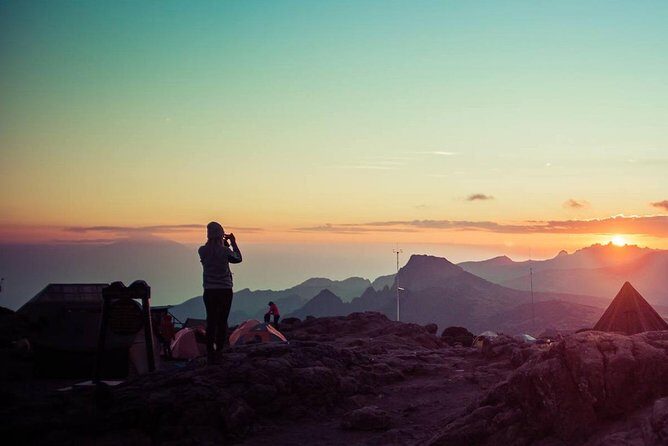
Day 2 shifts you out of the rainforest and into heather moorland. You start with breakfast and then climb toward Shira Camp Two at around 3,840m. The hike is longer—about 6.5 hours—and it often includes crossing multiple streams and walking over a plateau that links the day’s transition areas.
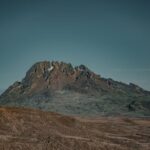
What makes Shira Two special is the camp setting: you are by a stream, and on clear moments you get a striking view toward the Western Breach and its glaciers. That is the kind of scenery that makes people understand why Kilimanjaro is famous, without needing to be overly dramatic about it.
The drawback is temperature. Shira Two is exposed, and the plan warns you clearly: be ready for nights below freezing. That means you need to treat warmth like a priority, not an optional comfort. When you are cold, everything feels harder, including sleep, and sleep is your real altitude tool.
Day 3: Lava Tower and the semi-desert push, ending back at Barranco
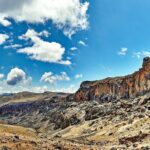
This day is about getting into higher, drier terrain. You leave moorland and enter semi-desert and rocky landscapes. The hike is around 7 hours and includes a key landmark: Lava Tower at about 4,630m.
The approach to Lava Tower after hours walking at altitude can trigger the first real altitude discomforts—headaches and shortness of breath are commonly mentioned outcomes around this point. That is not a reason to panic; it is a reason to keep your pace conservative and listen to your guide.
At Lava Tower, you eat packed lunch. There is also an option to climb the tower itself if conditions allow. If your body feels shaky, you should treat this as optional. On summit routes, extra scrambling is not worth turning a “maybe later” moment into a “maybe we backtrack” moment.
After lunch, you descend to Barranco Campsite around 3,950m. The practical value of this change is huge: descending slightly helps you regain some breathing comfort while keeping you moving toward the next acclimatization steps.
Day 4: Great Barranco Wall to Karanga Camp (short hike, big acclimatization payoff)
This is one of the most important “lessons” of the climb: sometimes the right strategy is not to go harder, but to get your body used to the kind of terrain it will see later.
You hike about 4 to 5 hours, ending at Karanga Camp at roughly 3,950m. The big event is the Great Barranco Wall. Even though it looks intimidating at first glance, the route is described as Class 2 and often feels easier than people expect once they are actually on it and moving with a slow rhythm.
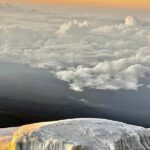
From the top, you get a view of Heim Glacier and you can find yourself above clouds. That kind of scenery is not just nice; it also gives your brain a break from focusing on breathing.
Then the trail winds through Karanga Valley and you settle at Karanga. The day is shorter by design. Use it to keep your energy for the ridge camping days ahead.
Day 5: Barafu Camp ridge night—last water, exposed wind, and early rest
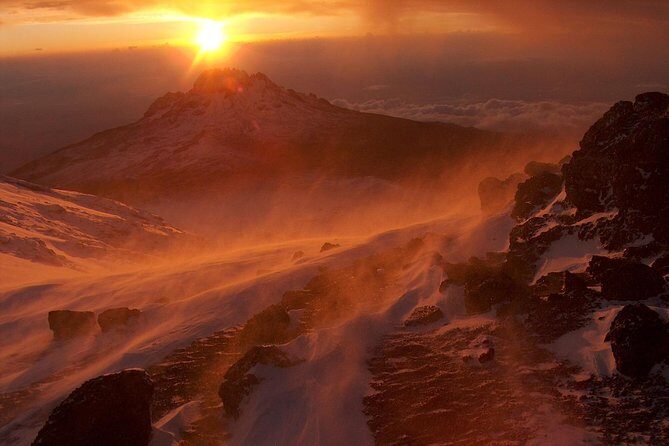
Day 5 is shorter in hiking time—about 2 to 3 hours—but it is intense in how it changes the feeling of the climb. You head toward Barafu Camp at around 4,550m, and the route intersects with the Mweka Route, which is the path used during the final descent on the last days.
One practical detail to take seriously: Barafu is a place where water access is limited. It is described as the last water stop for porters because there is no accessible water at Barafu Camp. That means you should drink what you need during the walk and follow your guide’s instructions closely. Do not wait until you feel desperate.
Barafu also sits on a rocky, exposed ridge. The name barafu means ice in Swahili, and it is not subtle about what that implies. Tents can be exposed to wind and rocks, so it is smart to pay attention to camp setup instructions early, before dark.
Dinner is served early so you can rest before the summit push. In other words: you are conserving energy for a night hike that starts at 23:30.
Day 6: The summit push from 23:30, Stella Point sunrise, then Uhuru Peak
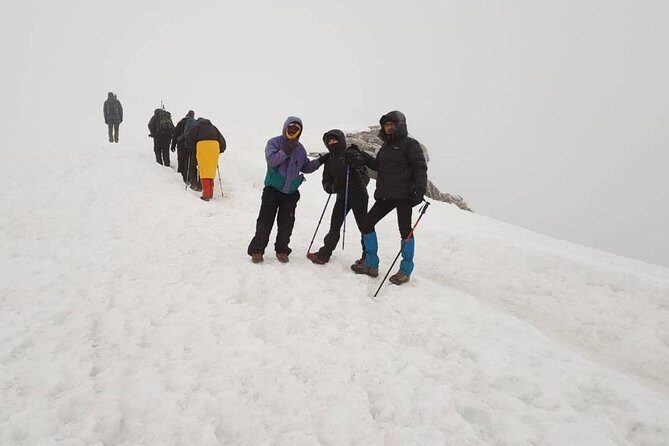
If Kilimanjaro has a single defining moment, it is this one.
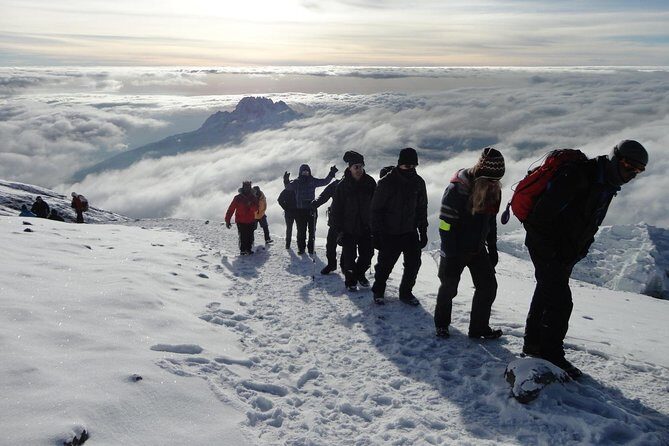
You are woken around 23:30 for tea and biscuits. Then you begin the summit attempt heading northwest over stone scree. This is the part many people feel is the hardest—physically and mentally. The terrain is heavy underfoot, and the dark makes everything feel longer because you cannot visually pace yourself with the end in sight.
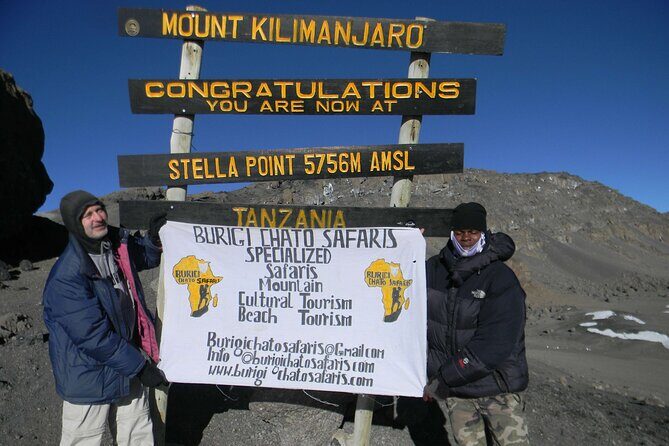
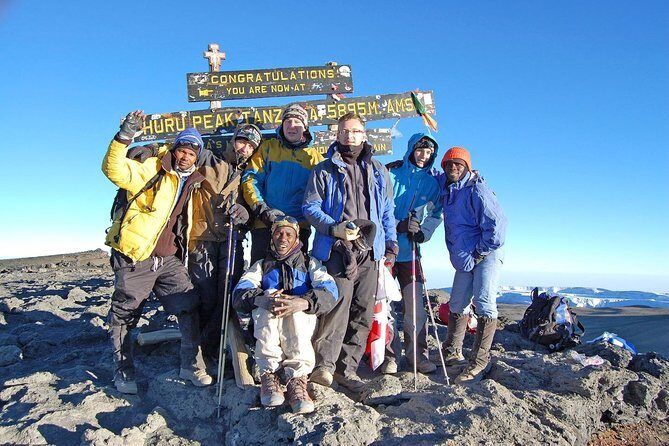
About 6 hours into the climb, you reach Stella Point at roughly 5,685m. If you are on schedule and conditions allow, you get sunrise on the crater rim there—one of those experiences that is less about fireworks and more about a slow, quiet shift in light over the mountain.
From Stella Point, you continue for about 2 more hours on a snow-covered trail toward Uhuru Peak at about 5,895m. If you are feeling altitude pressure, the best move is to keep your steps small and steady and let your guide set the pacing.
After reaching Uhuru Peak, you still have a long descent planned down to Mweka (described as 7 to 8 hours). The big lesson here: summit success is not the whole story. Your body still has to survive the downward hours, which is why the early pacing from day one matters.
Day 7: Mweka Trail forest descent, certificates, and a real team celebration
You end with a forest descent and a proper send-off.
After breakfast, you get a celebration with dancing and singing. It is also when you present tips to your guide, assistant guides, chef(s), and porters. This is not a throwaway moment. On Kilimanjaro, the staff are the operation that keeps you fed, safe, and moving, and the tip ceremony reflects that.
Then you descend for about 3 hours back to Mweka Gate. After that, there is a further short descent into the Mweka village area for about 1 hour, along with a park certificate process.
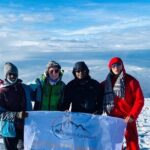
Here is the clean system to know: the National Park requires you to sign for certificates. If you made it to Stella Point at 5,685m, you receive a green certificate. If you reached Uhuru Peak at about 5,895m, you receive a gold certificate. It is a simple way to mark the achievement on paper after the physical work is done.
Price and value: what $2,676.39 gets you, and where you should budget extra
At $2,676.39 per person for this 7-day private activity, you are paying for more than the guiding. This price bundles the core mountain logistics that make the climb workable and safer.
Included in your cost:
- All fees and taxes
- Return transfers between Kilimanjaro airport and Moshi (and Moshi back to the airport)
- Qualified staff: mountain guide, assistant guides, porters, and cook, including their wages
- Camping gear: tents, camp chairs, tables, and sleeping mattresses
- Water and daily comfort: fresh drinking water and hot water for washing each day
- Meals: breakfast daily, plus lunches and dinners throughout
- Emergency oxygen and a basic first aid kit (for emergencies only)
What that means for you: you do not have to figure out how you will manage camp setup, meal timing, water logistics, or basic medical readiness. Those are the parts that can turn a dream climb into a stressful scramble.
Not included (so plan ahead):
- Visas and flights
- Travel and health insurance
- Personal gear (you can rent in Moshi, but it is still on you)
- A portable toilet is optional but strongly recommended
- Personal medicine and water purifying tablets
- Extra meals/snacks beyond what is specified
So is the price worth it? For most people, yes—mainly because it includes staff, equipment, and daily water/food structure. The hidden savings is time and stress: you show up, you follow the plan, and you let the team handle the parts that require experience.
Who should book this Lemosho 7-day climb (and who should reconsider)
This climb fits best if you want:
- A 7-day Lemosho itinerary with gradual pacing and varied terrain
- A group setup where your staff are handling meals, camps, and water planning
- A summit experience that includes sunrise timing at Stella Point
It may be a tougher fit if you:
- Struggle with cold and exposed wind. Barafu and higher camps can be brutal at night.
- Need a very short, low-effort hiking experience. Summit day is long by any standard, and it starts late at night.
- Are not able to bring or rent proper trekking gear and layers. This itinerary expects you to be equipped for cold temperatures.
One more point I respect from the way this kind of climb is described: the emphasis on safety and medical checks shows up in customer feedback. If you want a team that stays organized and responsive, this is the kind of operation that can make the climb feel calmer.
Should you book Pinnacle Adventures & Safaris for the Lemosho 7-day Kilimanjaro climb?
If you want the Lemosho Route specifically, and you value a well-run team over guesswork, this option looks like a strong match. The inclusion list is practical—tents, mattresses, hot water for washing, fresh drinking water, full meal support, and emergency oxygen. That kind of support matters on Kilimanjaro, where small comfort problems snowball into big energy problems.
I would book it if you can handle cold nights and you take summit pacing seriously. If you are sensitive to early-morning starts, long nights, and the idea of multiple high-altitude camps, you should think hard before committing.
Bottom line: for the price, you are buying structure. For many people, that structure is the difference between finishing feeling proud and finishing feeling broken.
FAQ
What route is this climb based on?
This is a 7-day Kilimanjaro climb using the Lemosho Route, starting near Londorossi Park Gate and progressing through camps including Shira Camp Two, Barranco, Karanga, Barafu, and then the summit at Uhuru Peak, with the final descent via the Mweka Trail.
How long is the summit day and when do you start?
You are woken around 23:30 for tea and biscuits to begin the summit attempt. The plan is about 8 hours to reach Uhuru Peak and then about 7 to 8 hours to descend back to Mweka.
Is pickup or airport transfer included?
Yes. The experience includes return transfers between Kilimanjaro airport and Moshi, plus Moshi back to Kilimanjaro airport, and pickup is offered.
What is included with the price?
The price includes all fees and taxes, qualified guides and staff (including their wages), porters and cook, camping equipment, fresh drinking water and hot water for washing daily, and meals (breakfast, lunch, and dinner as specified).
What should I bring since gear and medical items are not included?
You should plan for personal hiking and trekking gear (you can rent gear in Moshi), plus personal medicine and water purifying tablets. A portable toilet is optional but recommended.
What is the cancellation deadline for a full refund?
You can cancel up to 3 days in advance for a full refund. If you cancel less than 3 full days before the start time, the amount you paid will not be refunded.