REVIEW · ARUSHA
4 Days / 3 Nights Lake Manyara, Ngorongoro and Serengeti
Book on Viator →Operated by Cubs Expeditions Limited · Bookable on Viator
That pop-up roof turns every stop into front-row viewing. This 4 days / 3 nights safari is built for close animal encounters, from Lake Manyara’s tree-climbing lions to the crater wildlife at Ngorongoro. I especially like that you get airport or hotel pickup in Arusha, then spend real time on game drives instead of rushing between places with no viewing.
I also like the human side: the company’s team is repeatedly praised for being organized and responsive, with guides and staff named like Humphrey, Eli, Solomon, Arno, Amani, and Chef Khalil showing up in the experience stories. One thing to consider is that sightings are never guaranteed in the wild, and conditions like rain vs. dry season can change what you see and when you see it.
In This Review
- Key moments that make this safari click
- The simple formula: two classics plus one wow-factor crater
- Arusha kickoff: a 6:00 am start that’s actually worth it
- Day 1 Lake Manyara: elephants, flamingos, and the tree-climbing twist
- Day 2 Serengeti: Seronera river country and the long-plains feeling
- Day 3 Ngorongoro Conservation Area: crater energy starts with an early drive
- Day 4 Ngorongoro Crater: descending over 600 meters and scanning for predators
- Guides, organization, and the small details that make the day run
- Price and value: $1,700 per person for a tight circuit
- Who this safari fits best (and who should think twice)
- So, should you book it?
- FAQ
- What does this safari include?
- Where does the tour start and when?
- How many days and nights is the trip?
- Which parks are visited?
- Are park tickets included?
- What is the group size?
- Is there free cancellation?
Key moments that make this safari click
- Pop-up roof 4×4 jeep for better viewing while you’re driving and tracking animals
- Lake Manyara variety: elephants, flamingos, baboons, buffalo, and the famous tree-climbing lions
- Serengeti Seronera focus for wildlife-rich plains around the river area
- Ngorongoro crater timing with an early descent and predator sightings that can take patience
- Olduvai Gorge stop for a human-history break that’s genuinely interesting
- Small group size (max 15) which often makes the day feel easier and less chaotic
The simple formula: two classics plus one wow-factor crater
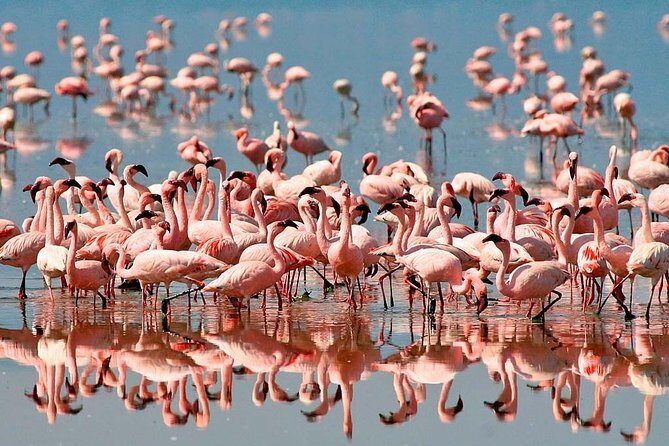
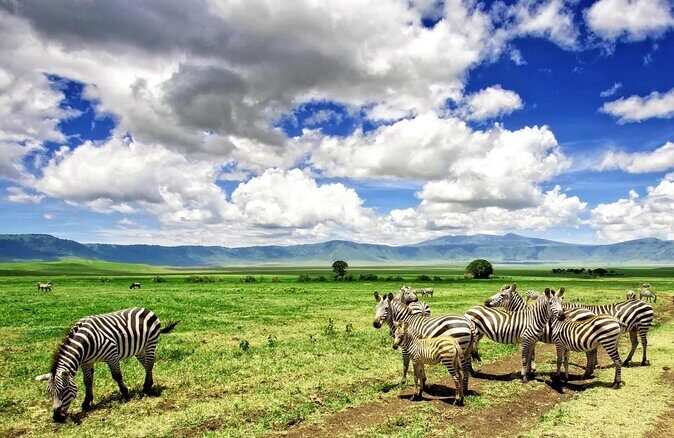
This safari works because it hits three “must-do” regions in northern Tanzania, each with a different wildlife vibe. Lake Manyara is compact and diverse, Serengeti is open and huge, and Ngorongoro Crater is the kind of place where the geology does part of the work for you. In practical terms, you’re moving far enough to change scenery, but not so much that every day becomes pure driving.
The time budget also matters. You get multiple game drives on arrival day at Lake Manyara, then you spend a full day transitioning into Serengeti and driving in the central area known for wildlife. After that, you go early into Ngorongoro Conservation Area and build in an Olduvai Gorge stop, then finish with a crater-focused day. If you like wildlife more than spreadsheets, this schedule feels balanced.
A few more Arusha tours and experiences worth a look
Arusha kickoff: a 6:00 am start that’s actually worth it
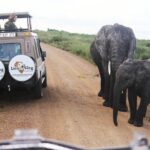
The tour starts in Arusha with pickup from the airport or your Arusha hotel, then you’re set up for safari-style touring right away. Start time is listed as 6:00 am, which is early, but it’s also how you maximize daylight for animal movement and feeding. You’ll be in a 4×4 safari jeep with a pop-up roof, which is a big deal for visibility, especially when animals are close, moving across the road, or you’re trying to keep everyone’s sightline clear.
You’re also given mineral water during the trip, and meals are included (breakfasts, lunches, and dinners). That sounds basic, but on safari it affects your day: fewer worries about snacks and timing means you can stay focused on spotting animals.
Small-group setup matters too. With a maximum of 15 travelers, you’re less likely to feel herded, and your guide can manage pacing and stops without the constant traffic-jam effect you get on large group trips.
Day 1 Lake Manyara: elephants, flamingos, and the tree-climbing twist
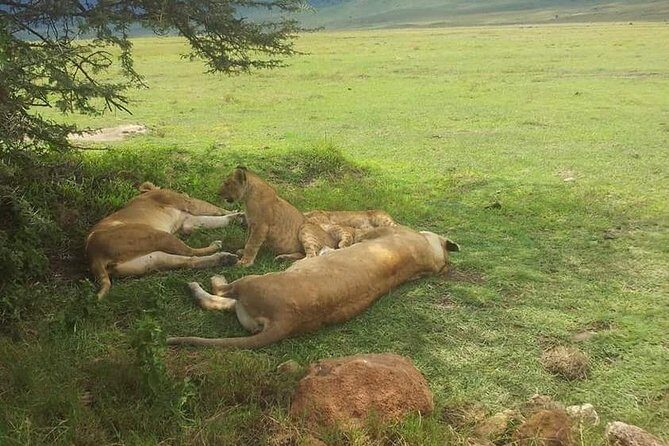
Day 1 is where many people get the “we’re really here” feeling. After breakfast, you drive to Lake Manyara with a lunch box. Then you do both a morning and an afternoon game drive in the park, which gives animals two chances to show up at the times they like best.
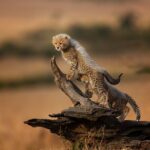
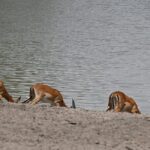
Lake Manyara’s main draw is variety in a relatively small area. You’re looking out for elephants, zebras, buffalo, giraffes, baboons, warthogs, and large flocks of flamingos drawn to algae in the lake. The standout feature people talk about is the chance to see tree-climbing lions, a behavior that’s rare enough to feel like a special event when it’s happening in front of you.
What I’d consider if you’re planning your expectations: Lake Manyara can be weather-sensitive. Visibility, animal activity, and lake conditions can shift how easy it is to find certain species. Still, even when specific moments are fleeting, the park’s mix keeps the drive engaging.
Your overnight stay on Day 1 is listed as Marera View Lodge, with dinner and breakfast included.
Day 2 Serengeti: Seronera river country and the long-plains feeling
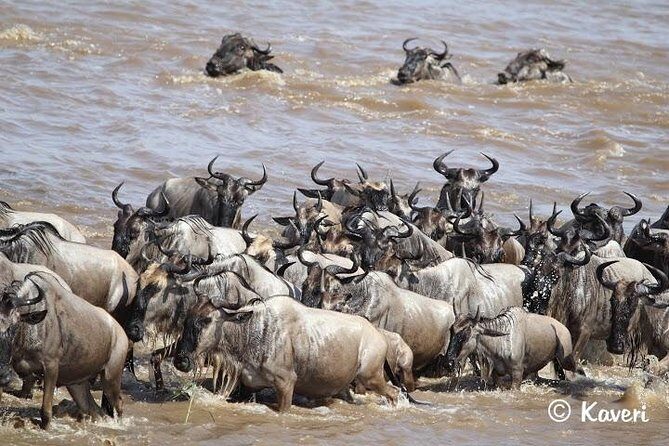
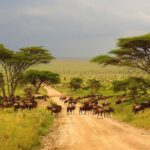
On Day 2, you transfer about 145 km toward Serengeti, with non-game viewing time of roughly 3 to 4 hours. The route passes through Karatu farmland and the Ngorongoro Conservation Area before dropping into the Serengeti region. Even if you’re thinking only about animals, this transition day can matter because it gets you into the right rhythm: you arrive with enough energy for the central Serengeti section.
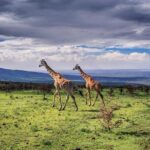
The focus is on the Seronera area, known for being one of the richest wildlife habitats in the park. A key detail here is the Seronera River. In plain terms, water attracts life, and where water shows up consistently, animals follow. That means your guide can spend less time guessing and more time scanning.
You can also use the Seronera day as a Big Five strategy. Some safaris make one park do all the work; this one spreads your chances across different landscapes and predator patterns. The wild doesn’t guarantee anything, but the structure gives you multiple angles.
What to keep in mind: game drives in Serengeti are long, and your best viewing depends on where animals decide to be. That’s part of the adventure, but it’s also why having a pop-up roof jeep is so useful. You can spot faster, and you can react faster when movement happens.
Day 3 Ngorongoro Conservation Area: crater energy starts with an early drive
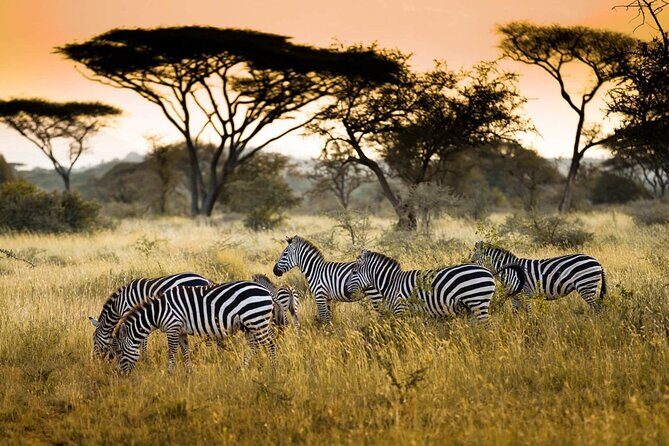
Day 3 begins with an early game drive in the Ngorongoro Conservation Area, then you transition with a stop at Olduvai Gorge. The drive time for this leg is again listed as about 145 km, with non-game viewing time of roughly 2 to 4 hours.
Olduvai Gorge is your “pause from animals, but keep your mind engaged” moment. It’s known for human-evolution discoveries by Drs. Lois and Mary Leakey, including skulls referred to as Nutcracker Man and Handy Man. If you only want wildlife, this might sound like a detour. But it adds meaning to the trip. You go from seeing survival in the animal world to seeing how humans have also studied survival and change over time.
After the Olduvai Gorge stop, you transfer to your lodge for dinner and overnight. The overnight accommodation listed for Day 3 is Ang’ata Tented Lodge.
One caution: Olduvai Gorge and the day’s driving can add up, so it helps to pace yourself physically. Bring a way to keep warm and stay comfortable between drives, because early starts plus crater-bound routes can feel more intense than you expect.
Day 4 Ngorongoro Crater: descending over 600 meters and scanning for predators
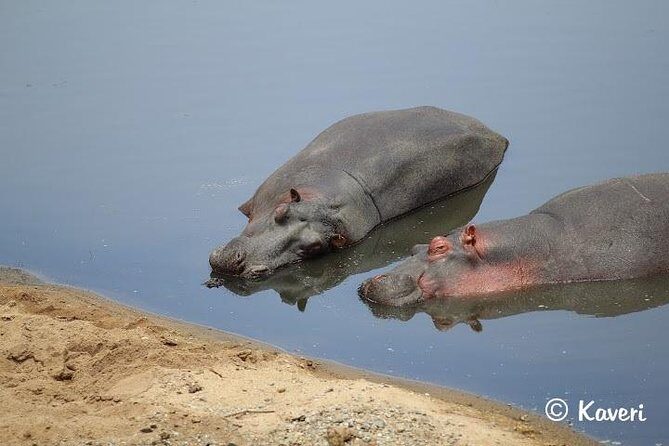
Day 4 is the big one for many safari-minded travelers: you descend over 600 meters into the crater to view wildlife. This is not just a scenic detail. The crater’s shape creates a natural “gathering bowl,” and with a year-round supply of water and fodder, the area supports animals in a dense, visible way.
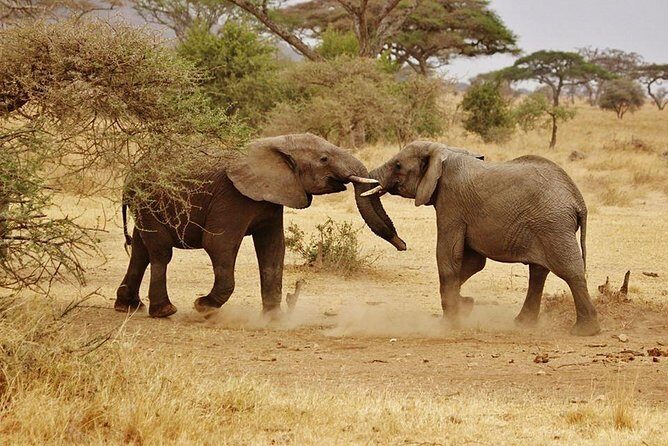
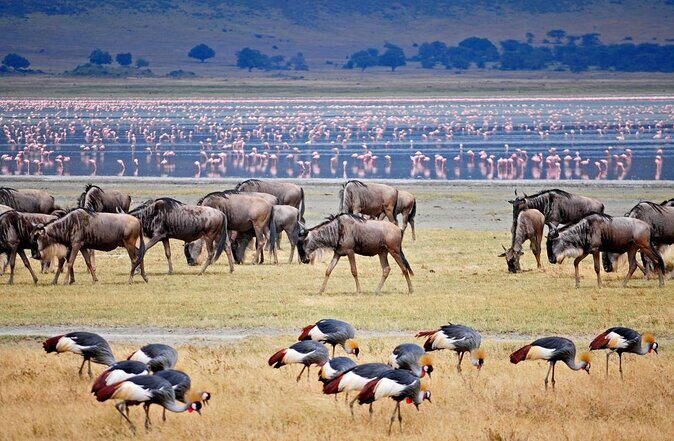
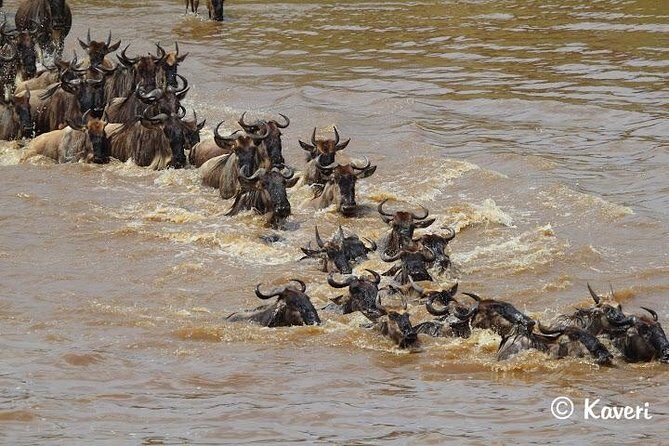
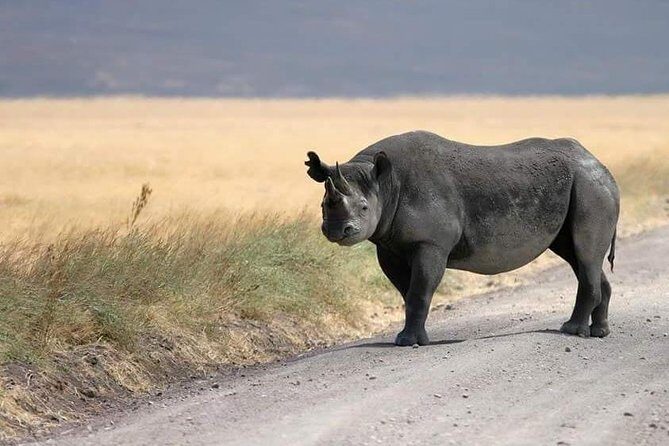
You’ll see species that include wildebeest, zebra, buffalo, eland, warthog, hippo, and giant African elephants. You’re also in predator country, with lions, hyenas, jackals, cheetahs, and the ever-elusive leopard. The leopard piece matters: spotting it sometimes requires a trained eye, which is exactly where having a good guide changes the game. A guide’s scan habits, reading of animal behavior, and knowledge of where predators tend to appear can cut down a lot of guesswork.
You’ll also visit Lake Magadi, described as a large but shallow alkaline lake in the southwestern corner. That stop gives you a different kind of viewing than pure animal tracking. It’s a scene change that helps break up the day’s scanning.
If your goal is photos, remember that the crater can be busy with vehicles. The best viewing moments come from your guide picking the right angle quickly and staying patient for movement.
Guides, organization, and the small details that make the day run
This is the part that shows up again and again in the experience stories: organization and communication. The company’s coordinator Humphrey is repeatedly described as responsive and available for questions, including support through WhatsApp and email. On the driving side, named guides and staff you may be paired with include Eli, Solomon, Arno, Amani, Ed, and Issa for various trip roles.
It’s not just names. The real value for you is stress reduction. When communication is quick and clear, you can focus on safari basics: being on time for early drives, knowing how the day flows, and trusting that meals and transfers are handled. When food is included and prepared well by the team (Chef Khalil comes up in multiple accounts), it means you don’t spend your day hunting for snacks or timing meals around your own planning.
One practical point: tips are not included, and safari staff work hard. If you go into the trip ready to budget for gratuities, you’ll feel more relaxed during the final leg.
Price and value: $1,700 per person for a tight circuit
At $1,700 per person, the price sits firmly in the mid-range for a 4-day/3-night northern safari. For your money, you’re getting several things that normally cost extra or require coordination: pickup and drop-off in Arusha (airport or hotel), a safari jeep with a pop-up roof, game drives, mineral water, and meals (lunches, dinners, and breakfasts).
You’re also dealing with real distances and multiple parks. Day 2 and Day 3 include transfers around 145 km, and Day 4 includes a longer route (listed as about 210 km). That kind of driving means you’re not just paying for parks; you’re paying for transportation, time, and effort to keep the schedule workable.
Where the price can feel more or less “worth it” depends on what you compare it to. If you’re comparing against DIY driving, you’re paying for local routing, park navigation, and guide spotting. If you compare against ultra-luxury private safaris, you’re likely paying less while still keeping the core ingredients: early drives, good vehicle visibility, and structured park time.
Who this safari fits best (and who should think twice)
This tour is a strong fit for you if you want a classic northern Tanzania mix in a short window. You’ll likely love it if your top priority is game drives and you’re okay with the fact that wildlife is always a bit unpredictable.
It’s also a good match for groups who want a shared experience without feeling overcrowded, thanks to the max 15 traveler cap. And if you value a smooth setup—pickup, meals, and lodge nights—this package style helps.
You might think twice if you’re the kind of traveler who needs constant comfort upgrades or expects guaranteed sightings of specific animals every day. Even in a well-run safari, weather and seasonal changes can affect what’s active and visible.
So, should you book it?
If you want a focused safari circuit with real game-drive time, a pop-up roof jeep, and a team that’s praised for staying organized and responsive, this one is an easy recommendation. The mix of Lake Manyara, Serengeti (Seronera), and Ngorongoro crater gives you multiple chances at the animals people remember most, plus an Olduvai Gorge stop that adds meaning beyond wildlife.
Book it if your priorities are visibility, structured days, and guides who help you find animals in motion. Hold off only if you need a very specific lodge style throughout (since accommodations are only partially listed) or you’re uncomfortable with the basic fact of safari life: animals decide the schedule.
If you do book, send a message early to confirm what you want to optimize (early spotting, predator chances, and how you prefer pacing). That kind of prep tends to pay off quickly on a short safari.
FAQ
What does this safari include?
Pickup and drop-off to the airport, hotel accommodation in Arusha before the safari starts, a 4×4 safari jeep with pop-up roof, game driving, mineral water, and meals (lunches, dinners, and breakfasts).
Where does the tour start and when?
It starts in Arusha, Tanzania, with a start time of 6:00 am. Pickup is available from Arusha airport or your Arusha hotel.
How many days and nights is the trip?
It’s 4 days / 3 nights.
Which parks are visited?
You visit Lake Manyara National Park, Serengeti National Park, and Ngorongoro Conservation Area / Ngorongoro Crater.
Are park tickets included?
The experience details show admission ticket free.
What is the group size?
The maximum group size is 15 travelers.
Is there free cancellation?
Yes. You can cancel up to 24 hours in advance for a full refund, and changes within 24 hours aren’t accepted.