REVIEW · MOSHI
Kilimanjaro Lemosho Route 7 Days
Book on Viator →Operated by Jaribu Africa Adventures · Bookable on Viator
Big mountain days, managed with real care. This 7-day Kilimanjaro Lemosho route from Moshi is built around the idea of trek high and sleep low to help your body adjust, while still giving you classic highlights like Shira Plateau views, Lava Tower, and the Great Barranco Wall. I also like the way the operation leans hard into safety and comfort, from vital-sign monitoring and emergency oxygen to a portable hyperbaric chamber (the Gamow bag) and a camp setup that includes a private-style wash setup and a tented toilet.
You’ll especially feel that balance on the hardest days: the slow, controlled pacing on the ascent and the early push to the summit are matched with real medical readiness. One consideration: this is not a quick hike. You’ll do long walking days, including a midnight-to-sunrise summit effort, so you’ll want solid fitness and the right attitude toward cold, altitude, and steep ground.
In This Review
- Key things I’d watch for
- Lemosho’s Start Above Machame: Why Your First Days Feel Like You’re Entering Kilimanjaro
- The Altitude Strategy: Trek High, Sleep Low on a 7-Day Schedule
- Day 1: Londrossi Gate to Lemosho Glades (1981m to 2780m)
- Day 2: Ridge Tracks Into Montane Forest and Moorland (2780m to 3511m)
- Day 3: Shark’s Tooth to the Alpine Desert Zone (3511m to 4175m)
- Day 4: Lava Tower (4530m Lunch) and the Down Into Great Barranco Valley
- Day 5: Great Barranco Wall (A Steep Climb With Real Reward)
- Day 6: Midnight Summit Push—Stella Point to Uhuru Peak (5685m to 5882m+)
- Day 7: Steep Mweka Rain Forest Descent and Your Summit Certificates
- Price and Value: Is $2,500 a Good Deal for This 7-Day Lemosho Trek?
- Camp Comfort Isn’t a Luxury Here: It Helps You Keep Going
- Fitness Fit: Who This Trek Suits (and Who Might Struggle)
- Should You Book This 7-Day Lemosho Route With Jaribu Africa Adventures?
- FAQ
- What’s included in the trip from Moshi/Arusha?
- What lodging is included before or after the mountain?
- What kind of tents and toilet setup do you use on the trek?
- Is medical and altitude safety equipment included?
- Do you handle national park fees and rescue fees?
- What happens on summit day regarding certificates?
- What is not included in the price?
- Is cancellation free, and what if the weather is bad?
Key things I’d watch for
- Treks designed for acclimatization: the route repeatedly gains height then offers recovery to reduce altitude stress.
- Real safety gear on the mountain: pulse oximeter, oxygen, Gamow bag, and vital sign monitoring.
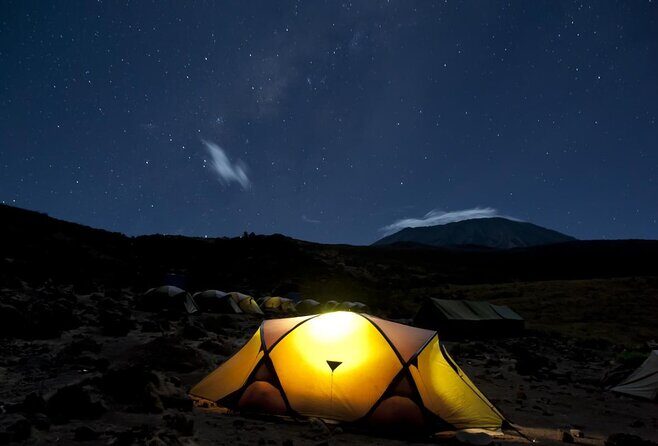
- Special camp comforts for a “real trek”: walk-in mess tent, hot washing water, and a private flush-toilet tent.
- Big visual payoffs: Shira Plateau, a Lava Tower panoramic option, and summit views from Stella Point to Uhuru Peak.
- Staff depth matters: you’re supported by a full crew—guides, cooks, and porters—with radio communication and AMREF medical evacuation plans.
Lemosho’s Start Above Machame: Why Your First Days Feel Like You’re Entering Kilimanjaro
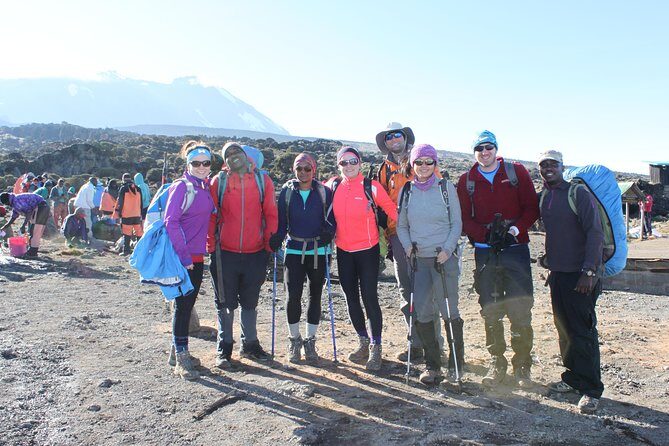
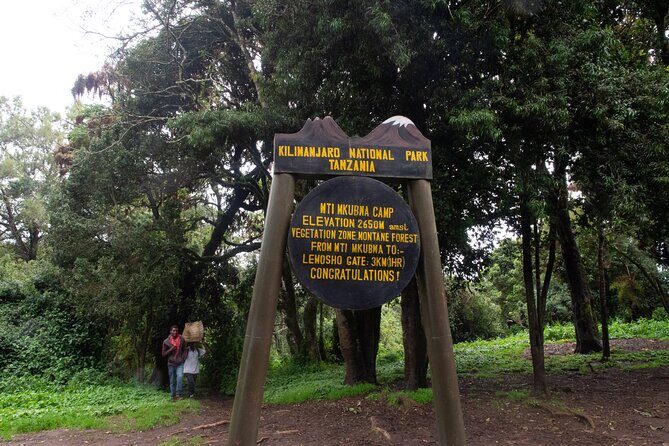
The Lemosho route starts with a drive to Londrossi Gate, then it quickly shifts from roads and plantations into the mountain zones that make Kilimanjaro feel so different from “just another hike.” You’ll pass through pine plantations, then move into Montane Forest and higher moorland before you ever start thinking about the summit.
That matters because your first big challenge is not the summit. It’s altitude—plus the mental habit of moving steadily when it would be easier to rush. The program’s rhythm uses that first stretch to get you walking comfortably while your body starts learning how to breathe at higher elevation.
A few more Moshi tours and experiences worth a look
The Altitude Strategy: Trek High, Sleep Low on a 7-Day Schedule
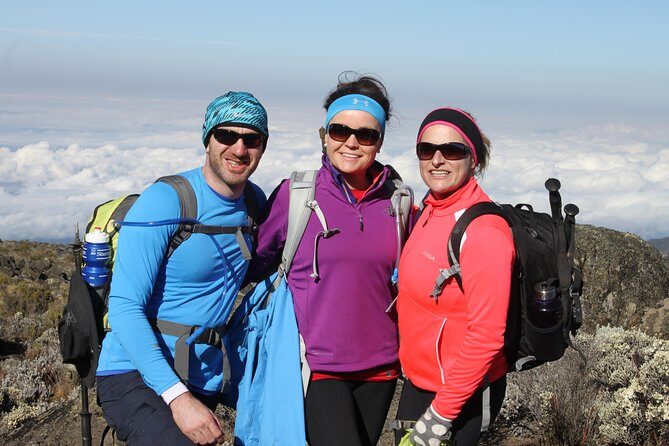
On Kilimanjaro, the big enemy is not the mountain. It’s the altitude hit you take before your body adapts. This route is explicitly built around the trekking pattern often described as trek high and sleep low—you’ll gain elevation during the day, then camp a bit lower than your day’s high point. That helps your acclimatization process and can reduce the odds of altitude sickness.
A big practical detail is the pace: you’ll hear “pole pole” (slowly slowly) and you’ll feel it in the itinerary design. Day 2 includes a long walking time (about 7 hours) over narrow tracks as you climb, but the plan avoids a forced sprint to camp. Same idea on Day 3 and Day 4: steady effort, then recovery.
You still need to take personal responsibility seriously. If you feel unwell, you should speak up early. The tour includes medical readiness (oxygen, monitoring, and rescue planning), but no system replaces honest communication at altitude.
Day 1: Londrossi Gate to Lemosho Glades (1981m to 2780m)
Day 1 begins with logistics done right. You drive by 4WD to Londrossi Gate, meet your guides and mountain crew, and then handle the formalities: climber registration and weighing duffle bags. The porter load limit is enforced at the mandatory 20kg cap, which is an ethical detail that also affects how the whole operation runs smoothly.
After registration, you drive about 11km along narrow dirt roads through pine plantations to Lemosho Glades. Then you start walking—about 4 to 5 hours total for roughly 7km. This is your first real acclimatization step, with starting altitude around 1981m (6890ft) and finishing around 2780m.
The main “win” on Day 1 is that it doesn’t feel rushed. You’ll be hiking as the environment changes, not battling a sudden spike in effort.
Day 2: Ridge Tracks Into Montane Forest and Moorland (2780m to 3511m)
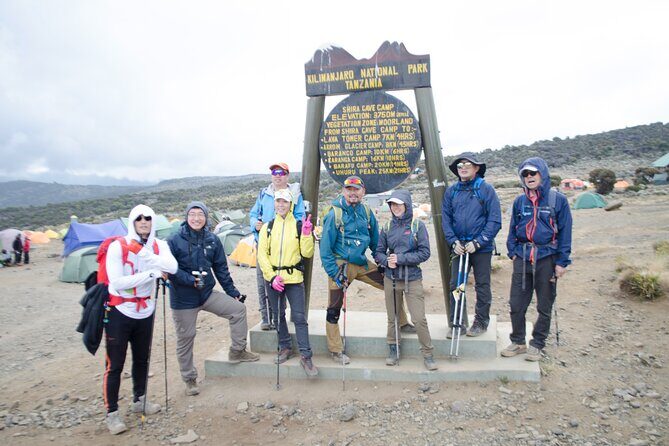
Day 2 is your long climb day: about 7 hours and around 12km, moving from Montane Forest into moorland. You’ll notice big changes in plant life as the altitude rises, including giant heather and erica. Higher up, you may encounter giant groundsel (Senecio kilimanjari) and giant levelia—plants that make the mountain feel both alive and oddly fragile.
The itinerary doesn’t push you to “arrive fast.” It builds your stamina at a pace that helps your body adjust. That slow rhythm is important on Day 2 because you’re transitioning from easier hiking zones to areas that feel colder and drier as altitude climbs.
If you’re the type who loves to keep a steady hiking speed, you’ll still need to follow the slower pace here. The route’s value is in pacing discipline.
Day 3: Shark’s Tooth to the Alpine Desert Zone (3511m to 4175m)
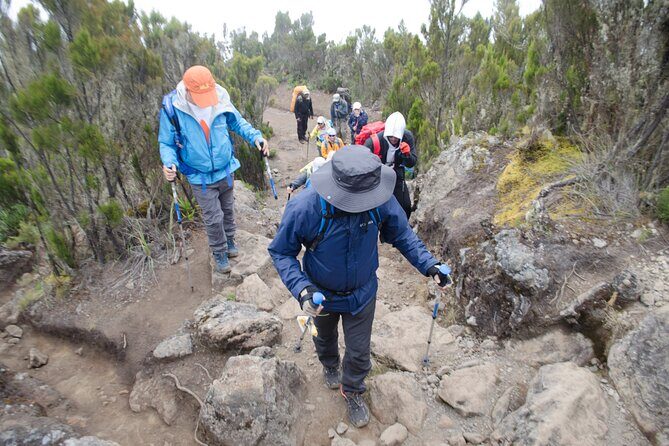
Day 3 is where Kilimanjaro starts to feel more barren—heather gives way to high-altitude desert. You’ll trek steadily northwards toward a landmark called Shark’s Tooth and keep acclimatizing as you climb toward about 4175m. Expect around 5 to 6 hours of hiking for roughly 9km.
The environment changes again: in this high desert zone, only hardy plants survive, like small senecios and hardy everlastings. The route then sets you up near massive volcanic features, including the Lent Group (large volcanic dykes).
This is the day you’ll likely start feeling how weather affects everything. Cloud cover, cold wind, and dry air can change how your body performs. Hydration and slow steps matter more here than on lower trails.
Day 4: Lava Tower (4530m Lunch) and the Down Into Great Barranco Valley
Day 4 begins with a descent down a rocky scree path to Lava Tower for lunch (Lava Tower sits around 4530m). It’s about 5 to 6 hours total and roughly 6km, but don’t let the shorter distance fool you. Scree is slow work, and you’ll be at altitude.
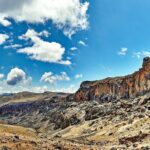
There’s an optional non-technical rock scramble to the top of Lava Tower if you feel good. If you take it, you get 360-degree style panoramas—Shira Plateau below you, the Karanga Valley in view, and major features across the mountain. Even without the scramble, Lava Tower is worth it for the sense of scale.
After lunch, you descend steeply for about 2 hours—dropping more than 600m—into the Great Barranco Valley. The benefit of that descent is that it sets you up for the next day’s challenge while giving you fresh terrain variety for photos and headspace.
Day 5: Great Barranco Wall (A Steep Climb With Real Reward)
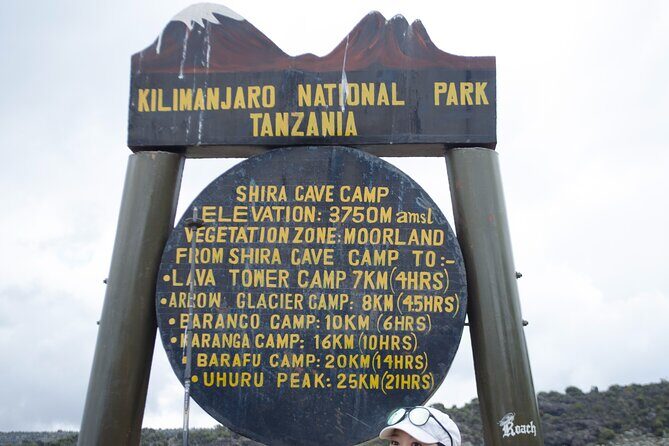
Day 5 tackles the Great Barranco Wall, an imposing face above Barranco camp. The hiking time is about 6 to 7 hours for roughly 9km, moving from roughly 4039m up toward about 4600m.
You’ll climb up the eastern wall and may reach just below the Heim Glacier. Depending on weather and cloud cover, you can get some breathtaking glacier views. Even if clouds roll in, the terrain itself is memorable: the wall is steep enough to make you focus on foot placement and controlled breathing.
Then you continue down into the alpine desert of the Karanga Valley. This is where temperature often drops, and where you’ll feel that the mountain is not just high—it’s also exposed.
Day 6: Midnight Summit Push—Stella Point to Uhuru Peak (5685m to 5882m+)
If you want a “summit day” that feels like its own expedition, this is it. Day 6 starts early, with you leaving camp around midnight (about 12am). You take a warm drink and a light snack, then begin the most difficult day of the trek.
After about 6 hours of slow but strenuous hiking, you reach the rim of the main crater at Stella Point (5685m). That stop is a big moment. You rest, eat lunch, and take in views over the clouds. If you’ve been feeling altitude fatigue, this pause helps you reset.
From Stella Point, the route is normally snow-covered, and the final ascent toward Uhuru Peak is challenging. You pass alongside the iridescent blue Rebmann and Tarzel glaciers and continue to Elveda Point (5882m), where Uhuru Peak can feel like minutes away.
This day is long—listed at about 12 hours total—and it’s mentally demanding. The good news is that this tour’s safety kit is built for it: emergency oxygen, the Gamow bag, vital-sign monitoring, and structured response if someone struggles.
Day 7: Steep Mweka Rain Forest Descent and Your Summit Certificates
Day 7 is the payoff-and-recovery day. You descend steeply through the lush Mweka rain forest, with hiking time about 5 to 6 hours and around 13.5km. The trail can be slippery if wet, so trekking poles (if you bring them) and careful footing matter.
The route follows the crest of a broad ridge between river valleys until you meet a road near the end. Then it’s a final walk of about 40 minutes to the Mweka Park Gates for a well-deserved picnic lunch.
Here’s a small detail I really like: successful hikers receive summit certificates from the Kilimanjaro National Park Authority. Gold is for Uhuru Peak; Green is for Stella Point. It’s a neat official way to mark the effort, especially if summit success depends on how you feel on summit night.
After celebrations, you’re taken by private bus or Jeep to your hotel in Arusha.
Price and Value: Is $2,500 a Good Deal for This 7-Day Lemosho Trek?
At $2,500 per person, you’re not just paying for the trail. You’re paying for the mountain operation behind it—national park fees, staffing, camp infrastructure, and serious medical readiness.
The list of included items is long and practical:
- National park entrance, camping/hut fees, and rescue fees (plus VAT on park entrance fees)
- A full support team (guides, cooks, porters) with salaries included
- Vital-sign support: pulse oximeter and comprehensive monitoring
- Emergency and altitude safety: emergency oxygen and the Gamow bag
- Medical evacuation planning with AMREF Flying Doctors
- Camping gear and setup, including 3-person expedition tents (2 clients per tent)
- A shower/wash tent and a portable tented private flush toilet
- Food: breakfast, lunch (7), dinner (7), plus purified water on the mountain
- Camp extras that make a difference after long hiking days: hot washing water twice daily, hot steamy towel, and wine and champagne at summit
So what’s the real value test for you? Ask yourself whether you want to be on a trek where safety and comfort systems are built in—not “promised.” This tour does include those systems, and it also handles ethical porter practices (20kg limit and fair treatment).
What’s not included matters too: international airfare, visas, staff gratuities, immunizations, and personal trekking equipment. If you already know you’ll spend extra on gear, make sure that cost is in your budget.
Camp Comfort Isn’t a Luxury Here: It Helps You Keep Going
On Kilimanjaro, recovery is part of the climb. This operator includes things that help your body reset between hiking days.
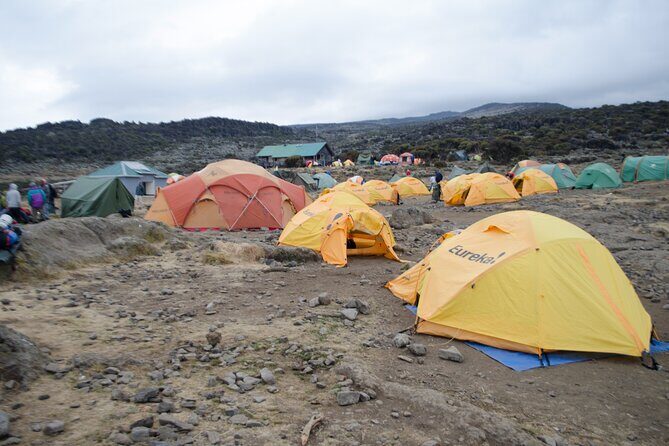
Your base camp setup includes expedition walk-in mess tent and lightweight aluminum table and mess tent gear, which makes meal time more functional than cramped. You also get a shower/wash tent and hot washing water in the morning and evening, plus a hot steamy towel—small things, but they can change how you sleep and how your legs feel the next morning.
The tent situation is also clearly defined: 3-person expedition tents with 2 clients per tent, plus a portable tented private flush toilet. That’s not about “feeling fancy.” It’s about reducing stress during a trip where you’ll already be managing cold nights, altitude fatigue, and long days.
Food is listed as large portions of fresh, healthy, nutritious meals, with purified water available on the mountain. If you’re prone to under-eating on long hikes, this matters.
Fitness Fit: Who This Trek Suits (and Who Might Struggle)
This is aimed at travelers with a moderate physical fitness level, and the route timing fits hikers who can maintain steady uphill effort for 5 to 7 hours most days. Still, you should plan for real variation:
- Day 2 is long at about 7 hours.
- Day 5 is challenging with a steep wall and altitude.
- Day 6 is the big test at around 12 hours with snow-covered final ascent conditions that are normally expected.
If you tend to hike fast and ignore pacing, this route will teach you discipline. If you’re comfortable walking steadily, taking breaks, and listening to your body, you’ll likely do well.
Also consider expectations around weather. This experience requires good weather, and if conditions are poor, you’ll be offered a different date or a full refund.
Should You Book This 7-Day Lemosho Route With Jaribu Africa Adventures?
I’d book this route if you want:
- a climb that emphasizes acclimatization and slow pacing,
- a summit day plan that includes strong altitude safety tools,
- and camp support that goes beyond the basics with a functioning toilet setup, wash tent, and recovery-focused comfort.
You might skip it if you hate early starts, strong climbs, and slippery descents, or if you’re not ready for a midnight summit push. At $2,500, you’re paying for a full support package, not a “barebones” trek.
If you’re the kind of person who likes clear structure, steady pacing, and a team that handles the details—this looks like a solid match.
FAQ
What’s included in the trip from Moshi/Arusha?
Pickup is offered, and the package includes airport transfers plus return transfer between Arusha and the park gate area.
What lodging is included before or after the mountain?
The itinerary includes 2 nights of accommodations on a bed-and-breakfast basis at either Ameg Lodge or Salinero Hotels.
What kind of tents and toilet setup do you use on the trek?
You’ll use 3-person expedition tents with 2 clients per tent. There is also a shower/wash tent and a portable tented private flush toilet.
Is medical and altitude safety equipment included?
Yes. The package includes emergency oxygen, comprehensive vital sign monitoring, a pulse oximeter, and a portable hyperbaric chamber called a Gamow bag. It also includes medical evacuations with AMREF Flying Doctors.
Do you handle national park fees and rescue fees?
Yes. Kilimanjaro National Park entrance, camping/hut fees, and rescue fees are included (including VAT on park entrance fees).
What happens on summit day regarding certificates?
At Mweka Park Gates, successful hikers receive summit certificates from the Kilimanjaro National Park Authority. Gold is for Uhuru Peak, and Green is for Stella Point.
What is not included in the price?
Not included are international airfare, visa costs, staff gratuities, immunizations, personal trekking equipment, and personal expenses (plus any extra evacuation fees or medical fees if they occur).
Is cancellation free, and what if the weather is bad?
Cancellation is free up to 24 hours in advance for a full refund. If the experience is canceled due to poor weather, you’ll be offered a different date or a full refund.