REVIEW · ARUSHA
7 Day The Great Savannah Luxury Safari All Inclusive
Book on Viator →Operated by TALES OF TANZANIA SAFARIS · Bookable on Viator
Seven days across Tanzania’s savannah feels fast, and huge. I like the way this route stacks four different ecosystems in one trip, from Tarangire’s elephant herds and baobabs to Serengeti’s endless plains, then down into Ngorongoro’s crater for Big Five odds and Lake Manyara for the famous tree-climbing lions. I also like the practical “less to worry about” setup: six meals included for most of your safari days. One consideration: this is an all-in, high-comfort safari at a premium price, and you’ll still spend real time in the vehicle, including early mornings.
You’ll start in Arusha, get picked up from Kilimanjaro International Airport, and settle into a rhythm that mixes game drives with breaks. And there’s a human touch here: guides like Dismas have been specifically praised for making the days feel memorable, and a coordinator named Pendo has been noted for fast, helpful replies when planning.
At $4,570 per person, you’re paying for a private safari circuit, in-park touring, and meals that cover most of the trip. Just plan ahead for what’s not included: tips, visa, and your international flight—because those can be the budget curveballs later.
In This Review
- The Great Savannah Safari Route in Plain English
- From Arusha Arrival to Your First Safari Day
- Tarangire National Park: Elephants, Silale Swamp, and Big-Group Safari Energy
- Lake Manyara: Pink Distance, Groundwater Forest, and Tree-Climbing Lions
- Serengeti Central Plains: “Endless” Visibility and Sunrise Game Drives
- Daytime Serengeti with an Optional Maasai Village
- Sunrise Serengeti: When the Big Cats Are Most Active
- Ngorongoro Crater: A Tight Ecosystem and Big Five Odds
- Meals and Luxury: What All-Inclusive Actually Means Here
- Private Tour Style: Why Your Group Experience Matters
- Value Check: Is $4,570 per Person Fair for This Safari?
- Who Should Book This Safari (and Who Should Rethink It)
- Final Verdict: Should You Book This 7-Day Great Savannah Safari?
- FAQ
- What’s the starting point of this safari?
- How many days is the safari?
- Which parks are included?
- Is the tour private?
- What meals are included?
- Are park admissions included?
- Is there an early morning game drive?
- Is the Maasai Village visit included?
- What’s not included in the price?
- Is free cancellation available?
The Great Savannah Safari Route in Plain English

This safari is built like a best-of Tanzania sampler, but not in the rushed way. The core idea is simple: different parks, different wildlife styles, different scenery, and enough variety that one day doesn’t feel like a repeat of the last.
You’ll move from Arusha into Tarangire, then across to Lake Manyara, and into the big-ticket stretch of the Serengeti. After that, you shift gears to Ngorongoro Crater, where the wildlife is packed into a natural “bowl” and sightings can feel more concentrated. Your last day returns you to Arusha or toward Kilimanjaro for onward travel.
Because it’s private, the pacing and timing can better match your group’s energy—rather than being forced into a fixed schedule shared with strangers.
From Arusha Arrival to Your First Safari Day

Day 1 is about getting you set up, not about forcing you into a long drive right away. You’ll be met at Kilimanjaro International Airport by a Tales of Tanzania Safaris representative and transferred to your hotel. After that, the rest of the day is yours to manage.
This matters more than it sounds. Tanzania safari days can start early, and jet lag is real. Having time to rest, swim, and do a light orientation around Arusha helps you show up for the wildlife days with your brain switched on.
A few more Arusha tours and experiences worth a look
Tarangire National Park: Elephants, Silale Swamp, and Big-Group Safari Energy

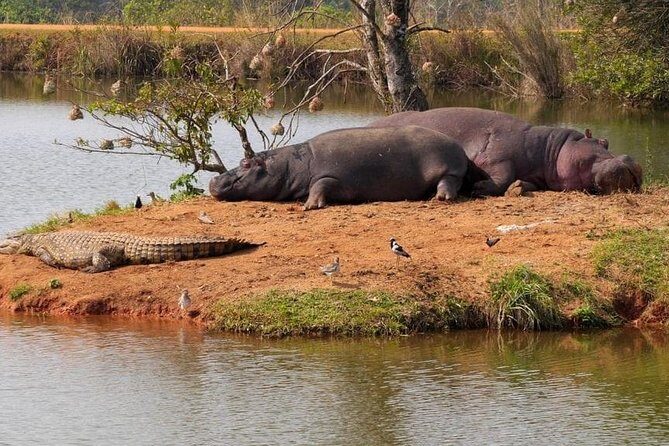
Tarangire National Park is the kind of place that instantly resets your expectations. It’s known for large herds of elephants, and it’s also a strong stop for lions and leopards, plus birdlife and varied scenery.
What I like about Tarangire as a first major park stop is the water story. The Silale Swamp (toward the south of the park) is described as reliably full of wildlife because animals keep coming back to it. There’s also the Tarangire River, which supports wildlife beyond the swamp. In plain terms: when water is consistent, animals are consistent too.
You’ll drive about 110 km from Arusha, roughly a 2-hour transfer. That’s not too brutal for a Day 2 start, and it gives you a smooth ramp into safari mode.
Practical note: Tarangire can deliver that classic safari feeling—big groups, lots of movement, and a “wow” factor that comes quickly. If you’re the type who likes action early in the trip, this is a smart place to begin.
Lake Manyara: Pink Distance, Groundwater Forest, and Tree-Climbing Lions

Lake Manyara sits between Tarangire and Ngorongoro, and it has a very different feel. The park is known for a groundwater forest area where wildlife gathers—blue monkeys are a standout, and you may also see giraffes, elephants, lions, and leopards. There’s also a scenic lake component, including a pink-dusted view in the distance with flamingos when conditions align.
The setting is described as a scenic strip along the Rift Valley escarpment. The road winds through that lush groundwater forest zone, and the baboon troops and blue monkeys can be eye-catching even before you settle fully into big-game searching mode.
Now, about the tree-climbing lions: Lake Manyara is famously linked with them, and the tour description leans into that. Still, keep your expectations realistic. Lions that climb trees aren’t a guarantee on any single drive. What you can count on is that this is an area with an unusual mix of habitats—so even on a day when you don’t see the exact species behavior you’re hoping for, you won’t feel bored.
If you want variety (and some scenic moments), Lake Manyara is a great middle stop before the scale of the Serengeti.
Serengeti Central Plains: “Endless” Visibility and Sunrise Game Drives

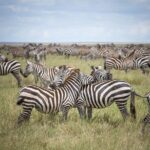
Serengeti is where the phrase endless plains starts to make sense. In the Central Serengeti area, you get wide-open views with acacia trees and rocky kopjes, plus long stretches where you can cover serious ground in a single day.
The big advantage of staying in this part of the Serengeti style is the ability to see a lot. When the terrain opens up, wildlife can appear across distances, and your game drive feels more like scanning a living map than chasing one tight pocket of animals.
You’ll spend two days in this area, and they’re planned with two different rhythms.
Daytime Serengeti with an Optional Maasai Village
On the first Serengeti day, your driver-guide picks you up from your lodge and you head out into the park. There’s an optional stop at a Maasai Village in the Ngorongoro Highlands, where you can meet elders, warriors, women, and children and learn about beliefs and traditions.
This is worth considering based on your travel style. If you enjoy cultural context alongside wildlife, it can add meaning to the photos you’ll take. If you’d rather focus strictly on animals and photography, treat it as optional and skip it.
A few more Arusha tours and experiences worth a look




Sunrise Serengeti: When the Big Cats Are Most Active
On the second Serengeti day, you’ll leave before sunrise, around 6:00 am, for an early morning game drive. The payoff here is practical: cooler temperatures, animals still active, and big cats more likely to be returning from nighttime hunting.
After that early drive, you’ll go back to the lodge for a leisurely breakfast and relaxation time. Then you’ll head out again later for another game drive and sunset viewing.
That two-drive structure is one of the best ways to experience Serengeti without feeling like you’re just burning daylight. Morning gives you energy; sunset gives you mood, and you come away with different lighting and animal behavior.
Ngorongoro Crater: A Tight Ecosystem and Big Five Odds
Ngorongoro Crater is where the trip shifts from wide plains to a natural amphitheater. The crater is described as the world’s largest intact collapsed caldera, and that matters because it forms a self-contained ecosystem with its own wildlife population.
In this kind of setting, sightings can feel more “dense.” You’re not relying entirely on luck spreading out across huge open areas. You’re in a defined bowl of habitats.
You’ll drive to the crater from Serengeti, with the transfer taking about 2 hours. Once inside, the tour highlights lots of lions, hyenas, fantastic birdlife, servals, Cape buffalo, and zebras. There’s also a chance at rhinos if you’re lucky.
The crater visit includes your lunch in the crater, and you’ll continue with the game drive afterward.
One more practical detail: the morning mist can make the view look unreal, and the high altitude means it can be visited at any time of year. That’s a good reason to care about timing, even if you’re not a sunrise person.
Meals and Luxury: What All-Inclusive Actually Means Here
This is described as luxury and all-inclusive, but the most useful way to judge it is by looking at what’s truly covered.
You get 6 breakfasts, 6 lunches, and 6 dinners included. That’s not a small point. Safari travel has a way of eating up your budget and your time if you’re constantly deciding where to eat. Here, the planning is handled.
Dinner and lunch being included also means you can keep the day’s rhythm aligned with game drives rather than guessing restaurants and schedules on the fly.
For drinks and tips: only tips are clearly listed as not included. Still, you should assume you’ll want to bring cash or card options for extras you might want during the day, since tips are separate.
Dietary needs are explicitly mentioned as something they can accommodate, including vegetarian, vegan, and gluten-free. The key is that you should indicate your needs at the time of booking so the kitchen can plan.
Private Tour Style: Why Your Group Experience Matters
This is a private safari/activity, meaning only your group participates. That affects the experience more than people think.
With a private setup, you’re not stuck with someone else’s comfort level. If your group wants longer scanning time for wildlife, you can usually make that work better than in a shared group scenario. If you want breaks, you can usually build them around your driver-guide’s planning.
It also helps with photo timing. Serengeti and Ngorongoro can offer changing scenes quickly, and having control over pacing helps you get the shots you want without feeling like you’re constantly rushing.
Value Check: Is $4,570 per Person Fair for This Safari?

Let’s be honest: this isn’t a cheap safari. At $4,570 per person, you’re buying a bundle: private touring, multiple parks, and meals for nearly the entire safari week.
Where the value shows up:
- You’re covering Tarangire, Lake Manyara, Serengeti, and Ngorongoro in one trip, which reduces the hassle of piecing together separate logistics.
- You’re not paying for daily meals out of pocket, which adds up fast on safari.
- The early morning drive in Serengeti is scheduled, not optional, so you’re more likely to catch the wildlife behavior you paid for.
What could feel pricey:
- Park and activity styles still depend on animal movement. Sightings are never controlled.
- You’ll still sit in the vehicle for long stretches. If you hate travel days, this itinerary may feel like work even when the experience is beautiful.
- Tips and visas aren’t included, so you’ll want to keep a buffer for those.
Overall, if you value comfort, privacy, and reducing “planning stress,” the price starts to look more rational. If you’re on a tight budget and don’t care about private guiding or packaged meals, there may be cheaper ways to see these parks.
Who Should Book This Safari (and Who Should Rethink It)
This safari fits best if you:
- Want a 7-day circuit that hits multiple Tanzanian wildlife hotspots without you coordinating everything yourself.
- Prefer private guiding and a more controlled schedule.
- Like the idea of early morning game drives, especially in Serengeti.
- Value a cultural option like the Maasai Village visit, but want it clearly marked as optional.
You might think twice if you:
- Hate long drives and want more “stay put” days.
- Expect every day to deliver exact behavior highlights like tree-climbing lions. This can happen, but it’s not guaranteed.
- Have a limited budget and would rather pay less even if it means less comfort or less packaged support.
Final Verdict: Should You Book This 7-Day Great Savannah Safari?
I’d book it if your goal is a smooth, high-comfort safari week that covers Tarangire elephants, Serengeti’s big visibility, Ngorongoro’s crater density, and Lake Manyara’s unusual wildlife habitat. The included meals and private style make the days feel easier to manage, especially with early mornings.
I’d hesitate only if you’re price-sensitive or if you’re the type who wants a trip with minimal driving. Also remember: Big Five in Ngorongoro is an opportunity, not a promise, and wildlife timing is always part of the deal.
If you’re comfortable with that tradeoff, this is the kind of safari route that can leave you with a stack of different wildlife memories, not one repeating scene.
FAQ
What’s the starting point of this safari?
The tour starts in Arusha. You’ll be met at Kilimanjaro International Airport and transferred to your hotel on Day 1.
How many days is the safari?
It’s a 7-day safari, listed as approximately 7 days.
Which parks are included?
The safari covers Tarangire National Park, Lake Manyara National Park, Serengeti National Park, and Ngorongoro Crater.
Is the tour private?
Yes. It’s a private tour/activity, so only your group participates.
What meals are included?
The package includes 6 breakfasts, 6 lunches, and 6 dinners.
Are park admissions included?
The itinerary lists admission tickets as free for Tarangire, Lake Manyara, and Serengeti days. The Ngorongoro day includes lunch in the crater.
Is there an early morning game drive?
Yes. One Serengeti day includes an early morning game drive leaving at around 6:00 am.
Is the Maasai Village visit included?
There’s an optional Maasai Village visit in the Ngorongoro Highlands.
What’s not included in the price?
Tips, visa, and international flights are not included.
Is free cancellation available?
Yes. You can cancel up to 24 hours in advance for a full refund.