REVIEW · MOSHI
Savannah Escape & Active Culture Tour
Book on Viator →Operated by Safari by Leo · Bookable on Viator
Four parks in four days.
This tour is a fast, well-paced run through northern Tanzania’s big-name wildlife areas, plus a chance to meet people living close to the land. I like that it’s driven by Leo, a rare professional end-to-end female safari guide, and the trip feels organized enough that you’re not constantly playing catch-up with your own plan.
What really works is the balance: you get the classic parks—Tarangire, Serengeti, and Ngorongoro Crater—and then you shift gears to Lake Eyasi for Hadza hunter-gatherer life. I also appreciate that the day-to-day wildlife focus isn’t the only story; Leo’s work connects the trip to girls’ and women’s menstrual hygiene management through social projects, so your cultural time doesn’t feel like a side quest.
The main drawback is simple: the schedule is packed. You’ll be doing long drive days and early starts, and at this price point, you’ll want to be sure you’re comfortable with a busy, action-heavy pace.
In This Review
- Key highlights worth caring about
- Moshi start: where the adventure begins
- Day 1 in Tarangire: baobabs, swamps, and elephant herds
- Day 2 in Serengeti: Seronera’s water and a long-view feel
- Day 3 in Ngorongoro Crater: the 600-meter drop and predator odds
- Day 4 at Lake Eyasi: Hadza hunter-gatherer life up close
- Leo’s leadership, plus the girls’ menstrual hygiene work
- Price and value: what $1,820 gets you (and why it’s not just a number)
- Meals, timing, and how to pack for a busy 4 days
- Should you book this Savannah Escape & Active Culture Tour?
- FAQ
- What parks are included on the Savannah Escape & Active Culture Tour?
- Where does the tour start and what time does it begin?
- Is this tour private or shared?
- What meals are included?
- Which park admissions are included or free?
- What is the cancellation policy?
Key highlights worth caring about
- Leo’s professional end-to-end guidance on Tanzania’s northern circuit, built for smooth days and smart game-drive decisions
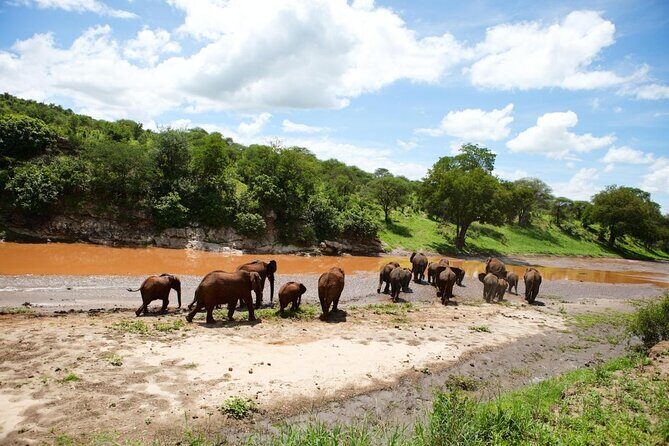
- Tarangire’s elephant magnet: river and swamps that pull wildlife in the dry season, plus big baobabs and acacia woodland
- Seronera in central Serengeti: water at the Seronera River helps concentrate animals, with sunset views as a goal
- Ngorongoro’s crater descent (600+ meters) into a world-heritage setting with year-round water and predators
- Lake Eyasi and the Hadza: a living hunter-gatherer community with click-language, hunting, foraging, and honey
- Social impact tied to Leo’s work supporting girls and women through menstrual hygiene management
Moshi start: where the adventure begins
Your day starts in Moshi, with pickup around 7:30 am (the listed start time is 7:00 am at the NSSF Building, Old Moshi Rd). That early start matters here, because the tour’s whole style depends on getting into the parks while the wildlife is active and the light is useful.
Moshi is also a practical base. You’re not flying and rushing across multiple regions in one day. Instead, you’re doing one focused loop: Tarangire → Serengeti → Ngorongoro → Lake Eyasi, and the tour returns you to the same starting meeting point at the end.
If you hate uncertainty, this private format helps. It’s described as private, meaning only your group participates. You’re not squeezed into a giant shared truck where your schedule gets swallowed by someone else’s delays.
You can also read our reviews of more tours and experiences in Moshi.

Day 1 in Tarangire: baobabs, swamps, and elephant herds
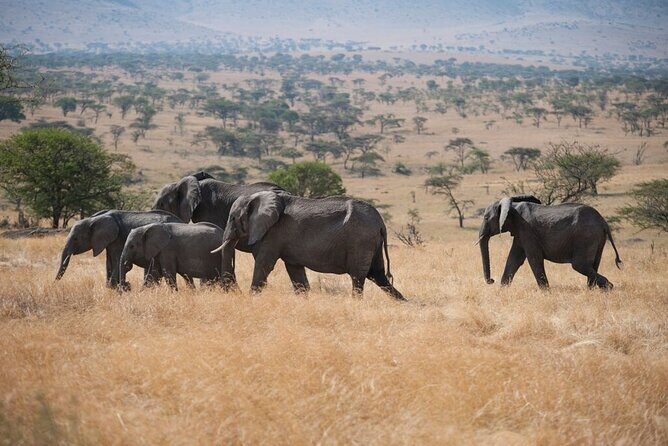
Tarangire National Park runs along the Tarangire River and sits on low-lying hills across the Rift Valley floor. The vegetation is mostly acacia woodland, with giant African baobab trees, and there’s also a large swamp area. That mix is the key to why the wildlife shows up.
In the dry season, the river and swamps act like a magnet. The tour notes that Tarangire has some of the largest elephant herds in Africa, and if you like seeing big-group behavior—herd spacing, calm feeding, and the occasional slow “moving together” moment—this is the right park to open with.
You’re also looking for rare or standout animals listed for the area: Greater Kudu, Fringed-eared Oryx, and Ashy Starlings. Even if you’re not hunting specific species, those lists are useful because they tell you what sort of game-drive sightings to expect in the habitats Tarangire is known for.
A small practical note: Day 1 is about 8 hours with a transfer that’s roughly 2 hours from Arusha (the schedule describes the drive from Arusha to the park). So you’ll want to travel with the mindset of a full day outdoors, not a “see a bit and come back” day.
Day 2 in Serengeti: Seronera’s water and a long-view feel
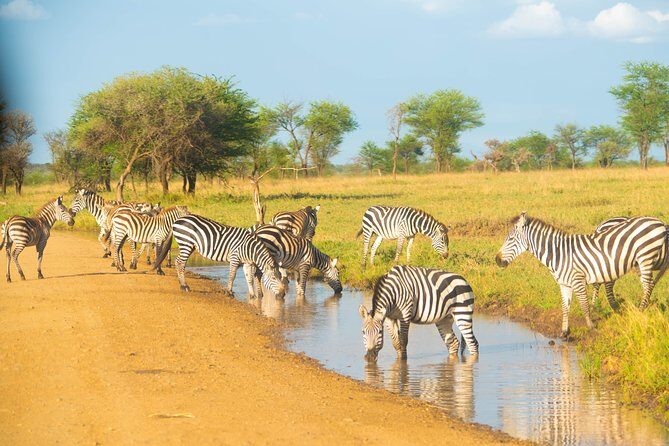
Serengeti is the headline, but the tour focuses you on a smart piece of it: central Serengeti around Seronera. The reason is simple and very practical. The Seronera River provides a valuable water source, which attracts wildlife to that area.
That concentration effect is why this day can feel productive even when you’re not guaranteed a single animal type. You’re not just driving through “maybe somewhere there will be animals.” You’re moving through a zone where water-driven wildlife patterns do a lot of the work for you.
The route described also includes driving via Ngorongoro Conservation before checking in “in the heart of wild Africa.” I’d treat that as a reminder that this day includes both transfer time and game-drive time, so don’t plan to squeeze in extra activities before or after.
The tour schedule gives you “late evening with sundown view,” which is exactly the kind of timing that helps Serengeti. The animals shift behavior as the light changes, and the visibility improves for longer viewing moments—especially if you’re the type who likes to watch how animals move between open grass and thicker cover.
Day 3 in Ngorongoro Crater: the 600-meter drop and predator odds
Ngorongoro Crater is one of those places where geography does half the storytelling. You start with an early morning breakfast, then a drive from Serengeti toward Ngorongoro, with a packed lunch.
Then comes the big feature: the tour describes descending over 600 meters into the crater for a game drive. That’s not just dramatic wording. A crater changes temperature, airflow, and visibility, and it tends to create a bowl-like setting where animals keep showing up in patterns you can actually track.
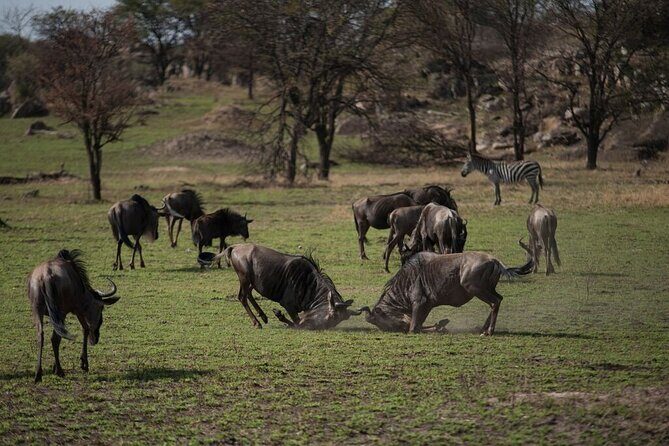
The crater is also described as a world heritage site with year-round water supply. That matters because water equals survival, and survival equals stability for wildlife viewing. The animals listed for this crater include wildebeest, zebra, buffalo, eland, warthog, hippo, and elephants, plus endangered black rhino.
On top of the herbivores, the tour calls out predators: lions, hyenas, and jackals. That combination is why Ngorongoro can feel intense. You’re not only seeing animals; you’re seeing the relationships between them—who’s relaxed around water, who’s watching, and what happens when predators move through the scene.
Day 3 is about 7 hours, which is long but not the longest day on the list. Still, this is the day where I’d pace yourself mentally. It’s easy to burn out on the thrill, then miss the small stuff—tracks, calls, and short bursts of behavior that make the big sightings more meaningful.
Day 4 at Lake Eyasi: Hadza hunter-gatherer life up close
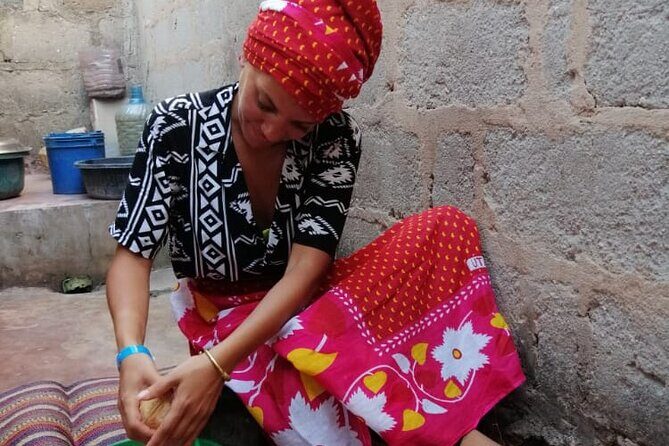
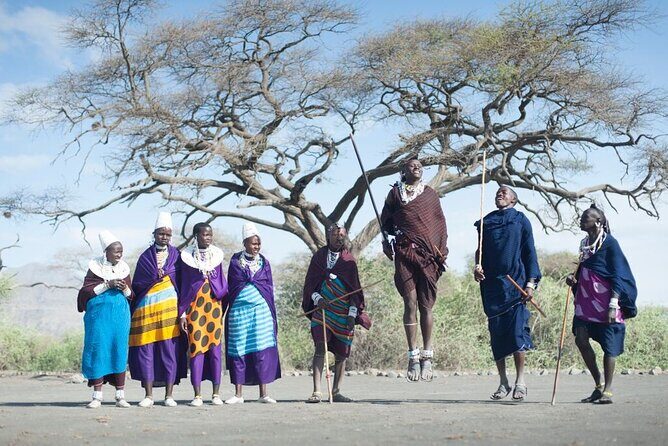
Lake Eyasi is a change of tempo. Instead of only scanning for animals, you’re meeting the Hadza hunter-gatherer tribe at their homeland around the lake and surrounding hills.
The tour describes the Hadza as a group facing extinction pressures. It cites around 1,300 members, with only about 300–400 still living a hunter-gatherer life. That’s not a statistic to throw into a brochure and forget. It’s a big reason cultural encounters here can feel urgent and human—people are adapting fast as land use changes via conservation and agriculture.
The tour also highlights a few defining details that you can use to frame what you’re seeing:
- They are nomad hunters and gatherers
- They speak a click-sound language
- They have no domesticated livestock
- They don’t grow or store food
- They survive by hunting and foraging edible plants and honey
- Individual autonomy is a hallmark of their way of life
From a visitor perspective, the most respectful mindset is to treat this as a living practice, not a performance. Ask questions. Watch carefully. And remember that “hunter-gatherer” doesn’t mean “simple.” It means specialized knowledge that has kept people fed without farming or herding.
Practically, the day is shorter—about 5 hours—and the tour says admission is included for this stop. That helps keep expectations grounded: you’re not being rushed across an entire day-long program here. It’s more like a focused cultural visit as the final chapter of your safari loop.


Leo’s leadership, plus the girls’ menstrual hygiene work
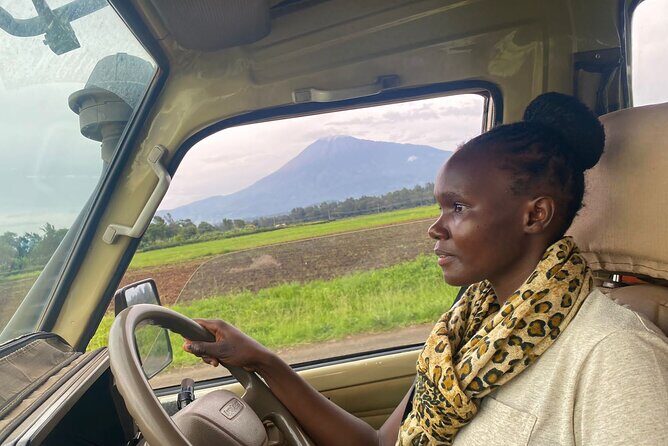
The standout character of this tour is Leo’s presence. The tour describes her as one of the few professional end-to-end female safari driver guides in Tanzania, with extensive experience on the northern circuit. In plain terms, that usually translates to fewer awkward moments. You don’t feel like you’re outsourcing your safety to luck.
Leo is also linked to a social project tied to girls and women’s menstrual hygiene management. The value for you is that this isn’t just a wildlife route with a random cultural checkbox. There’s an explicit thread connecting what you learn from the local community to what local support can look like.
If you’re trying to choose between safari companies, this is the kind of difference that can matter. Wildlife drives can be exciting, but your experience becomes more grounded when you understand the human reality around the parks.
Also, one theme that showed up in strong feedback is that Leo’s network and reputation help smooth out the day. You may hear that echoed in the way your guide handles ranger staff, lodge relationships, and timing on the road—because professional drivers don’t just know parks. They know people.
Price and value: what $1,820 gets you (and why it’s not just a number)
At $1,820 per person, this is not a budget safari. But it’s also not priced like a luxury “everything is included no questions asked” fantasy, either. The value comes from combining multiple big-ticket parks with a cultural stop in a tight loop, plus consistent meal coverage.
Here’s what you can count on from the details provided:
- 4 days approx., starting in Moshi and ending back at the meeting point
- Pickup offered and a private format for your group
- Meals covered: 3 breakfasts, 4 lunches, and 3 dinners
- Park admission structure listed as free for Tarangire and Serengeti, and included for Ngorongoro and Lake Eyasi
What you should think about before booking is your tolerance for “a lot of movement.” Tarangire and Serengeti days are described as around 8 hours, and the third day is also a full chunk of time. If you’re the type who wants long breaks and slow afternoons, this route may feel tiring.
If you’re the type who wants maximum variety, it makes sense. You’re seeing river-driven wildlife concentration in Tarangire, water-focused animal viewing around Seronera, the famous crater bowl in Ngorongoro, and then a cultural visit that ends the trip with a different kind of learning.
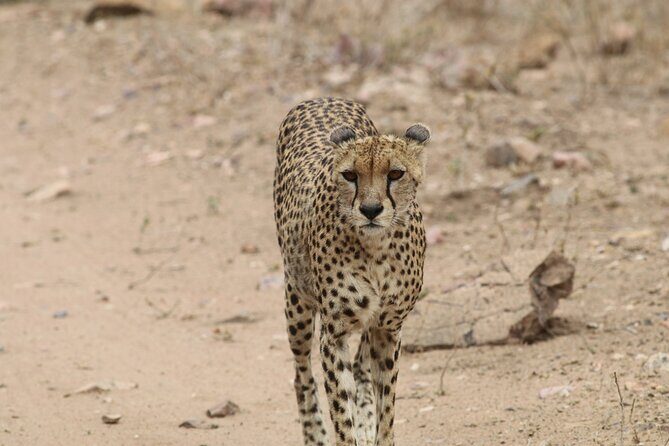
One more “value” angle: some feedback referenced special wildlife moments that go beyond the standard drive-and-watch routine, like the idea of a private lunch with a cheetah. That sort of detail is never guaranteed, but it hints at the guide’s ability to shape the day for memorable scenes.
Meals, timing, and how to pack for a busy 4 days
Meal coverage is one of the quiet perks. With breakfasts, lunches, and dinners included, you don’t waste mental energy hunting for food options during long park days.
Timing is the other big one. The start is early, and each day is built around game drive windows and transfers:
- Morning start on the parks days
- Packed lunch during drives
- Time in the evening for sun views in Serengeti
- Early descent and crater viewing on Ngorongoro day
For packing, I’d plan like you’re doing a real outdoors program. Bring layers for early mornings, water, and sun protection. Also, keep your camera and small gear easy to reach. When the guide finds an animal group, you’ll want to grab the shot quickly instead of digging for stuff.
Should you book this Savannah Escape & Active Culture Tour?
Book it if you want a high-coverage northern Tanzania loop with a guide who clearly has strong experience in the region. The mix of Tarangire + Serengeti + Ngorongoro is efficient, and the added Hadza visit at Lake Eyasi gives the trip a human dimension that many safari-only routes don’t have.
Skip it—or at least think twice—if you dislike early mornings and long drive days. This is a pace-forward trip, not a slow travel retreat.
One last tip before you decide: think about what you’re chasing. If your goal is wildlife variety in a short window, this tour’s structure makes sense. If your goal is mostly downtime, pick a longer itinerary with more breathing room.
FAQ
What parks are included on the Savannah Escape & Active Culture Tour?
The tour includes game drives in Tarangire National Park, Serengeti National Park, and Ngorongoro Crater in the Ngorongoro Conservation area. It also includes a cultural visit to the Hadza at Lake Eyasi.
Where does the tour start and what time does it begin?
It starts at the NSSF Building on Old Moshi Rd in Tanzania. The listed start time is 7:00 am, and the Day 1 pickup is described as around 7:30 am from your hotel.
Is this tour private or shared?
This is a private tour/activity. Only your group participates.
What meals are included?
The tour includes 3 breakfasts, 4 lunches, and 3 dinners.
Which park admissions are included or free?
Tarangire and Serengeti are listed as Admission Ticket Free. Ngorongoro Crater and the Lake Eyasi (Hadza) visit are listed as Admission Ticket Included.
What is the cancellation policy?
You can cancel for a full refund up to 24 hours in advance of the experience start time. If you cancel less than 24 hours before, the amount paid is not refunded.