REVIEW · MOSHI
Machame Route 7 Days 6 Nights /Kilimanjaro Climb
Book on Viator →Operated by Migration Venture Africa Ltd · Bookable on Viator
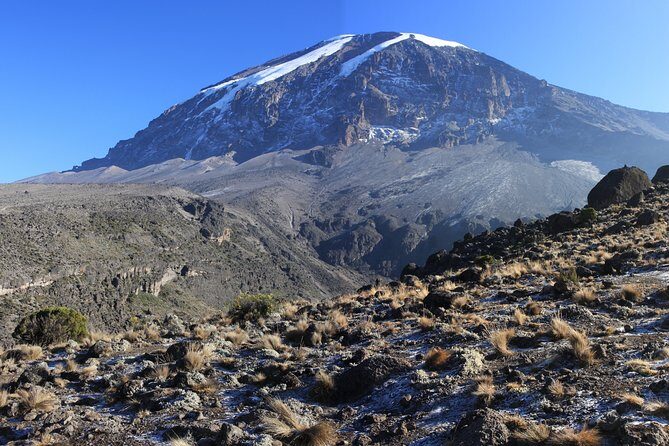
Kilimanjaro gets real fast on Machame. This 7-day, 6-night climb from Moshi leans into better acclimatization pacing, so it’s a serious option if you want a higher shot at getting up and back. I like that the Machame Route has a reputation for strong success rates versus the Marangu trail, and I also like how the schedule builds in altitude time in key places like the Karanga Valley.
One thing to consider: Machame is longer and often described as more demanding. If your fitness is only “average,” you’ll want to train for long hiking days—especially the push that climbs, then drops, over multiple elevations.
In This Review
- Key things to know before you go
- Why the Machame Route tends to feel like the better challenge from Moshi
- The rhythm of the climb: how altitude changes the experience
- Day-by-day breakdown: Machame Gate to Mweka Get
- Day 1: Machame Gate to Machame Camp (5,400 ft to 9,400 ft)
- Day 2: Machame Camp to Shira Camp (9,400 ft to 12,500 ft)
- Day 3: Shira Camp via Lava Tower to Barranco Camp (12,500 ft to 13,000 ft)
- Day 4: Barranco Camp to Karanga Camp (13,000 ft to 13,100 ft)
- Day 5: Karanga Camp to Barafu Camp (13,000 ft to 15,300 ft)
- Day 6: Barafu area to Summit and down toward Mweka Camp (15,300 ft to ~19,340 ft, then to 10,000 ft)
- Day 7: Mweka Camp down to Mweka Get (10,000 ft to 5,400 ft)
- Guides, food, and why camp support changes your odds
- Price and value: does $2,450 make sense for this climb?
- What I’d pack and prepare, based on what’s not included
- Who this tour fits best (and who should rethink it)
- Should you book this Machame 7 Days / 6 Nights climb?
- FAQ
- How long is the Machame Route climb?
- Where does the tour start and end?
- What time do we start?
- How much does it cost?
- What’s included in the price?
- What’s not included?
- Is the group private or shared?
- What if weather is bad near the summit?
Key things to know before you go
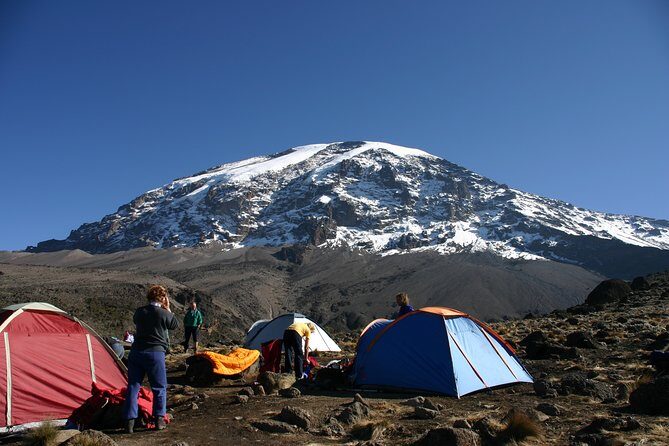
- Machame’s pacing helps: more time to acclimatize, including an extra day in the Karanga area
- Your summit plan has options: you may go via Barafu, and there can be a Western Breach/Arrow Glacier option
- Long days are part of the deal: Day 6 is the heavy one, with major climbing and a long descent
- Guides and camp support matter: reviews highlight strong guidance from Goodluck and Moses, plus cook Roger turning meals into a morale boost
- What’s included is clear: meals, all fees/taxes, and private transportation are covered; tips and personal gear are on you
Why the Machame Route tends to feel like the better challenge from Moshi
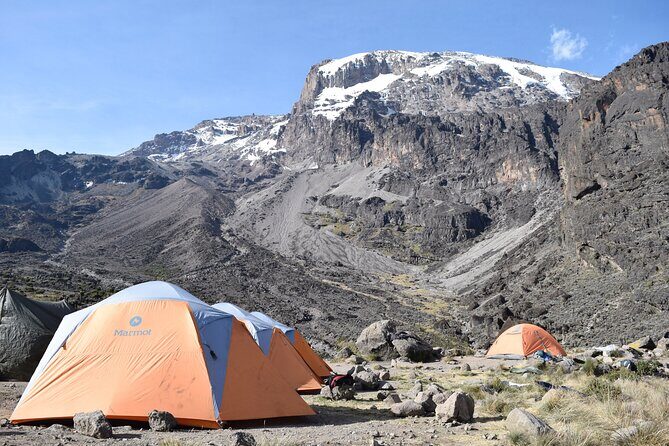
Machame has become one of the most popular Kilimanjaro routes for a reason. It’s often seen as more satisfying because the hiking day rhythm tends to keep you engaged: you move through distinct altitude zones, sleep in different camps as you climb, and you get acclimatization time built into the plan instead of trying to rush straight upward.
The big practical advantage is pacing. Machame generally gives you an extra day at altitude compared with Marangu-style schedules, which often translates to a better acclimatization window. And if you take advantage of the Karanga Valley acclimatization day, you’re giving your body another chance to adjust before the final push.
The tradeoff is that Machame can feel more demanding. You’re hiking farther on some days, and Day 6 in particular is long and tough. If you’re the kind of traveler who likes a steady grind with good support, that’s a plus. If you want shortest-distance trekking with the least time on your feet, Machame may feel like too much.
A few more Moshi tours and experiences worth a look
The rhythm of the climb: how altitude changes the experience
Kilimanjaro isn’t only about distance. It’s about how your body reacts as you gain altitude day after day. This route’s structure matters because altitude acclimatization is not a one-time checkbox—it’s a process.
Here’s what the route gives you:
- You start lower and climb to higher camps gradually.
- You sleep at increasing elevations so your breathing has time to adapt.
- You get a real acclimatization day before the summit attempt.
- You approach the summit with a last big altitude gain, then you descend far the same day.
The plan also assumes you’re realistic about effort. Even if you feel good at the start of a hiking day, the thin air can make the same pace feel slower and harder later. That’s why a strong guide team and a calm pace strategy are so important.
Day-by-day breakdown: Machame Gate to Mweka Get
This is a 7-day, 6-night climb. Your adventure begins in Moshi, Tanzania, and you end back in the same area. You’ll also be starting very early—your start time is listed as 12:30 am—so build in buffer for the pickup and pre-climb setup.
Day 1: Machame Gate to Machame Camp (5,400 ft to 9,400 ft)
This first day is the “get moving” day. You start around 5,400 ft and climb to about 9,400 ft over roughly 11 km, with most hiking taking 5 to 7 hours.
What’s special here: you’re transitioning from low-elevation conditions toward the mountain’s working zones. It’s not usually a day to race. You want to settle into a rhythm—slow feet, steady breathing—so you don’t burn your legs before the altitude starts to bite.
Potential drawback: the elevation jump is real. Even though it’s only Day 1, the air is already thinner than Moshi, so start easy.
Day 2: Machame Camp to Shira Camp (9,400 ft to 12,500 ft)
Day 2 climbs higher again, going from about 9,400 ft to 12,500 ft over a shorter distance—around 5 km—with a hike time of 4 to 6 hours.
Why this matters: a shorter day with higher altitude can feel strange at first. The legs may feel better than Day 1, but your breathing may still be demanding because you’re gaining height quickly.
Practical tip: keep your pace conservative. With Kilimanjaro, “feeling okay” early on doesn’t always predict how you’ll feel later.
Day 3: Shira Camp via Lava Tower to Barranco Camp (12,500 ft to 13,000 ft)
This is a transitional day with a highlight stop at Lava Tower. You’ll hike about 10 km, usually 6 to 8 hours, and finish at Barranco Camp around 13,000 ft.
What to expect: you’ll spend the day working around higher terrain and arriving at Barranco for a camp night that sets up the next day’s acclimatization style hiking.
Possible drawback: Lava Tower can make you feel like you should speed up because it looks like a “destination.” Don’t. Thin air slows everything down. Let the guide lead the pace.
Day 4: Barranco Camp to Karanga Camp (13,000 ft to 13,100 ft)
Day 4 is about acclimatizing more than climbing. The elevation change is small—about 13,000 ft to 13,100 ft—and hiking is shorter, roughly 4 to 5 hours over around 3 miles. This zone is described as Alpine Desert.
Why it’s valuable: this is the kind of day that can help your summit shot. When the route plan includes a true acclimatization day, your body has time to adjust before the steepest effort.
Practical reality: “shorter” doesn’t mean easy. You’ll still be hiking high and in colder, drier conditions.
Day 5: Karanga Camp to Barafu Camp (13,000 ft to 15,300 ft)
This day is a bigger jump. You go from around 13,000 ft up to about 15,300 ft over a short distance (about 2.5 miles), typically 4 to 5 hours, also in Alpine Desert.
What this day feels like: steep gains with less room for distraction. It can be a mental game because there isn’t much “flat time” to reset your breathing.
Consideration: save energy. Barafu is a staging point for the summit attempt, and you’ll want to arrive ready to follow the plan for rest and timing.
Day 6: Barafu area to Summit and down toward Mweka Camp (15,300 ft to ~19,340 ft, then to 10,000 ft)
Day 6 is the make-or-break day. You’re hiking from about 15,300 ft to around 19,340 ft (the summit zone), then descending all the way toward 10,000 ft. It lists 12 to 15 hours total hiking time: roughly 3 miles to the summit and about 7 miles on descent.
This is the longest, most demanding part of the whole climb. Even if the distance on paper to the summit looks small, the altitude makes it brutal. The air is thin, your body is tired, and every step asks for more breath than you used to need.
Why guides and morale matter here: the final push is where encouragement, correct pacing, and calm decision-making make a huge difference. In the feedback tied to this operator, strong guidance from Goodluck and Moses shows up along with the support role of cook Roger for keeping meals and morale steady earlier in the trek.
Day 7: Mweka Camp down to Mweka Get (10,000 ft to 5,400 ft)
You finish by descending from about 10,000 ft down to 5,400 ft. This is listed at 3 to 4 hours over about 6 miles.
What’s great about Day 7: you’re finally back to air that feels more human. It’s still downhill work, so sore knees are common, but it’s usually a relief to have the end in sight.
Guides, food, and why camp support changes your odds
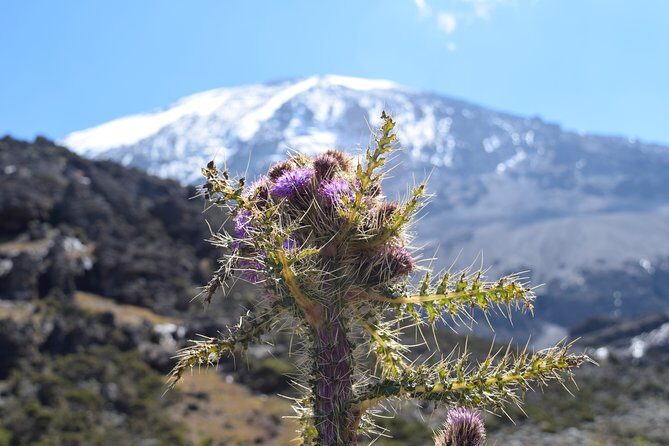
I care a lot about summit success, and on Kilimanjaro that comes down to the whole team—not just the mountain. This is where the human side matters: guides manage pacing, monitor how you’re feeling, and keep the group moving safely.
The feedback connected to this company highlights Goodluck and Moses as experienced guides who led people safely to the summit with patience and encouragement. That kind of attitude matters on the steep days where your brain wants to quit before your legs do.
Food is the other big factor. You’ll be burning energy all day, and you need meals that are filling and timed well. One cook named Roger is specifically mentioned for preparing food that keeps climbers fueled. If you’ve ever tried to hike at altitude while underfed, you already know how quickly that turns into poor energy and poor decisions.
Private transportation and pick-up support also helps. You’re not trying to coordinate your own logistics between Moshi and the mountain day by day; it frees you up to focus on the climb.
Price and value: does $2,450 make sense for this climb?
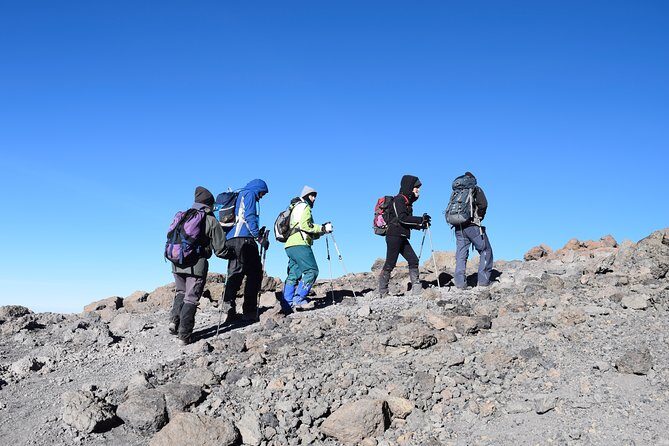
At $2,450 per person, this isn’t a bargain. But it also isn’t just buying a spot on a hiking trail. What you get for that price includes:
- all fees and taxes
- breakfast, lunch, and dinner
- private transportation
- pickup offered
- a mobile ticket
What’s not included is equally important:
- tips to the crew
- personal mountain equipment
- travel insurance
- visa
So the value question becomes: will you also spend on gear, insurance, and tips anyway? If yes, the base price is more reasonable because much of the heavy-lift overhead is handled. If you’re missing gear and haven’t budgeted for insurance and tips, your real total cost will climb.
If you want the simplest budgeting path, plan for those extras now rather than assuming they’re baked in.
What I’d pack and prepare, based on what’s not included
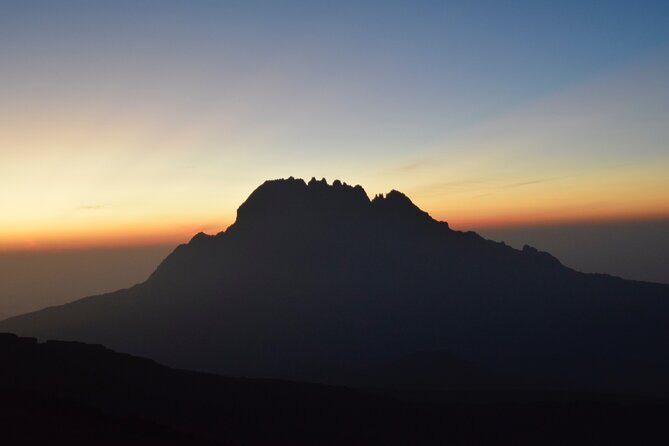
The tour data doesn’t list equipment, and it specifically notes personal mountain equipment is not included. That means you need to show up ready for cold nights, early starts, and big hiking effort.
At a minimum, you should plan for:
- warm layers for camp and summit conditions
- a system for keeping hands and feet warm
- solid hiking boots and socks you trust for long days
- a daypack that works for water and essentials
- sun protection (altitude can be unforgiving)
If you don’t already have reliable cold-weather gear, it’s usually cheaper to get quality locally or bring it from home than to try to “wing it” on a mountain climb with thin air.
Also budget for practical admin items. Visa is not included, and travel insurance is not included—so handle those before departure.
Who this tour fits best (and who should rethink it)
This private tour/activity is designed for your group only. That usually means less waiting around and more control over your pace with your guides. If you like clear structure and direct attention from the crew, you’ll likely appreciate that.
It also asks for moderate physical fitness. Moderate fitness can still mean different things for different people. If your training includes long hikes and you can handle a day that’s 12+ hours with major altitude changes, you’re in the right zone.
You should consider another approach if:
- you’re hoping for minimal time hiking each day
- you’re not comfortable with cold nights and very early starts
- you dislike long summit push days that include both climbing and descent
Should you book this Machame 7 Days / 6 Nights climb?
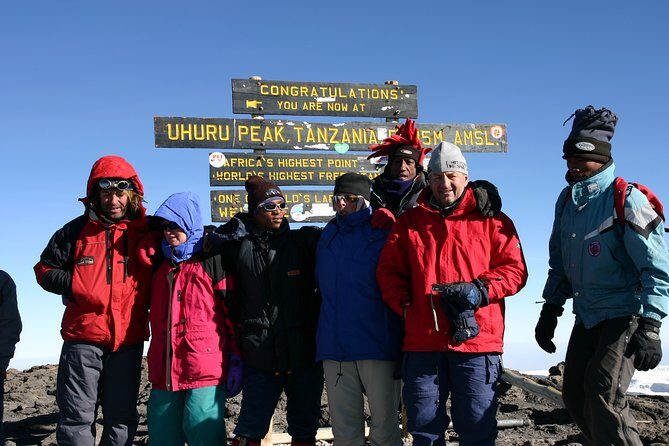
I’d book it if you want a route that’s known for stronger success odds, and you’re willing to work for it. The added acclimatization structure—especially the time around the Karanga Valley—aligns well with how altitude actually affects your body. Add in the support elements (private transport, full meals, and a guide team praised for patience), and this looks like a solid value package for the effort level.
I’d hesitate if you’re expecting an easy hike. Machame can be more arduous, and Day 6 is a long, demanding summit-and-descent day. If you’re not ready to train for long days, you may find the experience frustrating instead of empowering.
If you’re making your decision right now, one smart move is to be honest about your fitness and your cold-weather gear. The mountain won’t be impressed by good intentions.
FAQ
How long is the Machame Route climb?
It runs about 7 days total and 6 nights, including the summit day and a final descent back to the lower camp area.
Where does the tour start and end?
The start and end are both in Moshi, Tanzania. The activity ends back at the meeting point.
What time do we start?
The listed start time is 12:30 am.
How much does it cost?
The price is $2,450.00 per person.
What’s included in the price?
All fees and taxes are included, along with breakfast, lunch, and dinner, plus private transportation and pickup offered. You’ll also receive a mobile ticket.
What’s not included?
Tips to the crew, personal mountain equipment, travel insurance, and visa are not included.
Is the group private or shared?
This is a private tour/activity. Only your group will participate.
What if weather is bad near the summit?
The experience requires good weather. If it’s canceled due to poor weather, you’ll be offered a different date or a full refund.
If you want, tell me your fitness level and what gear you already have, and I’ll help you sanity-check whether Machame fits you well.