REVIEW · MOSHI
Kilimanjaro Lemosho Route
Book on Viator →Operated by ZARA TOURS · Bookable on Viator
Kilimanjaro is a grind, and this route helps. I like the Lemosho approach because it gives you gradual altitude gains through forest and the Shira plateau before the big night push toward Uhuru Peak.
I also appreciate how much daily work the team handles for you. Porters pitch tents and move camp gear, while the chef keeps feeding you real meals and hot lunch stops from Shira Camp 1 to Barafu.
One drawback to plan for: the summit day is long and cold. You’ll rise around 11:30 PM for the ascent, hike 15+ hours, and your summit timing depends on weather.
In This Review
- Quick highlights
- Why the Lemosho Route works better for most bodies
- Day 1: Springlands Hotel to Mti Mkubwa Camp
- Day 2 to Day 3: Shira Camp 1 and Shira Camp 2 acclimatization
- Day 4: Lava Tower at 4,630 m and the Barranco finish
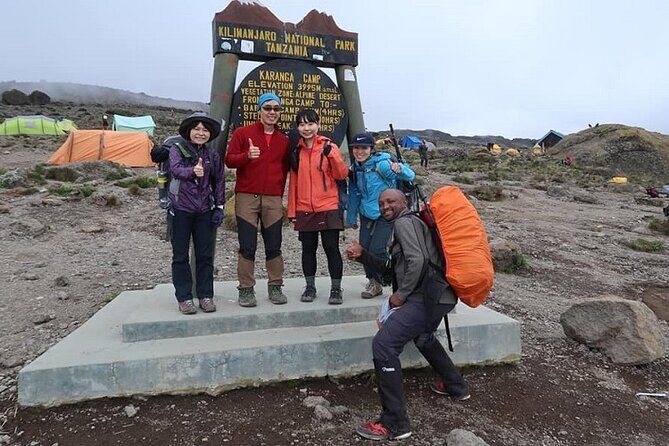
- Day 5: Barranco Wall, Karanga Valley, and the Barafu setup
- Day 6: Barafu altitude gains and summit briefing
- Day 7: 11:30 PM ascent, Stella Point sunrise, Uhuru Peak
- Day 8: Mweka Gate descent and Springlands Hotel recovery
- Price and what $2,890 per group really buys you
- The team quality: what keeps this climb feeling safe
- Leave no trace on a mountain that gets treated like a trash bin
- Who should choose this Lemosho climb (and who should think twice)
- Should you book this Kilimanjaro Lemosho Route?
- FAQ
- How long is the Kilimanjaro Lemosho Route?
- Where do we meet, and when does the trip start?
- Is this a private tour?
- What is the group size for the listed price?
- What fitness level do I need?
- Are park admission tickets included?
- What time do we start the summit attempt?
- What camps are involved on summit day?
- Is pickup included?
- Is there free cancellation?
Quick highlights
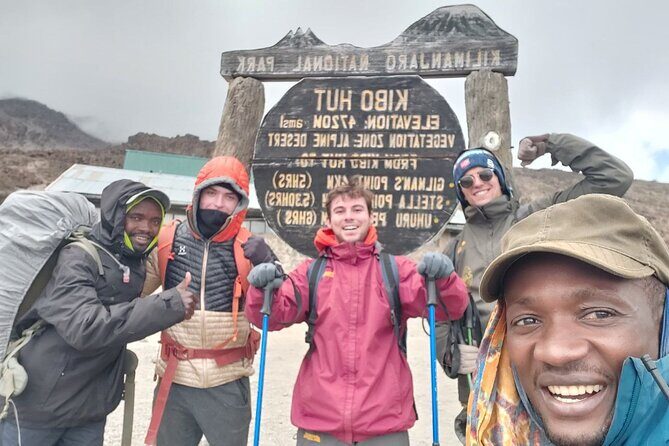
- Lemosho pacing for acclimatization through forest trails, moorlands, and Shira camps before the harder heights
- Real “camp support”: porters set up tents and a chef provides meals and hot lunch along the way
- Lava Tower + Barranco descent photos: a tough altitude day that ends with a dramatic payoff at Barranco
- Stella Point sunrise build-up: the emotional hinge of the climb, followed by a short, serious push to Uhuru Peak
- Strong organization and safety culture: many guides and support teams named across this operation focus on smooth logistics and feeling taken care of
- Food gets credit: fresh, dependable meals show up again and again as a highlight
Why the Lemosho Route works better for most bodies
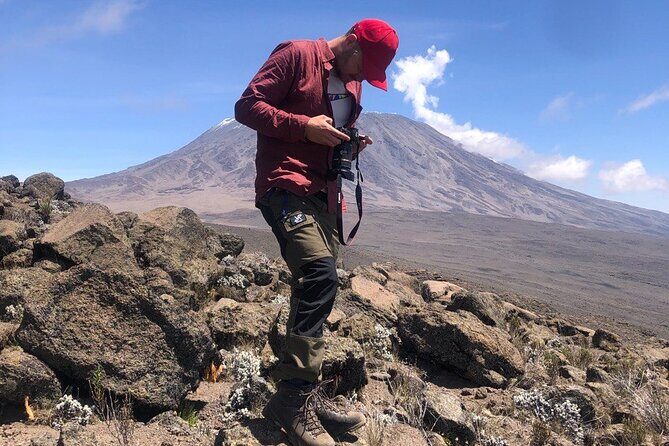
The Kilimanjaro Lemosho Route is built like a long ramp, not a straight sprint. That matters because altitude doesn’t care about your motivation. It cares about how steadily you climb and how much time you give your body to adjust.
What I like about this itinerary is the mix of “enough walking to acclimatize” and “enough stopping to recover.” You spend multiple days above 2,700 m and then step up again toward 3,800 m, 4,600 m, and finally the summit elevations. You’re not stuck hiking hard every single day. You get a rhythm: hike, eat, settle, then learn the next day’s plan.
Also, the route’s sectioning helps mentally. Days 1–3 are about moving upward while watching the mountain change. Days 4–6 feel like the altitude workout that makes the summit attempt possible. Day 7 is the monster day, with sunrise at Stella Point and then Uhuru Peak.
You can also read our reviews of more tours and experiences in Moshi.
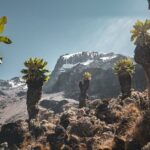
Day 1: Springlands Hotel to Mti Mkubwa Camp
Your day starts with breakfast and a guide briefing at Springlands Hotel, then you’re transferred to the Lemosho Park Gate area (around 2,100 m) for registration. After that, you begin trekking through forest trails toward Mti Mkubwa Camp at about 2,750 m.
This first day is fairly gentle by Kilimanjaro standards: about 7 km and roughly 5 hours of hiking. The point is simple: get your legs moving, get used to the rhythm of trekking with a group, and let your body start adapting.
What I’d watch for on Day 1 is hydration and pacing. Forest trails can feel easier because you’re not yet in the thin air. That’s also when it’s easiest to overdo it. Your guide’s job is to keep you at a steady effort, not a hero pace.
Day 2 to Day 3: Shira Camp 1 and Shira Camp 2 acclimatization
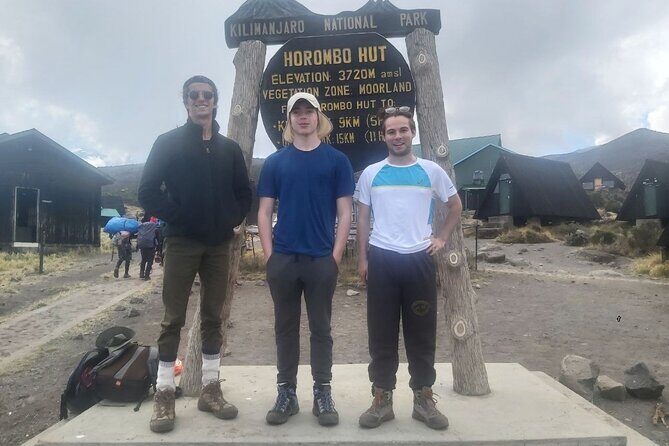
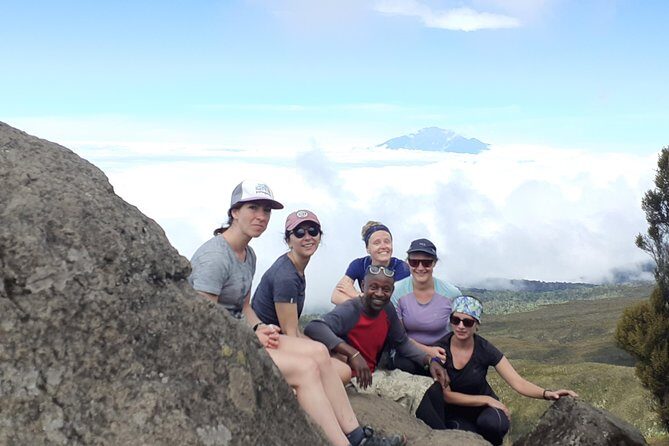
On Day 2 you’ll trek from Mti Mkubwa Camp to Shira Camp 2, climbing from about 2,780 m up toward 3,840 m. The hiking distance is around 12 km, usually 6–7 hours. You’ll pass through moorlands and get standout views of Kibo Volcano along the way.
A key detail here: hot lunch happens at Shira Camp 1 before you continue up to Shira Camp 2. That break matters. You’re not just eating to survive—you’re resetting before the next push to higher altitude.
Day 3 is a shorter day on paper: Shira Camp 1 to Shira Camp 2, roughly 5 km and 3–4 hours. It’s described as relatively easy, giving you a chance to absorb the air, enjoy the views, and acclimatize without crushing your legs.
This is where the route earns its reputation. Those extra Shira hours are not “wasted time.” They’re often the difference between arriving for summit day feeling stable versus feeling fragile.
Day 4: Lava Tower at 4,630 m and the Barranco finish
Day 4 is one of those days that feels like it has two moods: grind up, then reward down. You start around 3,840 m and head toward Lava Tower (4,630 m), passing through semi-desert, rocky terrain. The total hiking day is about 11 km and 7–8 hours.
The itinerary notes a steady climb to lunch, then a more demanding stretch up a rocky scree path to Lava Tower. After that, you descend about 680 m to Barranco campsite. The descent is a major help for acclimatization, and it also brings some of the best photo moments, including views around the Western Breach.
One practical consideration: scree and rocky paths are tough on knees. You’ll want to use trekking poles if you have them, and you’ll want to focus on controlled steps rather than speed.
Day 5: Barranco Wall, Karanga Valley, and the Barafu setup
Day 5 runs from about 3,960 m to 4,035 m, with around 5 km and roughly 5 hours of hiking. You may face the Barranco Wall—a steep section that can feel intimidating but is usually one of those “I can do this” moments once you settle into the pace.
After that, you descend into the Karanga Valley, described as lush compared to earlier zones. It’s a morale boost day: views improve, vegetation changes, and you’re not staring at the same kind of ground all day.
You reach Karanga campsite, where your porters set up camp and the chef prepares lunch. Then the route adds an acclimatization hike toward Barafu camp, ascending about 200 m and returning. This is a smart pattern: nudge the altitude, then come back to rest.
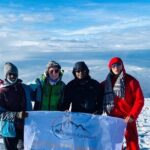
Day 6: Barafu altitude gains and summit briefing
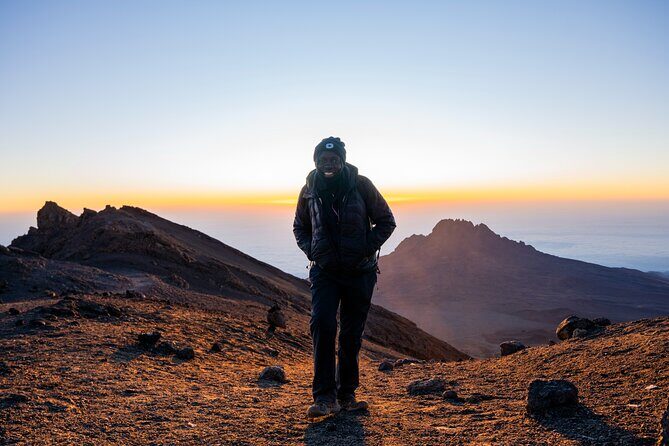
Day 6 starts around 4,035 m and brings you up to about 4,640 m at Barafu campsite. The hiking time is about 5 hours for around 5 km. The terrain is varied, with rocky sections and gradual slopes.
This is not a day to prove fitness. It’s a day to protect your summit chances. The plan emphasizes acclimatization focus so you avoid altitude issues before the summit push.
When you arrive at Barafu, porters handle camp setup and you eat lunch. Later, you’ll rest until dinner. After dinner, your guide does an important summit briefing: route, challenges, and safety measures, plus preparations for the late-night start.
If you’re the type who wants to control everything, this day is a good time to let the plan lead. The mountain doesn’t reward perfection. It rewards good decisions.
Day 7: 11:30 PM ascent, Stella Point sunrise, Uhuru Peak
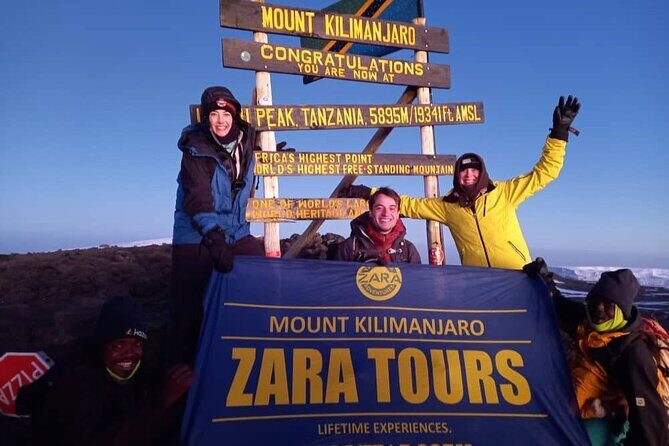
Day 7 is the summit attempt. You’ll rise around 11:30 PM, and you’ll start the climb after tea and biscuits. From here, the route heads northwest through scree toward Stella Point on the crater rim.
The climb to Stella Point (5,685 m) is about 6 hours and is described as often the most mentally and physically challenging part. You rest briefly at Stella, and weather permitting, you’ll get a sunrise—a moment that’s usually why people can endure a day like this.
Then it’s about a 2-hour snow-covered ascent to Uhuru Peak (around 5,895 m). Your time at the summit depends on conditions. Don’t linger too long; the cold and fatigue add up fast.
The descent is also part of the story: about 3 hours back to Barafu for a short rest, then you continue to Mweka Camp for dinner and overnight.
Practical advice for this day: keep moving steadily, keep your breathing calm, and follow your guide’s pacing. On summit night, small mistakes compound.
Day 8: Mweka Gate descent and Springlands Hotel recovery
On Day 8 you descend from Mweka Camp down to Mweka Gate, then you’re driven back to Springlands Hotel. You get a hot lunch and a refreshing shower—exactly the kind of small reward that makes the hard days feel worth it.
The hike down is about 10 km, with roughly 4–5 hours of descending. It’s usually easier than the ascent days, but it can still feel long. Your legs will be tired. Your job is to keep steps short and steady.
At the end, tipping the team is encouraged, and you’ll find tip envelopes available at the hotel. If you want to pair Kilimanjaro with safari, there’s also a safari coordinator you can meet at the hotel to talk through options.
Price and what $2,890 per group really buys you
The price listed is $2,890 per group (up to 5) for an 8-day climb. This is a private tour, so you’re not sharing camp space and logistics with strangers unless your own group includes more people.
Here’s why that matters for value: Kilimanjaro costs money in the parts people rarely budget for well—multiple guides, chefs, porters, camp setup, and park admission. This itinerary specifically notes admission tickets included, plus daily meals and the logistics that keep you fed and housed at each campsite.
Also, pickup is offered, and there’s a mobile ticket. Those might sound small, but on a trip that starts at/near midnight and involves gate registration, smoother transport and ticketing can reduce stress.
If you’re traveling solo, the per-person cost rises because it’s priced “per group up to 5.” If you have 2–5 people going together, you can spread that cost and make the whole thing more reasonable.
The team quality: what keeps this climb feeling safe
What shows up repeatedly in the feedback for this operation is not fancy marketing. It’s people who run the mountain day-to-day with calm competence.
You’ll see names like Festo, Nechi Teti, Captain G, Lema, John, Said, and Augustino associated with successful summits and smooth organization. The common thread is a team that focuses on safety, clear guidance, and the little practical details that keep everyone moving in the right direction.
Porters and cooks also get real respect in the way this climb is described. When your tents get set up fast and your food shows up hot, you spend less energy worrying and more energy adapting.
Leave no trace on a mountain that gets treated like a trash bin
Kilimanjaro is tough enough without leaving mess behind. One concern mentioned in the information you provided is that some people throw trash, which is sad.
So here’s how you help: treat your trash like it has a seat on your body until you can hand it out properly. Bring a small bag for personal waste and keep it closed. Don’t assume staff will clean up what you leave. They’re working hard enough.
If you want the mountain to look like a sacred place, act like it is.
Who should choose this Lemosho climb (and who should think twice)
This route is designed for people with moderate physical fitness. That doesn’t mean you’ll be on an easy vacation. It means you can handle long days, uphill movement, and altitude, as long as you follow the pace.
You’ll likely be a good match if you:
- Want a route with built-in acclimatization days, not just “go higher every day”
- Prefer structured logistics—camp setup, meals, and guiding that keeps the group together
- Are ready for the reality of summit night starting around 11:30 PM
You might want to rethink if you’re dealing with health concerns related to altitude, or if you struggle with very long hikes and cold conditions. Kilimanjaro is not a “try it and see” kind of challenge.
Should you book this Kilimanjaro Lemosho Route?
I’d book it if your priority is a paced Lemosho plan with camp support that keeps you fed, sheltered, and guided from Springlands Hotel to Mweka Gate. The biggest reasons are the acclimatization structure (Shira and Barafu steps) and the way the summit push is handled: Stella Point first, then Uhuru Peak, then a protected descent.
I’d hesitate if you know you struggle with summit-day intensity—15+ hours, a midnight start, and weather-dependent timing can be a lot even for strong hikers. But if you’re willing to follow the plan and pace yourself, this route is set up to give you a fair shot.
FAQ
How long is the Kilimanjaro Lemosho Route?
The itinerary runs about 8 days, including trekking and the final descent and return to Springlands Hotel.
Where do we meet, and when does the trip start?
The meeting points listed are Kilimanjaro Airport and Kilimanjaro National Park, with a start time of 12:00 am.
Is this a private tour?
Yes. It’s described as a private tour/activity, and only your group participates.
What is the group size for the listed price?
The price is $2,890 per group, up to 5 people.
What fitness level do I need?
The information provided says travelers should have moderate physical fitness.
Are park admission tickets included?
Yes. Admission tickets are included on the route days listed.
What time do we start the summit attempt?
You’ll rise around 11:30 PM and start the ascent after tea and biscuits.
What camps are involved on summit day?
The summit sequence goes from climbing toward Stella Point, then Uhuru Peak, then a descent to Barafu before continuing to Mweka Camp for dinner and overnight.
Is pickup included?
Pickup is offered.
Is there free cancellation?
Yes. Free cancellation is available, with a full refund if you cancel up to 24 hours in advance of the experience’s start time.