REVIEW · MOSHI
Kilimanjaro Experience 7 Days Lemosho route
Book on Viator →Operated by Kilinge Adventures · Bookable on Viator
Summit starts with a midnight alarm. On the Lemosho Route, you’ll hike through rainforest, moorland, and alpine desert, then push up toward Stella Point and Uhuru Peak with a full team handling the logistics at camp.
I love the staged acclimatization built into the route. You don’t just rush higher; you get time on the Shira side and a key Barranco/Lava Tower pattern that helps your body adjust. I also like the day-to-day comfort: tents waiting at each stop, clean purified drinking water, and meals served in big, fresh portions.
One possible drawback is that the summit night is long and cold. If you come unprepared for steep sections at night and don’t plan for warmth and altitude stress, the experience can feel tougher than the photos.
In This Review
- Key things that make this Kilimanjaro trek worth your time
- First: what you’re really buying for $1,000 in Moshi
- The team and the porter care that changes the mood at altitude
- Price and logistics: what to expect before you even start hiking
- Day-by-day: the Lemosho Route in real human terms
- Day 1: Londorossi Gate to the Lemosho forest trail (Rain Forest, 3–4 hours)
- Day 2: Shira Ridge views and the drop to Shira 1 (Moorland, 5–6 hours)
- Day 3: Shira Plateau day and acclimatization with optional Lent Hills walking (Moorland, 5–7 hours)
- Day 4: Lava Tower (Shark’s Tooth) and the descent to Barranco (Semi Desert, 4–6 hours)
- Day 5: Barranco Wall to Barafu Hut for the South Circuit (Alpine Desert, 8–10 hours)
- Day 6: Summit night from around 12:00am to Stella Point, then down (Arctic, 7–8 hours ascent + 4–6 hours descent)
- Day 7: Mweka Park Gate certificates, then Moshi hot shower (Rain Forest, 3–4 hours)
- What food, tents, and purified water feel like day after day
- The summit mindset: how to prepare so the night doesn’t surprise you
- Who this Lemosho 7-day trek is best for (and who should think twice)
- Should you book the Kilimanjaro 7 Days Lemosho with Kilinge Adventures?
- FAQ
- What time does the Kilimanjaro Lemosho trek start?
- Where does the trek begin?
- Is pickup offered?
- How long is the trek?
- What’s included in the price?
- Are Kilimanjaro National Park fees included?
- What meals and water do I get on the mountain?
- What fitness level do I need?
- What happens if weather is poor?
- Is free cancellation available?
Key things that make this Kilimanjaro trek worth your time
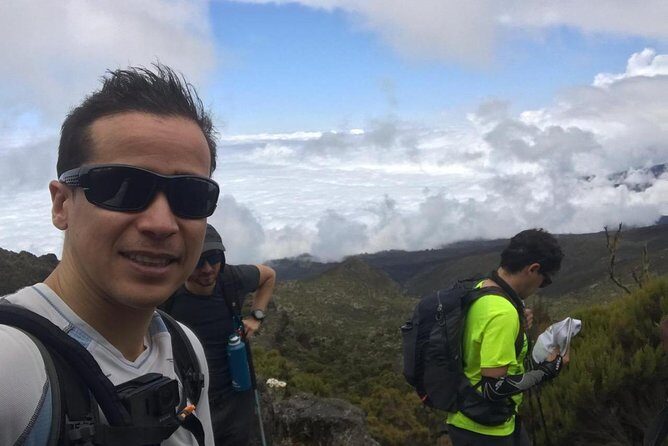
- Rainforest-to-desert route: you’ll start in lush forest, then climb into moorland and alpine desert before the summit zone
- Built-in acclimatization days: Shira Plateau time plus the Barranco and Lava Tower days help your body adapt
- Full-service mountain support: guides, porters, cook salaries, purified water, tents, and meals are included
- Summit approach you can picture: tea/snacks around 11:00pm, start around 12:00am, reach Stella Point around 06:00am
- A team that focuses on comfort: reviews highlight food readiness, tent setup, and friendly communication
First: what you’re really buying for $1,000 in Moshi
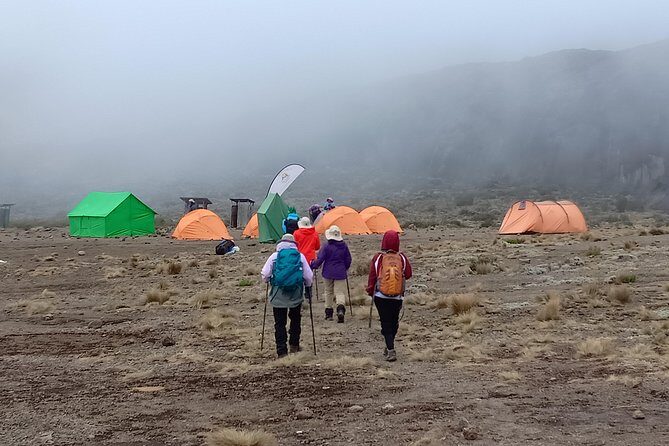
This climb is not just a ticket to walk up a mountain. At $1,000 per person, you’re paying for a whole operating system: guides and porters, a cook, camp gear (tents), and support that matters at altitude. The value is strongest on Kilimanjaro because the mountain days come fast, and you can’t DIY when the weather flips or your body needs time.
Here’s the practical trade-off: the package lists Kilimanjaro National Park fees as not included, and it also lists tips and personal expenses as extra. So your all-in budget will be a little higher than the base price once you add those items. Also, each day shows an admission ticket line marked free, but the overall park-fee note still exists—so it’s smart to confirm your final total in writing before you pay.
If you want predictability—meals handled, tents handled, rescue fees covered—this model usually feels worth it. If you’re the type who wants to fully manage food, gear, and staffing yourself, you’ll likely prefer a different style of trip.
A few more Moshi tours and experiences worth a look
The team and the porter care that changes the mood at altitude
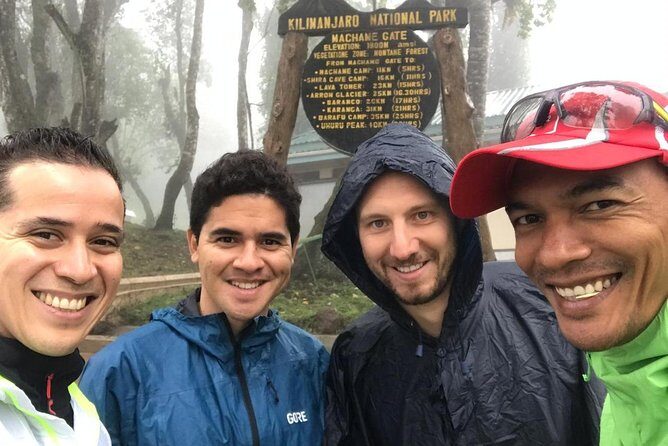
Kilinge Adventures runs this 7-day Lemosho trek out of Moshi, Tanzania, and the reviews are consistent on one theme: people feel supported. You’ll be working with professional mountain guides and porters, and the package specifically includes fair and ethical treatment of porters plus guides/porter/cook salaries.
That matters because on Kilimanjaro, morale is oxygen. When your food shows up on time, when your tent is ready, and when you can ask a question without feeling rushed, you can focus on your pace and your breathing.
From past climbs tied to this operator, you may run into guides such as Thomas, Alex, Victor, or Norka. You might also meet a cook named Joseph or Shedrack (both show up in reviews), and that’s a big deal because food on summit weeks isn’t just “fuel”—it’s your energy plan. One climber even mentioned their guide tested O2 saturation, which is the kind of small reassurance that can help you take altitude seriously without spiraling.
Bottom line: you’re not only hiring trail leadership. You’re hiring day-to-day calm.
Price and logistics: what to expect before you even start hiking
You’ll meet at a start time listed as 8:30 am. Pickup is offered, and the tour notes it’s near public transportation, which is useful if you’re building in some buffer time in Moshi before day one.
Also, the experience includes a mobile ticket. That sounds minor, but on the ground it often means fewer paper hassles when you’re tired and time is tight.
Group size is capped at 100 travelers. That number sounds large, but on Kilimanjaro what matters more is your immediate group on the trail—your guide team, your tent setup, and the pacing around you.
Finally, a quick heads-up for decision-making: this trek says it requires good weather. When weather forces a change, you’ll be offered a different date or a full refund. That’s important for anyone planning around flights or fixed work schedules.
Day-by-day: the Lemosho Route in real human terms
Kilimanjaro routes all share one truth: your day starts before you feel ready. But the Lemosho itinerary is designed to move you higher in stages while keeping the experience varied. Here’s what each day is doing, not just where you sleep.
Day 1: Londorossi Gate to the Lemosho forest trail (Rain Forest, 3–4 hours)
You depart Moshi, drive to Londorossi Gate (about 4 hours), handle entry formalities, then continue to the Lemosho trailhead (about another hour). After lunch, you start walking into dense rainforest.
Elevation shifts from roughly 7,800 ft to 8,694 ft (2377 m to 2650 m) over about 7 km. The walking time is 3–4 hours, and the habitat is Rain Forest.
Why this day matters: it’s your “get moving” day. You’re not trying to conquer anything yet—you’re letting your body settle into altitude while the trail does what it’s good at: keep you cool, steady, and surrounded by living green.
Practical note: rainforest hikes often mean damp ground and slippery bits. Pack for wet shoes and plan to move carefully.
Day 2: Shira Ridge views and the drop to Shira 1 (Moorland, 5–6 hours)
You leave the forest and climb into a more open world—tall grasses, heather, and volcanic rock with lichen beards. Elevation goes from about 8,694 ft up to 11,840 ft (2650 m to 3610 m), walking about 8 km for 5–6 hours.
You reach Shira Ridge, then descend gently to Shira 1 camp. The views of Kibo from the plateau side are highlighted as amazing.
Why this day matters: it’s where you start to “see” the mountain. Even if you don’t feel strong yet, you’ll often get that moment where your brain finally understands what you’re doing.
Day 3: Shira Plateau day and acclimatization with optional Lent Hills walking (Moorland, 5–7 hours)
Today is a fuller day, around 14 km and 5–7 hours, climbing roughly 3610 m to 4200 m.
You explore the Shira plateau with gentle movement east toward Kibo’s glaciered peak. You’ll walk across moorland meadows by a stream, reach Shira 2 camp, then continue toward Moir Hut, described as a less-used spot at the base of the Lent Hills. There are different walking options around Lent Hills, and the route frames this as an excellent acclimatization opportunity.
Why this day matters: it helps you build altitude confidence without forcing a summit mentality. Also, being on a plateau can make it easier to pace—you’re not constantly wrestling steepness.
If you’re tempted to speed up because you feel okay: don’t. This is where “slow and steady” pays off later.
Day 4: Lava Tower (Shark’s Tooth) and the descent to Barranco (Semi Desert, 4–6 hours)
Elevation goes from about 4200 m down to 3940 m by the end of the day, even though you’re still working hard. Distance is around 7 km, with 4–6 hours on the move.
You continue east up a ridge, passing a junction linked to Kibo, then your direction shifts south-east toward Lava Tower, also called the Shark’s Tooth. After lunch, you descend to Barranco camp for a key acclimatization pattern.
Why this day matters: it’s an intentional rhythm—gain a bit, then come down enough for your body to absorb the altitude. The route calls it very important for preparing for summit day, and that makes sense. Your system learns what you’re asking it to do.
Day 5: Barranco Wall to Barafu Hut for the South Circuit (Alpine Desert, 8–10 hours)
Elevation rises slightly, from about 3940 m to 3995 m. You’ll walk around 9 km, and this is listed as 8–10 hours, mostly because the terrain is serious.
After breakfast you leave Barranco, pass the Barranco Wall (not subtle), continue along a steep ridge to Karanga Valley campsite. Then you hit the junction connected with the Mweka Trail and climb up to Barafu Hut.
At Barafu, you’re described as completing the South Circuit and seeing summit angles from different positions. Campsite-wise, you rest, enjoy dinner, and prepare for the summit push. From here, you can see Mawenzi and Kibo.
Why this day matters: this is the last long step before the night that counts. If you’re anxious, it helps to treat this day like a staging area, not a final test.
Fuel and sleep matter more than pride.
Day 6: Summit night from around 12:00am to Stella Point, then down (Arctic, 7–8 hours ascent + 4–6 hours descent)
This is the main event. You’ll wake around 11:00 pm for tea and snacks. At about 12:00 am, you start the summit climb over steep rocks for roughly 2–3 hours, then move across zigzag sections toward the crater rim and finally Stella Point (18800 ft / 5657 m) around 06:00 am.
At Stella Point, you meet other hikers coming from other routes, and you join them heading toward Uhuru Peak. The route highlights an unforgettable sunrise.
After the summit day effort, you descend significantly—this day includes about 5 km ascent and 12 km descent, ending down around 10,000 ft / 3100 m.
Why this day matters: your job is to keep moving with controlled effort. Speed is not the goal. Consistency is.
Practical reality check: nights and early mornings at these elevations can feel brutally cold. Even if you’re physically ready, cold and darkness can get into your thinking.
Day 7: Mweka Park Gate certificates, then Moshi hot shower (Rain Forest, 3–4 hours)
After breakfast, you continue down to the Mweka Park Gate to receive your summit certificates.
You descend from about 3100 m to 1640 m, covering around 10 km in 3–4 hours. Habitat is Rain Forest again, and the route notes it can be wet and muddy at lower elevations.
This is where gaiters and trekking poles help a lot. Shorts and t-shirts may work at this height, but keep rain gear and warmer layers handy because weather on Kilimanjaro is famous for mood swings.
From the gate, a vehicle meets you and drives back to your hotel in Moshi for a hot shower—and yes, the itinerary notes Kilimanjaro beer as part of the celebration.
What food, tents, and purified water feel like day after day
This trek includes large portions of fresh, healthy, nutritious food, plus all meals while on the mountain and all nights accommodation on the mountain. Clean purified drinking water is included too.
That combination is a real quality-of-life factor. On summit day, you don’t want to worry about whether your breakfast was adequate or whether your water plan is sketchy. When meals show up and tents are set up at each camp, you can get your body into recovery mode fast.
In reviews, people consistently praise the organization, the food, and how tents were waiting at every stop. That’s exactly what you want: fewer surprises.
One more thing: even if you’re an experienced hiker, Kilimanjaro takes a bite out of your routine. Having the same “system” every day—eat, hike, arrive, set up—helps you conserve mental energy.
The summit mindset: how to prepare so the night doesn’t surprise you
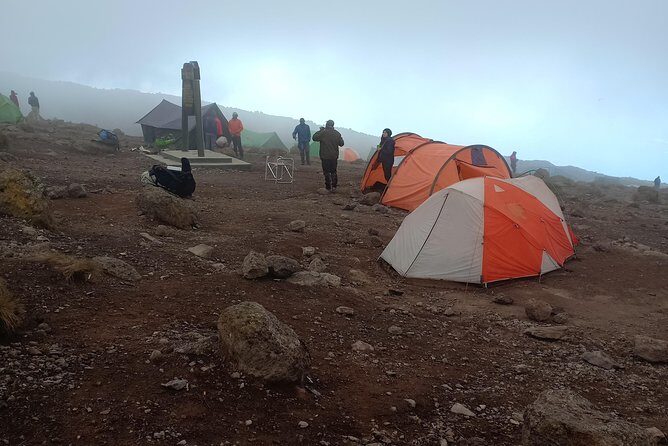
You’ll start the summit at 12:00 am, with tea/snacks around 11:00 pm. That schedule means you’ll likely spend most of day five and early day six thinking about sleep, cold, and breathing.
So here’s the honest checklist I’d use for this specific climb:
- Train for steady uphill effort, not just gym days
- Expect altitude to change your breathing even if you feel fit
- Dress for cold at night and early morning
- Use trekking poles and gaiters on the muddy lower-day descent
- Keep your pace controlled when the trail steepens
If you’re the kind of person who gets anxious about the unknown: ask your guide for their approach. On Kilimanjaro, a good guide’s job is to manage tempo, not just lead you forward.
And if you want extra reassurance, it’s encouraging that at least one guide connected to this operator reportedly tested O2 saturation. You might not have that exact method on your trek, but it tells you they take altitude monitoring seriously.
Who this Lemosho 7-day trek is best for (and who should think twice)
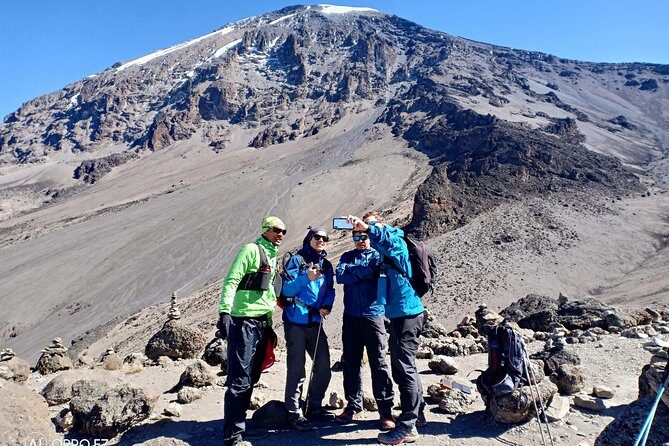
This itinerary is a fit for hikers with moderate physical fitness who want a route with built-in acclimatization days and varied terrain. If you like a “walk with a purpose” plan—rainforest start, plateau day(s), barranco/lava tower adjustments, then a summit push—this route style makes sense.
You might want to think twice if:
- You dislike early starts and long nights
- You’re not ready for cold gear demands
- You’re looking for an easy stroll with flexible pacing
Also, keep in mind the weather dependency. This climb requires good weather, and if conditions force a shift, you may be offered another date or a full refund.
Should you book the Kilimanjaro 7 Days Lemosho with Kilinge Adventures?
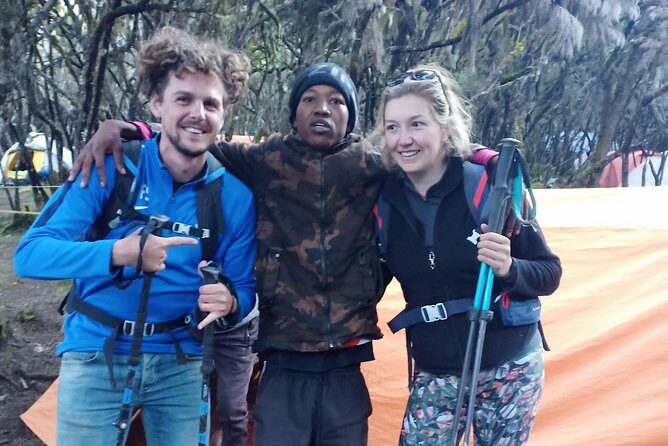
I’d lean yes if you want a guided, structured Kilimanjaro climb where the big moving parts are handled for you: professional guides, porters and cook support, tents, purified water, and all mountain meals. The price can feel reasonable for what you’re getting, especially since the experience lists rescue fees and mountain nights as included.
I’d confirm a couple things before booking:
- The exact total cost after Kilimanjaro National Park fees (listed as not included)
- Your gear plan for cold summit conditions and wet/muddy lower elevations
- What pickup looks like for your specific hotel in Moshi
If you want Kilimanjaro with real people behind the scenes, plus a route that respects acclimatization, this is a strong option.
FAQ
What time does the Kilimanjaro Lemosho trek start?
The experience start time is listed as 8:30 am.
Where does the trek begin?
It’s based in Moshi, Tanzania. On day one, the plan drives to Londorossi Gate for entry formalities, then continues to the Lemosho trailhead.
Is pickup offered?
Yes, pickup is offered.
How long is the trek?
The duration is listed as about 7 days.
What’s included in the price?
The package includes guides and porters, cook salaries, tents, clean purified drinking water, all meals while on the mountain, and all nights accommodation on the mountain, plus all rescue fees.
Are Kilimanjaro National Park fees included?
No. Kilimanjaro National park fees are listed as not included, even though the daily admission line is shown as free—so confirm the final total before you pay.
What meals and water do I get on the mountain?
You get large portions of fresh, healthy, nutritious food. Drinking water is listed as clean and purified, and all meals while on the mountain are included.
What fitness level do I need?
You should have a moderate physical fitness level.
What happens if weather is poor?
The experience requires good weather. If it’s canceled due to poor weather, you’ll be offered a different date or a full refund.
Is free cancellation available?
Yes. Free cancellation is listed, and you can cancel up to 24 hours in advance for a full refund.