REVIEW · MOSHI
Kilimanjaro Climb • Machame Route ~ 10 Day
Book on Viator →Operated by Tusker Trail Kilimanjaro Adventures · Bookable on Viator
Moshi becomes your base camp for a serious walk up Africa’s tallest mountain. You start in Tanzania, gain altitude step by step, and aim for Uhuru Peak at sunrise. I like how the trek runs with camp support so you can focus on hiking, and I like the medically trained High Altitude First Responders approach built into the team. One catch: climbing gear and clothing rental aren’t included, so you’ll need to plan that early.
On this Machame-style 10-day climb, the days are paced to help your body adjust, and the route is scenic in a way that stays practical. You move from dense rainforest with colobus monkeys, to heather and giant senecios, to the cold Barafu zone before the summit push. If you want a climb that feels structured and supported, this is built for that.
In This Review
- Key Highlights Worth Fixing Your Eyes On
- Why the Machame Route Makes Sense for a 10-Day Summit Goal
- Moshi Warm-Up: Hotel Time, Gear Check, and Real Human Support
- Day 3: Machame Gate Into Rainforest, Where Monkeys Meet Your Sweat
- Day 4: From Rainforest Out to Heather Country and Shira
- Day 5: Lava Tower to Barranco, Plus Kibo and Glacier Views
- Day 6: Barranco Wall and the Kibo-Mawenzi Contrast
- Day 7: Barafu Arrives Early, and Cold Shows Up Fast
- Day 8: The Sunrise Summit Day—Crater Rim, Uhuru Peak, Then Millennium
- Day 9: Down to Mweka Gate Through Rainforest, Then a Shower Finally Feels Real
- Value Check: What You Pay for at $5,628 and What You Must Add
- Packing and Comfort Reality: The Gear Gap Is Your Biggest Risk
- Who Should Choose This Machame Climb?
- Final Decision: Should You Book With Tusker Trail Kilimanjaro Adventures?
- FAQ
- How long is the Kilimanjaro Machame Route experience?
- What is the summit goal on this climb?
- Where does the trek start?
- Is pickup offered from Moshi?
- Are meals included?
- Is climbing gear and clothing rental included?
Key Highlights Worth Fixing Your Eyes On
- Machame Route pacing that uses multiple changing environments to help you acclimatize
- Camp crew setup on arrival, so you’re not wrestling tents after a long day
- Medically trained High Altitude First Responders guiding the team’s altitude decisions
- Summit timing just after sunrise, with steep footing visible in daylight
- Real day-by-day variety, from rainforest to heather slopes to Barafu cold
- Named guide team support, including Kombe, Guadance, Nemis, and Ureo
Why the Machame Route Makes Sense for a 10-Day Summit Goal
The Machame Route is often picked for a reason: it gives you enough time on the mountain to work with altitude, without turning the trek into a vague, stretched-out endurance test. In this 10-day format, you climb gradually, then you do targeted ups and downs that help your body adjust while still moving toward the crater area.
I also like the way the plan emphasizes “see and go.” You’re not only chasing a number like a summit height. You’re climbing through distinct zones: rainforest, then moorland with heather and giant senecios, then colder crater-adjacent terrain. That variety helps you mentally handle the grind because each day has a new mission.
There’s a more practical payoff too. Your final ascent is planned for early light, so you can see the steep path under daytime conditions rather than guessing where to place your feet in darkness.
You can also read our reviews of more tours and experiences in Moshi.
Moshi Warm-Up: Hotel Time, Gear Check, and Real Human Support
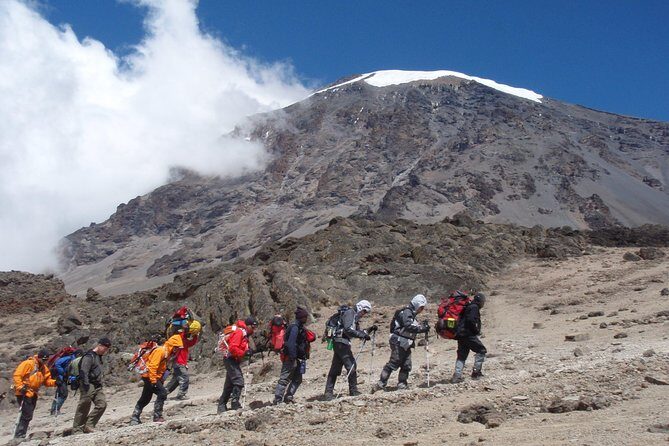
Your trip begins in Moshi, which matters because the altitude work starts before you ever reach the mountain. You arrive, check into a family-owned hotel, and use the first day to recover, sleep, and settle in.
The next nights in Moshi are where the trip turns from travel into training. You get a detailed climb orientation and a gear check, plus time to get to know your guides. This is the part many first-time climbers underestimate. On Kilimanjaro, the mountain is the mountain, but your preparation determines how smoothly you move when the air thins.
It also helps that the guiding crew is described as medically trained High Altitude First Responders. I read that as: you’re not just getting trekking leadership. You’re getting altitude judgment, health monitoring, and fast response capability in high-stakes conditions.
If you’re the type who likes clarity, you’ll appreciate this pre-climb time. You get to ask questions, confirm what you have, and learn how the team wants you to pace.
Day 3: Machame Gate Into Rainforest, Where Monkeys Meet Your Sweat
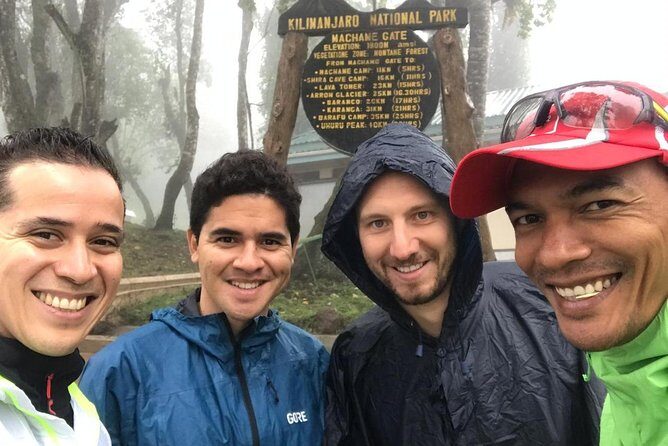
After breakfast, you drive to the Machame gate and enter the national park. Once paperwork is handled by your guide, you start hiking right away. The track narrows early, then climbs steadily through tropical rain forest.
This first “big climb” segment is about building rhythm. Expect a steady uphill path, not a sprint. If you come in overconfident, rainforest days punish that fast. The humidity and constant movement add a layer of effort even before altitude really starts to bite.
One of the most memorable details here is wildlife. Colobus monkeys bark from the canopy, and the forest smells alive with plants you won’t see at home. I like that this day gives you a sense of Kilimanjaro as an ecosystem first, not just a summit quest.
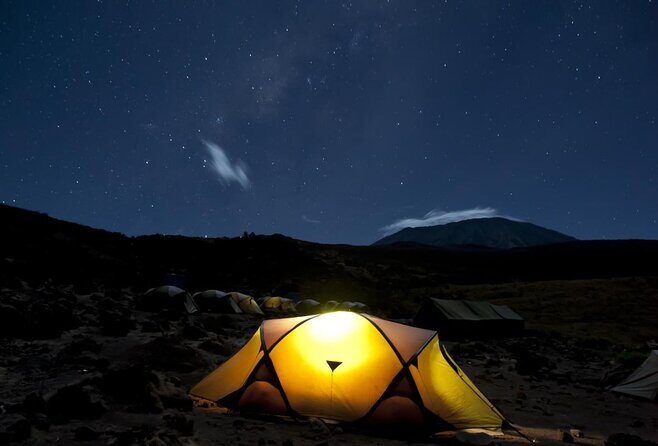
When you reach Machame Camp, the camp crew has already set up camp for you. That means less time fussing and more time resting, eating, and mentally preparing for the next altitude step.
Day 4: From Rainforest Out to Heather Country and Shira
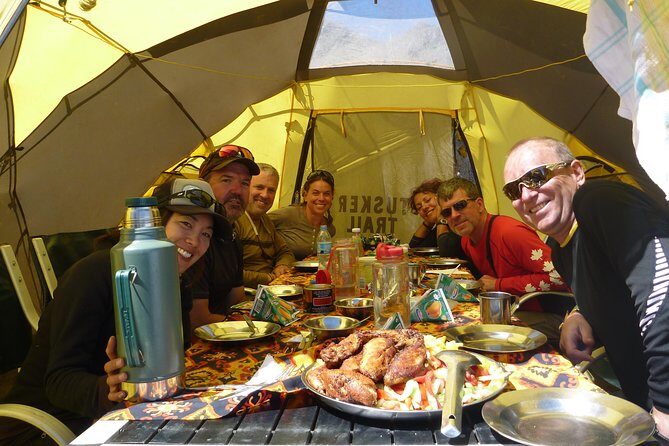
On this day, you leave the last glades of rainforest behind. The terrain shifts, and that shift is the message your body needs: the mountain is changing, and so should your pace.
If the weather cooperates, you can see Kibo Peak from about 20 miles away. That kind of distant view is motivating, but the real value is what comes next. The hike is described as slow as altitude effects begin. After roughly 9,000 ft, you pass the first lobelia, protea, and giant senecio—plants that signal you’re entering the higher moorland ecosystem.
You reach Shira in about 7–8 hours. This is an important acclimatization moment because it gives you time to adjust while you keep moving upward. The slower rhythm also makes it easier to catch your breath for the rest of the climb.
Drawback to consider: this day can feel long if you start too fast. On Kilimanjaro, your legs can handle more than your breathing can. Stick to the slow plan, even if the trail looks friendly early.
Day 5: Lava Tower to Barranco, Plus Kibo and Glacier Views
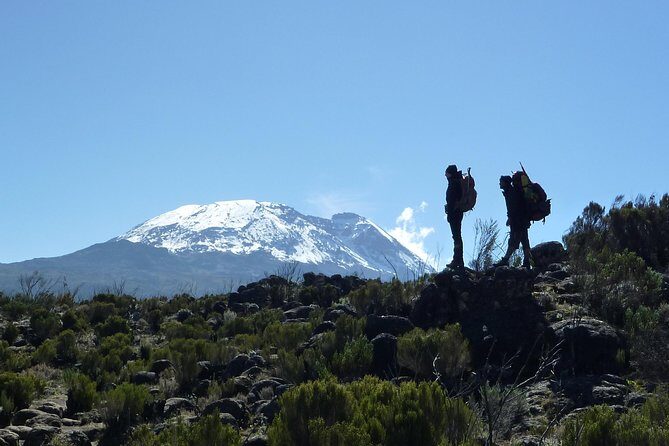
You continue the climb past the Lava Tower, then gradually trek downhill through giant senecios toward Barranco. That “downhill” is part of good altitude strategy. It gives your body recovery while still keeping you in motion.
The route also treats you to spectacular views of the high peaks. You’re hiking toward Kibo’s south-facing glaciers, with the dramatic crater terrain becoming more believable with every hour.
By the time you arrive at Barranco Camp (after descending through heather and lobelias), you’re likely to feel that altitude fatigue shift from background to front-of-mind. That’s normal here. The good part is you’ve positioned yourself for the next day’s big wall experience.
I like that this day connects the dots visually. You’re not just moving from point to point. You’re watching Kilimanjaro’s volcanic story unfold—lava-era landmarks, plant zones, then the glaciers above.
Day 6: Barranco Wall and the Kibo-Mawenzi Contrast
This is one of the defining days on many Machame climbs, and here it’s described as “spectacular,” with great up-and-down hiking. You head up after breakfast and tackle the Barranco Wall, which is the kind of climb that tests legs and lungs in the same breath.
What makes it special is the view setup. Kibo Peak hovers to your left, and Mawenzi looms to your right. That side-by-side contrast is more than pretty. It helps you orient mentally. You’re not climbing blind. You can look, adjust your expectations, and keep moving.
At about 5 hours of hiking, the effort is concentrated. This is a good day to focus on technique: short steps, steady breathing, and no hero moves when you feel the air thin.
When you finish, you’re setting up for the final push zone ahead. Mentally, Day 6 often feels like the bridge between “adventure hike” and “serious summit attempt.”
Day 7: Barafu Arrives Early, and Cold Shows Up Fast
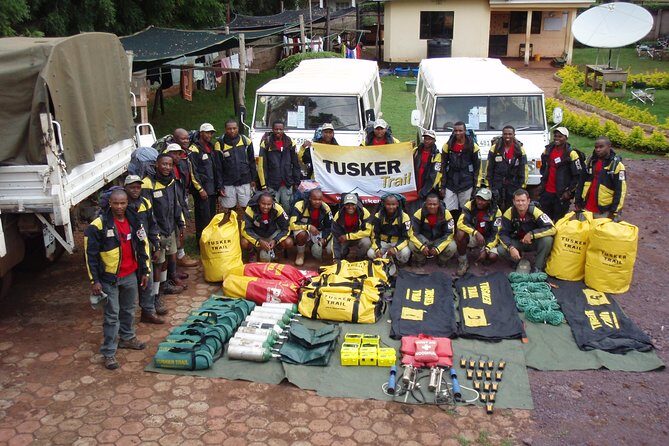
Day 7 shifts into the zone climbers talk about: thinner air and colder conditions. The itinerary notes that you’ll run short of breath as the air gets thin, and the climb is both tough and rewarding. That matches what you should expect near the higher camps.
Barafu means ice in Swahili, and the name fits the reality. You’re in a camp area that tends to feel harsh. You’re likely to feel both physically tired and mentally alert, because the next day is the toughest day ahead.
Clouds moving in and out can also change how you experience the peak views, revealing the eroded silhouette of Mawenzi rising from the plains below. Even when weather makes views partial, the day still gives you that summit-energy buzz.
This is also the moment to follow your team’s pacing and medical checks closely. With medically trained High Altitude First Responders involved, you’re not just getting encouragement. You’re getting health-minded decision making.
Day 8: The Sunrise Summit Day—Crater Rim, Uhuru Peak, Then Millennium
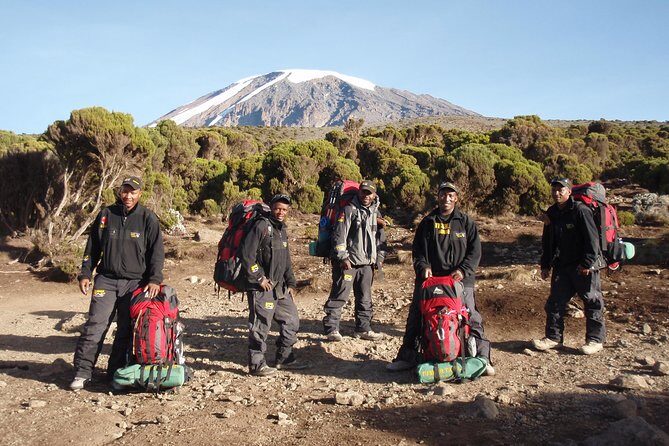
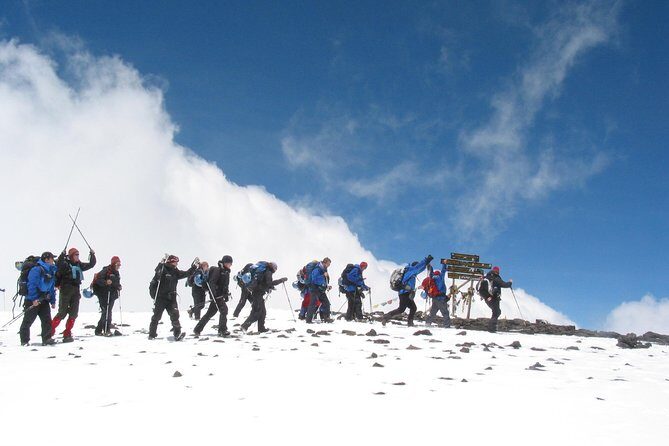
This day is split into the summit push and the continuation. The climb starts a couple hours before sunrise, and the plan aims for Uhuru Peak just after sunrise. That’s a big quality-of-life detail. Daylight improves footing on steep terrain and helps you read the trail.
You climb from Barafu to the Crater rim, then continue toward the summit. The distance listed for this stretch is roughly 2.75 miles / 4.5 km and about 7–9 hours total for the summit day segment. Expect steep walking and constant focus on breathing.
Then you transition from Summit to Millennium, with the descent continuing back down. You reach the highest point (listed as about 19,340 ft) and keep going toward Millennium at about 12,590 ft. The itinerary notes about 1–2 hours from the crater context to Uhuru Peak, then a continued descent and recovery.
The view described is intense: Mawenzi Peak in sight, Kibo saddle beneath you, and crater ice-walls looming ahead. Whether you get full clarity or partial clouds, the day’s structure keeps you moving in a planned way instead of improvising.
Practical downside: this is the hardest day of the trip. Even with a strong crew, you’ll likely feel it in your lungs. Go slow by design. If the guide team says slow, you listen. That’s how people protect the summit attempt.
Day 9: Down to Mweka Gate Through Rainforest, Then a Shower Finally Feels Real
After breakfast, you do a shorter hike to Mweka Camp and then continue down through rainforest toward the gate. The day is listed as about 6 hours total, which can still feel long because descent brings its own strain.
At the gate, you enjoy a final lunch and celebration with your guides and porters. You drive back to the hotel for a well-earned shower, which is not a small detail. After days of cold air and dust, a warm shower becomes a moral event.
This day is also where you start appreciating the full journey. You’re leaving the high altitude world and returning to plant-rich rainforest terrain. It makes the entire week feel like a complete vertical story instead of just a summit day.
Value Check: What You Pay for at $5,628 and What You Must Add
At $5,628 per person for a ~10-day Machame climb, you’re not paying for a casual hike. You’re paying for a full support system around a high-altitude objective.
Here’s what’s explicitly built in from the trip description:
- Meals: breakfast (9), lunch (10), dinner (8)
- National park admissions noted as included during hiking days
- Camp crew setting up camp so you can focus on moving and resting
- Pickup offered and a mobile ticket included
And from the on-the-mountain setup:
- Equipment carrying and camp setup are handled, which matters because it reduces the amount of weight you personally manage day to day.
What you still need to plan for:
- Climbing gear and clothing rental aren’t included. This is the most important budget reminder. If you rent late, options can shrink, prices can rise, and fit can suffer. Start early.
Is it good value? For me, it leans yes if you want strong medical-minded guiding, camp support, and a route that gives you time to acclimatize. The cost is steep, but it matches the fact that you’re buying logistics, staff support, park entry, and meals in a remote environment.
Packing and Comfort Reality: The Gear Gap Is Your Biggest Risk
Because gear and clothing rental aren’t included, you should approach packing like part of training. The most common mistake is assuming you can buy or rent something on the fly. For Kilimanjaro’s cold and summit conditions, fit and warmth matter.
From the trip structure, you’ll spend meaningful time moving in rainforest humidity, then in colder heather and Barafu conditions. That means your layers should be flexible. You also need footwear that works for uneven ground, plus items that keep you comfortable in wind and cold when you’re at higher camps.
Don’t ignore the camp aspect either. Since the camp crew sets up for you, your comfort will depend heavily on the right clothing and sleep setup you bring or arrange through rentals. If you’re prepared, you’ll save energy for the climb.
Who Should Choose This Machame Climb?
This climb fits best if you want:
- A 10-day plan with pacing built into the route
- Strong team support, including medically trained High Altitude First Responders
- Camp logistics handled so you can spend your energy on hiking
- A summit goal with structure, including the sunrise timing for Uhuru Peak
It also suits families and mixed-age groups if the team’s pacing works for your group. The guide approach emphasizes careful medical evaluations and ongoing attention, which is important when your group has different fitness levels.
If you’re someone who hates planning and doesn’t want to think about gear, the missing gear rental may frustrate you. This is a trip where preparation pays back fast.
Final Decision: Should You Book With Tusker Trail Kilimanjaro Adventures?
If you want Machame with a team-first style, I think you should seriously consider it. The combination of camp setup, meal structure, national park admissions included, and the altitude-minded medical approach is the kind of support you want when things get serious on the mountain.
I’d only hesitate if you’re not ready to handle gear and clothing planning on your own. Fix that gap and you’re set up for a smoother climb experience.
FAQ
How long is the Kilimanjaro Machame Route experience?
The trek is listed as about 10 days.
What is the summit goal on this climb?
The goal is Uhuru Peak, the highest point in Africa.
Where does the trek start?
It starts from Moshi, Tanzania, and you drive to the Machame gate on the first climbing day.
Is pickup offered from Moshi?
Yes, pickup is offered.
Are meals included?
Yes. Breakfast, lunch, and dinner are included during the trip (breakfast 9, lunch 10, dinner 8).
Is climbing gear and clothing rental included?
No. Climbing gear and clothing rental are not included.