REVIEW · MOSHI
Kilimanjaro 360° 9 days Tour
Book on Viator →Operated by One Bike Tanzania · Bookable on Viator
Kilimanjaro 360° is not a sit-and-watch safari; it’s a hands-on ride that threads through farms, Maasai villages, forests, and big sky views around Kilimanjaro and Kenya. I like that the trip is built around off-road terrain (gravel, dirt, and muddy sections) so your days actually feel like progress, not an endless transfer schedule. I also like the way the itinerary mixes challenge with variety, from Shira Plateau climbing to calmer time at Lake Chala. One drawback to weigh up: this is for strong physical fitness, and the days with rocky uphill sections and mud won’t be forgiving.
In This Review
- Moshi as your base, then the mountain takes over
- Key points I’d plan around
- Why a 360° cycling circuit around Kilimanjaro works
- Moshi arrival, transfers, and getting your ride organized
- Day 2 from Machame gate to Olpopongi Maasai village: farms, forest edges, and a real overnight
- Day 3 Sinya and Ngasurai open plains: the wildlife corridor day
- Day 4 Shira Plateau challenge and the helipad at 3700m
- Day 5 the north-eastern border ride to Nalemoru and Rongai forest edges
- Day 6 Lake Chala: a downhill reset into caldera-lake life
- Day 7 dense forest cycling toward Kahawa Shambani in Uru
- Day 8 uphill toward Mweka Gate, then a relaxing return to Moshi
- Day 9: hotel sleep and transfer out of Moshi
- Price and what you’re really paying for ($2,499 per person)
- How tough is this, really? Fitness and pacing tips that fit the route
- Who this Kilimanjaro 360° ride suits best
- Should you book it?
- FAQ
- Where does the Kilimanjaro 360° tour start and end?
- Is pickup from the airport included?
- What’s included in the tour price?
- Do I need to bring my own bike and helmet?
- Is this a private tour?
- What fitness level do I need?
- What kind of terrain should I expect?
- Does weather affect the tour?
- Is Day 9 just departure logistics?
Moshi as your base, then the mountain takes over
You start in Moshi, get set up with a bike and helmet, and spend nine days moving in a loop that keeps changing the scenery and the people you meet. It’s also a private tour/activity, so it’s easier to match the pace and keep things feeling personal rather than rushed. If you’re the type who gets frustrated with slow, technical riding, this may feel like more work than you expected.
Key points I’d plan around
- Off-road route, no tarmac on key days, which means real riding skill (and lots of wheel traction changes).
- Two cultural nights: a traditional Maasai-hut stay at Olpopongi and time in Tanzanian village areas like Uru.
- High-point climbing to 3700m via the Shira Plateau helipad—big altitude day, big views if weather cooperates.
- Wildlife corridor scenery connecting movement between Amboseli (Kenya) and Tanzanian wildlife areas.
- Lake Chala recovery day at a unique caldera lake with spring-fed water and birdlife time.
- Supporting vehicle + meals included, which helps you keep your energy for the tougher legs.
You can also read our reviews of more tours and experiences in Moshi.
Why a 360° cycling circuit around Kilimanjaro works
Kilimanjaro is famous for hiking, but cycling gives you a different kind of connection. You feel the slope under your tires. You notice how quickly the vegetation changes as you move west-to-north-to-east, and you also see how people live right next to wildlife land and protected areas.
This tour is also a values-and-lifestyle kind of trip, not just a checklist. The route is designed to put you close to local life—Chagga farms, Maasai communities, and Tanzanian villages—while still keeping the focus on moving under your own power. If you care about health and getting out there, it’s a strong fit.
And the “360°” idea matters. You’re not doing one dramatic climb and going home. You’re cycling a loop that keeps rewriting your mental map of Kilimanjaro, with Kenya visible from open sections when the sky is clear.
Moshi arrival, transfers, and getting your ride organized
You’ll be in Moshi, the practical launch point for biking around the mountain. On Day 1, you’re picked up from Kilimanjaro airport or another arrival point by a One Bike guide and transferred to your hotel. That matters because the tour’s first day is about setup and orientation rather than pushing straight into technical riding.
The meeting point is the One Bike Shop on Mailimoja Rd in Moshi (start), and the tour ends back there on Day 9. It’s open daily from 9:00 AM to 6:00 PM, which gives you some flexibility if your arrival timing is slightly different.
Mobile ticket is included, and you’ll have the time on Day 1 to rest and explore Moshi at your own rhythm. Moshi is a good place to get your bearings: cafes, market streets, and easy walks if you want to stretch before the bikes start working overtime.
Day 2 from Machame gate to Olpopongi Maasai village: farms, forest edges, and a real overnight
Day 2 starts with a transfer to Machame gate, then you ride from there over dirty and gravel roads. The early part takes you through rain forest and through banana and coffee plantations. This is Chagga country, so you’re not just passing trees—you’re riding through lived-in agriculture.
As you head west, the terrain opens up. You move into wind-exposed areas with more plains and acacia woodlands. That change is more than scenery; it’s a pacing change. In forest, the riding feels boxed in. On windy open sections, you feel every gust and every slight shift in effort.
Then you enter Maasai-land territory and see how tribal cultures differ across the region. The route also passes places like Ngabobo and Tinga Tinga village, and you’ll ride along the border of the national park, crossing paths tied to native animals.
The night stay is a big part of why this tour feels like more than biking. You sleep in a traditional Maasai-hut at Olpopongi Maasai village. Expect it to be part of the cultural experience, not a hotel substitute.
Possible consideration: Day 2 is already off-road, and you’ll be learning the rhythm of gravel riding while also absorbing the local environment. If you’re new to technical bikes, build patience into your first two hours.
Day 3 Sinya and Ngasurai open plains: the wildlife corridor day
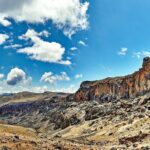
Day 3 is about riding open land—Sinya and Ngasurai plains—serving as a wildlife corridor linking movement from Amboseli (Kenya) to the Enduimet wildlife management area (Tanzania). That corridor concept is useful because it explains why the scenery feels both wide and important. You’re not just riding past scenery; you’re passing through an ecological link.
The route is fully off-the-beaten-path with no tarmac. So even if the day feels visually “simpler” than the rocky climbs, your bike handling still needs attention—dust, loose gravel, and uneven ground can make distances feel longer.
If you get a clear day, the views can include Mt. Kilimanjaro, Mt. Meru, and even Ol Doinyo Lengai. That combo is the kind of visual pay-off you only get from open sections where weather clears up.
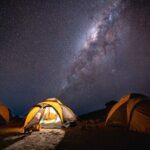
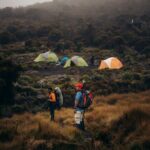
You finish at Simba farm campsite for the night. Campsite nights usually mean earlier downs, later wind-down, and the chance to meet your fellow group members if you like that vibe.
Day 4 Shira Plateau challenge and the helipad at 3700m
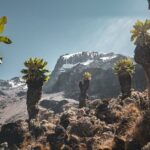
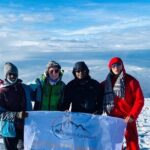
This is one of the tour’s standout challenge days, and it’s the one I’d mentally prepare for from the start. You cycle uphill on dirty and rocky roads to reach the Shira Plateau of Kilimanjaro. The plan includes a stop at a helipad around 3700 meters.
At that height, conditions can change fast. Even without guessing temperatures, you should assume your body will work harder because the ride is both uphill and high. It’s the kind of day where you’ll want a steady effort rather than bursts.
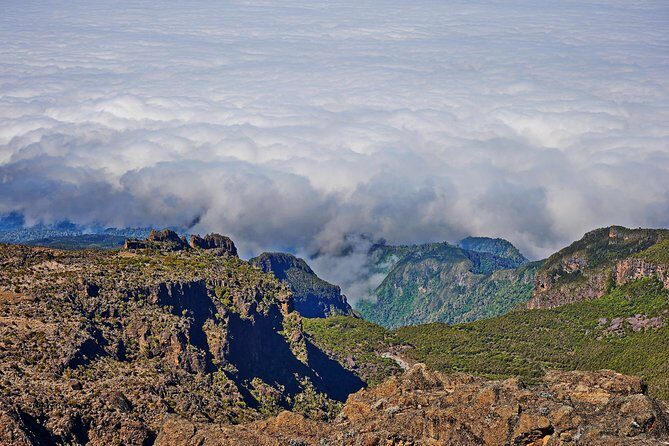
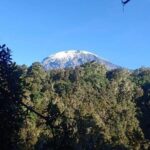
The reward is dramatic: you can look toward the top of Kilimanjaro and the Kibo peak (snow-covered on one side), plus Maasai land on the other. Whether those views fully land depends on the day’s weather, but the route is designed for the possibility.
After resting, you enjoy a much easier ride down back to Simba farm campsite for the night. That contrast—grind up, roll down—helps balance the day. Still, don’t mistake downhill for easy. Rocky slopes can demand strong braking control.
Day 5 the north-eastern border ride to Nalemoru and Rongai forest edges
Day 5 heads through the north-eastern side of Kilimanjaro, bordering Kenya. You’ll ride through vibrant villages and farmlands, then finish near the entry of the Rongai trek route in the Nalemoru village.
This part matters because it connects you to conservation and to a tree-rich setting. The Rongai area is described as a conservation center for many tree species, and you can see that variety along the route and around the village area.
You stay at Snow Cap Cottages in the Rongai Village. Compared with the earlier roadside camping, this kind of overnight can feel like a reset—more shelter and a calmer night rhythm.
Possible drawback: this day is still part of an endurance loop. Even when the terrain changes, you’ll be stacking fatigue from the earlier days. Make sure you eat and drink as if Day 6 depends on it—because it does.
Day 6 Lake Chala: a downhill reset into caldera-lake life
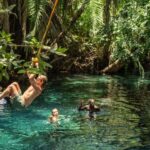
Day 6 shifts the tone. After a couple of tough days, you take a smooth downhill ride to Lake Chala, described as a unique caldera lake fed by underground springs from Kilimanjaro.
This is where you get something different from the mountain: time by the water. You’ll have the chance to enjoy the lake and its diversity of life—forest plants and birds in the area.
From a cycling standpoint, a downhill-centered day can be a mental relief. You’re still moving, but you’re not always fighting steep grade. From a travel standpoint, it’s a chance to slow down and let your body recover so Days 7 and 8 don’t feel like a second penalty.
You spend the night by the lake, so expect a quieter end-of-day atmosphere than roadside village nights.
Day 7 dense forest cycling toward Kahawa Shambani in Uru
Day 7 brings back the challenge in a different form. The ride includes dirt and sometimes muddy roads, with plenty of ups and downs. Instead of open plains and big sky, you go deep into dense forest where the focus shifts to flora and fauna.
This kind of day can be physically demanding because mud and uneven ground make every pedal stroke less efficient. You might feel you’re working harder even if the distances don’t sound huge on paper.
The day ends at Kahawa Shambani campsite in Uru village. Camp nights are practical for this style of multi-day riding: you’re close to the next morning’s start, and you’re not losing time to long returns.
Day 8 uphill toward Mweka Gate, then a relaxing return to Moshi
Day 8 is the “wrap the loop” day. You cycle uphill toward Mweka Gate after riding around the whole Kilimanjaro mountain. The phrasing here is important: this isn’t a quick out-and-back. You’re closing a full circuit, so even if you feel stronger by now, you’re still finishing a long training arc.
The ride includes a final uphill push, then you enjoy an easy, relaxing ride back to Moshi via tarmac road. That tarmac segment is a gift. It’s smoother rolling after days of rock and mud, and it helps your body absorb the finish.
In town, you’ll have dinner and time to relax or experience Moshi’s nightlife. Then you spend the night in your hotel.
Possible consideration: the nightlife option can be tempting when you’re tired. If you know you’ll regret late nights, keep it simple and use your energy wisely.
Day 9: hotel sleep and transfer out of Moshi
Day 9 is recovery-focused. You sleep and rest well in your hotel, then transfer from the hotel to the airport or another place of departure from Moshi.
This structure is smart. A lot of mountain trips end with a rushed morning. Here, you get a last day to breathe before travel.
Price and what you’re really paying for ($2,499 per person)
$2,499 is a serious price tag, so it’s fair to ask what you’re getting beyond the word “cycling.” In this case, a lot of the value is in the package design:
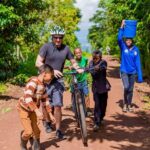
You’re getting mountain bikes and helmets, plus water and snack support during the ride. There’s also a supporting vehicle, which is key for multi-day off-road tours—when terrain turns unpredictable, having backup and logistics makes the experience more realistic.
Meals are included at a meaningful level: breakfast (8), lunch (9), and dinner (7). That matters because cycling days eat time and appetite. When meals are handled, you’re not constantly hunting for food along remote routes.
There’s also a private tour/activity format, meaning your group rides together without mixing into random schedules.
What’s not included is equally important: insurance and flight tickets aren’t part of the price, and airport/departure tax isn’t included either. If you’re budgeting, add those items early rather than hoping they work out last-minute.
One more note: the tour includes “admission ticket free” mentions on Days 1 through 5. Even if the details vary, the overall message is that you’re not constantly paying entry fees for daily access.
How tough is this, really? Fitness and pacing tips that fit the route
The tour explicitly asks for travelers with a strong physical fitness level. That’s not marketing fluff here—it’s consistent with the ride descriptions: rocky uphill on Shira Plateau, muddy sections in dense forest, and multiple days with ups and downs.
If you’re planning training, focus on two things:
- Time on your bike so your legs handle off-road fatigue.
- Brake and control practice, since you’ll ride over dirty, gravel, and muddy surfaces.
Also, think about hydration and food. With included meals and a supporting vehicle, you still need to treat your body as part of the operation. Off-road days can surprise you with how quickly you burn energy, even when the day feels “cooler” because of forest cover.
If you’re prone to getting discouraged by tough days, this itinerary may test your patience—especially Day 4 and Day 7. But if you like challenges and want the payoff of views and varied country, it’s a strong match.
Who this Kilimanjaro 360° ride suits best
This is ideal for:
- You if you want active travel where cycling is the main event, not an accessory.
- You if you enjoy off-road terrain and want a route that feels remote and varied.
- You if you like meeting people through everyday spaces—farms, villages, and community stays—while still moving under your own power.
It may be less ideal if:
- You want mostly smooth roads with predictable effort.
- You’re not comfortable with mud or rocky uphill riding.
- You prefer a lighter pace and shorter days with lots of spare time.
Should you book it?
I’d book the Kilimanjaro 360° tour if your priority is a real multi-day cycling challenge with authentic stops, not just seeing Kilimanjaro from a viewpoint. The best reason to choose it is the mix: cultural nights (including a Maasai-hut stay), varied ecosystems, a major high-altitude climbing day, and then a quieter reset at Lake Chala before the final loop closure.
Before you commit, be honest about your fitness and your comfort with technical riding. If you’re strong on the bike and you enjoy the idea of riding through farms, forests, and community areas for nine days straight, this is a trip that can feel like a complete journey rather than a long day tour. If you’re unsure, pick a test ride at home first—because the route is built for cyclists who show up ready to work.
FAQ
Where does the Kilimanjaro 360° tour start and end?
It starts at the One Bike Shop on Mailimoja Rd in Moshi and ends back at the meeting point.
Is pickup from the airport included?
Yes. On Day 1, you’ll be picked up from Kilimanjaro airport or another arrival point and transferred to your hotel.
What’s included in the tour price?
The tour includes a mountain bike and helmet, water and snacks, a supporting vehicle, and meals (breakfast, lunch, and dinner on the listed days).
Do I need to bring my own bike and helmet?
No. Mountain bikes and helmets are included.
Is this a private tour?
Yes. It’s listed as a private tour/activity, so only your group participates.
What fitness level do I need?
The tour notes that travelers should have a strong physical fitness level.
What kind of terrain should I expect?
Expect dirty and gravel roads, rocky uphill sections, dirt and sometimes muddy roads, and both forest and open areas.
Does weather affect the tour?
Yes. The experience requires good weather. If it’s canceled due to poor weather, you’ll be offered a different date or a full refund.
Is Day 9 just departure logistics?
Day 9 includes sleeping and resting at your hotel, then a transfer to the airport or another departure point from Moshi.