REVIEW · MOSHI
7 Days Machame Route
Book on Viator →Operated by Golden Summit Adventures · Bookable on Viator
Climbing Kilimanjaro starts with a whisper of clouds. The Machame route mixes mossy cloud forest, sweeping high views, and the famous night climb, while using a smart rhythm of walk high, sleep low to help your body adjust.
I also like how tightly Golden Summit Adventures runs the trip, especially the details that keep summit day from feeling chaotic. You get the support you need, including porters looking after your belongings while you push for the top, plus meals that stay filling and actually help energy levels. The main drawback to plan for is the toughest day: the midnight summit attempt stretches long, with cold, tiring scree climbing that demands real stamina.
In This Review
- Key things to know before you go
- Moshi to Kilimanjaro: the Machame Route in plain terms
- Day 1: Cloud forest to the trail’s first big change
- Day 2: Shira Plateau and the view check-in
- Days 3 and 4: high moorland, Lava Tower, and the walk high sleep low goal
- Day 5: Barafu Camp, Kibo glacier views, and saving your legs
- The midnight summit day: Stella Point at 5,739m and Uhuru Peak at 5,895m
- Day 7: rainforest descent to Mweka Gate, certificates, and Moshi recovery
- Price and value at $2,000 per person
- What the group size and crew experience means for you
- Who should (and shouldn’t) pick this Machame package
- Should you book the 7-Day Machame Route with Golden Summit Adventures?
- FAQ
- How long is the Machame Route trip?
- What time does the trek start from Moshi?
- Is pickup from Moshi included?
- How many people are in a group?
- Do you sleep in tents on the Machame route?
- When does the summit attempt start?
- What happens at the end of the trek at Mweka Gate?
- Is free cancellation available?
Key things to know before you go
- Machame’s acclimatization rhythm: higher walking days with lower sleeping to support altitude adjustment.
- Big scenery shifts in a short time: cloud forest to plateau, then to high moorland and glacier views.
- Stella Point first light: the crater rim at 5,739m happens at sunrise timing, not later.
- Porter support that protects your energy: your summit-day items are handled so you can focus on moving.
- Small group size: capped at 15 travelers, which usually helps coordination feel smoother.
- A structured end in Moshi: Mweka Gate formalities, certificates, then a return to your hotel with time to reset.
Moshi to Kilimanjaro: the Machame Route in plain terms
This is a classic Kilimanjaro experience, and the Machame route earns its reputation for a reason: the path gives you multiple chances to climb high, then recover at a lower camp. Over seven days, you’ll move through very different terrain zones, which matters because your body needs time to adapt to altitude and the air gets thinner fast.
From Moshi, your trek starts around 8:00 am, and pickup is offered. You’ll also use a mobile ticket, which keeps things simple when you’re traveling in Tanzania. Each day includes an admission ticket, so you’re not constantly hunting for paperwork while you’re trying to focus on the hike.
Cost is $2,000 per person for this seven-day package. That’s not pocket change, so here’s how to judge value: on Kilimanjaro, you’re paying for more than “walking.” You’re also paying for guides and teams, tent logistics (tents carried up by porters), meals on the trail, and the park admissions that make the route official. When a company runs well, it shows up in small things—less waiting, clearer briefings, and fewer moments where you’re wondering what happens next.
A few more Moshi tours and experiences worth a look
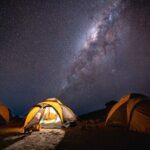
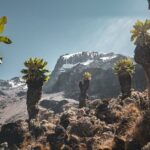
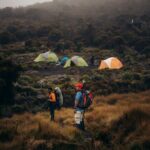
Day 1: Cloud forest to the trail’s first big change
Day 1 is about getting your rhythm. You’ll start hiking through moss-covered trees in Kilimanjaro’s cloud forest. The air has that damp, cool feel, and the light can look soft even when the sun is out. It’s the kind of start that’s scenic but also practical: the pace is easier, so you can settle into altitude without rushing.
As the day goes on, the forest thins. Vegetation changes into heathers, tall grasses, and wildflowers. That shift matters because you’re watching the mountain “turn the dial” on you—from lush and enclosed to more open and exposed. Expect roughly 6 hours of hiking, with an admission ticket included.
Practical tip: on a cloud-forest day, your gear will feel damp. You’ll feel it in socks and gloves. Bring a plan for drying and use layers that you can vent, because it’s common to start cool and end up warm.
Day 2: Shira Plateau and the view check-in
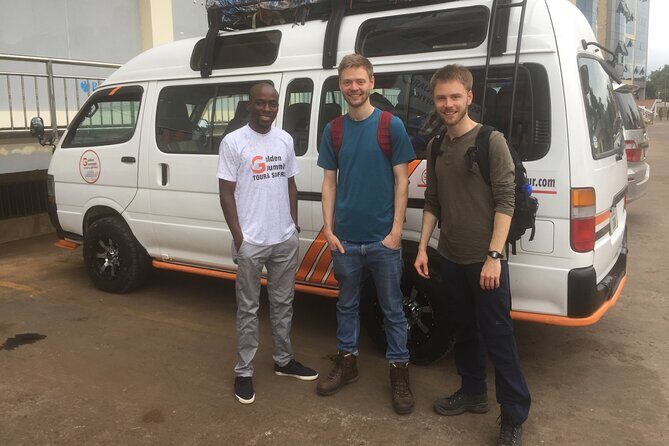
On Day 2, the route continues up through forest until you tackle a steep push toward the Shira Plateau. Once you’re up there, you get rewarding mountain views. Looking back, you can see Mount Meru rising above Arusha in the distance, which is one of those “wait, that’s real?” moments.
You’ll hike about 5 hours today. This day is shorter than Day 1, but it still asks for steady effort. The higher you climb, the more you’ll notice your breathing changes. That’s why pacing matters more than speed.
I like how this day is positioned: it helps you feel the altitude without demanding the kind of brute effort that comes later. If you tend to go out fast because you feel good, this is a great day to practice patience.
Days 3 and 4: high moorland, Lava Tower, and the walk high sleep low goal
By Day 3, the terrain changes character. You’re walking now on high moorland, and the vegetation looks different enough that you can tell you’re not just climbing—you’re crossing into another world. The route takes you along the southwest side of Kilimanjaro and passes notable features like the Lava Tower and the Western Breach area.
You’ll reach altitude up to around 4,600m, and the big idea here is the mountaineering code: walk high, sleep low. That doesn’t mean the days feel easy. It means you’re actively using the schedule to reduce the stress of altitude, giving your body a better shot at acclimatization.
Day 3 is listed at about 8 hours, and Day 4 at about 4 hours. Even though that’s a big difference on paper, both days are about altitude management and staying focused on movement quality, not ego speed.
Here’s why you should care: at this elevation, small mistakes compound. If you hike too hard, you’re not just tired—you’re more likely to feel bad at camp. If your guide team keeps you on pace (and a good crew will), it’s easier to get that “we’re here, we’re safe, we’re moving smart” feeling.
A note on the glacial sights: the information for Day 3 and the adjacent glacier views ties you into the story of Kilimanjaro’s icefields. Even when ice is far off, seeing glacier areas is a reminder that you’re climbing through a high-altitude environment, not a themed park set.
Day 5: Barafu Camp, Kibo glacier views, and saving your legs
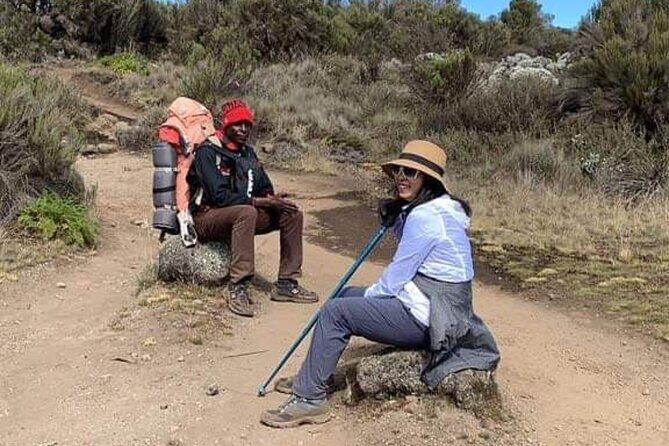
After breakfast on Day 5, you start hiking toward Barafu Camp. This is the day where the mountain starts looking more serious. On the way, you can see portions of Kibo’s glaciers, and you’ll pass the junction connected with the descent route Mweka and the Machame trail.
The day is around 4 hours. That shorter hiking time is important because it signals what’s coming next: you’re not far from the summit push. Your job today is to move efficiently, keep warm as the air thins, and avoid burning energy you’ll want later.
One more detail that helps you understand the pacing: the glacier-related references (including areas called Heim, Kersten, and Decken Glaciers) show up in the run of days around here. Even if you don’t catch every label in real time, the key is that your guide is tracking altitude and route position while you soak in the glacier views.
Practical tip: today is a great time to mentally prep for the cold night on Day 6. Your body will thank you if you focus on warmth management as much as movement.
The midnight summit day: Stella Point at 5,739m and Uhuru Peak at 5,895m
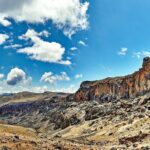
Day 6 is the reason most people sign up, and it’s also the day you need to respect most. You start off at around midnight, then begin walking steeply upward to the summit glaciers.
You’ll be climbing scree for roughly 4 to 5 hours. Scree isn’t technically complicated, but it is exhausting because every step has friction and instability. The upside is that you gain incredible height over a short distance, and the route gives you those high-altitude views that don’t feel real until you’re standing in them.
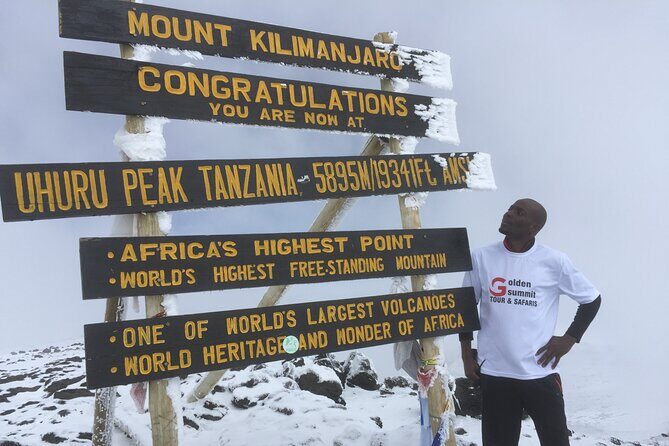
You’re aiming to reach Stella Point (5,739m) as the first rays of sun hit. That moment on the crater rim is framed as a key highlight: ice cliffs within the crater surround you, and the views out toward Mawenzi Peak and beyond are described as breathtaking. After that, you continue another hour to Uhuru Peak (5,895m).
Then comes the long truth of summit day: you descend. You return back to Stella Point and start down on scree slopes, then track back to Barafu Camp for breakfast. After that, you continue descending further down to Mweka Camp, calling it a long but well-earned rest.
The total listed time for Day 6 is about 15 hours. That is why the company’s organization matters. In a well-run team setup, you’re not wasting time searching for your items or guessing what’s next. The reviews highlight this kind of organization, including the way porters handle your belongings while you summit, so you can focus on putting one foot in front of the other.
Day 7: rainforest descent to Mweka Gate, certificates, and Moshi recovery
Day 7 is where you start to feel human again. You walk down through rainforest toward Mweka Gate. Even when you’re tired, the rainforest shift is a relief: the air feels less sharp, and the trail becomes less about fighting elevation and more about finishing with good form.
At Mweka Gate, you complete park formalities and receive certificates. Having that paper in hand at the end matters more than you might expect, because it’s the official sign you completed the route. Then you’re met by vehicles and returned to your hotel in Moshi for that first real reset: a welcome shower and time to celebrate with cold drinks.
The hiking time on Day 7 is about 3 hours, which is a gift after Day 6.
Price and value at $2,000 per person
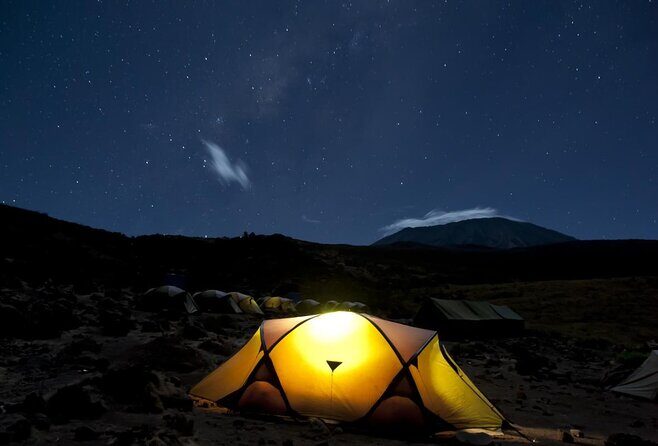
Let’s talk money like adults. At $2,000 per person, you’re paying for a whole operation, not just a route on a map. This package includes pickup, admission tickets, and a mobile ticket. It also includes the tent-based camp setup, with tents carried up the mountain by porters, which is one of the big practical differences between Kilimanjaro and many other hikes.
The strongest value signals from the experience details and feedback style are operational: the team is well organized, the briefings happen early, meals are designed to keep you fueled, and the summit-day logistics reduce stress. On summit night, you don’t want to be negotiating gear or timing. If porters are handling your belongings while you go for the summit, that’s not a luxury—it’s time and energy saved.
Still, you should think carefully about fit before you pay:
- You’re committing to real altitude work.
- You need to accept cold nights and a long summit schedule.
- This kind of trip rewards calm pacing, not last-minute bravado.
If you want a smooth, safety-first climb with clear support, the price can make sense.
What the group size and crew experience means for you
This trekking group has a maximum of 15 travelers. That number is big enough to feel social, small enough to avoid turning into chaos. In a bigger group, you can lose flexibility and get “conveyor belt hiking.” Here, the structure is more likely to feel like a guided team approach.
The crew is also described as experienced and focused on safety, with guides who aim to get you to the summit while teaching you about the environment and culture along the way. That combination is useful: it gives you more than survival-mode directions. You’re not just hiking; you’re learning what you’re walking through, which helps the trek feel meaningful even when it’s hard.
There’s also a strong customer-service vibe in the feedback you’ll see associated with this operator: warm communication, clear help, and attention to details like summit-day porter logistics and meals.
Who should (and shouldn’t) pick this Machame package
This trek is a good match for you if you have moderate physical fitness, you can handle long days, and you’re willing to follow pacing instructions. Kilimanjaro is a “slow and steady” game, especially in the later days when the air feels thin.
It’s also ideal if you want a route that’s known for scenic variety. Machame’s changes—from cloud forest to plateau to high moorland—keep the trek from feeling repetitive.
You might rethink the plan if:
- You struggle with very long, cold nights and steep scree climbing.
- You’re hoping for a “walk and relax” experience.
- You’re not comfortable with altitude taking over your breathing and sleep.
If you’re on the fence, be honest about your stamina for Day 6. That one day is the center of gravity for the whole week.
Should you book the 7-Day Machame Route with Golden Summit Adventures?
If your goal is Kilimanjaro’s Machame route with solid logistics and a team that takes safety and clarity seriously, this package is worth strong consideration. The details that stand out—organized briefings, tents carried by porters, and summit-day help like porters looking after belongings—are exactly the kinds of factors that make a difference when you’re tired and cold.
That said, be sure you’re choosing the right route for your body and your mindset. You’re signing up for a seven-day acclimatization plan with a demanding summit push. If you prepare well, follow the pace, and pack smart for cold and altitude, you’re setting yourself up for a powerful, rewarding week.
FAQ
How long is the Machame Route trip?
It’s listed as 7 days (approximately).
What time does the trek start from Moshi?
The start time is 8:00 am.
Is pickup from Moshi included?
Yes, pickup is offered, and on the final day you’re returned by vehicle to your hotel in Moshi.
How many people are in a group?
The tour lists a maximum of 15 travelers.
Do you sleep in tents on the Machame route?
Yes. You hike and sleep in tents, and the tents are carried up the mountain by porters.
When does the summit attempt start?
On Day 6, the route starts around midnight for the summit push.
What happens at the end of the trek at Mweka Gate?
On Day 7 you hike to Mweka Gate, complete park formalities, and receive certificates, then you’re met by vehicles and taken back to your hotel in Moshi.
Is free cancellation available?
Yes. There’s free cancellation. You can cancel up to 24 hours in advance for a full refund, and cancellation changes made less than 24 hours before the start time aren’t refunded.