REVIEW · ARUSHA
5 Days Tanzania’s Wildlife Joint Safari.
Book on Viator →Operated by Nkollo Tours&Safaris · Bookable on Viator
Five days, four parks, one wild rhythm.
This 5 Days Tanzania’s Wildlife Joint Safari is built for travelers who want the big-name Northern Circuit without luxury pricing. You’ll travel with a professional guide and a chef the whole time, moving between Tarangire, Serengeti, Ngorongoro Crater, and Lake Manyara to chase both the classic big-animal drama and the everyday details that make safari feel real. I also like how the tour is set up as a working safari (not just a bus ride): camping gear is included, and meals are freshly prepared on the road.
One thing to consider: this is a budget safari with budget lodges/camps and long driving days between parks. If you’re picturing a slow, comfy itinerary with lots of downtime, this won’t match that style. Still, if your priority is animals and efficient park time, the structure makes sense—and the organization around it matters a lot.
In This Review
- Key things that make this safari work
- Entering the Northern Circuit: what this tour is really aiming for
- Value math: is $1,100 fair for a 5-day wildlife safari?
- Day 1: Tarangire National Park and the rhythm of an early start
- Days 2 and 3: Serengeti, including a Ngorongoro crater viewpoint stop
- Day 4: Ngorongoro Crater for big herds and big cat drama
- Day 5: Lake Manyara’s birds and the tree-climbing-lion angle
- Group size and day-to-day logistics that actually matter
- Who this safari is best for
- Should you book this 5-day joint safari?
- FAQ
- FAQ
- What parks are included in this 5-day safari?
- Where does the tour start and where does it end?
- Are park admission tickets included?
- What meals are included?
- Is pickup offered?
- How big is the group?
Key things that make this safari work

- Professional guide plus chef for the whole trip so the day feels coordinated, not chaotic
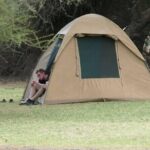
- Camping equipment included, which keeps this budget safari feeling like a true expedition
- Park admissions are included across the days, so you’re not piecing together ticket costs
- Northern Circuit highlights in one run: Tarangire, Serengeti, Ngorongoro Crater, and Lake Manyara
- Small-group feel (max 20 travelers), which can make sightings and timing easier to manage
- Lake Manyara birdlife plus famous tree-climbing lions for a different kind of safari day
Entering the Northern Circuit: what this tour is really aiming for
This safari is designed around one simple idea: you can’t “do Tanzania” in a checklist way. You have to move with the wildlife, and that means covering the Northern Circuit parks that concentrate big animals and big landscapes into a tight schedule. Here, the focus is Serengeti and Ngorongoro as the main acts, with Tarangire and Lake Manyara acting like the best supporting roles—different habitats, different animal moods, and plenty of variety.
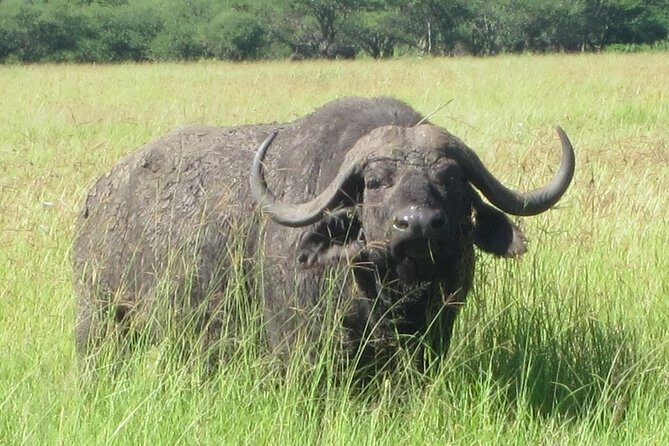
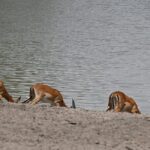
You’ll start from Arusha and keep returning there at the end. Along the way, you’re not just chasing the famous names. The tour notes a long list of species you might encounter beyond the big targets: cheetah, gazelles, topi, hyena, impala, eland, African wild dog, waterbuck, and baboons. On the bird side, it highlights around 500 bird species, and that matters because birds give you another layer of wildlife watching even when the big cats are quiet.
The other thing I like is the practical setup: you travel with a guide and chef, plus bottled water is included. That sounds small, but on safari it makes your day easier. You’re not spending mental energy on logistics while you’re trying to watch animals in motion.
A few more Arusha tours and experiences worth a look
Value math: is $1,100 fair for a 5-day wildlife safari?

At $1,100 per person, the price lands in the budget range, but it doesn’t look like a bare-bones “you’re on your own” deal. The tour is positioned as a joint safari with a professional guide and a chef throughout, and it includes key items that usually add up:
- Park admission tickets included (listed per day)
- Meals included: breakfast (4), lunch (5), dinner (4)
- Bottled water
- Camping equipment (so sleeping arrangements aren’t just “bring your own stuff”)
That combination is what makes the value feel more solid than many budget options that cut corners. If you’ve ever priced out a safari that includes park fees but still makes you pay for food prep, transport coordination, and gear, the total often climbs fast.
Now, remember the trade-off: this is not built around premium lodges or constant creature comforts. You’ll stay in budget lodge or camp at certain points, and you’ll spend serious time driving to connect parks. If your definition of value is quiet luxury and short travel segments, you might feel the “budget” side. But if your definition is “more time in the parks with reliable support,” this pricing structure lines up.
Day 1: Tarangire National Park and the rhythm of an early start

Day 1 starts after hotel breakfast with a pickup and group briefing. That “formalities first” approach isn’t just theater—it helps everyone get aligned before the long day, especially in a group up to 20 people where timing matters.
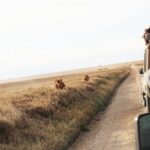
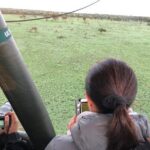
From there, you head from Arusha to Tarangire National Park for a full-day game drive with a picnic lunch. Tarangire is a strong first park for a reason: it kick-starts the safari with nonstop wildlife energy. The tour’s promise here is straightforward: game viewing all day, then dinner and overnight at a budget lodge.
What to watch for on a first day like this is your own stamina. With a full-day drive, it’s easy to forget that safari days are mentally tiring even when you’re sitting. You’ll likely want to treat the first day as your baseline: you’re training your eyes to spot animals at distance, and you’re learning how your guide reads the terrain.
Also, since you’re in a group, the guide’s ability to keep everyone on the same page is a big deal. One of the review highlights was the guide Joseph’s skill in navigating the sometimes rough roads and tracks. On Day 1, that kind of road sense matters because it affects where you arrive and how long you can actually spend inside the park.
Days 2 and 3: Serengeti, including a Ngorongoro crater viewpoint stop

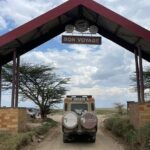
Serengeti is the heart of this safari, and the schedule reflects that. On Day 2, you travel to Serengeti after early breakfast and you also pass through the Ngorongoro crater viewpoint before reaching the main gate. That stop gives you a “first look” moment without turning the day into a sightseeing detour. It’s a clever way to build anticipation for the crater day that comes later.
In the afternoon, you arrive and then you head for lunch inside the park. The day closes with an evening game drive in an area listed as seronera or the central part of Serengeti, timed toward sunset. That timing is important because many animal behaviors shift with light and temperature, and dusk is when your chances often feel more active.
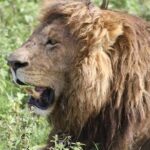
Then Day 3 doubles down. You start early again for a guided game drive, and the tour explicitly calls out the big-category expectation: big cats, elephants, and giraffes. After lunch in the park, you continue with game driving on the way to Ngorongoro for overnight and dinner.
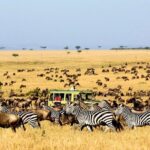
This is the part of the itinerary where the safari feels most “classic.” Serengeti isn’t just about one perfect sighting; it’s about repetition. You get multiple shots at movement—different times of day, different viewing angles, and guide-led tracking of where animals are likely to be.
A possible downside of this structure is also the simplest one: two long days with early starts can wear you out. But you’re paying for density here. If your top priority is maximizing wildlife time over rest time, this is a sensible trade.
Day 4: Ngorongoro Crater for big herds and big cat drama

Ngorongoro Crater is treated as a full safari moment, not a quick stop. After early breakfast, you continue with game driving through the crater. The key detail is the crater itself: it creates a protected ecosystem with high crater walls. That matters because it concentrates animals into a more contained viewing environment than many open plains routes.
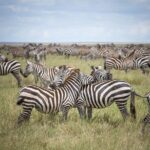
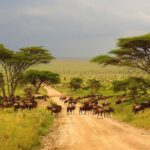
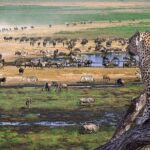
The tour’s description leans into predator-prey action: lions and hyenas hunting wildebeest and Grant’s gazelle. It also points to what you’ll likely notice visually—hundreds of wildebeest and zebras, with frequent chances at lions and other big cats such as leopards and cheetahs.
After your afternoon game drive, you head back to a budget lodge or camp for dinner and overnight. That overnight is important because it sets up the next day’s transition without forcing you into another night drive.
If you’re trying to understand what makes Ngorongoro so special in a practical way, it’s this: you’re not just watching wildlife at random. You’re watching wildlife that lives inside a bowl-shaped system, which often makes for more consistent “animal on the move” scenes—especially when herds and predators are active.
A few more Arusha tours and experiences worth a look


Day 5: Lake Manyara’s birds and the tree-climbing-lion angle

Day 5 shifts pace slightly by adding Lake Manyara National Park after breakfast, with a full-day game drive and lunch in the park. The tour highlights the bird side—flamingos are specifically mentioned—and it also calls out Lake Manyara’s fame for tree-climbing lions.
Then you head back to Arusha and the safari ends.
This day is a great contrast to the Serengeti-to-Ngorongoro intensity. You still get a full game drive, but Lake Manyara is more about variety: birds that keep you scanning even when mammals are farther away, plus the chance that the park’s unusual lion behavior shows up during your time there.
One consideration: because this is a joint safari with fixed park days, your final impressions depend on what the wildlife is doing that particular day. That’s the nature of safari. Still, Lake Manyara’s mix of habitat makes it a strong closer for a 5-day trip because it doesn’t repeat the exact same scene you’ve already seen twice.
Group size and day-to-day logistics that actually matter

This tour runs with a maximum of 20 travelers, which is a big practical point. In wildlife watching, crowding can ruin your sightlines and make it harder for the guide to position your group. A small-to-mid group size tends to help with smooth movement during drives and viewpoints.
Also, the tour is customizable. That matters if you’re trying to match priorities—more time in a specific park, different pacing, or adjusting the balance between viewing and rest. Just keep your expectations realistic: with a tightly connected circuit, changes are usually about preference and timing rather than replacing entire parks.
Pickup is offered, and you’ll also get a mobile ticket. Those details might sound administrative, but they tend to reduce stress when you’re already moving between parks with early starts.
Finally, the format includes fresh meals prepared by the chef. Safari food can be a make-or-break detail for comfort, and having one person responsible for it throughout the trip is a good sign for consistency.
Who this safari is best for

This one fits best if you want a Northern Circuit hit with real guiding and feeding support, and you’re comfortable with a busy schedule.
It’s especially suitable if:
- you’re chasing Serengeti and Ngorongoro as the core experiences
- you want a guide-led safari rather than a DIY plan
- you like the idea of camping-style support (with camping equipment included) but still want structured meals
- you’re okay with budget lodges/camps in exchange for more park time
It might not fit as well if:
- you need luxury lodging the whole way
- you strongly prefer short driving days and lots of downtime
- you want a highly flexible itinerary with minimal long travel segments
Should you book this 5-day joint safari?
If your goal is to see the big-name northern parks in one clean package—Tarangire, Serengeti, Ngorongoro Crater, and Lake Manyara—with park admissions and meals included, this safari looks like good value. The combination of a professional guide, a chef throughout, and included camping gear is exactly what makes a budget safari feel like a real trip instead of a rough compromise.
I’d book if you’re the type who enjoys early starts and longer driving days because that’s how you get density of wildlife moments. And the guide quality seems to be a real strength here—Joseph’s praised skill in handling rough roads and tracks is the kind of competence you want when you’re connecting multiple parks quickly.
Before you commit, be honest about one thing: this is a budget-style run. Budget lodging and a full schedule are part of the deal. If you need everything comfortable and slow, you may feel squeezed.
FAQ
FAQ
What parks are included in this 5-day safari?
You’ll visit Tarangire National Park, Serengeti National Park, Ngorongoro Crater, and Lake Manyara National Park.
Where does the tour start and where does it end?
The tour starts with pickup in Arusha after your hotel breakfast and ends by returning to Arusha on the final day.
Are park admission tickets included?
Yes. Admission tickets are listed as included for each day’s park activities.
What meals are included?
Breakfast is included for 4 days, lunch for 5 days, and dinner for 4 days. Bottled water is also included.
Is pickup offered?
Yes, pickup is offered.
How big is the group?
The tour has a maximum of 20 travelers.