REVIEW · ARUSHA
4-Day Camping on the Big Five Private Safari
Book on Viator →Operated by Rehoboth Safaris · Bookable on Viator
A safari that feels personal is rare—this one delivers. You’ll spend four days chasing the Big Five across Tarangire, Serengeti, and Ngorongoro, sleeping on the ground with your gear handled and park fees included. What I like most is how the plan hits the big names and keeps a good pace for real wildlife time, and I also loved the human side: guides such as Godfrey (often mentioned as fluent and caring) and a chef like Meshak who turns camp meals into a highlight. One thing to weigh: this is camping in the parks, so if you hate basic comfort or want hotel-level quiet, plan carefully.
You’ll start at 7:00 am and then spend each day in the parks when animals are most active and visibility is best. You’ll also get bottled water (3 liters or more per day) and drinks on the included side, plus fly and bug spray to help with the real-world bugs. A possible drawback is timing: the early mornings and crater descent mean you’ll feel the schedule, not just watch it.
In This Review
- Key highlights to know before you go
- Tarangire National Park: elephants, acacia country, and a first taste of real Africa
- Serengeti National Park: the big plains and why the timing matters
- Serengeti’s midday reset and Olduvai Gorge’s history angle
- Ngorongoro Crater: the 2,000 ft descent and why black rhino is on the radar
- Camping comfort: tents, sleeping gear, and camp life that actually gets praised
- Getting around: long drives, early starts, and how the schedule supports sightings
- Price and value: what $1,436 covers (and what to budget beyond it)
- Who should book this Big Five private camping safari?
- Should you book the 4-Day Big Five Private Safari with Rehoboth Safaris?
- FAQ
- FAQ
- What parks are included on this safari?
- What time does the safari start?
- Is this a private tour?
- Are park entrances included in the price?
- What meals and drinks are included?
- Does the tour include camping gear?
- Is airport pickup and transfer included?
- Do I need to buy a ticket for the parks?
- Is tipping included?
- What if poor weather cancels the trip?
Key highlights to know before you go
- Big Five focus across three top parks, with Ngorongoro framed for rare-sighting chances
- Private group setup, so your guide can adjust drives to what you’re seeing
- Guide-led game drives powered by local expertise (Godfrey is repeatedly credited for finding animals)
- Camping included, with tents plus sleeping bag and mattress
- Chef-made camp food is part of the experience (Meshak gets specific praise)
- Park fees included, so you’re not doing surprise add-ons at the gate
Tarangire National Park: elephants, acacia country, and a first taste of real Africa
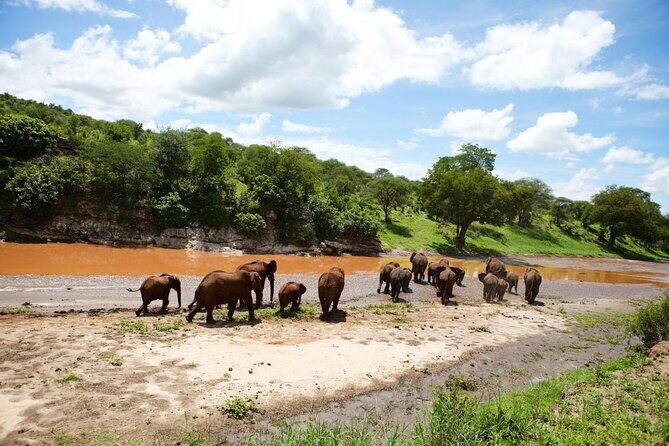
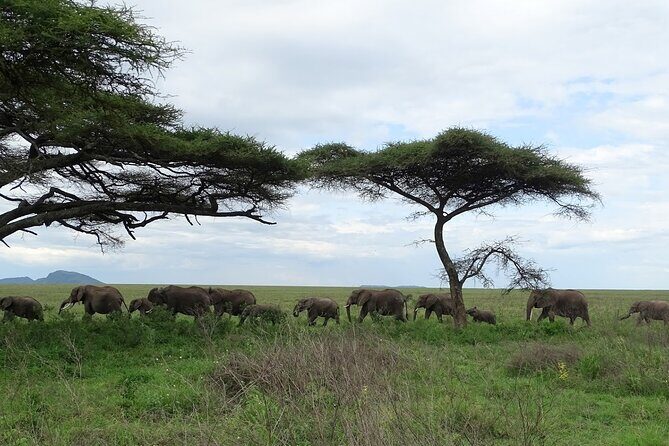
Day one starts with a morning briefing and then you head toward Tarangire National Park, known for huge elephant herds. This is a smart opener because Tarangire often sets the tone fast: you’re not just looking for one rare moment, you’re walking into a landscape where big herds and lots of different species can be visible in the same drive.
Tarangire’s scenery is varied enough to keep your eyes busy—grass areas, acacia woodlands, and even forest patches. That matters because wildlife doesn’t spread evenly. If one section is quiet, your guide can often move you to a better pocket without losing the day. You’re also likely to hear the birdlife before you fully see it, with species like yellow-breasted lovebirds mentioned in the park profile.
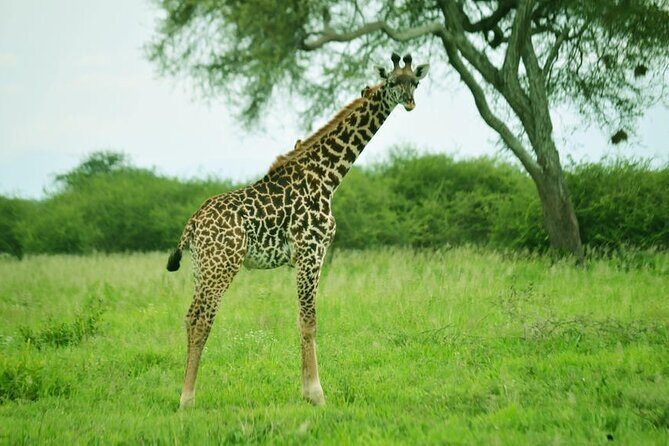
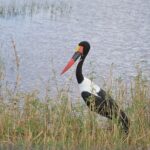
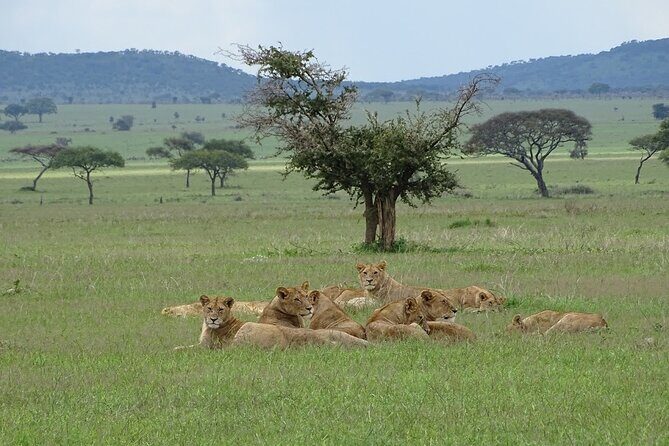
From a “what could I actually see?” standpoint, you’re looking at giraffes, kudus, buffalo, elands, and even gerenuk (the odd-looking long-necked antelope that feels like it shouldn’t exist). Predators are possible too: lions, leopards, and hyenas are part of the park mix, while wild dogs are described as very rare—so I’d treat that as a bonus, not a promise.
Logistically, this first day ends with travel to your lodge/camp area for the night. The day is described as about 10 hours, which tells you something important: you’re traveling, driving, and settling in, not only “park sightseeing.” If you like the full safari flow—morning briefing, long drive, then dinner and rest—this fits well.
You can also read our reviews of more private tours in Arusha
Serengeti National Park: the big plains and why the timing matters
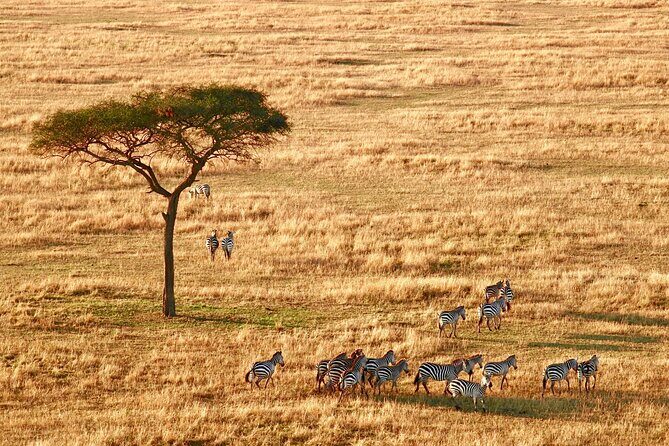
Serengeti is the headline, and it earns it. After breakfast you’ll drive via the Ngorongoro Conservation Area, then arrive at the Serengeti plains through Naabi Hill Gate. The park profile calls out the official entrance dropping you into wide-open terrain—exactly the kind of place where visibility helps and where the game drive feels like it goes on forever.
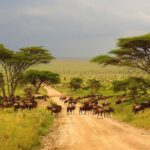
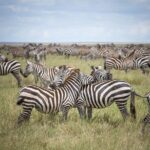
This is also where your expectation should shift from animals-in-one-spot to wildlife-in-motion. The park is described as covering about 6,000 square miles, and the Great Migration is tied to the story: up to 1.5 million wildebeest are referenced as part of the system. Even if the migration moment you imagine doesn’t line up perfectly with your date, Serengeti still works because the habitat is built for seeing a lot of different life at once—across plains, near rivers, and around those rocky kopjes (the term comes up in the park description).
One of the best ways to enjoy Serengeti is to notice how the day is structured around animal behavior. The itinerary later makes the pattern clear: mornings are prime time, and the heat builds as the day runs. You’ll spend a full day here, with park entry and wildlife viewing central to the day plan.
Practical value for you: with a private tour, your guide can keep the driving and stopping aligned to what’s happening. That’s a lot more useful than a rigid checklist. In the feedback, guides like Godfrey are specifically praised for expertise and for taking people to strong areas—so you’re not only paying for the parks. You’re paying for brains and field judgment.
Serengeti’s midday reset and Olduvai Gorge’s history angle
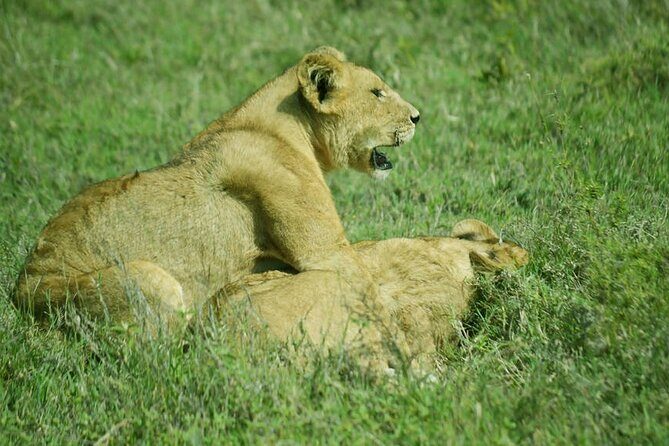
Day three gives you a balanced combo: a morning drive plus a history stop. Your day begins with about a 4-hour game drive in central Serengeti when conditions are better—described as not hot yet. By around 11:30am, the plan shifts back for brunch, which is a very real safari rhythm. It’s also a smart move because it reduces the chance that you’re stuck in the vehicle in the hottest part of the day with nothing to show for it.
Then, on the way back, you’ll stop at Olduvai Gorge. This is a chance to add context beyond animals: it’s described as an archaeological site, with interest for both history and the Masai tribes. Even if you’re mainly a wildlife person, I like having one day where the safari doesn’t only ask your eyes to work. It lets your brain reset too, and it can make the whole trip feel more complete.
A subtle benefit here: the itinerary breaks your “drive for hours” pattern with a clear change of pace. That tends to make the overall trip feel less exhausting and more satisfying when you reach the crater day.
If there’s one caution, it’s that Olduvai Gorge is a different kind of experience than a wildlife chase. If you’re the kind of traveler who wants nonstop game driving, you’ll still get your morning—but you won’t be in the parks all day.
Ngorongoro Crater: the 2,000 ft descent and why black rhino is on the radar
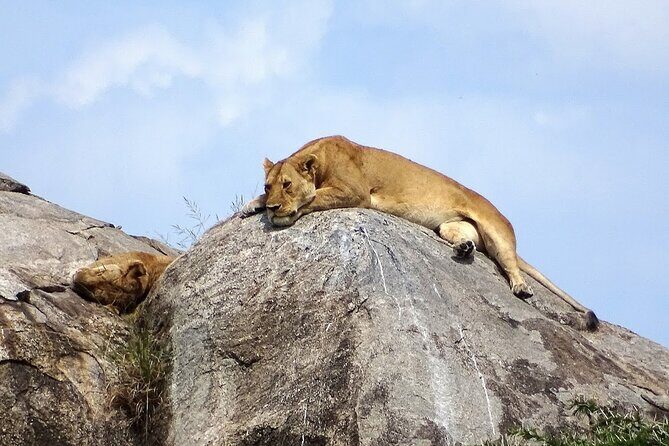
Your last morning starts very early, with a picnic lunch included as you head out. The big moment here is descending roughly 2,000 ft down to the crater floor by 4×4 drive vehicle. That descent changes everything. Lighting shifts. Sound carries differently. And wildlife density tends to feel more concentrated once you’re down in the crater’s bowl.
Ngorongoro is framed as a volcanic crater with a true “Garden of Eden” feel: rich pasture, swamps, forest, and permanent water. That mix matters because it supports many different food sources and hiding cover. The tour description even calls out that there can be up to 25,000 larger animals living there—so in practice, you’re hunting more often by scanning rather than searching.
This is also where the Big Five plan tightens. Ngorongoro is described as one of the best opportunities for seeing black rhino, plus rare species like the black-manned lion. I’d treat those as high-probability targets rather than guaranteed sightings, but the overall logic is strong: crater ecology often increases your odds by keeping suitable habitat close together.
Then you’ll do wildlife viewing on the crater floor and later drive back to Arusha, with drop-off to your lodge or hotel in the late afternoon. This is a good ending structure. You get the emotionally charged crater experience, and then you’re not left with a long scramble back to town.
Camping comfort: tents, sleeping gear, and camp life that actually gets praised
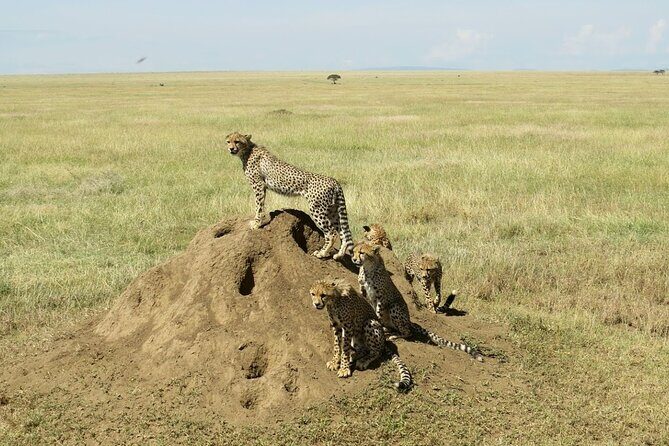
This is not a lodge-only safari. It’s 4-day camping, with camping equipment included—tents, plus a sleeping bag and mattress. You also get meals and water (including bottled water, with 3 liters or more per day stated), plus wine and soft drinks listed as included.
What that means for you is simple: you’ll be living in “camp mode” for multiple nights, but you won’t be doing the hard logistics yourself. The included sleeping setup matters because it protects your energy for the drives. If you’re considering this tour and you hate cold nights, don’t assume the park air will always be comfortable—plan for layering and come prepared.
One standout detail from the feedback: camp food gets real credit. Chef Meshak is named in reviews as cooking delicious meals every day. That’s important. On safaris, meal quality can be either an afterthought or a morale booster. Here, it sounds like it lands on the good side.
Also, since this is a private safari, camp downtime should feel less like waiting and more like resetting. You’ll likely have more flexibility to decide when you want to step out for a look at the camp surroundings, rather than being dragged along with a larger group.
A few more Arusha tours and experiences worth a look
Getting around: long drives, early starts, and how the schedule supports sightings
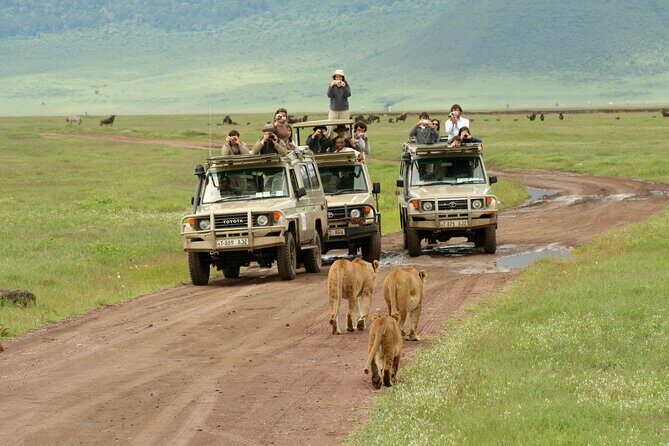
The pace is part of the deal. The tour’s start time is 7:00 am, and the day lengths vary—around 10 hours on day one, a full day for Serengeti, a longer day three (listed as about 12 hours), and a shorter day four (about 6 hours). Those differences matter.
Day two and day three are especially instructive because they show how wildlife viewing is planned around conditions:
- Morning drive time is treated as prime viewing
- Midday brings food and rest
- Then the day continues with another targeted experience (like Olduvai Gorge) or shifts into crater time early on day four
If you’re trying to maximize sightings, this pattern makes sense. Animals are often easier to see in the cooler hours, and vehicle time tends to pay off more then. If you’re trying to maximize comfort, you may want to keep your expectations aligned with “safari schedule,” not “vacation schedule.”
Price and value: what $1,436 covers (and what to budget beyond it)
At $1,436 per person for a private four-day safari, the best way to judge value is to look at what’s included. Your package covers park entrances and taxes, accommodation, and meal coverage with water. It also includes camping gear (tents, sleeping bag, mattress) and basic supplies like fly and bug spray for use in the parks.
There’s also transfer to and from the airport, plus fly doctor medical insurance listed in the included items. That kind of safety net is worth real money in the real world, even if you hope you’ll never test it.
Add to that group discounts are mentioned, and park days are structured around multiple major stops. In other words, you’re not only paying for “being in Tanzania.” You’re paying for three of the big wildlife regions in a tight time window, with guides, vehicles, and park fees baked in.
What’s not included is tips. The guidance provided recommends a total tip of $40 USD per client. I like knowing that number up front because it keeps your budget clean.
Who should book this Big Five private camping safari?
This is a strong fit if you:
- Want Big Five country without switching between too many lodging styles
- Like the idea of a private guide who can adjust your drives
- Can handle early starts and the rhythm of morning wildlife + midday food breaks
- Want real safari life, including camp meals (again, Chef Meshak gets credit) and sleeping setup provided
It might be less ideal if you:
- Want a fully hotel-comfort experience throughout
- Prefer short travel days with minimal driving
- Are sensitive to early mornings and want a slower schedule
Based on the guide-focused praise, you’ll likely enjoy this most if you care about the “how” of safari—finding animals, reading signs, and learning what you’re seeing as you go.
Should you book the 4-Day Big Five Private Safari with Rehoboth Safaris?
I’d book it if your priority is a classic circuit—Tarangire, Serengeti, and Ngorongoro—done with private attention and camping logistics handled for you. The package is built for wildlife time, and the camp side seems to be genuinely cared for, not just tolerated. The names that come up in the feedback—guide Godfrey for expertise and warmth, and chef Meshak for camp cooking—are the kind of details that usually signal a higher-quality operation.
If you’re unsure, here’s your best decision test: picture yourself waking up early, spending long hours in open-air viewing, and then turning in with a tent and sleeping setup. If that feels exciting rather than annoying, this tour fits your style.
FAQ
FAQ
What parks are included on this safari?
You’ll visit Tarangire National Park, Serengeti National Park, and Ngorongoro Crater (through the Ngorongoro Conservation Area).
What time does the safari start?
The experience start time is listed as 7:00 am.
Is this a private tour?
Yes. This is described as a private tour/activity, meaning only your group participates.
Are park entrances included in the price?
Yes. Park entrances and taxes are included.
What meals and drinks are included?
The tour includes meals and water. Lunch and dinners are included on the days listed, plus breakfast. Wine and soft drinks are also included, and bottled water (3 liters or more per day) is provided.
Does the tour include camping gear?
Yes. Camping equipment is included, including tents, a sleeping bag, and a mattress.
Is airport pickup and transfer included?
Transfer to and from the airport is included.
Do I need to buy a ticket for the parks?
No. Admission tickets are listed as free within the tour inclusions for each park day.
Is tipping included?
Tips are not included. A recommended total tip is $40 USD per client.
What if poor weather cancels the trip?
The experience requires good weather. If it’s canceled due to poor weather, you’ll be offered a different date or a full refund.