REVIEW · ARUSHA
3 Days Mount Meru trekking
Book on Viator →Operated by Rupia Adventure · Bookable on Viator
Sunrise on Meru hits different. This 3-day climb from Arusha National Park mixes a walking-safari feel with a midnight summit push, ending with views toward the Ash Tray and Mt. Kilimanjaro. You go with a private guide, plus an armed ranger for the wildlife-heavy trail.
I love how the hike starts like a wildlife spotting morning, with zebras, giraffes, buffalo, and sometimes elephants near the route. I also like the private tour style, which keeps your pacing, questions, and timing in your guide’s hands. All meals and hut accommodation are included, so you’re focused on the mountain, not logistics.
The main consideration is the midnight wake-up and steep rocky final ridge on summit day. If you’re not comfortable with cold, dark hiking and a strong fitness base, this will feel more punishing than fun.
In This Review
- Key points to know before you go
- Why Mount Meru takes 3 days and still feels like a journey
- Day 1: Momella Gate and a walking-safari start in Arusha National Park
- Day 2: Saddle ridge, crater views, and the Little Mt. Meru option
- Day 3: Midnight start to sunrise at 4,565m over Ash Tray and Kilimanjaro
- Wildlife, rangers, and the team you’ll hike with
- Price and logistics: is $800 good value here?
- Fitness, cold nights, and how to prepare smartly
- Who should book this Mount Meru trek (and who should skip it)
- Should you book Rupia Adventure for Mount Meru?
- FAQ
- What is included in the $800 Mount Meru trekking price?
- How long is the Mount Meru trek?
- What time does the summit attempt start?
- Where do you start the hike?
- Do I need an armed ranger during the trek?
- What if the trek gets cancelled due to weather?
Key points to know before you go
- Day 1 is a walking safari: Early hiking inside Arusha National Park can bring zebras, giraffes, and buffalo.
- An armed ranger goes with you: The trail has a high chance of wildlife sightings, so a ranger is required.
- Crater and Ash Tray views start early: You’ll see the Mt. Meru crater and the Ash Tray as you gain height.
- Little Mt. Meru can help acclimatize: You have an option to hike it with your guide on Day 2.
- Summit day is timed for sunrise: Tea and biscuits at 00:30, then a climb starting at 1:30am.
- Small groups, max 15: It’s private-led, keeping the experience more personal.
Why Mount Meru takes 3 days and still feels like a journey
Mount Meru is Tanzania’s 5th-highest peak, and the whole trek is built around timing. You’re not just hiking “up,” you’re hiking up, resting, then jumping into a summit attempt under darkness so you can reach the top by sunrise.
What makes this route especially compelling is that it blends two experiences. First, you’re moving through Arusha National Park in the early hours, where wildlife can be close enough to feel real, not just theoretical. Second, you switch into true mountain mode on Day 2 and Day 3, with ridge walking, steep grades, and a rocky scramble near the end.
If you care about getting a sense of place, this trek delivers. You start around 1,400m near Arusha, then climb toward the 4,565m summit, with key points along the route like Rhino Point (3,800m) and Cobra Point (4,350m). That altitude rhythm helps you understand why Meru is both challenging and doable for prepared hikers.
You can also read our reviews of more hiking tours in Arusha
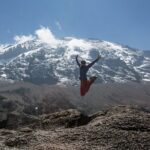
Day 1: Momella Gate and a walking-safari start in Arusha National Park
Day 1 begins with breakfast in Arusha, then pickup to Momella Gate in Arusha National Park. Before you start hiking, porters organize and pack your belongings, while you and your guide register with TANAPA (Tanzania National Park). That handoff matters. It keeps your brain on the trail instead of juggling gear.
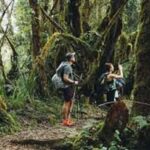
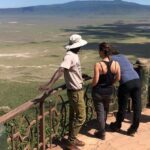
Then you begin ascent through the park, and the “mountain trek” part starts with a surprise: it behaves like a walking safari. You should expect giraffes, zebras, antelope, and buffalo along the way, with elephants possible depending on conditions and animal movement.
Because wildlife sightings are likely, you’ll have an armed ranger hired through the National Park walking with your team for the duration of the hike. This isn’t an optional add-on. It’s part of how the trek stays realistic and safe in a wildlife corridor.
The practical takeaway for you: dress and move as if you’re doing both safari walking and mountain trekking. That means layers, eye protection, and footwear that handles uneven ground. Day 1 can feel long, but it’s the warm-up for the height challenge coming the next day.
Day 2: Saddle ridge, crater views, and the Little Mt. Meru option
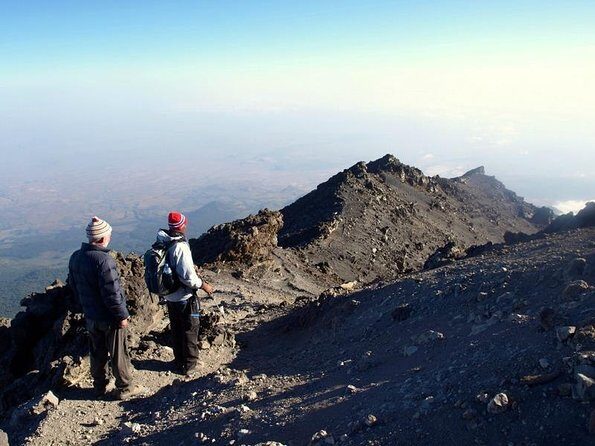
After breakfast, Day 2 is where the trail leans steep. You ascend along the ridge of the saddle, and you get views of Mt. Meru Crater and the Ash Tray as you gain height. Even when your legs are working hard, your eyes have something to track besides just the slope ahead.
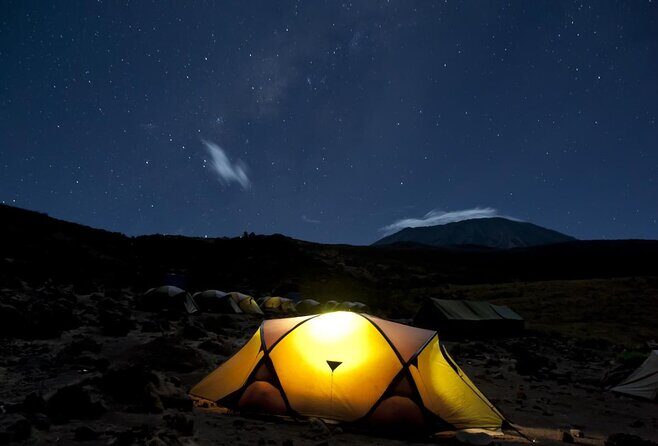
The day has a built-in pacing tool: when you reach camp, you have the option to hike Little Mt. Meru (3,820m) with your guide to help acclimatize. If you’re the kind of hiker who likes “earning” rest time by moving a bit more, this is a smart choice. If you’re already feeling cooked, you can likely skip it and focus on recovery.
Dinner comes early so you can rest before the summit attempt. You’re encouraged to get sleep by 19:00, which is important because the next night starts very early. This is one of those details that’s not glamorous, but it’s what often separates a smooth summit from a miserable one.
The main consideration on Day 2: you’re going higher, and the air gets cooler. You’ll want to manage your effort. Going too hard early can turn the summit night into a grind.
Day 3: Midnight start to sunrise at 4,565m over Ash Tray and Kilimanjaro
Summit day starts with a wake-up call at 00:30 for tea and biscuits. Then the climb begins at 1:30am. You’re hiking in the dark at the start, which means your headlamp habits, footing, and clothing layers matter as much as motivation.
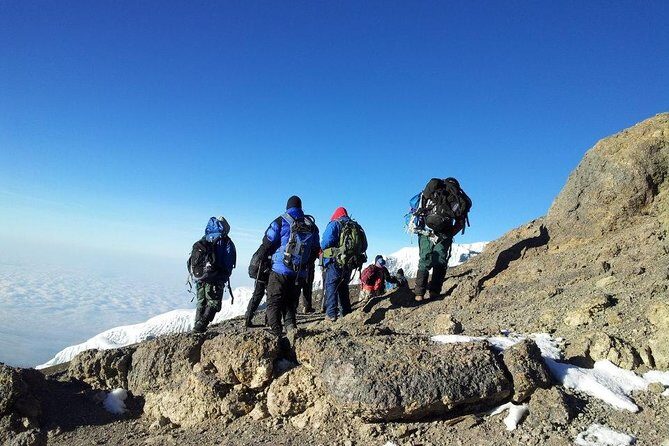
The route begins with a steep grade up to Rhino Point (3,800m) and then continues to Cobra Point (4,350m). By the time you’re on that higher stretch, you’ll feel the altitude in your breathing even if you’re moving carefully.
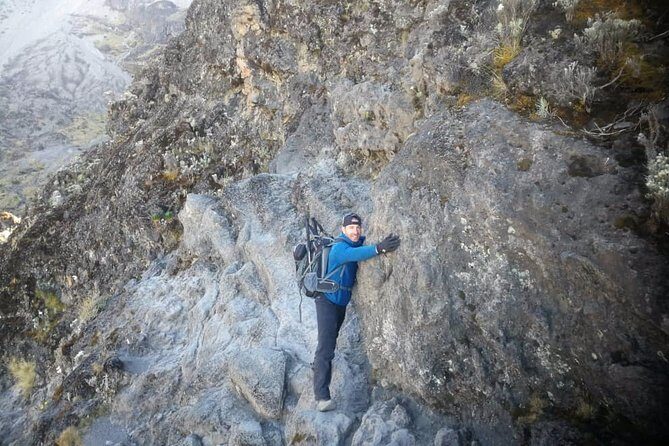
The final push has a technical feel. The last hour involves scrambling along a rocky ridge between the crater and inner cliffs of Meru. This is not a smooth walkway. It’s where strong ankles and good grip matter, and where you’ll likely appreciate moving slowly and watching your steps instead of chasing speed.
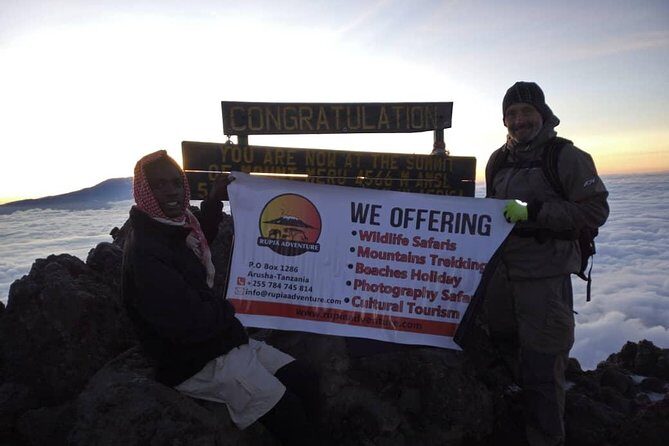
Then it happens: you reach the summit (4,565m) at sunrise. The views are described as spectacular, specifically toward Mt. Meru Ash Tray and Mt. Kilimanjaro. After that, you descend back to Momella Gate and return to Arusha.
What you’ll remember is how timing creates emotion. You’ve been working for hours in darkness and cold, then suddenly the horizon opens. That sunrise payoff is the whole reason the trek uses a midnight schedule.
Wildlife, rangers, and the team you’ll hike with
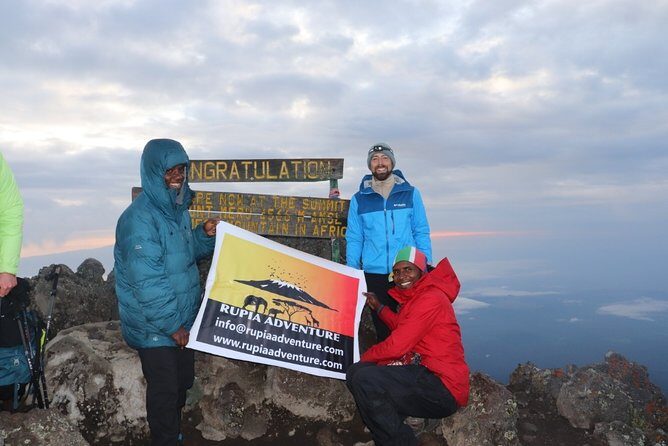
A big part of this experience is the team setup. Porters handle organizing and packing items for your hike, which means you spend less time managing bags and more time managing pace and energy.
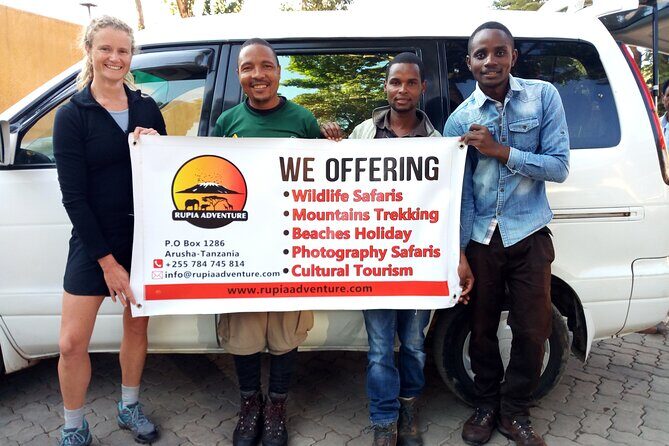
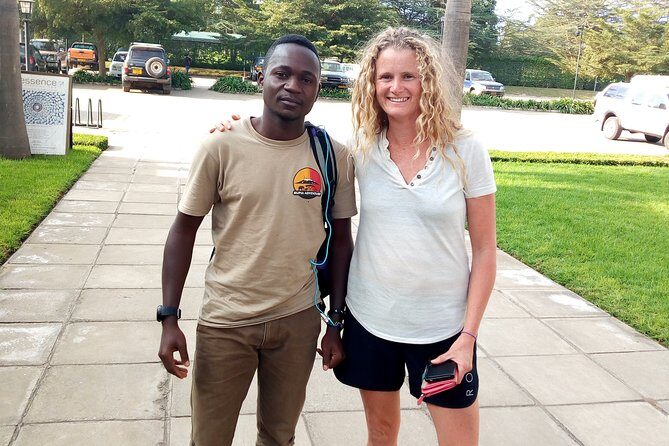
Your guide leads the climbing and interpretation of what you’re seeing. One guide name that comes up is Frank, noted for sharing information about mountain flora, fauna, and general mountain life. Even if you don’t get Frank, you should expect the guide role to go beyond “just directions.”
On top of the guide, you’ll have an armed ranger because the route is within a wildlife-rich park area and sightings are possible. That ranger requirement is a key difference from “generic” mountain hikes. It signals that the environment is alive, not empty. It also means safety procedures and wildlife awareness are part of your day, not an afterthought.
There’s also a human reality check. Most feedback highlights friendly, supportive staff and strong organization. But there is at least one serious complaint alleging payment-transfer issues and poor responsiveness, plus concerns about vehicles or equipment and guide experience. You can’t ignore that. If you book, double-check any payment instructions you receive and make sure your contacts are reachable before you send money.
A few more Arusha tours and experiences worth a look

Price and logistics: is $800 good value here?
At $800 per person for a 3-day Mount Meru trek, the price isn’t “cheap,” but it also isn’t just paying for walking. You’re paying for a full package that includes:
- Pickup offered in Arusha
- Private guide experience
- Admission tickets included
- All meals and hut accommodation included
- Porters handling and packing your belongings
- A required armed ranger for the wildlife conditions
- A mobile ticket
That bundle matters. Many treks look affordable until you add the park fees, meals, staffing, and accommodation. Here, those core items are bundled into the cost, so you’re less likely to get surprised mid-trip.
Still, value depends on your situation. If you already have transport, gear, and meals handled elsewhere, you might feel the cost more sharply. If you want a supported trek where you show up and hike, the inclusions justify the price.
For comparison in your head, think about what it would cost to replicate all of that yourself: a guided climb, ranger support, porters, food, and huts. For most people, $800 is paying for work you don’t want to coordinate alone.
Fitness, cold nights, and how to prepare smartly
This trek asks for a strong physical fitness level. That’s not just marketing language. The schedule includes a steep Day 2 ascent and a summit day that starts in the middle of the night, with a steep grade and rocky scrambling at the end.
A good way to think about your readiness is to plan for three different kinds of effort:
- Long uphill walking on Day 1 and Day 2
- Steep ridge hiking on Day 2
- Cold, technical footing and altitude strain on Day 3
You also need to be mentally ready for the timeline. Getting sleep by 19:00 on Day 2 is aimed at helping you function during the 00:30 wake-up. If you stay up too late or arrive already exhausted, it shows up fast during the summit push.
Weather matters too. The experience requires good weather. If conditions force cancellation due to poor weather, you’ll be offered a different date or a full refund. That’s useful to know because Meru isn’t a “climb no matter what” mountain.
Packing tips you can apply without inventing details:
- Bring warm layers for the night start
- Use footwear that grips rocks during scrambling
- Expect dust, uneven trail, and cooler air as you go higher
- Keep your mindset flexible if the trail feels slower than planned at altitude
Who should book this Mount Meru trek (and who should skip it)
This trek fits best if you want:
- A guided, private experience with a clear summit goal
- A route that mixes wildlife time with mountain time
- A sunrise summit payoff timed for the early climb
- Included meals and hut accommodation, so you’re not juggling camp logistics
You might rethink if:
- You struggle with steep hiking or don’t handle cold, dark starts well
- You’re looking for a purely beginner-friendly trek without scrambling
- You’re not comfortable with altitude, even if the trek is paced across three days
One more note: the group maximum is 15 travelers. That’s small enough to feel personal, but large enough that you’ll still need to follow staff instructions and maintain consistent trekking behavior for safety.
Should you book Rupia Adventure for Mount Meru?
If you’re aiming for a well-run private Mount Meru trek with included meals, huts, park admission, and ranger support, this is a solid candidate. The combination of Day 1 wildlife potential and a sunrise summit from 4,565m is the main reason people choose Meru, and this plan is built around making that happen.
My advice: book if you’re physically ready, you can handle a midnight start, and you want a supported climb where you’re not coordinating food and lodging. Also, do one extra step for peace of mind: confirm payment details and make sure you have working communication channels before the trip begins, since there is at least one serious complaint about payment and responsiveness.
If those boxes are checked, you’re in for a trek that feels like both safari and mountain challenge, with views toward Ash Tray and Kilimanjaro that make the early hours feel worth it.
FAQ
What is included in the $800 Mount Meru trekking price?
The price includes pickup offered in Arusha, admission tickets, all meals, and hut accommodation. It also includes a private guide experience, porters to organize and pack items, an armed ranger requirement for the hike, and a mobile ticket.
How long is the Mount Meru trek?
The trek is listed as 3 days, with the overall experience beginning with pickup from your hotel in Arusha and ending when you return to Arusha after descending from Momella Gate.
What time does the summit attempt start?
You are woken at 00:30 for tea and biscuits, and the summit attempt starts at 1:30am on Day 3.
Where do you start the hike?
You start at Momella Gate in Arusha National Park.
Do I need an armed ranger during the trek?
Yes. Because of the high possibility of wildlife sightings, an armed ranger hired through the National Park is required to hike with the team for the duration of the hike.
What if the trek gets cancelled due to weather?
The experience requires good weather. If it’s cancelled due to poor weather, you’ll be offered a different date or a full refund. If it’s cancelled because the minimum number of travelers isn’t met, you’ll be offered a different date or a full refund.